 Bellingham
 New-Construction Windows Built for Cordata's Weather
Cordata sits in one of the wetter, greyer corners of Whatcom County, and that shapes how windows should be installed here far more than most homeowners realize. Long stretches of driving rain, a moss season that can run half the year, and the salt-tinged air that rolls in off Bellingham Bay all put steady pressure on a home's exterior envelope. New-construction windows are your first real chance to get the water management right before siding, trim, and paint close everything up. Get it right at this stage and the window will perform for decades. Get it wrong, and the problems — rot, staining, soft trim, mold behind the wall — often stay hidden until they're expensive.
We install new-construction windows on homes and additions throughout the Cordata area, and the approach we use is built specifically around this climate, not a generic install method pulled from a drier region.
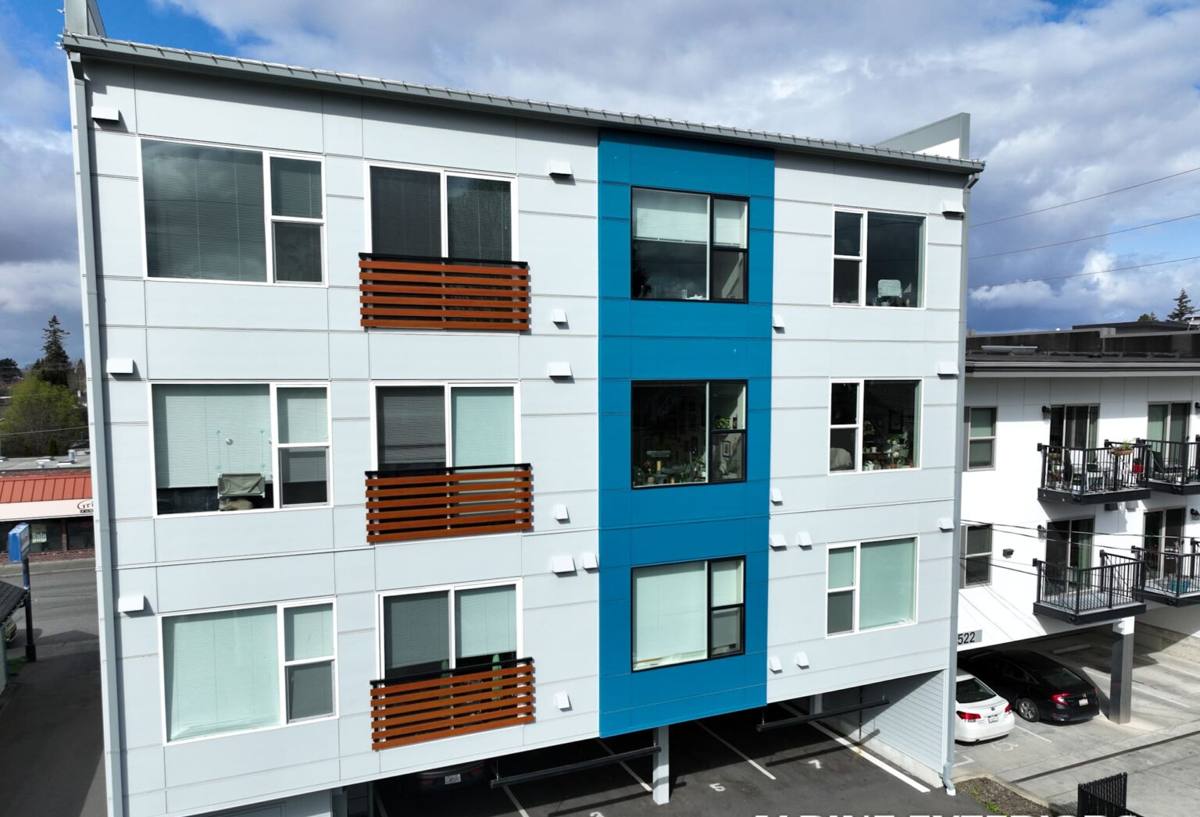
What "New-Construction" Windows Actually Means
New-construction windows are different from the replacement windows most homeowners are familiar with. They come with a nailing flange around the perimeter of the frame, designed to be installed into open framing before the siding and weather-resistive barrier (WRB) go on. That flange is what ties the window into the wall's drainage plane — it's the difference between a window that's just sitting in an opening and one that's actually integrated into the building's water management system.
This matters more in Cordata than in a lot of places. Because rain here tends to be steady and wind-driven rather than short bursts, a wall assembly gets tested constantly rather than occasionally. A flanged window installed correctly sheds water down and out, layer over layer, the same way shingles do on a roof. Installed even slightly wrong — flashing tape in the wrong order, a missing sill pan, fasteners in the wrong spot — and water finds its way behind the WRB instead of over it.
New-Construction vs. Replacement — Why It Matters at This Stage
If you're building new or doing a full addition in Cordata, you're not choosing between window types out of preference — the open wall framing means new-construction is the correct product. The advantage is that we get to build the water management system from scratch, in the right order, rather than working around existing siding and trim the way we would on a retrofit. It's a better outcome for the window, but only if every layer is installed in sequence.
What a Correct Installation Involves
A lot of what makes a window installation good or bad happens before the window is ever in the opening. The rough opening, the sill pan, and the flashing sequence do most of the actual work of keeping water out — the window itself is only as good as what surrounds it.
Flashing and Weather Barrier Integration
- Rough opening is checked for square, level, and correct dimensions before the window ever arrives on site
- A sloped sill pan is formed so any water that does reach the sill drains back out, not inward
- Flashing tape or membrane is applied in a shingle-lap sequence — sill first, then jambs, then head — so each layer overlaps the one below it
- The window flange is set into the sill pan and fastened per the manufacturer's schedule, not just "enough nails to hold it"
- Head flashing integrates with the WRB above the window so water is directed out and over, never trapped behind the siding
- Backer rod and sealant are used at the interior and exterior trim lines to control air and bulk water separately
Every one of those steps matters everywhere, but in a climate with as much sustained wet weather as Whatcom County gets, skipping or rushing any single layer is where callbacks and rot claims come from years later.
Window Selection for Coastal and Moss-Season Conditions
Frame material choice affects how a window holds up to salt air and constant moisture exposure. We walk homeowners through the trade-offs rather than pushing one product, because the right choice depends on the specific home, its exposure, and the budget.
| Frame Material | Moisture / Salt Air Resistance | Maintenance | Typical Cost Tier |
|---|---|---|---|
| Vinyl | Good — won't rot or corrode, but can discolor over many years of sun and salt exposure | Low — occasional cleaning | Lower |
| Fiberglass | Very good — dimensionally stable, resists moisture and salt air well | Low | Mid to upper |
| Wood-clad (exterior clad, interior wood) | Good on the clad exterior; the wood interior needs the exterior seal to stay intact | Moderate — clad exterior is low-maintenance, but any breach in the cladding needs prompt attention | Upper |
| Aluminum | Conducts cold and can show condensation in our damp winters; less common in residential new construction here | Low | Varies |
We don't install products we can't stand behind for this climate. If a frame or glazing option has known moisture-management weaknesses for a wet coastal environment, we'll say so plainly and steer you toward something that holds up, rather than selling whatever has the best margin.
Our Installation Process
On a Cordata new-construction or addition project, the sequence generally looks like this:
- Rough opening inspection — verify dimensions, square, and structural framing before ordering or installing
- Sill pan flashing installed with proper slope for drainage
- Jamb and head flashing applied in correct shingle-lap order, tied into the WRB
- Window set, leveled, and fastened per manufacturer specifications
- Exterior flashing and WRB integration completed above and around the unit
- Interior and exterior sealant applied at appropriate points — not everywhere, since over-sealing can trap moisture instead of releasing it
- Final check for operation, square, and weatherproofing before trim and siding close in around the window
That last point deserves emphasis: once siding goes on, the flashing work underneath is no longer visible or correctable without removing finish materials. This is why the installation crew's attention to sequence — not the window brand — is usually what determines whether a window performs for 20+ years or starts showing problems in five.
Moss, Salt Air, and Long-Term Window Performance
Two climate factors specific to this part of Whatcom County are worth planning around during a new build. First, the extended damp season means anything organic — algae, moss, lichen — will find a foothold on horizontal surfaces like sills and trim if drainage isn't clean and continuous. Second, proximity to the bay means airborne salt can accelerate wear on certain metals and finishes over time. Neither is a reason to avoid building here; it's simply a reason to choose flashing materials, sealants, and hardware finishes rated for coastal exposure, and to make sure water has a clear path off the window rather than pooling anywhere.
What Homeowners Can Do Long-Term
- Keep gutters and downspouts clear so roof runoff isn't dumping extra water onto window heads below
- Rinse pollen, moss spores, and salt residue off sills and frames a couple times a year
- Watch for soft spots, discoloration, or peeling paint at the interior and exterior trim — early signs of a sealant failure
- Keep landscaping and irrigation from spraying directly onto window units
- Have sealant joints inspected every few years, since caulk and backer rod are wear items, not permanent fixes
Why Hiring a Crew That Already Works in Cordata Matters
New-construction window installation is one of those trades where the visible result — a window that opens, closes, and looks straight — can hide a flashing job that's already set up to fail. A crew that works regularly in Cordata and the surrounding Bellingham area has seen how homes here actually perform after a few wet seasons, not just how they look on install day. That experience shapes decisions about sealant choice, flashing sequence, and frame material that a crew unfamiliar with this specific coastal, high-moisture environment might not think twice about.
It also matters for coordination. New-construction windows have to line up with the framing crew, the siding crew, and often the general contractor's schedule. A local crew that's done this sequencing on other Cordata and Bellingham projects tends to catch rough-opening issues early, before they become change orders mid-build.
Getting Started
If you're framing a new home or addition in Cordata and want the window installation done right the first time, we're happy to walk the plans or the framed opening with you and talk through frame material, flashing approach, and sequencing before anything goes in the wall. Reach out for a free, no-pressure estimate using the form below.