 Bellingham
 Roofing in Cordata: A Different Kind of Wear
Cordata sits in north Bellingham, close enough to Bellingham Bay and the Salish Sea that salt-laden air is a constant, low-grade factor in how every exterior material ages here. Add Whatcom County's long stretch of driving rain each fall and winter, plus a moss season that can run eight months or more under the tree canopy common to this part of town, and you get a roofing environment that's genuinely tougher on materials than what a roof in a drier inland climate has to handle. A new roof installation in Cordata isn't just about swapping old shingles for new ones — it's about building a roof system that's specifically detailed to shed water fast, resist wind-driven rain intrusion, and slow down moss and moisture organisms that thrive in shade and dampness.
Homeowners who wait until a roof is actively leaking often end up paying for water damage repairs on top of the roof itself. Understanding what your roof is up against, and what a properly installed replacement actually involves, helps you make a better decision about timing and materials.
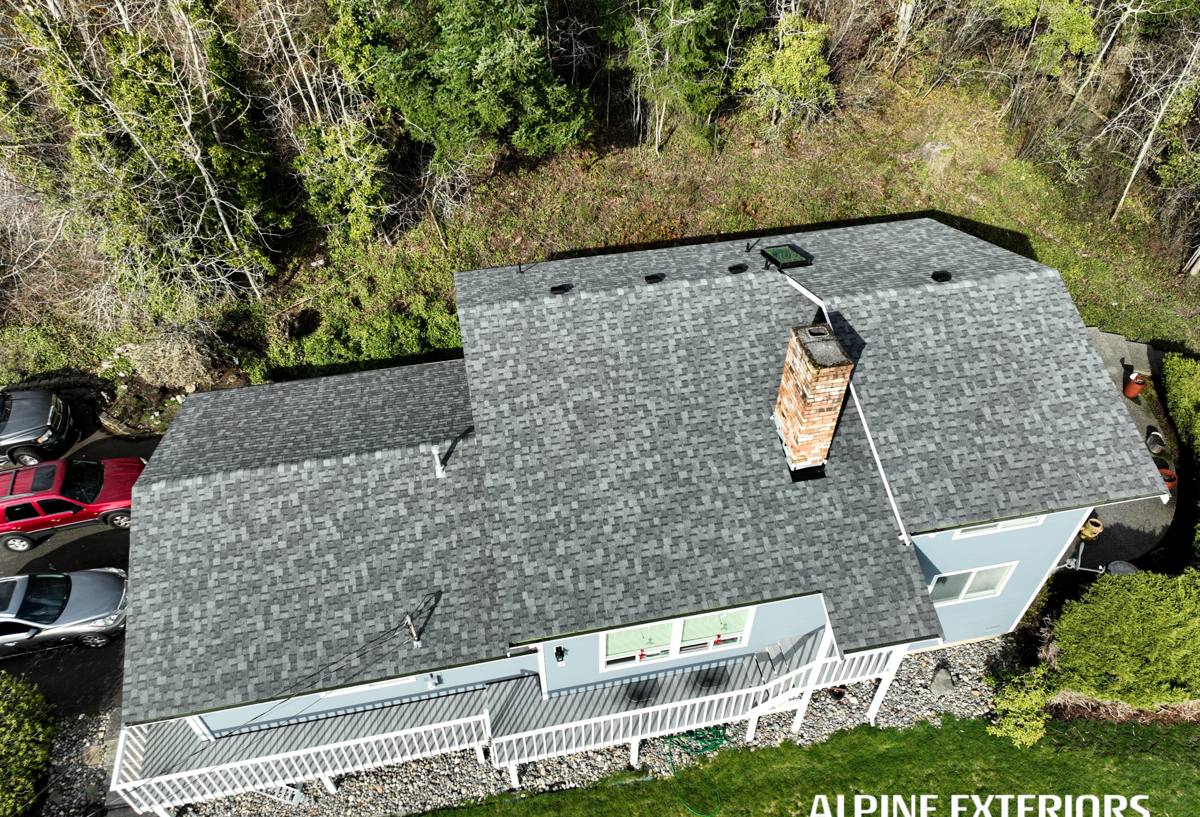
What Driving Rain, Salt Air, and Moss Actually Do to a Roof
Driving Rain
Bellingham's storms frequently come with sustained wind, which pushes rain sideways under shingle tabs, around flashing, and into any gap in the underlayment. A roof designed for calm, straight-down rain in a milder climate will underperform here. Correct installation means extra attention to flashing details, ice-and-water shield in vulnerable areas, and shingle fastening patterns rated for wind exposure.
Salt Air
Being close to the water means airborne salt settles on exposed metal — flashing, fasteners, vents, gutters — and accelerates corrosion over time. Standard steel fasteners and untreated metal components corrode faster near the coast than they would further inland. Using corrosion-resistant fasteners and flashing metals isn't an upsell here; it's a practical necessity for a roof that's meant to last.
Moss and Prolonged Dampness
Cordata's mature trees and generally shaded lots keep roof surfaces damp longer after a rain than roofs in open, sunny areas. That extended dampness is exactly what moss and algae need to establish. Once moss takes hold, it holds moisture against the roof surface, works into shingle layers, and can lift tabs enough to let water in — turning a cosmetic issue into a leak risk if it's left unaddressed for years.
Signs Your Roof Needs Replacement, Not Another Repair
- Shingles are curling, cupping, or losing significant granules (visible in gutters as dark grit)
- Moss or algae has spread across large sections rather than isolated patches
- You've had two or more separate leak repairs in the last few years
- The roof is 20+ years old (asphalt) and hasn't been re-roofed since original construction
- Daylight is visible through the roof deck from the attic, or the deck feels soft underfoot
- Flashing around chimneys, vents, or valleys is rusted, cracked, or separating
A roof showing one or two of these signs may still be repairable. A roof showing several at once has usually reached the point where a repair is a short-term patch on a system that's failing more broadly, and a full replacement is the more honest recommendation.
What a Correct New Roof Installation Involves
A new roof is more than the shingles you see. The parts underneath do most of the actual work of keeping water out, and in a climate like Cordata's, skipping or shortcutting them is where roofs fail early.
Tear-Off and Deck Inspection
Old roofing material comes off down to the deck so it can be inspected for rot, soft spots, or damage hidden under the old shingles — something you can't fully assess from the surface. Any damaged decking gets replaced before anything new goes down.
Underlayment
A synthetic or felt underlayment is installed as the roof's secondary water barrier, with ice-and-water shield membrane added along eaves, valleys, and other spots where wind-driven rain is most likely to get pushed underneath the shingles.
Flashing
New flashing at chimneys, skylights, sidewalls, and valleys is critical — flashing failures are one of the most common sources of roof leaks, more often than the field shingles themselves. This is a detail-heavy part of the job that rewards careful, unhurried work.
Ventilation
Proper intake and exhaust ventilation keeps the attic temperature and moisture balanced, which reduces condensation buildup on the underside of the deck and helps prevent the kind of trapped dampness that speeds up moss growth and shortens shingle life from below as well as above.
Roofing Material
The visible layer — shingles, metal panels, or another material — installed to manufacturer spec with fastening patterns and exposure rates appropriate for our wind and rain conditions.
Comparing Roofing Materials for a Cordata Home
| Material | Typical Lifespan | Moss/Moisture Resistance | Relative Cost |
|---|---|---|---|
| 3-Tab Asphalt Shingle | 15–20 years | Fair — needs regular moss treatment | Lowest |
| Architectural Asphalt Shingle | 25–30 years | Good, especially with algae-resistant granules | Moderate |
| Standing Seam Metal | 40–50+ years | Excellent — sheds moisture, little surface for moss to grip | Highest |
| Composite/Synthetic Shingle | 30–50 years | Good to excellent, varies by product | Moderate to high |
Architectural asphalt shingles with algae-resistant (AR) granules are the most common choice for Cordata homes — they balance upfront cost against real moss resistance. Metal roofing costs more initially but shrugs off moss almost entirely and holds up exceptionally well against driving rain and salt air, which makes it worth considering for homeowners planning to stay long-term or wanting to minimize future maintenance.
Our Installation Process
- On-site assessment — we inspect the existing roof, deck condition, ventilation, and flashing details, and walk you through what we find before recommending replacement over repair.
- Written estimate — clear scope, materials, and pricing so you know exactly what's included before any work starts.
- Material selection — we help you weigh shingle vs. metal vs. composite against your budget, roofline, and how long you plan to stay in the home.
- Tear-off and deck repair — old material removed, deck inspected and repaired as needed.
- Underlayment and flashing — installed with attention to the wind and rain exposure points specific to your roof's layout.
- Final installation and ventilation check — new roofing material installed to spec, ventilation confirmed adequate for the attic space.
- Cleanup and walkthrough — site cleared of debris and nails, and we walk the finished roof with you.
Moss Prevention Built Into the Roof, Not Just Bolted On After
Moss control shouldn't be an afterthought. During installation, we factor in details that make ongoing moss management easier and less necessary in the first place: algae-resistant shingle granules where the budget allows, zinc or copper strips near the ridge on request, and proper ventilation and flashing that keep the deck and shingle underside as dry as the surface allows. None of this makes a Cordata roof immune to moss given the shade and rainfall here, but it meaningfully extends the time between treatments and reduces how aggressively moss can establish itself.
Why a Crew That Already Works in Cordata Matters
Roofing crews familiar with this specific pocket of Bellingham already understand the practical realities that affect the job: the moisture patterns under mature tree cover common to the neighborhood, Whatcom County permitting requirements, and how to schedule around our wetter months without leaving a roof exposed longer than necessary. A crew that's done multiple jobs in the area also knows what's realistic to promise for a timeline given our weather windows — and won't schedule a full tear-off during a week the forecast makes it a bad idea.
Local experience also means faster answers to practical questions: which material handles the shade and dampness of a tree-covered lot best, what ventilation upgrades are worth the cost on an older Cordata home, and how to sequence the work so your home isn't left vulnerable overnight.
Questions to Ask Before You Hire
- Are you licensed and insured to work in Whatcom County, and can you provide proof?
- What warranty covers the materials, and what warranty covers your labor separately?
- Will you inspect and repair the deck if damage is found, or is that a change order surprise?
- What underlayment and flashing details do you use for wind-driven rain?
- How do you handle ventilation as part of a full replacement?
- Can you give a written, itemized estimate before work begins?
A contractor who answers these clearly and without hesitation is generally one who does this work carefully and often — which is exactly what you want on a roof that has to hold up against Bellingham's weather for decades.
If your Cordata roof is showing its age or you just want an honest assessment of where it stands, we're happy to take a look and walk you through your options. Use the form below to request a free, no-pressure estimate.