 Bellingham
 Building a Deck That Actually Holds Up in Fairhaven
Fairhaven sits close to Bellingham Bay, which means homes here deal with a mix of conditions that inland Whatcom County properties don't see as often: salt-laden air rolling off the water, driving rain that comes in sideways during winter storms, and long stretches of shade and dampness that keep moss and algae established most of the year. A deck built without those factors in mind might look fine for a season or two, but the problems show up early — soft spots at the ledger board, rusted fasteners bleeding orange streaks down the boards, or a surface so slick with moss by January that it's genuinely unsafe to walk on.
We build and repair decks throughout Bellingham, and Fairhaven jobs get treated as their own category. The framing details, hardware, and material choices we'd use on a dry, sunny lot on the east side of town aren't automatically right for a shaded, water-adjacent property here. This page walks through what actually matters for a Fairhaven deck — not marketing language, just the decisions that determine whether it's still solid in fifteen years.
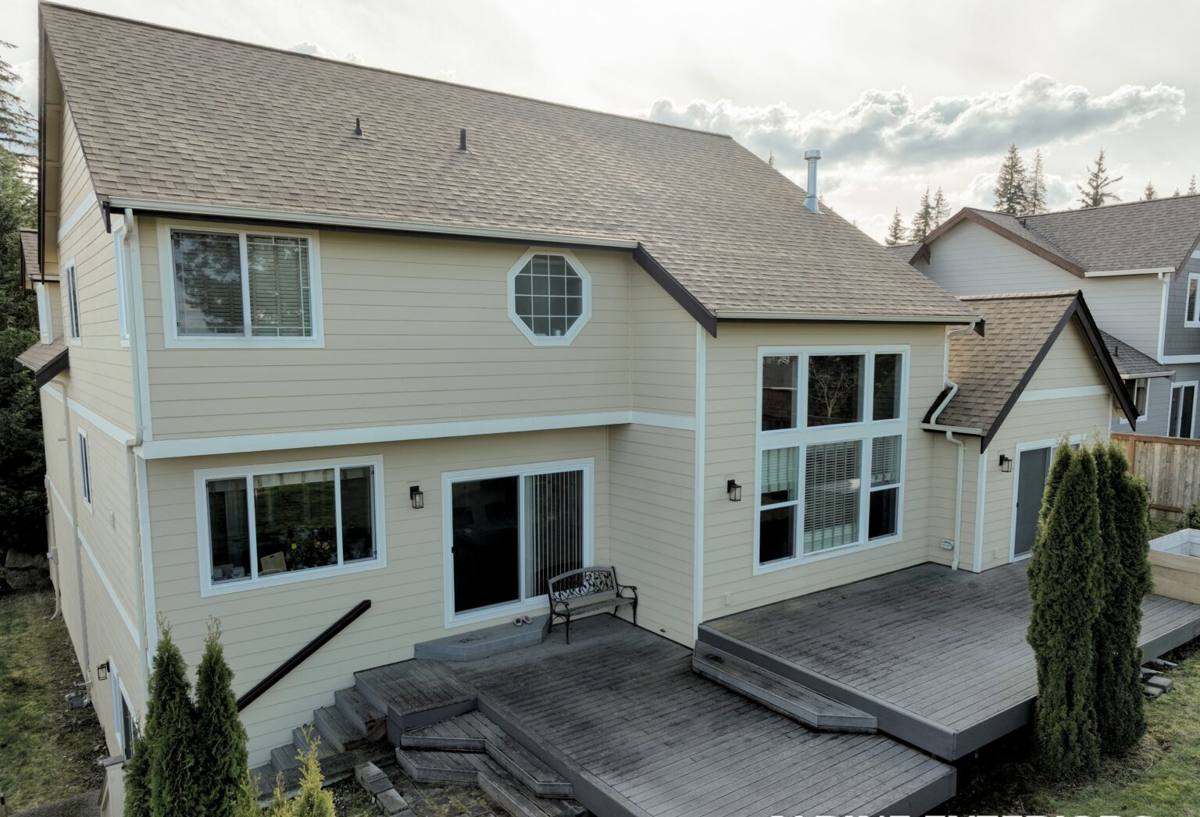
What Bellingham's Marine Climate Does to an Outdoor Deck
Salt Air and Corrosion
Proximity to the bay means airborne salt settles on exposed metal continuously, not just during storms. Standard galvanized fasteners and hardware can start showing corrosion within a few years in this kind of exposure, especially at joist hangers and structural screws that stay damp after every rain. It's a slow problem, which is exactly why it gets missed — nothing fails suddenly, it just weakens a little more every winter.
Driving Rain and Water Intrusion
Storms off the water tend to come in at an angle rather than straight down, which pushes moisture into places a calmer rain never would — up under ledger boards, behind fascia, into end grain at board edges. If flashing and gaps aren't detailed correctly at the point where the deck meets the house, that's where rot starts, usually hidden behind the rim joist where you won't see it until there's already damage.
Moss, Shade, and Slow Drying
Many Fairhaven lots have mature tree cover and sit on ground that slopes toward the water, both of which limit direct sun on a deck surface. Less sun means slower drying after rain, and slower drying means moss, algae, and general surface grime get a real head start most of the year. That's a traction hazard as much as a maintenance one, and it should factor into board choice and spacing decisions from the start rather than something dealt with after the fact.
Decking Material Options for a Fairhaven Property
There's no single "best" decking material — the right call depends on how much upkeep a homeowner actually wants to do, budget, and how much shade and moisture the specific site gets. Here's how the common options hold up under Fairhaven's conditions specifically.
| Material | How It Handles Shade & Moisture | Maintenance | Typical Lifespan |
|---|---|---|---|
| Pressure-treated wood | Needs consistent sealing to resist moss staining and moisture uptake in shaded spots | Annual cleaning, re-sealing every 1-2 years | 10-15 years with upkeep |
| Cedar | Naturally moisture- and rot-resistant, but still needs care in low-sun areas to avoid graying and moss | Periodic cleaning and oiling | 15-20 years with upkeep |
| Composite decking | Handles damp shade well; some capped composite boards resist algae growth better than others | Occasional washing, no sealing or staining | 25-30+ years |
| PVC decking | Fully synthetic, doesn't absorb moisture, performs consistently in shaded, damp conditions | Low — occasional washing | 25-30+ years |
For heavily shaded Fairhaven lots close to the water, we lean toward composite or PVC more often than we do inland, simply because wood in a low-sun, high-moisture spot demands more consistent maintenance than most homeowners are realistic about keeping up with. That's not a knock on wood — a cedar deck maintained on schedule looks great and lasts a long time. It's a maintenance-burden conversation we have honestly, based on how much sun your specific yard actually gets.
The Structural Work Nobody Sees (But Should Care About)
The decking boards are the part everyone looks at, but the framing underneath is what determines whether the deck is actually safe and long-lived. In a marine climate, we pay particular attention to:
- Ledger board flashing — the connection to the house needs proper flashing and a water-resistant barrier so driving rain can't work its way behind the ledger and into the house framing.
- Fastener and hardware grade — stainless steel or heavy hot-dip galvanized hardware where salt exposure is a real factor, not the minimum-code option.
- Footing depth — footings set below the local frost line and sized for the soil conditions on site, not guessed at.
- Joist spacing and board gapping — tight enough for a solid feel underfoot, with enough gap between boards to let water and debris drain instead of pooling and feeding moss growth.
- Airflow underneath — enough clearance and ventilation below the deck so the framing can actually dry out between rain events instead of staying damp for weeks.
None of this is visible once the deck is finished, which is exactly why it matters who's doing the work. A deck that looks identical to another one on the surface can have a completely different service life depending on what's underneath.
Permits and Local Building Requirements
Most new decks and significant deck rebuilds in Bellingham require a building permit, and the requirements get stricter with height and guardrail conditions. In general terms, expect:
- Guardrails required once the deck surface is a certain height above grade, with minimum rail heights and baluster spacing set by code to prevent falls.
- Stair and landing requirements if the deck connects to grade with steps.
- Footing and structural requirements reviewed against the specific span and load of your design.
We handle the permit process as part of the job rather than leaving it to the homeowner to figure out. It adds a step up front, but it means the finished deck is actually signed off and won't create problems later when you go to sell the house or file an insurance claim.
Our Process, Start to Finish
- Site visit. We look at sun exposure, drainage, slope, and how the deck will tie into the house before talking materials.
- Design and material selection. Based on how much sun and shade the specific spot gets, we walk through honest tradeoffs between wood, composite, and PVC for your budget and maintenance appetite.
- Written estimate. Clear scope, materials, and pricing before anything is signed.
- Permitting. We pull the required permits and schedule inspections as part of the project timeline.
- Construction. Framing first, with attention to flashing, fastener grade, and footing depth, followed by decking, railings, and finish work.
- Final walkthrough. We go over the finished deck together, including basic care guidance specific to the material you chose.
Deck Maintenance Checklist for Fairhaven's Climate
Whatever material you choose, a little regular attention goes a long way toward preventing the slow damage that Bellingham's damp, shaded conditions can cause. A reasonable seasonal routine looks like:
- Sweep debris and standing leaves off the deck regularly, especially in fall when tree cover is heaviest.
- Clean moss and algae buildup before it gets established and slick — a stiff brush and a mild deck cleaner is usually enough if caught early.
- Check fasteners and hardware once a year for corrosion or loosening, particularly on decks facing the water.
- Inspect the ledger board connection and flashing at the house wall for any signs of moisture staining.
- Re-seal or re-stain wood decking on the schedule appropriate to the product — don't let it go past due in a shaded spot.
- Keep gutters and downspouts near the deck clear so runoff isn't dumping extra water onto or under the structure.
Why a Fairhaven-Familiar Crew Makes a Difference
Fairhaven is a distinct part of Bellingham — a mix of older homes in the historic core and newer construction on lots that slope toward the water, many with mature tree canopy that shapes how much sun any given yard actually gets. A crew that's worked here before already knows to ask about sun exposure before recommending a material, already specs corrosion-resistant hardware without being asked, and already understands that a deck built for a dry, open lot inland isn't automatically the right build for a shaded, salt-exposed property near the bay.
That local familiarity also matters for anything involving the neighborhood's older housing stock or site conditions specific to sloped, water-adjacent lots — knowing what questions to ask before design starts saves time and avoids surprises once the permit and construction phases begin.
If you're planning a new deck or need to replace one that's showing its age, we're glad to come take a look and talk through what makes sense for your specific property. The estimate is free, there's no pressure, and you'll get a straight answer about what your site actually needs — just fill out the form below.