 Bellingham
 Windows Built for Ferndale's Weather, Not Just Its Openings
Ferndale sits close enough to the water that salt-laden air is a regular part of the weather mix, and far enough into Whatcom County's rain patterns that driving, wind-blown rain is a normal winter event rather than an occasional storm. Add a moss season that runs longer here than in drier parts of the state, and you have a climate that is genuinely hard on windows. Frames swell and stick. Seals fail years before their rated life. Aluminum hardware pits and corrodes. Wood sills that aren't detailed correctly start showing rot from the inside out, often before a homeowner notices anything from the street.
Custom windows solve two problems at once: they fit your actual openings instead of forcing your house to fit a standard size, and they let us choose materials, glass packages, and flashing details that are matched to what a Ferndale home actually deals with year-round. That second part matters more here than in a lot of the country. A window that performs fine in a dry inland climate can underperform badly a few miles from Bellingham Bay.
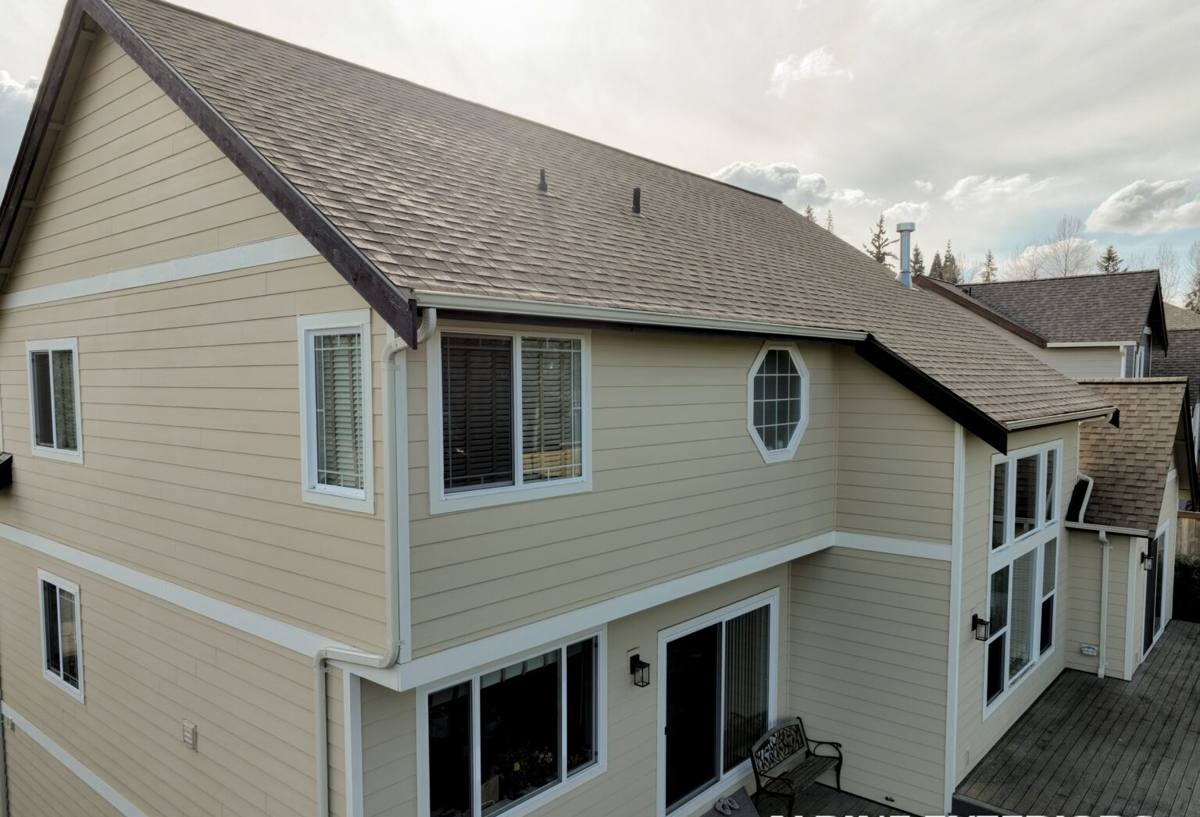
What "Custom" Actually Means on a Job Like This
Custom doesn't mean expensive for its own sake — it means the window is built to your opening, your wall assembly, and your home's exposure, rather than pulled off a shelf in a standard size and force-fit with extra trim or shims. On older Ferndale homes, especially farmhouses and homes built before modern energy codes, openings are rarely a perfect standard size. Settling, past remodels, and original hand-framing all add variation from window to window, even within the same house.
Where Custom Sizing Matters Most
- Older homes where openings have shifted slightly out of square over decades
- Additions or remodels where the new wall doesn't quite match original framing dimensions
- Homes with unusual shapes — arched tops, angled bays, or oversized picture windows
- Replacing a single failed window without disturbing matching windows nearby
- Matching sightlines and grille patterns across a whole elevation for a consistent look
Custom sizing also means we're not cutting corners on flashing and shimming to make a stock unit work. That's where a lot of long-term problems start — a window that technically fits but was forced into an opening it wasn't really built for.
Signs Your Current Windows Are Losing the Fight
Because of the salt air and rain exposure here, window failure in Ferndale tends to show up earlier and more visibly than it would in a drier climate. Most homeowners notice one or two of these signs well before the window actually fails outright.
- Fog or moisture trapped between panes — the seal has failed and the gas fill is gone
- Frames that stick, drag, or won't latch fully, especially after rain
- Visible pitting, chalking, or corrosion on aluminum hardware or frames
- Soft or discolored wood at the sill or lower corners — often the first sign of rot
- Moss or dark streaking building up on the sill or frame that wasn't there a year or two ago
- A noticeable draft or cold spot near the window on windy days
- Paint that keeps failing at the same spot no matter how often it's touched up
Any one of these on its own isn't an emergency. Several together, especially soft wood or persistent moisture between panes, usually means the window has moved past the point where caulk and weatherstripping will fix it.
Material and Glass Choices That Actually Hold Up Here
There's no single "best" window material — the right choice depends on your home's style, your budget, and how much maintenance you want to take on. What we won't do is recommend a product just because it's cheap to install, if we know it's going to give you problems in this climate within a few years.
| Material | How It Handles Salt Air & Rain | Maintenance | Best Fit |
|---|---|---|---|
| Vinyl | Resists corrosion well; won't rot; performs consistently in coastal air | Low — occasional cleaning | Most homes, budget-conscious replacements |
| Fiberglass | Excellent — very stable, doesn't expand/contract much with moisture and temperature swings | Low | Homes wanting long-term durability, larger openings |
| Wood-clad (exterior clad, wood interior) | Good if the cladding and flashing details are correct; exposed wood is vulnerable | Higher — cladding needs inspection over time | Historic-style homes, interior wood look |
| Bare aluminum | Poor in this environment — prone to pitting and corrosion near salt air | High | We generally steer homeowners away from this for Ferndale exposure |
Glass Packages Worth Discussing
Double-pane, low-E glass with argon fill is a solid baseline for this area. For homes with more direct rain and wind exposure, or south/west-facing walls that take the brunt of storms, we'll often talk through upgraded seals and, in some cases, triple-pane options — not because every window needs it, but because certain elevations genuinely benefit from the extra performance.
What a Correct Installation Involves
The window itself is only part of the job. In a climate with this much wind-driven rain, how the window is installed matters just as much as what's installed. Most of the water problems we get called out to fix in older installs trace back to flashing and sealing shortcuts, not the window product itself.
The Details We Don't Skip
- Proper flashing integration with the existing weather-resistive barrier, not just caulk over the gap
- Sill pan flashing so any water that gets past the window drains out, not into the wall
- Correct shimming so the frame stays square and the sash operates smoothly for years, not months
- Sealing sequence that allows the wall assembly to shed water outward, rather than trapping it
- Interior air sealing separate from exterior weatherproofing — they're not the same step
Skipping any one of these can look fine on install day and still cause rot or leaks two or three winters later. That's part of why we treat the flashing and sealing details as non-negotiable, even when it adds time to the job.
Our Process for a Ferndale Window Project
- On-site assessment. We look at each opening, the current window condition, and any signs of moisture or rot already present in the framing.
- Precise measurement. Every opening is measured individually — we don't assume matching windows are identical, especially on older homes.
- Material and glass selection. We walk through options based on the wall's exposure to wind, rain, and sun, not a one-size-fits-all recommendation.
- Written estimate. Clear scope, materials, and pricing before any work starts — no surprise add-ons mid-project.
- Removal and inspection. Old windows come out carefully so we can check the framing underneath for hidden rot or moisture damage before it's covered back up.
- Installation with full flashing and sealing. Done to the standard described above, not the minimum needed to pass a glance.
- Final walkthrough. Operation, sealing, and finish checked with you before we consider the job done.
What Affects the Cost
Pricing on custom windows varies more than most homeowners expect, mostly because "custom" covers a wide range of scope. Broadly, single-window replacements on an easily accessible wall run toward the lower end, while full-house replacements, oversized openings, or second-story access push costs higher.
| Factor | Why It Affects Price |
|---|---|
| Window size and shape | Larger, arched, or angled units cost more to manufacture and install |
| Material choice | Vinyl, fiberglass, and wood-clad carry different material costs |
| Glass package | Upgraded low-E coatings or triple-pane glass add cost per unit |
| Number of windows | Whole-house projects often see better per-unit pricing than single replacements |
| Access and height | Second-story or hard-to-reach windows take more labor and equipment |
| Existing damage | Rotted framing found during removal adds repair scope before the new window goes in |
We'd rather walk your home and give you real numbers than throw out a broad range that doesn't mean much. The estimate is free either way.
Why It Matters That We Already Work in Ferndale
A crew that regularly works Whatcom County knows what this climate does to a window install over time, not just on day one. We've seen what happens when flashing details get skipped on a coastal-exposed wall, and we've seen how much longer a correctly installed window lasts here compared to one that wasn't. That experience shapes how we spec materials and details for your home specifically, rather than applying a generic approach that might work fine somewhere drier.
Local presence also means straightforward scheduling, a crew that's familiar with the area's mix of older farmhouses and newer builds, and someone to call if a question comes up after the install — not a one-time crew that's moved on to another region.
Living With Moss and Salt Air After Installation
Even a well-installed, well-built window benefits from a little seasonal attention in this climate. Rinsing sills and tracks to clear salt residue, keeping nearby gutters and overhangs clear so moss and debris don't sit against the frame, and checking exterior sealant every year or two will meaningfully extend the life of any window, custom or otherwise. We're happy to walk you through what to watch for on your specific material choice when the job is done.
If your current windows are showing their age, or you're planning a remodel and want openings built around your home instead of a catalog size, we'd be glad to take a look. Reach out for a free, no-pressure estimate — we'll assess your home's actual exposure and give you honest options, not a hard sell.