 Bellingham
 Deck Building for Blaine's Marine Climate
Blaine sits right on the water, at the edge of Whatcom County where Drayton Harbor and Semiahmoo Bay meet open exposure to wind off the Strait of Georgia. That location is what makes Blaine beautiful, and it's also what wears out a poorly built deck faster than almost anywhere else in the county. Salt-laden air corrodes hardware, driving rain finds its way into every gap a builder left unsealed, and a shaded, damp winter stretches the moss season out for months longer than it lasts inland. A deck built for a dry Spokane summer or even a typical Bellingham lot doesn't automatically hold up here. One built with Blaine's conditions in mind does.
This page covers what we build differently for Blaine homes specifically — the hardware, the drainage details, the material choices, and the maintenance rhythm that actually matches this stretch of coastline.
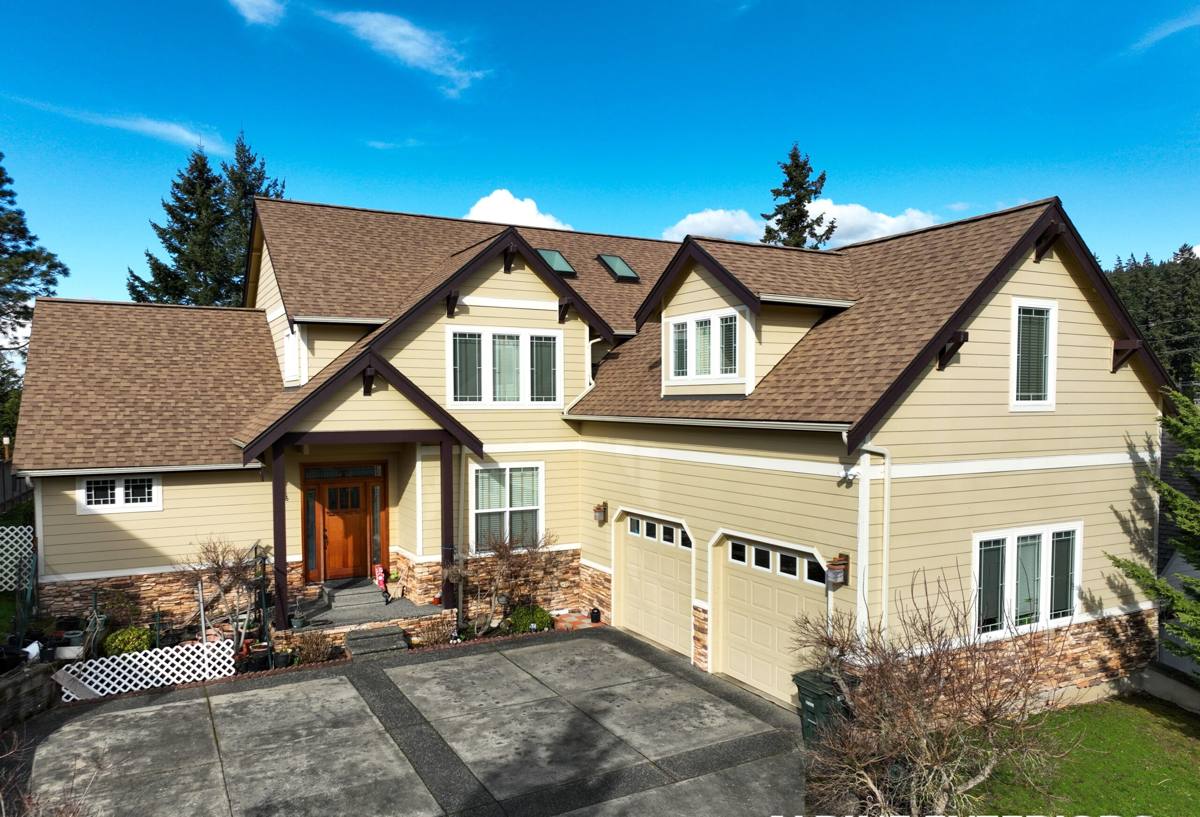
What Blaine's Coastal Conditions Do to a Deck
Before talking about materials or process, it's worth being specific about the failure patterns we actually see on decks near the water in Blaine, because they're different from what shows up on a deck a few miles inland.
Salt Air and Metal Hardware
Airborne salt accelerates corrosion on anything metal — joist hangers, structural screws, bolts, post bases. Standard electro-galvanized fasteners, the kind that are perfectly fine in a lot of the country, can start showing rust streaks and pitting within a few years this close to salt water. Once a fastener corrodes, it loses holding strength long before it looks obviously bad, which is a structural problem, not a cosmetic one.
Moss, Algae, and Slip Risk
Whatcom County's damp, low-sun winters grow moss on almost any horizontal wood surface that doesn't get regular direct sun, and shaded or north-facing decks in Blaine can hold moisture into a green film for months at a stretch. Beyond looking neglected, wet moss on decking is genuinely slippery, and moss that's allowed to sit traps moisture against the board surface, which speeds up rot in wood decking and can stain composite.
Driving Rain and Ledger or Flashing Failures
Storms off the water in Blaine tend to come with real wind behind them, which drives rain sideways into places a calm-weather deck detail wouldn't need to worry about — under ledger boards, behind rim joists, into end-grain cuts. The single most common rot failure we find on older decks isn't the decking itself, it's water that worked its way behind the ledger board where the deck attaches to the house, because the original flashing wasn't sized or lapped for wind-driven rain.
Decking Material Options for Blaine Homes
There's no single "best" decking material — the right call depends on how exposed the site is, how much upkeep the homeowner wants to do, and budget. Here's how the common options actually perform under Blaine's specific mix of salt air and moss-friendly damp shade.
| Material | Salt air behavior | Moss / moisture behavior | Upkeep |
|---|---|---|---|
| Pressure-treated wood | Wood itself is fine; fasteners need to be rated for it | Absorbs moisture, needs sealing to resist moss staining and rot | Annual cleaning and re-sealing every 2-3 years |
| Cedar | Naturally rot- and insect-resistant, ages gracefully near salt air | Still needs cleaning; will gray and can host moss if left unsealed | Periodic cleaning, oil or sealer if a natural look is wanted |
| Composite decking | No corrosion in the board itself; check fastener/clip hardware rating | Won't rot, but moss can still grow on the surface film in shaded spots and needs washing | Occasional wash, no sealing or staining |
| PVC / cellular decking | Fully inert to salt and moisture | Least hospitable surface for moss, but still needs occasional cleaning | Lowest — wash as needed |
We don't push one product on every job. Composite and PVC decking cost more up front and trade off a bit of the warmth of real wood, but for a shaded, water-exposed lot in Blaine they cut down dramatically on the moss-and-reseal cycle that wood decking needs. Cedar is a good middle ground for owners who want a natural look and are willing to keep up with cleaning and sealing. What we won't do is mix a premium decking surface with bargain-grade fasteners underneath it — that's the combination that leads to hardware failing years before the decking itself would have.
What a Correctly Built Deck Involves
A deck is a structure first and a surface second. In a marine environment like Blaine, the parts nobody sees are what determine whether the deck is still solid in fifteen years or needs to be torn apart in five.
Fasteners and Hardware
We use stainless steel or heavy hot-dip galvanized fasteners and connectors rated for coastal exposure — not the standard electro-galvanized hardware that's adequate inland but corrodes too fast this close to salt water. Every joist hanger, structural screw, and post base is matched to the fastener rating the manufacturer specifies for its warranty to hold.
Ledger Flashing
Where the deck attaches to the house, proper flashing — correctly lapped with the house's water-resistive barrier, not just caulked over — is what keeps wind-driven rain from working its way behind the ledger board. This is the detail we see skipped or done poorly most often on older Blaine decks, and it's the one most responsible for hidden rot.
Drainage and Slope
Decking needs a slight slope away from the house and consistent gapping between boards so water sheds instead of pooling. Pooled water is what keeps a board wet long enough to grow moss and start rot, even in a material that resists both reasonably well.
Footings and Structure
Footings are sized and set to current code, accounting for local soil and frost depth, with post bases that keep wood posts off direct concrete contact so they aren't sitting in trapped moisture.
Guardrails and Code
Guardrail height, baluster spacing, and stair details follow current building code requirements — not just what looks right, but what passes inspection and keeps the deck safe to use for years.
Our Process for a Blaine Deck
- Site assessment — we look at sun exposure, wind exposure, drainage, and how close the site is to open water, since that changes both the hardware spec and the material recommendation.
- Design and material selection — sized to the site, matched to how much maintenance the homeowner actually wants to take on long-term.
- Permitting — deck permits and, where required, engineering for elevated or larger structures are handled through the applicable local jurisdiction before we start digging footings.
- Build — footings, framing with coastal-rated hardware, correctly lapped ledger flashing, decking, and guardrails, in that order, with each stage checked before the next starts.
- Final walkthrough — we go over the finished deck with the homeowner, including what upkeep it actually needs given its sun and shade exposure.
Maintenance in a Long Moss Season
Whatcom County's moss season on a shaded deck can run from fall through spring, and the maintenance that keeps ahead of it is straightforward but easy to skip. A little consistency here goes a long way toward protecting the investment.
- Sweep leaves and debris off the deck regularly through fall — trapped organic matter is what moss and algae feed on first.
- Rinse or scrub shaded and north-facing sections at the start of each rainy season, before moss gets established rather than after.
- Check the gaps between deck boards periodically and clear out anything blocking drainage.
- Re-seal wood decking on the manufacturer's recommended schedule — skipping a cycle in a wet climate lets moisture in fast.
- Inspect ledger flashing and fastener heads once a year for rust streaks or gaps, especially after a hard windstorm off the water.
- Trim back overhanging branches or shrubs that keep sections of the deck shaded and damp longer than necessary.
Why Hiring a Crew That Already Works Blaine Matters
A contractor who mostly builds decks inland, away from salt air, may not think twice about standard hardware or a simpler flashing detail — because inland, it holds up fine. On a water-exposed Blaine lot, that same shortcut can mean visible corrosion or a rot problem behind the ledger board within a handful of years. We build deck after deck in this specific stretch of Whatcom County, so the coastal-rated hardware, the ledger flashing detail, and the material honesty about moss and upkeep aren't afterthoughts — they're the baseline spec we start every Blaine job from. That local track record also means we're familiar with the permitting expectations for the area, so there are fewer surprises once the project is underway.
If you're planning a new deck or replacing one that's showing its age, we're happy to take a look and talk through what makes sense for your site. Fill out the form below for a free, no-pressure estimate.