 Bellingham
 Why Cordata Decks Take a Beating
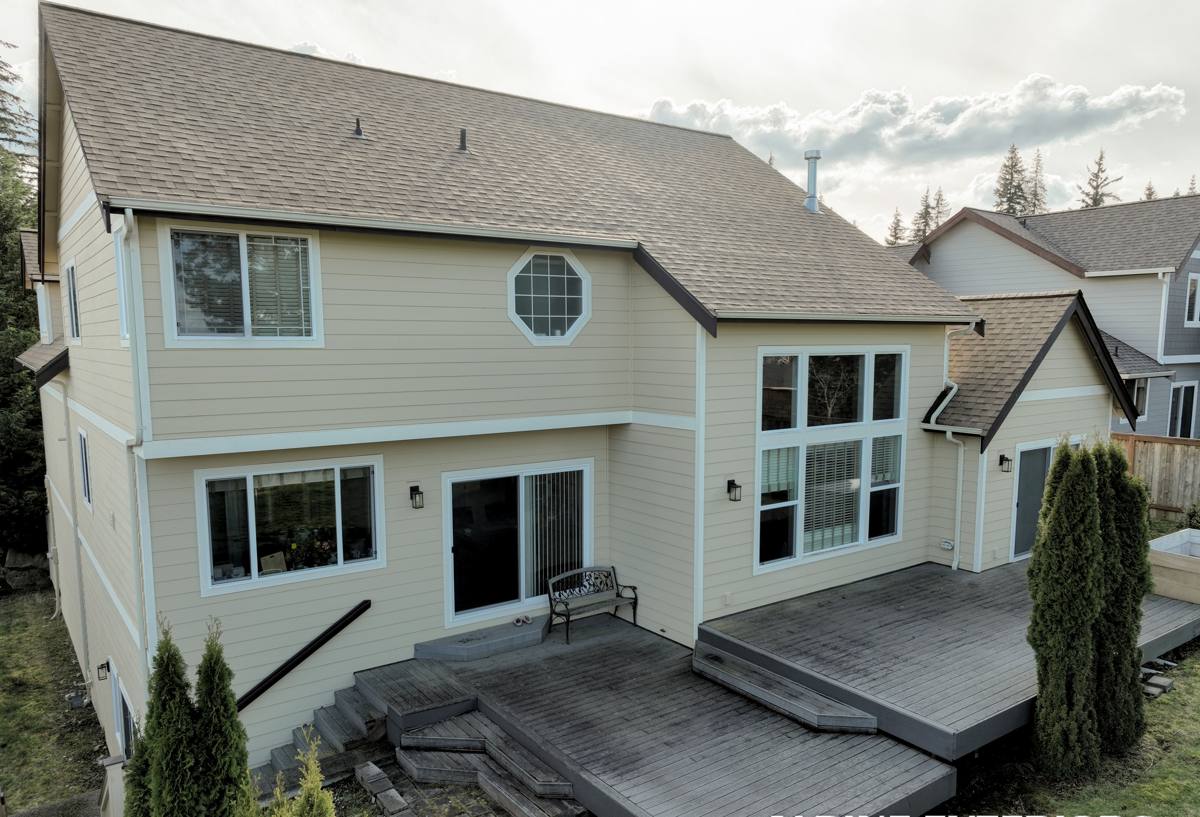
Cordata sits in north Bellingham, and like the rest of Whatcom County it gets the full package of Pacific Northwest weather: months of driving rain, a moist marine breeze off the Salish Sea that carries a fine trace of salt air, and a moss season that can stretch from October clear into May. None of that is dramatic on any given day, but a deck is outdoors year-round, and it's the slow accumulation that does the damage. Water finds every gap in flashing or fastener holes. Shade from mature trees, common on lots throughout this neighborhood, keeps boards damp longer after a storm than a deck sitting in full sun would. Add a few winters of that cycle and you get soft spots, rust streaks, and boards that feel spongy underfoot even though the deck looked fine from a distance.
Deck repair here isn't really about cosmetics. It's about catching moisture damage before it spreads from a board or two into the framing underneath, where it gets expensive and, if ignored long enough, unsafe.
The Damage Patterns We See Most Often in This Neighborhood
Ledger Board and Rim Joist Rot
The ledger board — the framing member that bolts the deck to the house — is the single most common failure point on older decks in wet climates. If it was never properly flashed when the deck was built, rain runs down the siding, behind the ledger, and sits there. By the time you notice a stain on the wall inside, the wood behind it has often been softening for years.
Corroded Fasteners and Hardware
Older decks were sometimes built with fasteners that weren't rated for outdoor exposure, or with joist hangers that have simply rusted out after a decade or two of damp weather. Corroded hardware doesn't always show from the top — you usually have to get underneath the deck to see it.
Moss, Algae, and Slick Wood
Shaded, north-facing, or tree-covered sections of a deck stay wet longer and grow moss and algae faster than open areas. Beyond looking bad, that growth holds moisture against the wood and makes the surface genuinely slippery — a real fall hazard on stairs and near entry doors.
Loose or Failing Railings
Railing posts that were undersized, poorly attached, or have rotted at the base are one of the more serious issues we find, because a railing that looks solid can still fail under a sideways push. We check every post connection as a matter of course, not just the boards.
Repair or Replace? How We Make That Call
Not every deck problem means starting over, and not every deck is worth patching. We look at the extent of the damage, the age and condition of the framing, and what it would cost to keep chasing repairs versus doing the job once.
| Factor | Repair Usually Makes Sense | Replacement Usually Makes Sense |
|---|---|---|
| Framing condition | Joists and beams are sound; damage is isolated | Rot has reached multiple structural members |
| Ledger board | Solid, or a small section needs flashing correction | Widespread rot or no flashing at all |
| Age of decking | Under 10-15 years, isolated bad boards | Original decking is at or past its service life throughout |
| Railings/stairs | Attachment points are solid, cosmetic wear only | Posts are soft, loose, or undersized for current code |
| Your plans | Deck size and layout still work for the household | You want a different footprint, material, or added features |
Most of the time, a Cordata deck that's been reasonably maintained needs targeted repair: a section of decking, a flashing correction at the ledger, a hardware upgrade, or railing reinforcement. Full replacement becomes the honest recommendation when the framing itself is compromised — patching boards on top of rotten joists just delays a bigger problem and wastes money in the meantime.
What a Proper Deck Repair Actually Involves
A repair that only replaces the boards you can see from the top is a temporary fix. A repair that holds up through another decade of Whatcom County winters starts underneath.
- Pulling questionable boards to inspect the joists and beams beneath them, not just patching over what's visible
- Checking the ledger board connection and flashing where the deck meets the house — the most common source of hidden rot
- Replacing any corroded fasteners, joist hangers, or bolts with hardware rated for exterior and, where relevant, coastal-influenced exposure
- Sistering or replacing damaged joists rather than just supporting them from below
- Confirming railing posts are through-bolted into solid framing, not just screwed to a rim board
- Checking drainage and grading under and around the deck so water has somewhere to go besides sitting against the framing
Skipping any of these steps is how a deck ends up needing the same repair again in three or four years instead of fifteen.
Our Process, Start to Finish
We keep the process straightforward because most homeowners just want a clear answer on what's wrong, what it costs, and how long it will take.
- On-site inspection — we get under the deck, check the ledger, test boards and railings for soft spots, and look at the framing, not just the surface
- Written estimate — a clear breakdown of what needs repair versus what's optional, so you're not guessing at scope
- Scheduling around the weather — we plan structural and framing work for drier stretches when possible, since wet lumber is harder to assess accurately and doesn't take fasteners or finish as well
- The repair itself — framing and hardware first, decking and railings second, finish work last
- Cleanup and walkthrough — we clear debris and walk the deck with you so you know exactly what was done and what to watch for going forward
Choosing Materials for a Bellingham Climate
When we're replacing decking or railing sections, the material decision matters more here than it would in a drier climate. Both wood and composite decking have a place, and the right call depends on the specific deck and how much upkeep you want to take on.
Pressure-treated wood and cedar are still common choices and work well when properly sealed and maintained — but that maintenance isn't optional in this climate. Left unsealed, wood decking will gray, absorb moisture, and grow moss faster on shaded sections than most homeowners expect. Composite decking costs more upfront and needs no sealing, but it isn't maintenance-free either — it can still grow surface algae in shaded, damp spots and needs periodic cleaning to stay slip-resistant. We'll walk you through the real trade-offs for your specific deck rather than pushing one material as a cure-all; the honest answer is that every decking material needs some seasonal attention here, just different kinds and different amounts of it.
Seasonal Maintenance That Protects the Repair
A repair is only as good as the upkeep that follows it. A few habits go a long way toward stretching the life of decking in a climate like ours:
- Clear leaves and debris from between boards before fall rains set in — trapped organic matter holds moisture and feeds moss
- Wash down shaded or north-facing sections at least once during moss season, even if the rest of the deck looks clean
- Re-seal wood decking on the schedule the product calls for, not just when it visibly looks dry
- Keep gutters and downspouts near the deck clear so runoff isn't dumping extra water onto or under it
- Check railing posts for movement once a year — a small amount of give is worth catching early
Permits and Local Requirements
Depending on the scope of the work, deck repairs in Bellingham and unincorporated Whatcom County can fall under local building permit requirements — this is more likely when structural framing, footings, or railing height and spacing are involved, and less likely for straightforward board or hardware replacement. We'll tell you upfront if your project needs a permit and handle that conversation with the city or county as part of the job, so you're not left figuring it out on your own.
Why a Crew That Already Works in Cordata Matters
Deck problems in this neighborhood tend to follow patterns — the shaded lots, the tree cover, the way moisture works its way into ledger connections over a wet winter. A crew that already works in Cordata has seen those patterns repeatedly and knows where to look first instead of guessing. That familiarity also means less time spent diagnosing and more time spent fixing, and it means we're not far away if something needs a follow-up look after the next storm season. Hiring locally isn't just a convenience — it's the difference between a contractor who's estimating from a photo and one who already knows how decks in this part of Bellingham tend to fail.
If you've got a soft spot, a rusted railing bracket, or just a deck that hasn't been looked at in a while, we're happy to come take a look. Estimates are free, there's no pressure to sign anything on the spot, and you'll get a straight answer on what actually needs to happen.