 Bellingham
 Deck Replacement Built for Sudden Valley's Conditions
Sudden Valley sits up against Lake Whatcom, tucked into tree cover that keeps homes shaded, cool, and — for a deck — damp for a large part of the year. That combination of lake humidity, heavy tree canopy, and Whatcom County's long wet season is hard on wood and hard on fasteners. If you've owned a home here for more than a few years, you've probably already noticed it: a deck that never fully dries out between October and May, moss creeping into the grain, boards that feel a little spongy near the house even though the rest of the structure looks fine.
That's not a sign you did anything wrong. It's what happens to a deck built without this specific microclimate in mind. A deck replacement done right for Sudden Valley isn't just about swapping old boards for new ones — it's about correcting the drainage, fastening, and material choices that let the last deck fail early in the first place.
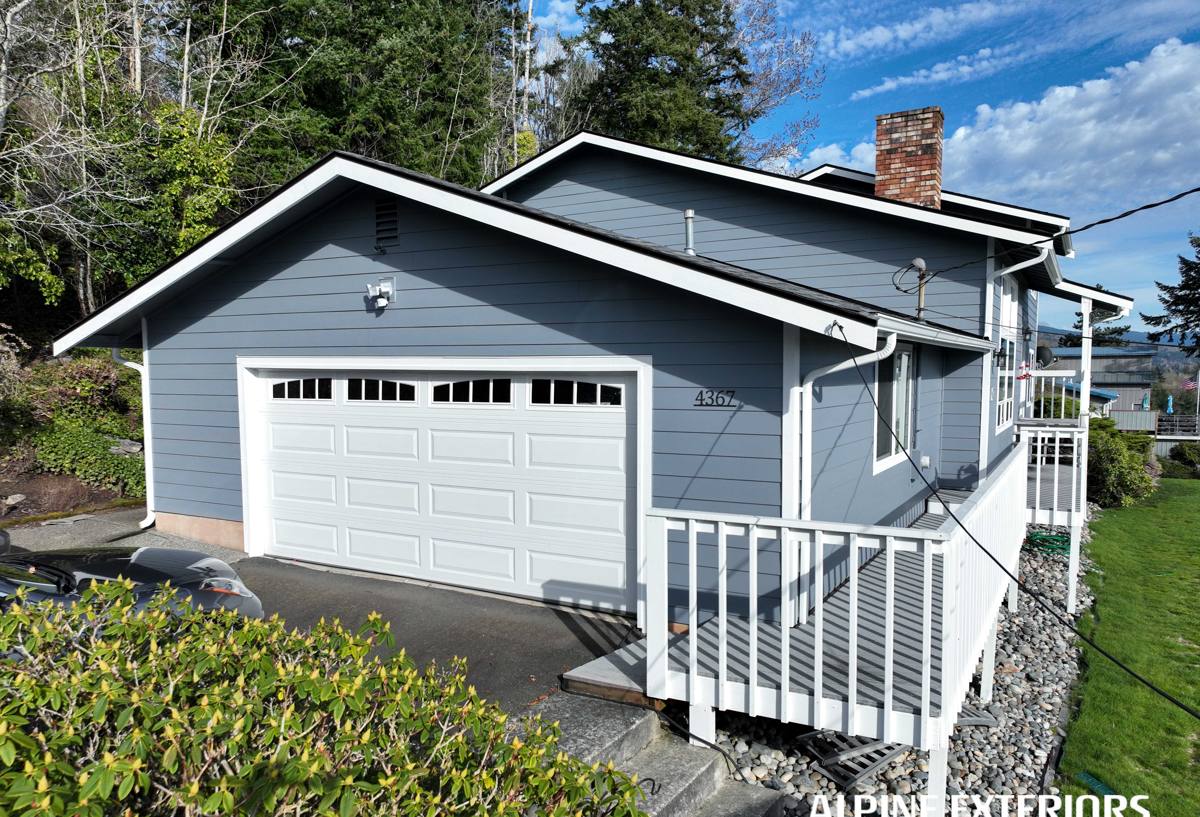
Why Decks Struggle Specifically in This Neighborhood
Lake-Driven Humidity
Proximity to Lake Whatcom means the air around Sudden Valley homes holds more moisture longer than it does in more open parts of Bellingham. Decks facing the lake or shaded by the surrounding forest often stay damp well after a storm has passed elsewhere in the county, which extends the amount of time wood is sitting wet and vulnerable.
Tree Cover and Moss
The wooded lots that make Sudden Valley attractive also mean less direct sun on most decks. Less sun means slower drying, and slower drying means moss and algae get a real foothold — especially on north-facing decks or ones tucked under mature trees. Moss isn't just cosmetic; it holds water against the deck surface and accelerates rot in the boards underneath it.
Driving Rain and Whatcom County's Wet Season
Whatcom County's rain doesn't just fall — it often comes in sideways off the water, driven by wind. That matters for a deck because it pushes moisture into places a straight-down rain wouldn't reach: under railings, behind ledger boards, into end-grain cuts that weren't properly sealed. Over a long wet season, that repeated wind-driven moisture finds every weak point in a deck's original construction.
Signs a Sudden Valley Deck Needs Replacement, Not Repair
- Soft or spongy boards, especially near the house or in shaded areas
- Persistent moss or dark staining that comes back within weeks of cleaning
- Fasteners that are rusted, popped up, or leaving black streaks in the wood
- Structural posts or ledger boards with visible rot at ground contact or the house connection
- Railings that feel loose or wobble under normal weight
- A deck more than 15-20 years old that's never had the substructure inspected
- Gaps between boards that have closed up or warped unevenly, trapping water
If what you're seeing is limited to a handful of surface boards and the framing underneath tests solid, a repair might genuinely be enough. We'll tell you that if it's true — replacing a deck that doesn't need it isn't a good use of your money, and we'd rather earn the bigger job later than push one you don't need now.
What a Correct Deck Replacement Involves Here
Substructure First
The framing, posts, and footings matter more than the decking material sitting on top. In a shaded, moisture-heavy setting like Sudden Valley, we pay close attention to post-to-concrete connections, joist spacing, and ledger board flashing — the ledger connection where the deck meets the house is one of the most common failure points we find, because a poorly flashed ledger lets water track directly into the house framing.
Drainage and Airflow Underneath
A deck that can't shed water and breathe underneath will stay wet longer no matter what decking material sits on top. Where grading and clearance allow, we build in ventilation gaps and make sure water has a clear path away from the foundation instead of pooling under the deck.
Fasteners That Match the Environment
Standard fasteners corrode faster in a consistently damp, shaded environment. We use corrosion-resistant, code-rated fasteners and connectors throughout — not just on the visible decking, but in the structural hardware where a failure is harder to spot and more serious.
Material Choice for Shade and Moss Exposure
On a heavily shaded lot, the decking surface itself needs to handle standing moisture and reduced UV exposure well. We'll walk through the realistic trade-offs for your specific deck's sun exposure rather than defaulting to one product for every yard.
Comparing Decking Materials for a Shaded, Wet Lot
| Material | How It Handles Shade & Moisture | Maintenance | Typical Lifespan |
|---|---|---|---|
| Pressure-treated wood | Absorbs moisture readily in shaded spots; needs consistent sealing to resist rot and moss | Annual cleaning and periodic re-sealing | 10-15 years with upkeep |
| Cedar | Naturally rot-resistant but still needs sealing in constantly damp, shaded areas | Regular cleaning, re-oiling every 1-2 years | 15-20 years with upkeep |
| Composite decking | Doesn't absorb water the way wood does, but algae and moss can still grow on the surface in deep shade and need washing | Occasional washing, no sealing or staining | 25-30+ years, manufacturer-warrantied |
| PVC decking | Fully moisture-resistant surface; best option for the shadiest, dampest corners of a lot | Occasional washing | 25-30+ years, manufacturer-warrantied |
There's no universally "right" answer here — a sunnier section of a Sudden Valley lot can do fine with a well-maintained wood deck, while a deck buried under fir and cedar canopy is usually better served by composite or PVC simply because it removes the moisture-absorption problem entirely. We'll look at your specific sun exposure before recommending anything.
Our Process for a Sudden Valley Deck Replacement
- On-site assessment: We inspect the existing deck's framing, posts, footings, and ledger connection — not just the surface boards — to confirm replacement is the right call and identify any hidden rot.
- Honest scope and estimate: You get a clear breakdown of what's being replaced, what materials we recommend for your lot's sun and shade pattern, and why.
- Permitting: Deck replacements involving structural changes typically require a permit through the City of Bellingham or Whatcom County, depending on your address. We handle that process so you don't have to track it down yourself.
- Demolition and disposal: Old decking, framing, and hardware are removed and hauled off — we don't leave debris piled on your property.
- Structural rebuild: Framing, posts, footings, and ledger flashing are corrected or replaced to current code, with fasteners and hardware suited to a damp, shaded site.
- Decking, railing, and finish work: New decking is installed per manufacturer spec, with attention to drainage gaps and airflow underneath.
- Final walkthrough: We go over the finished deck with you, including basic maintenance guidance specific to your material and sun exposure.
Permits, Codes, and Working Near Lake Whatcom
Because Sudden Valley sits close to Lake Whatcom — a source of drinking water for the region — some projects may involve additional review around drainage and runoff, on top of standard structural permitting. We factor that into the scheduling from the start so it doesn't turn into a surprise delay partway through the job. If your lot has slope, setback, or shoreline considerations, we'll flag that during the initial assessment rather than after work has started.
What to Ask Before Hiring Anyone for This Job
- Will you inspect the framing and posts, or just replace the visible boards?
- Are you licensed and insured to work in Whatcom County?
- Who handles the permit application — me or you?
- What fastener and hardware grade are you using, and why?
- Do you have experience with decks in shaded, lake-adjacent settings specifically?
- What's covered under warranty, and for how long?
A crew that's actually done work in Sudden Valley before will have real answers to the drainage and shade questions without hesitating. That local familiarity is worth asking about directly — it's the difference between a deck built to a generic spec sheet and one built for the conditions it actually has to survive.
Why Local Experience in Sudden Valley Matters
A deck built the same way you'd build one in a sunny, open part of Bellingham won't necessarily hold up the same way under Sudden Valley's tree cover and lake humidity. Knowing which corners of a lot stay damp longest, how much airflow a substructure actually needs given the shade, and where moss tends to take hold first isn't something you get from a spec sheet — it comes from having worked decks in this exact setting before. That's the value of hiring a crew that already knows this neighborhood rather than one applying the same approach everywhere in the county.
If your deck is showing signs of rot, moss buildup, or soft spots, or if you're just planning ahead for a replacement, we're happy to come take a look. We'll give you a straight answer on whether you need a full replacement or something less, along with a free, no-pressure estimate — just fill out the form below.