 Bellingham
 Fairhaven sits close enough to Bellingham Bay that its homes take a different kind of weathering than houses further inland in Whatcom County. Salt-laden air off the water, wind-driven rain that finds its way sideways under eaves, and a moss season that can run eight months out of the year all work on window frames, seals, and glazing in ways that show up as higher energy bills long before they show up as visible damage. By the time a homeowner notices drafts or fogged glass, the window has usually been underperforming for a couple of winters already.
This page covers what energy-efficient window work actually looks like for Fairhaven homes specifically — the older housing stock in and around the historic district, the closer-to-the-water exposure, and what a correctly installed window needs to hold up here rather than just on paper.
Why Fairhaven's Climate Is Harder on Windows Than It Looks
Marine air near Bellingham Bay carries salt and moisture that settles on frames, hardware, and sealants year-round. On its own that's a slow, manageable process. Combined with the region's driving rain — rain that comes in at an angle rather than straight down — it becomes a bigger problem, because wind-driven rain tests flashing and seals in ways that vertical rain never does. Water finds gaps that would otherwise stay dry, and once moisture gets behind a window frame it doesn't dry out quickly in a climate that stays damp most of the year.
Then there's moss and mildew season, which in this part of Whatcom County is less a season than most of the calendar. Organic growth on and around window frames holds moisture against wood and vinyl surfaces, degrades caulking faster than manufacturers' warranties assume, and can mask early signs of rot until a window's structural integrity is already compromised.
None of this means Fairhaven homes need exotic products. It means the installation details — flashing, sealant selection, drainage paths — matter more here than they would in a drier climate, and cutting corners on those details costs homeowners more in energy loss and repairs than the up-front savings are worth.
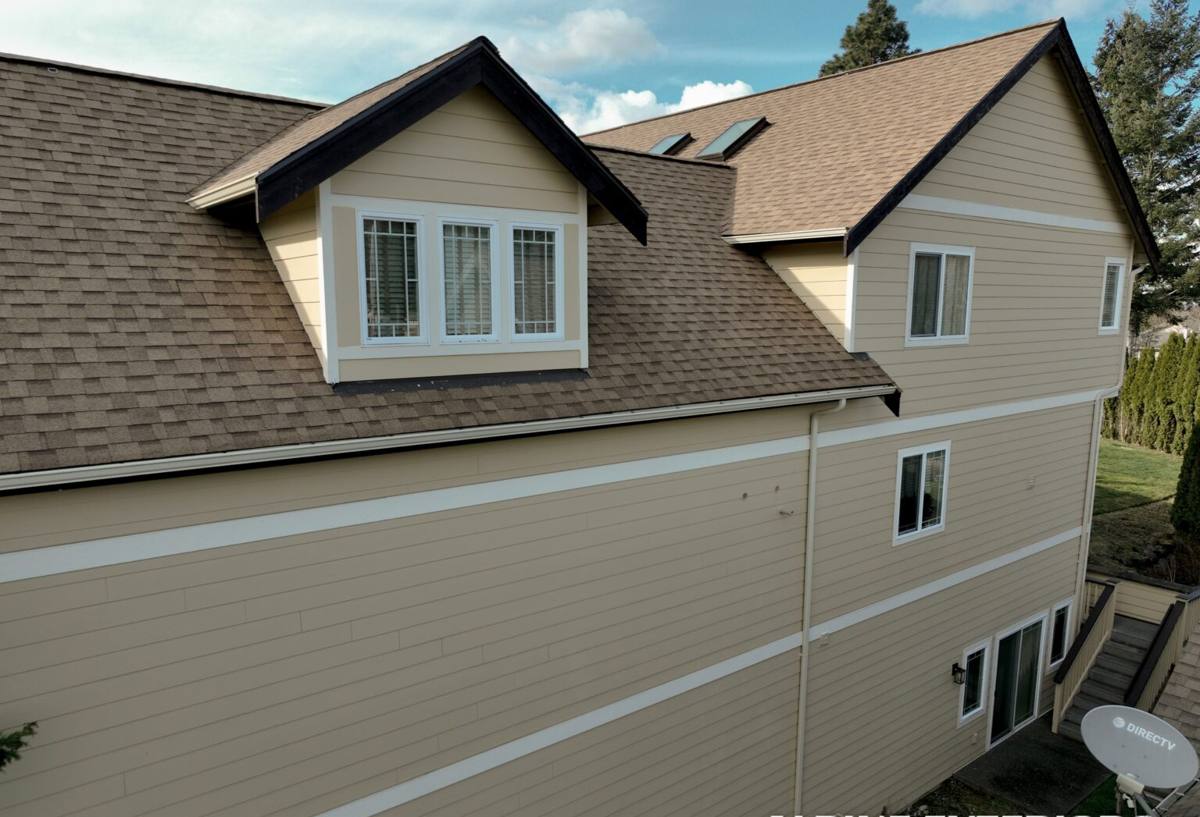
What "Energy-Efficient" Actually Means for This Climate
Energy-efficient windows are usually marketed around a few numbers, and in a marine climate like Bellingham's, some matter more than others.
U-Factor
U-factor measures how well a window resists heat flow — lower is better. In a climate with mild but persistent cold and damp, a low U-factor keeps heated indoor air from bleeding out through the glass and frame all winter, which is where most of the energy savings actually come from around here.
Low-E Coatings and Gas Fills
Low-emissivity coatings reflect heat back into the room in winter and block excess solar heat in summer. Argon or krypton gas fills between panes add another layer of insulation. These are standard on any decent double- or triple-pane window today, but the coating and fill only perform as rated if the seal around them stays intact — which brings us back to installation quality.
Condensation Resistance
This one gets overlooked but matters a lot here. A window with poor condensation resistance will fog or sweat on the interior during our cool, humid months, which isn't just an eyesore — it's moisture sitting on your sill and frame, feeding exactly the kind of wood rot and mildew growth this climate already encourages.
How Older Fairhaven Homes Typically Lose Energy Through Windows
Fairhaven's mix of older bungalows, craftsman-era homes, and early-20th-century construction means a lot of original window openings weren't built with modern air-sealing in mind. Common issues we see on this type of housing stock:
- Single-pane glass with storm windows added later, which help but don't come close to modern insulated units
- Wood frames with decades of paint layers hiding early rot at the sill and lower corners
- Gaps around the frame from house settling, letting conditioned air escape regardless of the glass itself
- Old glazing putty that's cracked or missing, which lets moisture behind the glass
- Aluminum-frame replacements from past decades that conduct cold straight through, undermining any efficiency gains from the glass
Any one of these can account for a noticeable chunk of a home's heat loss. A homeowner focused only on the glass — buying a top-rated energy-efficient window and setting it into a frame or opening that's already compromised — usually ends up disappointed with the results.
What a Correct Installation Involves Here
The window unit itself is maybe half the job. The other half is everything that keeps water out and heat in around it, and that's where a marine climate punishes shortcuts.
- Opening inspection. Before anything goes in, we check the framing and sill for hidden rot or moisture damage — common in older Fairhaven homes where past leaks weren't fully dried out before being painted over.
- Flashing and weather barrier work. Proper flashing directs water that gets past the exterior cladding down and out, away from the framing. This step matters more with driving rain off the bay than it does in more sheltered inland locations.
- Air sealing. Foam or backer rod and sealant around the frame perimeter closes the gaps that let conditioned air escape — this is often where the biggest efficiency gains come from, independent of the window itself.
- Sealant selection. Not all caulks and sealants hold up the same way against salt air and constant damp. We use products rated for the exposure, not just whatever's fastest to apply.
- Final weatherproofing check. Exterior trim and caulking get finished so water sheds away from the window rather than pooling or wicking in at the corners.
Skip or rush any of these and the window can be top-of-the-line and still underperform — or worse, trap moisture behind the frame where it does slow damage you won't see until the next remodel.
Frame Material: What Holds Up Near the Bay
Frame material choice matters more here than in a dry inland climate, because it determines how the window handles years of damp exposure and moss-season humidity. Here's how the common options compare for this kind of use:
| Material | Moisture Resistance | Maintenance | Typical Lifespan | Relative Cost |
|---|---|---|---|---|
| Vinyl | Very good — won't rot, resists salt air well | Low — occasional cleaning | 20–30+ years | Lower |
| Fiberglass | Excellent — dimensionally stable in wet/dry cycles | Low | 30–40+ years | Higher |
| Wood (clad exterior) | Good if cladding stays intact; vulnerable where cladding fails | Moderate to high — repaint/reseal cycles | 20–30 years with upkeep | Higher |
| Aluminum | Corrosion-resistant but conducts cold; can pit in salt air over time | Low | 20–30 years | Moderate |
We don't push one material on every job. A vinyl or fiberglass window is usually the lower-maintenance, better-value choice for a home exposed to salt air and driving rain, but wood-clad windows can be the right call where a homeowner is matching a historic look and is willing to keep up with maintenance. The trade-off is honest either way: lower upkeep versus a specific appearance, and we'll walk through that decision rather than default to whatever's easiest to install.
Our Process for Fairhaven Window Projects
We keep the process straightforward because most of the value is in getting the details right, not in a complicated sales process.
- On-site assessment. We look at your current windows, framing condition, and exposure — a window on the weather side of the house facing the bay needs different attention than one on a sheltered side.
- Straightforward recommendation. You get options with honest trade-offs on material, glass package, and cost — no upsell to features that won't matter for your specific exposure.
- Removal and opening prep. Old windows come out carefully, and if we find hidden rot or moisture damage, we address it before the new unit goes in — not after.
- Installation with full weatherproofing. Flashing, air sealing, and sealant work done to hold up against this climate, not just to pass a quick visual check.
- Walkthrough and cleanup. We confirm operation, check seals, and leave the site clean.
Choosing a Window Contractor for This Area
Not every contractor who installs windows understands what a marine climate with this much wind-driven rain and moss growth actually does to a building envelope over time. A few things worth checking before you hire anyone:
- Do they inspect the framing and sill, not just measure for the new unit?
- Can they explain their flashing and air-sealing approach in plain terms, without dodging the question?
- Are they licensed and insured to work in Washington, with a warranty structure they'll put in writing?
- Do they have experience with the older housing stock common in and around Fairhaven?
- Will they tell you honestly if a repair or partial replacement makes more sense than a full window swap?
A crew that already works in Fairhaven and the surrounding Bellingham area has seen how these homes age against the local weather, and that experience shows up in fewer callbacks and windows that actually perform the way they're rated to.
Signs Your Fairhaven Home's Windows Are Underperforming
A few practical warning signs worth checking before winter:
- Visible condensation or fogging between panes — the seal has failed and the insulating gas is gone
- Drafts you can feel by hand near the frame edges, even with the window latched
- Soft or discolored wood at the sill or lower corners
- Difficulty opening, closing, or latching — often a sign the frame has shifted or swelled from moisture
- Noticeably higher heating bills compared to similar-sized homes nearby
Any of these are worth a look before they turn into a bigger repair. Catching frame moisture early, in particular, is a lot cheaper than dealing with it after it's spread into the surrounding wall.
If you're weighing window replacement or want an honest read on whether your current windows are worth repairing versus replacing, we're glad to take a look. Fill out the form below for a free, no-pressure estimate — no obligation, just a straight assessment of what your Fairhaven home actually needs.