 Bellingham
 Why Happy Valley's Climate Is Hard on Siding
Happy Valley sits close enough to Bellingham Bay that salt-laden air is a daily fact of life, not an occasional weather event. Add Whatcom County's long wet season, driving rain that comes in sideways off the water during winter storms, and the deep shade thrown by mature tree canopy in older parts of the neighborhood, and you get a climate that is genuinely tough on exterior building materials. Siding here doesn't just get rained on — it stays damp for days at a stretch, gets salt exposure that accelerates corrosion and finish breakdown, and spends months of the year in the kind of low light and high humidity that moss, algae, and mildew thrive in.
Most siding failures we see in this part of Bellingham aren't dramatic. They're slow: a finish that starts chalking and fading years ahead of schedule, seams that trap moisture until the substrate underneath softens, or a north-facing wall that stays green with moss no matter how often someone scrubs it. None of that is a defect in the house — it's what happens when a siding product isn't matched to the climate it's installed in.
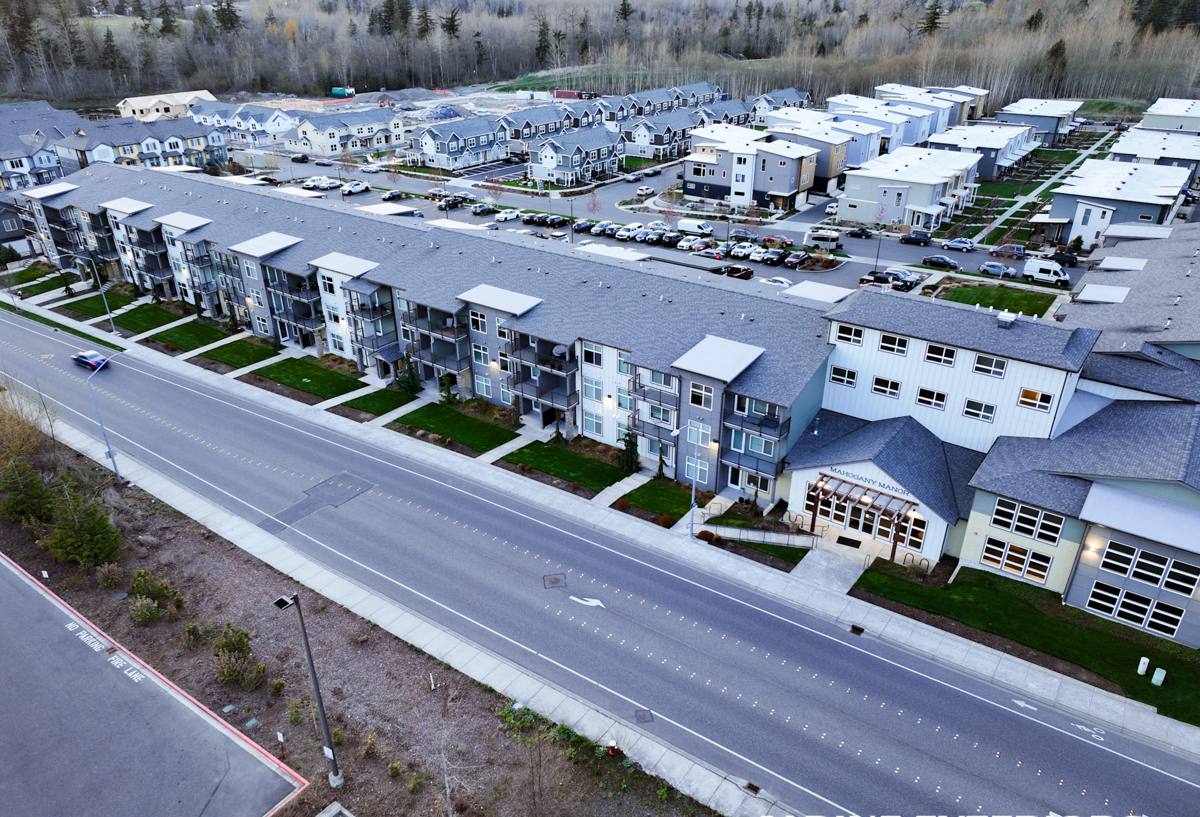
What Constant Moisture and Moss Actually Do to Siding
Moss and algae aren't just cosmetic. A moss mat holds water against the siding surface long after the rain has stopped, keeping that surface damp for far longer than open, sun-exposed walls. On wood-based products — solid wood, primed spruce, and engineered wood siding like LP SmartSide — that sustained moisture is exactly the condition that leads to swelling, delamination at cut edges and seams, and eventually rot in the substrate. Once moisture gets past a compromised seam or a nail head that's lost its seal, it doesn't dry out quickly in a Whatcom County winter. It just sits there and does damage.
Salt air adds a second layer of stress. It accelerates the breakdown of paint films and factory finishes, corrodes exposed fasteners faster than an inland climate would, and works its way into any gap in the weather barrier. Vinyl siding tolerates moisture reasonably well on its own, but it's a poor match for this specific combination of problems — it expands and contracts significantly with temperature swings, its seams and panel laps are a natural place for wind-driven rain to intrude, and it offers no fire resistance, which matters more each year as regional wildfire smoke and ember exposure become a bigger part of Pacific Northwest summers.
This is the reason we don't install LP SmartSide, vinyl, cedar, primed spruce, Cemplank, or Allura on Happy Valley homes. Every one of those products has legitimate strengths — cedar looks great, vinyl is inexpensive, LP SmartSide is easy to work with — but none of them, in our professional experience, holds up to this specific climate as well as properly installed James Hardie fiber cement.
Why We Install Only James Hardie Fiber Cement
James Hardie fiber cement is a cement-and-cellulose composite, not wood and not plastic. It doesn't rot the way wood-based products can, it doesn't soften or delaminate when it stays wet, and it's non-combustible — a real advantage as wildfire risk becomes a bigger consideration even on the wet side of the Cascades. For Happy Valley specifically, three things about the Hardie system matter more than the marketing:
Climate-Engineered Product Lines
Hardie manufactures different formulations for different climate zones — HZ5 for freeze-prone regions and HZ10 for the wetter, milder zones typical of western Washington. That distinction isn't cosmetic. It affects how the product handles moisture cycling over decades, which is exactly the stress Bellingham's wet season puts on a wall.
ColorPlus Factory Finish
Field-applied paint is only as good as the day it was sprayed, and in a high-moisture, high-salt environment it tends to chalk and fade faster than the manufacturer's own baked-on finish. Hardie's ColorPlus finish is factory-cured under controlled conditions, resists fading and moss staining better than site-applied paint, and carries its own separate finish warranty. That matters directly on shaded, north-facing walls where moss pressure is highest.
A Real, Transferable Warranty
Hardie's warranty structure is backed by a manufacturer that has been producing fiber cement in North America for decades, and it's transferable to a new owner if the home sells — a detail that matters to buyers and appraisers alike when the siding is only a few years old.
Siding Materials Compared for This Climate
| Material | Moisture / Rot Resistance | Moss & Algae Resistance | Fire Rating | Typical Maintenance |
|---|---|---|---|---|
| James Hardie Fiber Cement | Excellent — cement-based, does not rot | Strong with ColorPlus finish | Non-combustible | Periodic rinse, repaint only after 15+ years if desired |
| Vinyl | Good surface resistance, poor seam performance | Moderate — moss grips textured panels | Combustible, can deform in heat | Low, but panels crack/fade over time |
| LP SmartSide (engineered wood) | Vulnerable at cut edges and seams if compromised | Moderate | Combustible | Regular caulk and finish inspection |
| Cedar | Fair — needs consistent sealing | Low — organic surface feeds moss | Combustible | High — refinishing every few years |
| Primed Spruce | Poor once primer fails | Low | Combustible | High — early repainting typical |
What a Correct Fiber Cement Installation Involves
Fiber cement performs the way it's supposed to only when it's installed to Hardie's specifications — and in a climate like Bellingham's, the details matter more than usual. A correct installation includes:
- A continuous, properly lapped weather-resistive barrier behind the siding, with all penetrations sealed
- Correct flashing at every window, door, and roof-to-wall intersection, installed so water sheds outward and never behind the siding plane
- A drainage gap (rainscreen or furring strips) that lets any moisture that does get behind the panel drain and dry instead of sitting against the sheathing
- Manufacturer-specified fastener type, size, and spacing — under- or over-driven nails are one of the most common causes of premature failure
- Factory-cut and factory-primed edges kept intact wherever possible, with any field cuts sealed per Hardie's instructions
- Proper clearance between the bottom of the siding and grade, decks, and roof lines to keep splash-back and standing water away from the material
Skipping any one of these steps can turn a premium product into a problem wall. This is also why we don't treat fiber cement installation as interchangeable with vinyl or wood siding work — the sequencing, flashing details, and fastening tolerances are specific to the product, and getting them wrong voids the very warranty that's a big part of why homeowners choose Hardie in the first place.
Our Process on Happy Valley Homes
1. On-Site Assessment
We walk the exterior, check for existing moisture damage, moss buildup, and sheathing condition, and look specifically at north- and west-facing walls where Happy Valley's tree cover and prevailing weather tend to concentrate the worst wear.
2. Tear-Off and Substrate Check
Old siding comes off and we inspect what's underneath before anything new goes up. Soft or rotted sheathing gets flagged and addressed before installation continues — covering a compromised wall with new siding just hides the problem.
3. Weather Barrier and Flashing
We install the weather-resistive barrier and flashing details first, since this layer is what actually keeps water out long-term, not the siding itself.
4. Fiber Cement Installation
Hardie panels or lap siding go up to manufacturer spec — correct fastener pattern, proper gapping, and sealed field cuts.
5. Trim, Caulking, and Final Detailing
Trim, corners, and penetrations get finished and sealed, and we walk the job with the homeowner before calling it done.
What Drives Cost on a Fiber Cement Project
| Factor | Why It Matters in Happy Valley |
|---|---|
| Sheathing condition | Hidden moisture damage under old siding sometimes requires substrate repair before new siding can go on |
| Home height and access | Multi-story homes and steep lots common to Bellingham's hillier neighborhoods affect staging and labor |
| Trim and detail complexity | Bay windows, multiple gables, and dormers increase flashing and cut work |
| Product line and profile | Lap siding, panel siding, and shingle-style Hardie profiles carry different material and labor costs |
| Color | Factory ColorPlus finishes vs. field-primed-for-paint options affect material pricing |
We don't publish blanket prices because every one of these factors changes the number, but we'll walk your home, point out what we find, and give you a clear, itemized estimate with no pressure to sign on the spot.
Homeowner Maintenance Checklist
Even the best siding benefits from a little seasonal attention, especially in a climate that grows moss on almost anything that holds still. A short annual routine goes a long way:
- Rinse siding gently once or twice a year, especially shaded and north-facing walls
- Keep gutters clear so overflow doesn't run down the wall face
- Trim back tree branches and shrubs that keep siding shaded and damp
- Inspect caulking at trim, windows, and penetrations annually and re-caulk where it's cracked or pulling away
- Watch for moss buildup at panel laps and butt joints, where moisture collects first
- Address any small paint or finish damage promptly rather than letting it spread
Why Hiring a Crew That Already Works in Happy Valley Matters
A contractor who works Bellingham and Whatcom County regularly already knows which walls in a neighborhood like Happy Valley take the worst of the weather, how the local moisture and moss cycle behaves through the seasons, and what flashing and drainage details actually hold up here versus what merely meets code on paper. That local pattern recognition shows up in fewer callbacks and a wall system that's built for the conditions it will actually face, not a generic installation. It also means straightforward scheduling, familiarity with local permitting, and a crew that isn't learning the region's quirks on your project.
If you're weighing options for your home's siding, we're happy to take a look and give you a straightforward, no-pressure estimate — just fill out the form below and we'll get in touch.