 Bellingham
 Lynden's Climate Puts Real Stress on Exterior Siding
Lynden sits inland from Bellingham Bay in the Nooksack River valley, but it doesn't escape the weather pattern that defines Whatcom County: long stretches of wet, low-pressure systems moving in off the Strait of Georgia and Puget Sound, wind-driven rain that hits walls sideways instead of straight down, and a moss and algae season that can run eight months out of the year in shaded, north-facing exposures. Add in the humidity that collects along the valley floor near farmland and irrigation, and you have an environment that is unforgiving of siding products that weren't built to handle sustained moisture contact.
Homes here don't fail because of one big storm. They fail slowly — a gap in caulking that lets water track behind a J-channel, a piece of trim that stays damp for days after a rain event, moss holding moisture against a wall until the substrate underneath starts to soften. The siding material matters, but so does whether it was installed with this specific climate in mind.
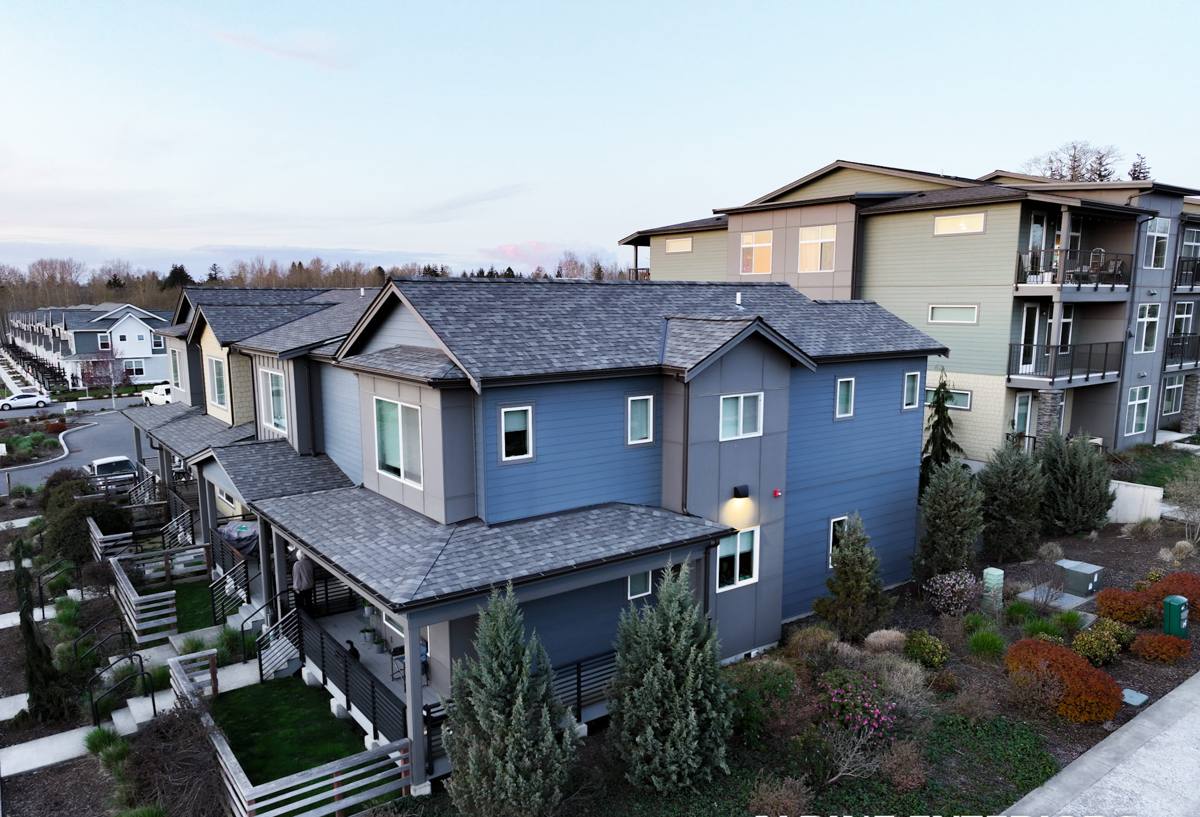
What "Correct" Fiber Cement Installation Actually Means Here
Fiber cement siding is only as good as the install behind it. A huge share of the problems we get called out to look at on older Lynden homes trace back to installation shortcuts, not the material itself. In a climate with this much sustained moisture exposure, a few details are non-negotiable:
- Proper weather-resistant barrier and flashing at every window, door, and penetration — installed shingle-style so water always sheds outward and down
- Correct fastener placement and spacing per the manufacturer's engineering specs, not "close enough"
- Minimum clearance between siding and grade, decks, patios, and roof lines so splash-back and standing water don't sit against the bottom course
- Factory-cut and factory-sealed panel edges wherever possible, since field-cut edges are the most common point of moisture intrusion if left unsealed
- Ventilated rainscreen or drainage gap behind the siding on exposures that see heavy wind-driven rain
- Caulking only where the manufacturer specifies it — over-caulking traps moisture just as often as under-caulking lets it in
None of this is exotic. It's the manufacturer's own installation standard. But it takes longer to do right, and it's the first thing that gets skipped when a crew is trying to move fast.
Why This Matters More in a Moss-Prone Valley
Moss and algae growth isn't just a cosmetic problem. Where moss takes hold on siding — usually the north and west faces, under eaves, and behind landscaping that blocks airflow — it holds moisture against the surface far longer than open exposure would. On a product with a factory-cured, baked-on finish like James Hardie ColorPlus, that moisture stays on the surface, where it can be pressure-washed off. On products with a site-applied paint or primer layer, sustained moss contact can work moisture into the substrate over the years, which is a slower and more expensive problem to catch.
Why We Only Install James Hardie
We get asked why we don't offer LP SmartSide, vinyl, or other lower-cost siding options. It's a fair question, and the honest answer is that we standardized on James Hardie fiber cement because it's the product we're willing to warranty and stand behind in this exact climate.
LP SmartSide is an engineered wood product — strand-based, resin-treated, and genuinely improved from older wood composites. It performs reasonably well in moderate climates. But it's still wood at its core, meaning it can swell, delaminate at cut edges, or take on moisture damage if caulking and flashing details aren't maintained over the years. In a valley with Lynden's rain and moss exposure, that maintenance margin for error is thinner than we're comfortable with.
Vinyl siding is inexpensive and low-maintenance in the sense that it doesn't need repainting, but it's a thin, flexible plastic product that can warp in temperature swings, crack in impacts, and fade unevenly over time. It also relies entirely on trim and J-channel to manage water — there's no substrate to speak of, so any installation flaw becomes a water management flaw.
Cemplank, Allura, primed spruce, and raw cedar all have their own trade-offs — some are perfectly reasonable products installed by other contractors. We simply chose not to carry them. James Hardie is non-combustible, engineered specifically for regional climate zones (their HZ5 line is built for exactly the wet, temperate exposure Whatcom County sees), comes with a factory-applied ColorPlus finish that resists fading and doesn't need repainting on the same cycle as field-painted products, and carries a strong transferable warranty when installed to their spec. That's the product we put our name behind.
James Hardie Product Lines for Lynden Homes
Most Lynden homes we work on fall into a few categories, and the right Hardie product depends on the house:
| Product | Best Fit For | Why It Works Here |
|---|---|---|
| HardiePlank Lap Siding | Farmhouses, ranch-style, and traditional homes | Classic lap profile, wide range of ColorPlus colors, proven in wet climates |
| HardieShingle | Gable accents, craftsman and cottage-style homes | Staggered or straight-edge shingle look without the moisture sensitivity of real cedar shingles |
| HardiePanel Vertical Siding | Modern builds, shop-style outbuildings, accent walls | Clean vertical lines, pairs well with board-and-batten trim |
| HardieTrim | Corner boards, window and door trim, fascia | Matches the siding's moisture resistance so trim doesn't become the weak point |
Color selection matters too. ColorPlus finishes are baked on at the factory under controlled conditions, which gives a more even, longer-lasting result than field-applied paint — especially relevant in a valley where extended damp weather limits the window for touch-up painting to a few dry months a year.
Our Process on a Lynden Job
1. Site Assessment
We start by walking the exterior and identifying the home's specific exposure — which walls take the most wind-driven rain, where moss has already taken hold, where past water intrusion may have already affected sheathing. This shapes the flashing and drainage plan before a single panel is ordered.
2. Tear-Off and Substrate Check
Once old siding comes off, we check the sheathing underneath for soft spots, rot, or existing moisture damage. This is often the first time an owner sees the real condition behind their old siding, and it's the point where we're honest about anything that needs to be addressed before new siding goes on top of it.
3. Weather Barrier and Flashing
We install a continuous weather-resistant barrier and integrate flashing at every window, door, and penetration, lapped correctly so water is directed out and down, never trapped behind the cladding.
4. Installation to Manufacturer Spec
Panels go up with correct fastener spacing, clearances, and joint treatment, following James Hardie's published installation instructions — the same standard their warranty is written against.
5. Trim, Caulk, and Final Detail
Trim is fitted and sealed only where specified. We don't over-caulk gaps that are designed to allow drainage or ventilation.
6. Walkthrough and Cleanup
We walk the finished job with the homeowner, cover basic care, and make sure job-site debris and old material are fully cleared.
Comparing Siding Options for This Climate
| Factor | James Hardie Fiber Cement | Vinyl | Engineered Wood (LP-type) |
|---|---|---|---|
| Moisture resistance | Non-combustible, dimensionally stable, factory-finished | Doesn't absorb water but relies fully on trim/flashing for water management | Improved over old wood, but still wood-based at the core |
| Moss/algae behavior | Baked-on finish cleans off without damaging substrate | Resists moss but can trap moisture behind panels if warped | Sustained moss contact is a genuine long-term risk |
| Repainting cycle | ColorPlus finish typically outlasts field paint by years | Never needs painting, but color is baked into the plastic and can fade | Needs repainting on a regular cycle to stay protected |
| Fire resistance | Non-combustible | Can melt or deform under heat exposure | Combustible, like other wood products |
| Typical lifespan when installed to spec | Multiple decades | Decades, but with more visible wear over time | Shorter than fiber cement if moisture management lapses |
Maintaining Fiber Cement Siding in a Wet Valley Climate
- Rinse siding annually, and more often on shaded north/west walls where moss tends to establish
- Trim back landscaping and tree limbs that block airflow and sunlight against exterior walls
- Inspect caulking at trim joints and penetrations once a year, especially after the first winter
- Watch for staining or discoloration near ground level, which can signal splash-back or grading issues
- Clear gutters before the fall rains so overflow doesn't run down the face of the siding
- Address any moss buildup with a gentle wash rather than pressure-washing directly into seams
What Correct Pricing Depends On
| Factor | Why It Affects Cost |
|---|---|
| Home size and wall complexity | More corners, gables, and dormers mean more cutting, trim, and flashing detail |
| Existing substrate condition | Rot or moisture damage found at tear-off adds repair scope before new siding goes on |
| Product mix | Lap siding, shingle accents, and vertical panel combinations price differently |
| Color and finish | Standard ColorPlus colors versus custom or premium finishes |
| Access and site conditions | Multi-story sections, tight lot lines, or landscaping can add labor time |
We won't quote a number without seeing the house — anyone who does is guessing, and that guess tends to grow once the tear-off starts.
Why Local Experience in Lynden Specifically Matters
A crew that only occasionally works this part of Whatcom County will treat every job like a generic install. A crew that works Lynden and the surrounding valley regularly already knows which wall orientations take the worst of the wind-driven rain, how aggressively moss establishes on shaded farmhouse gables, and where drainage and grading issues tend to hide behind old siding before it even comes off. That local pattern recognition is what keeps a job from turning into a surprise once the tear-off starts, and it's the difference between an install that looks right on day one and one that actually holds up through a decade of valley winters.
If you're weighing a siding replacement or new install in Lynden, we're happy to walk your home, look at your specific exposure, and put together a straightforward, no-pressure estimate — just fill out the form below to get started.