 Bellingham
 Why Puget Homes Need a Siding Plan Built for This Climate
Puget sits in the kind of Pacific Northwest weather pocket that punishes ordinary siding. You get salt-laden air drifting in off the water, long stretches of wind-driven rain, and shaded, damp conditions that keep moss and algae growing for most of the year. Siding that might hold up fine in a drier inland climate can fail here in a fraction of the time — bubbling paint, soft trim, streaked panels, and moss creeping up from the bottom courses. Homeowners in this part of Whatcom County need a siding system, and an installation approach, that's actually built for marine exposure, not just siding that looks good on the day it goes up.
This page is about one thing: fiber cement siding done right for Puget-area homes. Not a general overview of siding options, not a national product brochure — what actually holds up here, what a correct installation looks like in this climate, and why the details matter more in a place like this than almost anywhere else in the state.
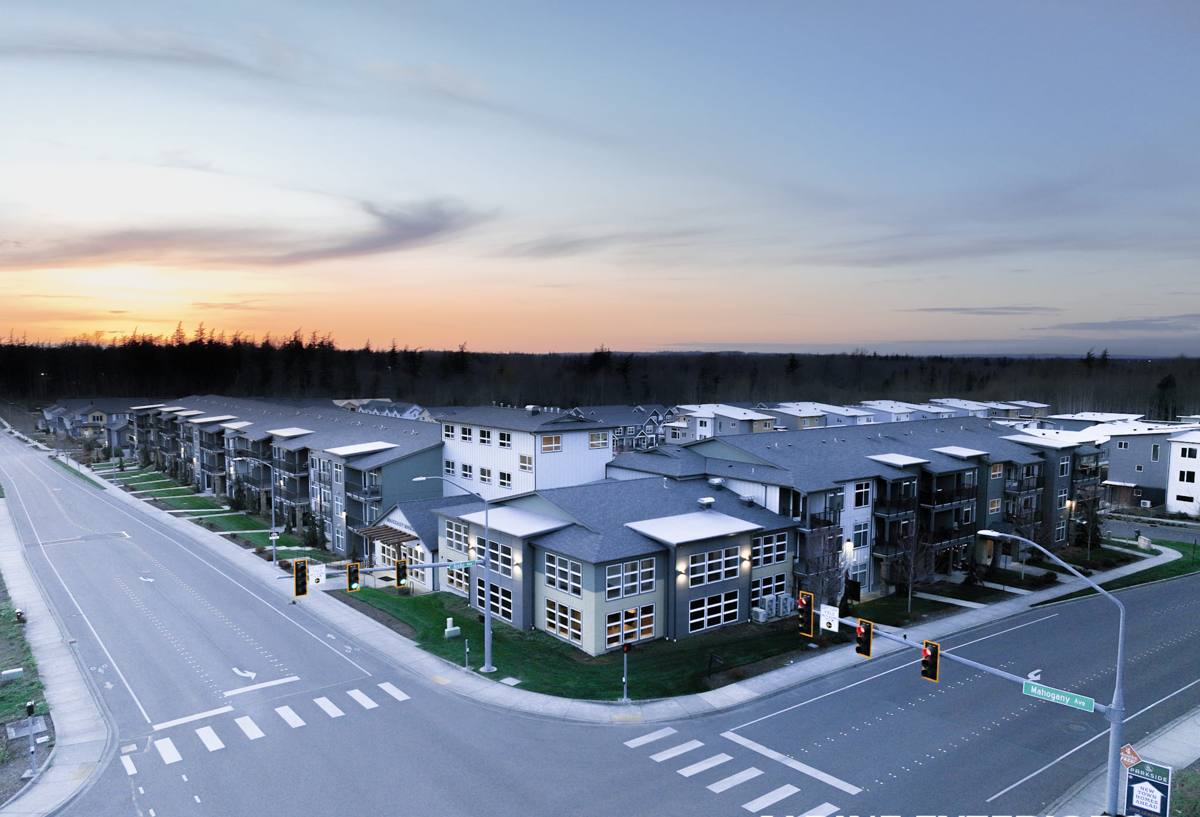
The Climate Challenge: Salt Air, Driving Rain, and a Long Moss Season
Salt Air and Coastal Exposure
Homes closer to the water deal with airborne salt that accelerates corrosion on fasteners, flashing, and any exposed metal trim. Over time, salt exposure also breaks down lower-grade paint films faster than inland UV exposure alone would. Siding material that isn't dimensionally stable, or trim fasteners that aren't corrosion-resistant, show their weaknesses here first.
Wind-Driven Rain
Bellingham and the surrounding Whatcom County coastline see rain that doesn't just fall straight down — it gets pushed sideways into wall assemblies by wind coming off the Sound. That means water is driven up under laps, into butt joints, and around window and door trim far more aggressively than in a calmer climate. A siding job that isn't detailed for wind-driven rain — proper laps, flashing, and a drainage plane behind the cladding — will eventually let water in, even if the surface material itself is fine.
Moss and Shade
Many lots around Puget carry mature tree cover, which is great for privacy and shade but means siding on the north and west walls often stays damp for days after a storm. That's exactly the environment moss, algae, and mildew need to take hold. Once organic growth gets established on siding, it holds moisture against the surface and accelerates whatever deterioration is already happening underneath.
Why We Install Only James Hardie Fiber Cement
We standardized on James Hardie fiber cement siding for every job we do, including here in Puget, and we don't install vinyl, LP SmartSide, Cemplank, Allura, primed spruce, or cedar. That's not brand loyalty for its own sake — it comes down to how each of those materials behaves in a wet, salt-exposed, moss-prone climate over ten, twenty, thirty years, not just in the first few seasons.
Vinyl siding relies on unsealed, overlapping panels that flex with temperature and can loosen or warp over time, and it doesn't hold up structurally the way a rigid fiber cement panel does. Wood-based products like primed spruce and cedar are organic materials, which means they're a food source for the rot and moss this climate specializes in producing, and they demand a repainting and caulking schedule that most homeowners don't want to keep up with indefinitely. Engineered wood siding products carry real moisture-management risk if any edge, cut, or fastener point isn't sealed exactly to spec — and in a climate with this much sustained rain exposure, that margin for error is thin. Fiber cement, by contrast, is non-combustible, dimensionally stable, and doesn't swell, rot, or feed moss the way wood-based products can.
HZ5 — Climate-Engineered for This Region
James Hardie makes region-specific formulations of its fiber cement board, and the HZ5 line is engineered for climates like ours — places with sustained damp weather and freeze-thaw cycling. It's manufactured to resist moisture absorption and stay stable through the wet winters and shoulder seasons that define a Puget Sound year. Paired with the factory-applied ColorPlus finish, which is baked on under controlled conditions rather than field-painted, you get a color coat that's far more resistant to the fading, chalking, and peeling that field-applied paint suffers under UV and salt exposure.
What a Correct Fiber Cement Installation Actually Involves
Fiber cement siding is only as good as the installation behind it. In a high-moisture, wind-driven-rain climate, the assembly behind the visible siding matters as much as the siding itself.
Water Management Comes First
Before any board goes up, the wall needs a properly lapped weather-resistant barrier, correctly integrated flashing at every window, door, and penetration, and a drainage gap — a rainscreen — between the back of the siding and the water-resistive barrier. That gap lets any water that does get past the cladding drain and dry out instead of sitting against the wall sheathing. Skipping or shortcutting the rainscreen is one of the most common ways a fiber cement job fails early in a climate like this one.
Fastening, Clearances, and Joints
Fiber cement needs to be fastened per manufacturer spec — correct nail or screw type, placement, and depth — because over- or under-driven fasteners create either cracking risk or loosening over time. Ground clearance and clearance from roofing, decks, and patios has to be maintained so the bottom edge of the siding isn't sitting in a splash zone. Butt joints need to be properly flashed and, ideally, minimized and staggered, since every joint is a potential water entry point.
Trim, Caulking, and Touch-Up
Cut edges of fiber cement board need to be sealed and field-touched with matching paint where the factory finish has been cut through, otherwise those raw edges become the first place moisture gets in. Caulking has to be applied at transitions and gaps with a product rated for the exposure, not just whatever's on hand.
| Installation Factor | Done Correctly | Common Shortcut |
|---|---|---|
| Drainage gap behind siding | Rainscreen installed, water drains and dries | Siding nailed directly to barrier, no drainage path |
| Flashing at openings | Integrated, lapped correctly with barrier | Caulk used in place of proper flashing |
| Cut-edge sealing | Sealed and touched up to match ColorPlus finish | Left raw or unsealed |
| Ground/roof clearance | Manufacturer minimums maintained | Siding installed tight to grade or decking |
| Fasteners | Corrosion-resistant, spec depth and spacing | Standard fasteners, inconsistent placement |
Our Process for Puget Projects
- On-site assessment: we walk the exterior, check the current siding and sheathing condition, and look specifically for moisture damage on the shaded and wind-exposed walls.
- Tear-off and sheathing check: once old siding is off, we inspect the sheathing underneath — this is where hidden rot from years of past moisture intrusion usually shows up, and it needs to be addressed before new siding goes on.
- Weather barrier and rainscreen installation: a new weather-resistant barrier, correctly lapped and flashed, plus a drainage gap sized for this climate's rain load.
- Hardie installation to spec: HZ5 fiber cement installed with manufacturer-specified fastening, clearances, and joint treatment.
- Trim, caulk, and detail work: all cut edges sealed, transitions caulked, and touch-up applied to match the ColorPlus finish.
- Final walkthrough: we go over the finished job with the homeowner and point out anything worth knowing about long-term care.
Signs Your Current Siding Is Already Losing the Fight
- Green or black staining that returns within weeks of being cleaned, especially on north- or west-facing walls
- Paint that's bubbling, peeling, or chalking off on your hand when you touch it
- Soft or spongy spots when you press on siding or trim, particularly near the bottom courses or around windows
- Visible gaps or separation at butt joints and corner trim
- Warping, cupping, or bowing panels, especially on wood-based or engineered wood siding
- A musty smell near exterior walls inside the house, which can indicate moisture getting past the siding
Maintenance in a Marine, Moss-Prone Climate
No siding is completely maintenance-free, but the maintenance burden is very different between materials, and it matters more here than in a drier climate. Fiber cement with a factory ColorPlus finish generally needs an occasional gentle rinse to knock off pollen, salt residue, and early moss growth — no repainting cycle, no caulk-and-recoat schedule the way wood siding demands. Keeping gutters clear and trimming back vegetation that shades and dampens walls also goes a long way toward keeping moss from establishing itself in the first place. We'd rather be upfront that this is a low-maintenance system, not a zero-maintenance one — anyone who tells you otherwise isn't being straight with you.
What Fiber Cement Siding Costs in Puget
Every home is different, and final pricing depends on square footage, the condition of what's being removed, trim complexity, and how much sheathing repair turns up once the old siding comes off. In general terms, expect fiber cement installation costs to sit above vinyl and roughly in line with or somewhat above engineered wood siding installed to a comparable standard — the difference shows up over the life of the siding, not in year one.
| Cost Factor | Why It Matters Here |
|---|---|
| Wall exposure (sun vs. shade, wind-facing sides) | Affects detailing needs and drainage design |
| Existing sheathing condition | Hidden moisture damage found at tear-off adds repair scope |
| Trim and architectural detail | More corners, windows, and transitions mean more flashing work |
| Rainscreen vs. direct-applied | Proper drainage gap adds labor but is critical in this rainfall pattern |
| Siding profile and color | ColorPlus custom colors and wider boards affect material cost |
Why Hiring a Crew That Already Works Puget Matters
A siding crew that's worked this specific stretch of Whatcom County coastline already knows which walls take the worst of the wind-driven rain, how aggressive the moss growth gets under mature tree cover, and what the salt exposure does to fasteners and trim over time. That local pattern recognition shows up in small decisions — where to add extra flashing attention, which walls need a wider drainage gap, how to sequence work around this area's wet stretches — that a crew unfamiliar with the area might not think to make. It's the difference between a siding job that looks right on install day and one that's still performing the way it should ten winters from now.
If you're weighing a siding replacement or want a second opinion on failing siding in Puget, we're happy to take a look and walk you through what we're seeing — no pressure, no obligation. Reach out through the form below for a free estimate.