 Bellingham
 Birchwood's Siding Problem Isn't Like Everywhere Else
Birchwood sits close enough to Bellingham Bay and the surrounding wetlands that homes here take on a specific combination of punishment: salt-tinged air moving in off the water, long stretches of driving rain that don't let up for days, and a moss season that can run from October through May in a wet year. Any one of those is manageable. Together, they wear down siding materials that were never engineered for the Pacific Northwest in the first place, and they expose weak points in installations that would hold up fine somewhere drier.
We install James Hardie fiber cement siding exclusively — not vinyl, not LP SmartSide, not primed wood, not cedar. That's not a marketing angle, it's a standard we hold to because we've seen what Whatcom County weather does to the alternatives over a ten- or fifteen-year span, and because Hardie's fiber cement formula and factory finish are built to take exactly the kind of abuse Birchwood dishes out.
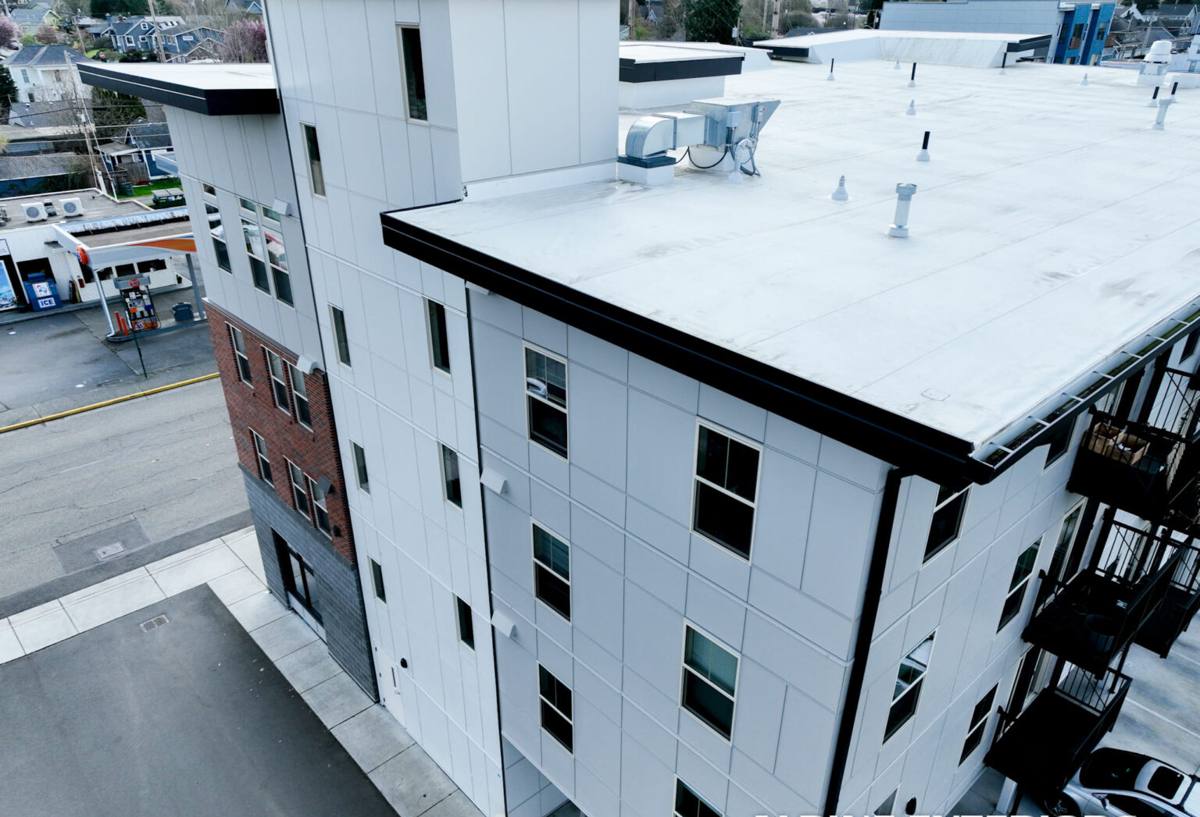
What Salt Air, Rain, and Moss Actually Do to a House
It helps to understand the mechanisms, not just the buzzwords, because they drive every decision in a correct install.
Salt Air
Airborne salt is mildly corrosive and hygroscopic — it pulls moisture out of the air and holds it against whatever surface it lands on. On metal fasteners, trim, and flashing, that means accelerated corrosion if the wrong materials are used. On paint and coatings, it means faster breakdown of the finish, especially on south- and west-facing walls that also catch the most sun.
Driving Rain
Bellingham doesn't just get a lot of rain — a good share of it comes in sideways off the water, driven by wind. That matters because siding isn't actually the primary thing keeping water out of your walls; the water-resistive barrier and flashing behind it are. Driving rain finds every gap in a poorly lapped joint, every under-flashed window, and every place where siding was nailed too tight against trim with no room to drain.
Moss and Sustained Dampness
Moss doesn't damage siding directly, but it's a sign of a bigger issue: a wall surface that stays wet for extended periods. Moss and algae growth on north-facing walls and under eaves means that surface is holding moisture far longer than it should. On wood-based products, sustained dampness is exactly what leads to swelling, rot, and delamination. On a properly installed fiber cement system, it's mostly cosmetic — but it still tells you where your wall assembly is retaining water it should be shedding.
Why James Hardie Holds Up Where Other Materials Struggle
James Hardie siding is fiber cement — cellulose fiber, sand, and cement formed under pressure. It doesn't absorb water the way wood-based sidings do, and it doesn't warp, crack, or become brittle in cold snaps the way vinyl can. Hardie's HZ5 product line, engineered specifically for wetter, harsher climates, is what we spec by default for Birchwood homes.
The ColorPlus finish — a factory-applied, baked-on coating — matters more here than in a dry climate. Field-applied paint on any siding material is the first thing that gives out under repeated wet-dry cycling and salt exposure; a factory finish with a much stronger bond and UV-cure process holds color and resists fading far longer, which means fewer repaint cycles over the life of the siding.
We've explained on other pages why we won't install LP SmartSide, vinyl, or cedar on client homes. In short: each of those materials has real strengths, but each also has a specific weak point — moisture-sensitive OSB substrate, thermal expansion and brittleness in vinyl, or the ongoing maintenance burden of natural wood — that shows up faster in a climate like ours than it would somewhere drier. Fiber cement doesn't carry those same weak points.
What a Correct Installation Actually Involves
Siding material choice only gets you halfway there. Most siding failures we get called out to inspect in this area aren't material failures — they're installation failures. A wall assembly is a system, and every layer has to do its job.
Water-Resistive Barrier and Flashing
Before a single piece of siding goes up, the wall needs a continuous, properly lapped weather-resistive barrier. Every window, door, and penetration needs correctly integrated flashing so that any water that gets behind the siding — and some always will, even on a perfect wall — has a clear path down and out, not into the sheathing.
Clearance and Drainage
Hardie siding needs a minimum clearance from grade, roof lines, decks, and horizontal surfaces, and it needs a gap — not a tight caulked seal — at the bottom to let any trapped moisture drain and the wall to breathe. This is one of the most commonly skipped details on rushed installs, and it's exactly the kind of gap driving rain will exploit over time.
Fastening
Fastener spacing, type, and depth all matter. Hardie specifies corrosion-resistant fasteners for good reason — in a salt-air environment, the wrong fastener corrodes years before the siding itself would ever fail, and a corroding fastener eventually stains the face of the board and loses its grip.
Joints, Caulking, and Touch-Up
Butt joints need to be properly gapped and treated, not just butted tight and caulked over. Cut edges and any field-touched areas need the correct sealant and touch-up paint system so the factory finish's protection isn't compromised at the one spot where raw fiber cement is exposed.
Our Process for a Birchwood Job
We run the same disciplined process on every home, but a few steps get extra attention here given the local conditions.
- Walk and assessment. We look at your current siding, sheathing where visible, moss and algae patterns, and any existing water staining or soft spots before quoting anything.
- Tear-off and sheathing check. Old siding comes off and we inspect the sheathing underneath. Any rot or damage gets addressed before anything new goes up — covering a problem is worse than not touching it.
- Weather barrier and flashing. New water-resistive barrier, correctly lapped, with flashing integrated at every window, door, and penetration.
- Hardie installation. HZ5 panels or planks installed to Hardie's fastening, clearance, and joint specifications, with corrosion-resistant hardware throughout.
- Trim, caulking, and touch-up. Factory-finished trim, correct sealant at joints, and matched touch-up paint at cut edges.
- Final walk-through. We go over the finished job with you and flag anything homeowners should watch for going forward.
Signs a Birchwood Home Needs New Siding Soon
You don't need to wait for visible failure to start planning. Watch for these signs, especially on north- and west-facing walls:
- Persistent moss or algae bands that come back within weeks of cleaning
- Soft spots, or a spongy feel, when you press on siding near the bottom edges or under windows
- Paint that's chalking, peeling, or bubbling faster than it did in past years
- Visible warping, cupping, or gaps opening at seams and corners
- Rust streaks below fasteners or trim
- Interior signs — musty smell, peeling interior paint, or staining near exterior walls
Any of these on their own might be minor. Several together, especially combined with a home's age or a siding material not suited to this climate, usually means it's worth a proper look before small problems become structural ones.
Cost Factors on a Birchwood Siding Job
Every home is different, and we won't quote a number without seeing the house, but these are the variables that actually move the price:
| Factor | Why it matters |
|---|---|
| Tear-off scope | Full removal of old siding vs. sections adds labor and disposal cost |
| Sheathing condition | Rot or water damage found during tear-off requires repair before new siding goes on |
| Home size and complexity | Wall area, number of stories, dormers, and cut-ups all affect labor hours |
| Product line | HZ5 panels vs. lap siding vs. shingle-profile products carry different material costs |
| Trim and accent work | Custom trim, corner treatments, and accent bands add detail time |
| Access | Steep grades, tight lot lines, or limited equipment access common in some Birchwood streets can affect labor |
Broadly, expect fiber cement siding projects to fall in the mid-to-upper range of exterior remodel costs compared to vinyl — the difference is that you're paying for a system that holds its finish and resists this climate's specific stresses for decades, not a handful of years.
Choosing the Right Hardie Line and Color
Hardie offers several profiles — lap siding, panel siding, and shingle-style — and dozens of ColorPlus colors. For Birchwood specifically, we generally steer clients toward HZ5 for its climate engineering, and we talk through color choice with an eye toward how a shade performs against salt exposure and UV on sun-facing walls versus how it reads against the surrounding tree cover and neighboring homes. Darker colors absorb more heat and can show dust and pollen differently than lighter tones; that's a conversation worth having before you commit, not after installation.
Why a Crew That Already Works Birchwood Matters
A contractor who's worked this neighborhood, and Bellingham and Whatcom County more broadly, already knows what a north-facing wall here does in February, what a bay-facing home deals with that an inland one doesn't, and where moss tends to establish first. That's not something you can fully substitute with a generic install checklist. It shows up in small decisions — how tight to set a clearance gap, which walls get extra attention on flashing, when to flag a homeowner about a moisture issue before it's a repair — that add up over the life of the siding.
It also means we're a known, accountable presence if a warranty question or a maintenance question comes up years down the road, not a crew that did one job in the area and moved on.
Maintaining Hardie Siding in This Climate
Fiber cement is low-maintenance compared to wood, but "low-maintenance" isn't "no-maintenance," especially here:
- Rinse siding annually, more often on shaded or north-facing walls prone to moss and algae
- Keep gutters clear so overflow isn't running down the wall face
- Trim back vegetation and tree cover that keeps walls shaded and damp longer than necessary
- Inspect caulking at joints and trim every couple of years and touch up as needed
- Address any fastener staining or corrosion promptly rather than letting it spread
None of this is heavy lifting, but staying on top of it is what lets a correctly installed Hardie system reach the far end of its expected lifespan instead of the near end.
If you're weighing a siding replacement in Birchwood, or just want a straight answer on whether your current siding is holding up the way it should, we're glad to take a look. Fill out the form below for a free, no-pressure estimate.