 Bellingham
 Blaine's Exterior Walls Work Harder Than Most
Blaine sits right up against the water at the northwest corner of Whatcom County, and that location shapes everything about how a home's exterior ages. Salt-laden air moves inland off the coast almost daily, driving rain comes in sideways during winter storms, and the region's mild, wet climate keeps humidity high enough that moss and algae have a long growing season on anything that stays damp. Siding here isn't just a cosmetic layer — it's the first line of defense against a climate that never really lets a wall dry out completely.
We install James Hardie fiber cement siding exclusively, and Blaine is one of the areas where that decision matters most. Homes closer to the water take a different kind of weathering than homes ten miles inland, and the siding system needs to be matched to that reality, not just to the regional average.
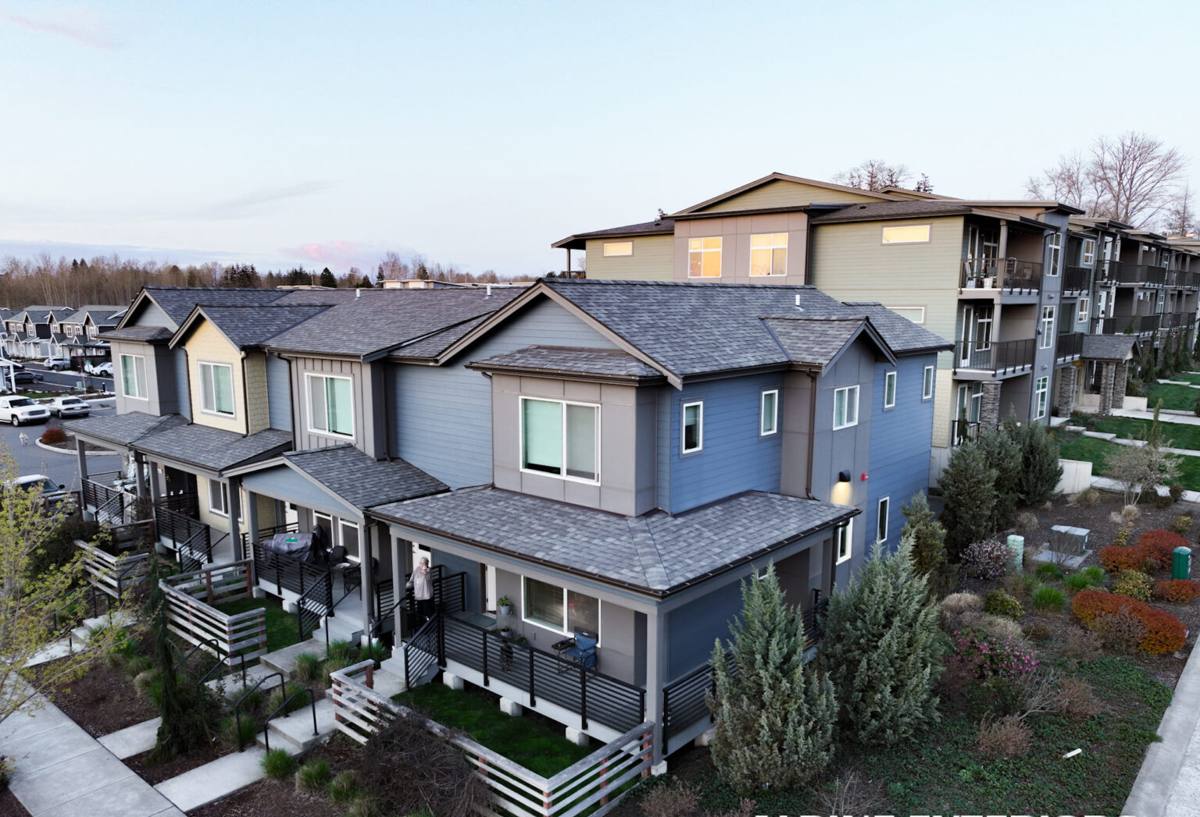
Why Salt Air and Driving Rain Are a Tougher Test Than People Expect
Salt air is corrosive to metal fasteners, trim, and flashing, and it accelerates the breakdown of finishes that aren't formulated to resist it. Combine that with wind-driven rain — which doesn't just wet a wall surface but forces moisture into every gap, seam, and fastener hole it can find — and you get a climate that punishes shortcuts. A siding product or installation detail that performs fine in a dry inland climate can fail years earlier on a home exposed to coastal weather.
The two failure points we see most often on homes near the coast are:
- Caulked or unflashed butt joints and trim seams that let wind-driven rain track behind the siding
- Fasteners and trim materials that corrode or streak rust down the face of the siding over time
- Paint or coatings that chalk, fade, or peel faster than advertised once salt exposure is factored in
- Siding installed tight to the wall with no drainage path, trapping moisture that never fully dries between storms
None of these are siding problems in the abstract — they're installation and product-selection problems. The right materials, installed the right way, largely solve them.
Why We Install James Hardie and Nothing Else
James Hardie fiber cement is non-combustible, dimensionally stable, and manufactured in region-specific formulations — Hardie's HZ5 product line is engineered for climates like ours, with cold, wet winters and high moisture exposure. It doesn't absorb water the way wood-based products can, and it doesn't degrade under UV and salt exposure the way some polymer-based sidings do over a long service life.
We get asked fairly often why we don't install LP SmartSide, vinyl, or cedar instead, since all three are common in this area. Here's the honest answer for each:
- Vinyl siding is inexpensive and low-maintenance in mild conditions, but it can warp or become brittle in temperature swings, and its seams and panel joints give wind-driven coastal rain more opportunities to get behind the cladding. It also isn't rated for the fire resistance we prefer to build with.
- LP SmartSide is a wood-strand product with a resin binder. It performs reasonably in moderate climates, but any breach in its factory coating exposes wood fiber to moisture — a real risk in a climate where a wall can stay damp for days at a time.
- Cedar and primed wood siding look great when new but demand a maintenance schedule — repainting, caulking, moisture checks — that most homeowners underestimate, especially in a climate that gives paint film so little time to fully cure between rain events.
James Hardie's fiber cement composition and factory-applied ColorPlus finish sidestep most of these failure modes, which is why it's the only product we put our name behind.
What a Correct Installation Actually Involves
The material is only half the equation. A large share of the siding failures we get called out to inspect in coastal Whatcom County homes trace back to installation shortcuts, not the product itself. On a home like the ones common in Blaine, correct installation means:
A drainage plane behind the siding
A weather-resistant barrier and, where conditions call for it, a rainscreen gap so any moisture that does get past the cladding has somewhere to go and can dry out instead of sitting against the sheathing.
Proper flashing at every penetration
Windows, doors, hose bibs, light fixtures, and any other wall penetration need flashed and lapped correctly — shingle-style, so water is always directed outward and down, never trapped behind a seam.
Correct fastener placement and material
Hardie specifies fastener type, length, and placement for a reason — under-driven or over-driven nails, or fasteners in the wrong location, are one of the most common causes of premature siding failure and voided warranty coverage.
Sealed and primed cut edges
Every field cut exposes raw fiber cement that needs to be primed or sealed before installation. Skipping this step is invisible on install day and shows up as a failure point years later, right where it's hardest to fix.
Correct clearances
Siding held at the proper distance from grade, roofing, and decking keeps splash-back and standing moisture away from the bottom courses — a detail that matters more in a climate that stays wet for months at a stretch.
How We Approach a Blaine Project
- On-site assessment — we look at wall exposure, wind direction, existing moisture damage, trim condition, and how close the home sits to open water or prevailing weather.
- Product and profile selection — HardiePlank lap siding, HardiePanel, and trim/soffit components are chosen based on the home's architecture and exposure, not a one-size-fits-all default.
- Tear-off and substrate check — we don't cover up rot, soft sheathing, or hidden moisture damage; anything we find gets addressed before new siding goes on.
- Weather barrier and flashing installation — done to manufacturer spec, with extra attention at every window, door, and penetration.
- Siding installation — fastened, spaced, and sealed to Hardie's published specifications so the manufacturer's warranty stays intact.
- Final inspection and cleanup — including a walk-through so you understand what was done and what to expect from the finish over time.
Moss, Algae, and the Long Wet Season
Whatcom County's moss and algae season runs long — shaded walls, north-facing elevations, and areas near trees or heavy landscaping stay damp for extended stretches, which is exactly what moss and algae need to take hold. James Hardie's ColorPlus finish is factory-baked and more resistant to the kind of surface staining and organic growth that shows up on site-painted or lower-grade coatings, but no siding is immune if a wall never gets a chance to dry.
Two things reduce moss and algae buildup on any siding, Hardie included: adequate drainage behind the cladding (see above) and keeping gutters, downspouts, and nearby vegetation from dumping extra water onto the wall. We factor both into the installation plan rather than treating them as an afterthought.
Cost Factors on a Blaine Project
Every home is different, but the line items that actually move the price on a coastal Whatcom County job are fairly consistent:
| Factor | Why It Matters Here |
|---|---|
| Existing wall condition | Rot or moisture damage found during tear-off needs repair before new siding goes on |
| Home exposure | Walls facing prevailing wind and driving rain often get upgraded flashing and drainage details |
| Siding profile | Lap siding, panel siding, and shingle-style profiles differ in material and labor |
| Trim and accessory scope | Corner boards, soffit, fascia, and frieze boards add material and detail work |
| Story height and access | Multi-story or steep-site homes require more staging and labor time |
| Color and finish | Factory ColorPlus finishes vary slightly in cost versus field-painted options |
We give straightforward, itemized estimates rather than vague lump-sum numbers, so you can see exactly what's driving the cost.
Maintaining Hardie Siding on a Coastal Home
James Hardie is low-maintenance compared to wood or repainted products, but "low-maintenance" isn't "no-maintenance," especially this close to the water. A simple annual routine keeps it performing the way it's designed to:
- Rinse the exterior once or twice a year with a garden hose to clear salt residue, pollen, and organic buildup — avoid high-pressure washing directed at seams or joints
- Walk the exterior after major storms and check caulked joints, trim intersections, and flashing for gaps or wear
- Keep gutters clear so overflow doesn't run down the wall face
- Trim back vegetation that shades walls or holds moisture against the siding
- Watch for any soft spots, staining, or discoloration near ground level, decks, or roof intersections and have them checked early
Why Hiring a Crew That Already Works Blaine Matters
A contractor who mainly works inland jobs may default to standard details that hold up fine in a drier microclimate but fall short right on the coast. A crew that regularly works Blaine and the surrounding waterfront communities already accounts for wind exposure, salt air, and the area's building department expectations without having to relearn it on your home. That familiarity shows up in the small decisions — flashing details, fastener choice, where a rainscreen gap is worth the extra step — that determine whether siding holds up for decades or needs attention in five years.
If you're planning a siding project in Blaine or anywhere else in Whatcom County, we're happy to walk your home, look at its specific exposure, and put together a clear, no-pressure estimate for a correctly installed James Hardie system. There's no obligation — just an honest look at what your home actually needs.