 Bellingham
 Why Cordata Homes Need a Roof Built for This Climate
Cordata sits in north Bellingham, close enough to Bellingham Bay that salt-laden air is a real factor on roofing materials, and far enough into Whatcom County's tree cover that shade and moisture linger on rooflines most of the year. Add in the driving, wind-pushed rain that comes through this part of the Pacific Northwest for months at a stretch, and you've got a roof environment that punishes anything installed with shortcuts. A roof here isn't just shedding water in a straight line off a gentle slope — it's dealing with wind-blown rain hitting valleys and walls at an angle, moss finding a foothold in shaded areas, and a slow drip of airborne salt that accelerates corrosion on unprotected metal.
Metal roofing can be an excellent fit for this kind of climate, but only when the panel type, fasteners, flashing, and underlayment are chosen and installed with these specific conditions in mind. This page is about what that actually looks like for a Cordata home, not a generic rundown of metal roofing in general.
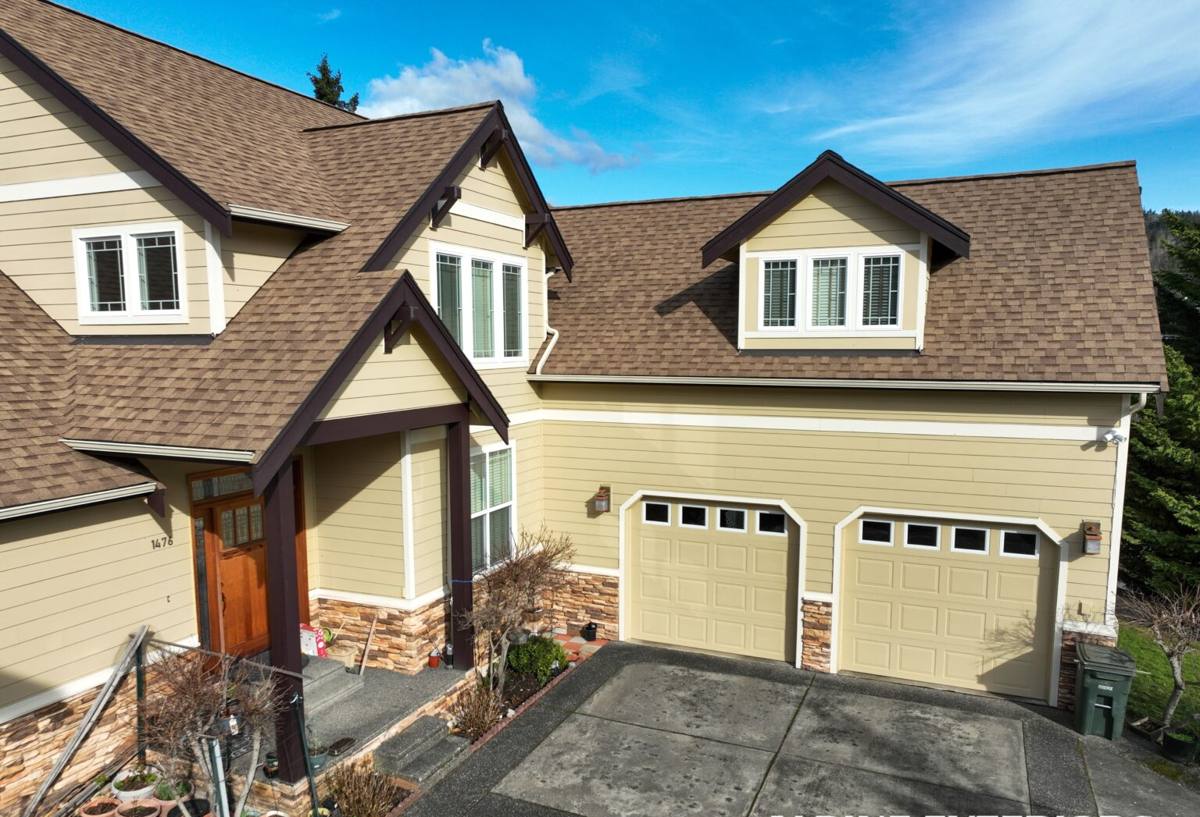
What Salt Air, Driving Rain, and Moss Actually Do to a Roof
Salt Air and Corrosion
Homes closer to Bellingham Bay pick up airborne salt that settles on roofing metal, fasteners, and flashing. On its own this isn't dramatic, but over years it accelerates corrosion on any metal component that isn't properly coated or that gets paired with an incompatible metal at a joint. The result shows up first at cut edges, fastener heads, and flashing seams — the places where a rushed install skips protective steps.
Wind-Driven Rain and Water Intrusion
Rain in this area rarely falls straight down. Wind pushes it sideways into wall-roof intersections, under poorly lapped flashing, and into valleys where two roof planes meet. A roof that would perform fine somewhere drier can leak here if the flashing details and underlayment weren't built for wind-driven water specifically.
Moss and Trapped Moisture
Shaded, tree-lined lots — common in and around Cordata — stay damp longer after a storm, and that's exactly what moss needs to establish. Moss holds moisture against a roof surface, and on organic materials it can work into seams and granules over time. It's less of a structural threat to metal itself, but it still needs to be accounted for in panel choice, slope, and how debris is managed on the roof.
Why Metal Roofing Makes Sense Here
Metal roofing has some real advantages for a climate like Bellingham's, but it isn't a cure-all — it just shifts what you need to get right.
- Smooth, non-porous surface: there's no organic mat for moss to root into the way there is with wood shakes or aging asphalt shingles, which reduces (but doesn't eliminate) moss buildup on the field of the roof.
- Efficient water shedding: steeper-pitch metal panels move driving rain off the roof quickly, which matters when storms come in sideways off the water.
- Long service life: a correctly installed metal roof with a quality coating can outlast several cycles of asphalt shingle replacement, which matters given how often this region's weather stresses a roof.
- Fewer wind-related failures: properly fastened metal panels resist wind uplift better than lightweight shingle systems in exposed spots.
None of that holds up, though, if the coating is wrong for a salt-air environment, if dissimilar metals are allowed to touch, or if the crew treats flashing as an afterthought. The material is only as good as the installation.
Panel Types and Finishes: What Actually Differs
Not all metal roofing is the same product wearing different colors. The panel style and finish change how it performs against Bellingham's specific mix of salt, rain, and shade.
| Panel Type | How It's Attached | Best Fit For |
|---|---|---|
| Standing seam | Concealed clips, raised interlocking seams | Homes wanting the fewest exposed fasteners and the best long-term seal against wind-driven rain |
| Exposed-fastener panels (corrugated/ribbed) | Screws driven through the panel face into the deck or purlins | Budget-conscious projects, outbuildings, or roofs where upfront cost matters more than fastener maintenance |
| Stone-coated steel | Interlocking panels resembling shingle or tile profiles | Homeowners who want a metal roof's durability with a more traditional roofline appearance |
Exposed-fastener panels cost less to install but the fasteners themselves are the weak point — every screw penetration is a potential path for water and a spot where the washer gasket eventually degrades, especially with salt exposure. Standing seam avoids that by keeping fasteners hidden under the seam, which is a big part of why it holds up better long-term in coastal-influenced air, even though it costs more upfront.
What a Correct Installation Actually Involves
Underlayment
A high-quality synthetic underlayment across the whole roof, with self-adhered ice-and-water membrane in valleys, around penetrations, and at eaves, gives the roof a second line of defense if wind-driven rain ever gets past the panels themselves.
Fastening and Clip Spacing
Standing seam clip spacing and exposed-fastener screw patterns both need to be tightened up for wind exposure rather than installed at the manufacturer's bare minimum — especially on roof edges and corners, where uplift forces are highest.
Flashing at Every Transition
Chimneys, dormers, skylights, and wall intersections are where leaks actually start. Flashing here needs to be formed and layered correctly, not just caulked and hoped for — caulk is a backup, never the primary seal.
Avoiding Dissimilar Metal Contact
Where two different metals touch and stay wet, galvanic corrosion can eat away at the less-noble metal faster than either would corrode on its own. This matters more here than in a dry inland climate because of the added salt content in the air. Fasteners, flashing, and panel metal all need to be compatible.
Ventilation
Proper intake and exhaust ventilation keeps moisture from condensing on the underside of the roof deck, which matters just as much under metal as under any other roofing material.
Our Process, Start to Finish
- On-site inspection: we look at the existing roof deck, flashing points, ventilation, and any moss or moisture staining before quoting anything.
- Honest scope and estimate: we walk through panel options, what your roof actually needs, and a clear price — no pressure, no upsell for its own sake.
- Deck prep: repair or replace any compromised decking before anything goes down over it.
- Underlayment and flashing: full synthetic underlayment plus membrane at vulnerable points, formed flashing at every transition.
- Panel installation: fastened or clipped to spec for wind exposure, not just to code minimums.
- Final walkthrough: we cover care, warranty details, and what to watch for going into the wet season.
Maintenance: What to Expect Living in Cordata
Metal roofing is low-maintenance compared to shingles, but "low" isn't "none," especially with tree cover and shaded valleys nearby.
- Clear gutters and valleys of needles and leaf litter each fall so water doesn't pool against panel edges.
- Check shaded, north-facing slopes periodically for moss or algae buildup, even though it's slower on metal than on shingles.
- Have flashing points inspected every few years, especially around chimneys and skylights.
- Avoid pressure-washing the finish directly — it can damage coatings; a soft brush and gentle rinse is safer.
- After major windstorms, do a visual check for lifted panel edges or loosened fasteners.
Cost Factors for Metal Roofing in Cordata
| Factor | Why It Matters |
|---|---|
| Panel type | Standing seam runs higher than exposed-fastener panels due to labor and hidden-fastener hardware |
| Roof complexity | More valleys, dormers, and penetrations mean more flashing work and labor time |
| Tear-off vs. overlay | Removing an old roof adds cost but lets us fully inspect and repair the deck underneath |
| Coating and gauge | Heavier gauge steel and marine-grade coatings cost more but hold up better against salt air |
| Access and pitch | Steeper or harder-to-access roofs take longer and require more safety setup |
We'll never give you a number without seeing the actual roof — anyone who quotes metal roofing sight-unseen over the phone is guessing.
Why Hiring a Crew That Already Works Cordata Matters
A contractor who works this specific corner of Bellingham regularly knows which roof orientations catch the worst of the wind-driven rain, which lots hold moss longer because of tree shade, and how Whatcom County's permitting and inspection process actually runs for a re-roof. That local familiarity shows up in small decisions — how much underlayment overlap to use in a valley, where to add extra fastening near a wind-exposed gable — that a crew unfamiliar with this climate might not think twice about. It also means faster response if a storm causes damage, since we're not driving in from out of the area.
If you're weighing metal roofing for a home in Cordata, we're happy to take a look and give you a straight answer about what your roof actually needs — no pressure, no obligation. Reach out below for a free estimate.