 Bellingham
 Building New in Fairhaven? The Window Install Matters as Much as the Window Itself
If you're framing a new home or an addition in Fairhaven, you've already got a long list of trades to coordinate. Windows tend to get treated as a checkbox: order them, set them, move on to siding. That's a mistake this close to Bellingham Bay. A new-construction window opening is the one place in the building envelope where you're cutting a hole in your weather barrier on purpose — and how that hole gets flashed, wrapped, and sealed determines whether the wall behind it stays dry for the next thirty years or starts rotting from the inside where nobody can see it until the drywall's already stained.
We install new-construction windows on homes and additions throughout Bellingham and Whatcom County, and Fairhaven jobs get their own set of considerations because of where the neighborhood sits — close to the water, exposed to weather coming off Bellingham Bay and the Strait of Georgia, and shaded enough in spots that moss and moisture linger longer than they do further inland.
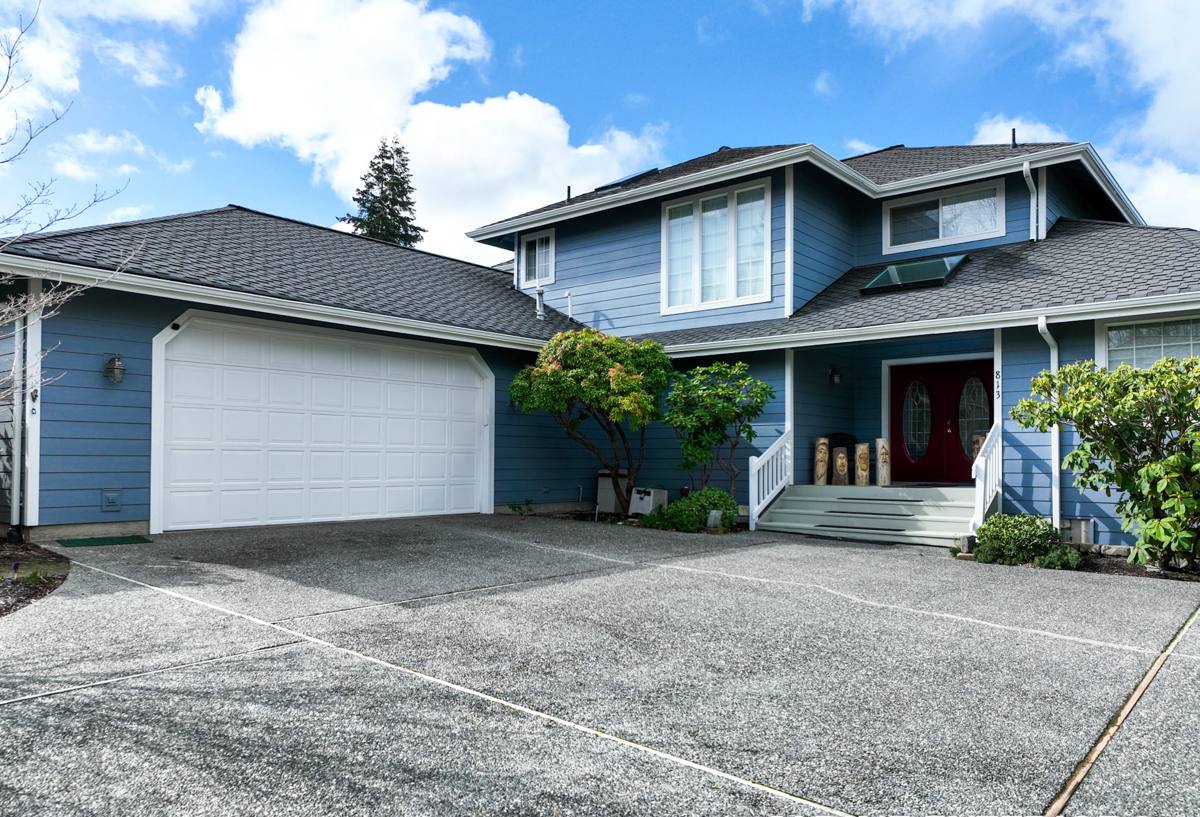
What Fairhaven's Climate Actually Does to a Window Install
Salt Air
Homes near the water deal with airborne salt that settles on hardware, fasteners, and cladding. Over years, cheap or mismatched metal components — screws, flashing tape edges, weep hole covers, hinge hardware on operable sashes — can corrode faster than they would a few miles inland. It's rarely dramatic; it's slow pitting and staining that eventually lets water find a path it shouldn't have.
Driving Rain
Bellingham doesn't just get rain, it gets wind-driven rain that hits window openings sideways, especially on exposures facing the water or open ground. A window that's air-sealed but not properly flashed for wind-driven rain will leak eventually — usually at the sill corners first, since that's where water collects and has the most time to find a gap.
A Long Moss Season
Whatcom County's wet season runs long, and shaded or north-facing walls in Fairhaven stay damp for months at a stretch. Moss and algae don't just grow on roofs — they colonize window sills, trim, and anything with a horizontal ledge where organic debris and moisture can sit. Left alone, that growth holds moisture against wood trim and caulk joints, which shortens their life.
None of this means new-construction windows in Fairhaven need to be exotic or overbuilt. It means the install has to be done correctly the first time, because this climate doesn't forgive shortcuts the way a drier region might.
What a Correct New-Construction Window Install Actually Involves
New-construction windows have a nailing fin around the perimeter of the frame, set into the rough opening before the weather-resistive barrier and siding go on — as opposed to replacement windows, which get inserted into an existing frame after the fact. That fin-mounted approach gives you the best possible seal against the wall assembly, but only if the sequencing is right.
- Rough opening check. Confirm the opening is square, level, and sized correctly before the window ever goes near it. A slightly out-of-square opening now becomes a shim-and-caulk problem forever.
- Sill pan flashing. A sloped, sealed sill pan under the window directs any water that does get past the exterior cladding back out, rather than letting it pool and soak into the framing.
- Weather-resistive barrier integration. The house wrap or building paper has to be cut, lapped, and taped in the right order — bottom up, back to front — so water sheds over every seam like shingles, never into one.
- Window-to-opening seal. Backer rod and sealant around the frame, plus proper fin fastening, so the window is both air-sealed and structurally anchored.
- Head flashing. A flashing above the window that directs water out and away from the top of the opening — this is the piece that matters most in driving rain.
- Interior air seal. Sealing the interior gap between the frame and rough opening controls condensation and drafts, which also affects long-term moisture inside the wall cavity.
Skip or rush any one of these steps and the window itself — no matter how good the brand — becomes the weak point in the wall.
Frame Material: What Holds Up Near the Water
We don't push one brand or material on every job. What we do is talk through trade-offs honestly, because the right choice depends on your home's design, budget, and exposure.
| Frame Material | Performance Near Salt Air / Rain | Maintenance | General Cost Position |
|---|---|---|---|
| Vinyl | Good — won't corrode or rot; UV-stable formulations hold color well | Low; occasional cleaning | Lowest to mid |
| Fiberglass | Very good — dimensionally stable, resists moisture and corrosion well | Low | Mid to higher |
| Wood-clad (aluminum or vinyl exterior) | Good on the exterior face; the wood interior needs the cladding and seals to stay intact | Moderate — cladding seams and interior finish need periodic attention | Higher |
| Bare aluminum | Prone to corrosion in salt air unless marine-grade and well-finished; we generally steer clients away from it for this exposure | Higher | Varies |
Whatever frame you choose, we recommend corrosion-resistant fasteners and hardware throughout — stainless or coated screws instead of standard zinc — since that's one of the cheapest upgrades that pays off longest in a salt-air environment.
Glass Packages
For this climate, a dual-pane, low-E coated unit with argon fill is the practical baseline — it manages Bellingham's mild but persistent heat loss in winter and keeps interiors comfortable without needing anything exotic. Homes with more direct water or wind exposure sometimes benefit from a slightly heavier-duty glazing spec, which we'll walk through based on your specific elevations.
Our New-Construction Window Process
We work directly with builders, GCs, or homeowners acting as their own GC, and we fit into your framing and siding schedule rather than making you fit into ours.
- Plan review. We review window schedules and rough opening sizes against the plans before anything is ordered, catching mismatches early instead of at install.
- Site walk. For Fairhaven builds specifically, we look at exposure — which elevations face the water or prevailing wind — and flag any openings that need extra flashing attention.
- Coordination with framing and siding crews. Window install has to happen at the right moment in the sequence: after weather-resistive barrier prep, before siding closes the wall up.
- Install per manufacturer flashing details, adapted for this climate. We follow the window manufacturer's installation instructions as the baseline, and layer in the sill pan, head flashing, and sealing details this region calls for.
- Final check. Every unit gets checked for square, level, plumb, and smooth operation before we call it done.
Cost Factors for New-Construction Window Installs
Every project's number is different, but the variables that move the price are consistent. Rather than quote a number that won't apply to your job, here's what actually drives cost:
| Factor | Why It Matters |
|---|---|
| Number and size of openings | More and larger windows mean more labor and material, straightforwardly |
| Frame material | Vinyl is generally the most budget-friendly; fiberglass and wood-clad cost more |
| Glass package | Upgraded glazing for wind or noise exposure adds cost per unit |
| Wall assembly complexity | Thicker walls, unusual siding materials, or complex trim details add install time |
| Access and elevation | Second-story or hard-to-reach openings take longer and may need lift or scaffold access |
| Coordination with other trades | Tight scheduling with framers and siding crews is usually smoother — and cheaper — than piecemeal timing |
As a rough, honest range: new-construction window installs (labor plus reasonable-quality units) commonly land somewhere in the low-to-mid hundreds per opening on the low end, up to well over a thousand per opening for larger units or upgraded glazing. We'll give you real numbers once we've seen your plans and window schedule.
Mistakes We Watch For on New-Construction Jobs
- Skipping the sill pan. It's an extra 15 minutes per window and it's the single biggest factor in whether a leak stays a leak or becomes rot.
- Wrapping the WRB in the wrong order. Water has to shed downward over every lap. Get the sequence backward and you've built a funnel instead of a barrier.
- Standard fasteners in a salt-air zone. Cheap screws corrode faster here than almost anywhere else in the county away from the immediate waterfront.
- Caulk used as the only defense. Sealant is a backup, not a strategy. Flashing does the real work; caulk just cleans up the edges.
- Installing before the opening is truly ready. Rushing to keep a schedule and setting a window in an out-of-square or unflashed opening creates problems that show up years later, not on install day.
Why It Matters That We Already Work Fairhaven
A crew that's done window installs across Bellingham and Whatcom County knows which elevations in Fairhaven take the worst of the weather off the bay, where moss builds up fastest, and which flashing details actually hold up here versus in a drier inland climate. That's not something you get from a manufacturer's install manual alone — it comes from seeing what fails in this specific environment and building the install to avoid it. We'd rather spend an extra half hour getting the flashing right on install day than have anyone dealing with a wet wall cavity five years from now.
After Install: Keeping New Windows Performing
New-construction windows are close to maintenance-free if the install was done right, but a little seasonal attention extends their life:
- Clear moss, leaves, and debris from sills and tracks a couple of times a year, especially on shaded or north-facing walls.
- Check exterior caulk lines annually for cracking or gaps, particularly after the first full wet season.
- Operate and lubricate hardware on operable windows periodically so mechanisms don't seize from disuse.
- Rinse salt residue off exterior frames and glass on homes closest to the water — plain water is usually enough.
- Watch for any interior staining or soft trim near window openings, which is an early sign worth investigating rather than ignoring.
If you're planning new construction or an addition in Fairhaven and want windows installed by a crew that treats the flashing details as seriously as the windows themselves, we're happy to walk your plans and give you a straightforward, no-pressure estimate. Fill out the form below and we'll get back to you.