 Bellingham
 New-Construction Windows in Lynden: Getting It Right the First Time
New-construction window work is a different job than swapping out an old window in an existing wall. On a new build, the window opening is raw — bare studs, a weather-resistive barrier that hasn't been cut yet, and a sequence of trades that all need the opening to be flashed and sealed correctly before siding, trim, or interior finishes can go on. In Lynden, where new homes and additions keep going up on former farmland and infill lots, we do a fair amount of this work directly with builders, framers, and homeowners managing their own build. The window itself matters less than what happens around it — the flashing, the sill pan, the sealant order — and that's where most long-term problems start or get prevented.
This page covers what a correct new-construction window install actually involves in Lynden specifically, what the local climate asks of that work, and how we approach the job from first walkthrough to final inspection.
Why Lynden's Weather Changes the Job
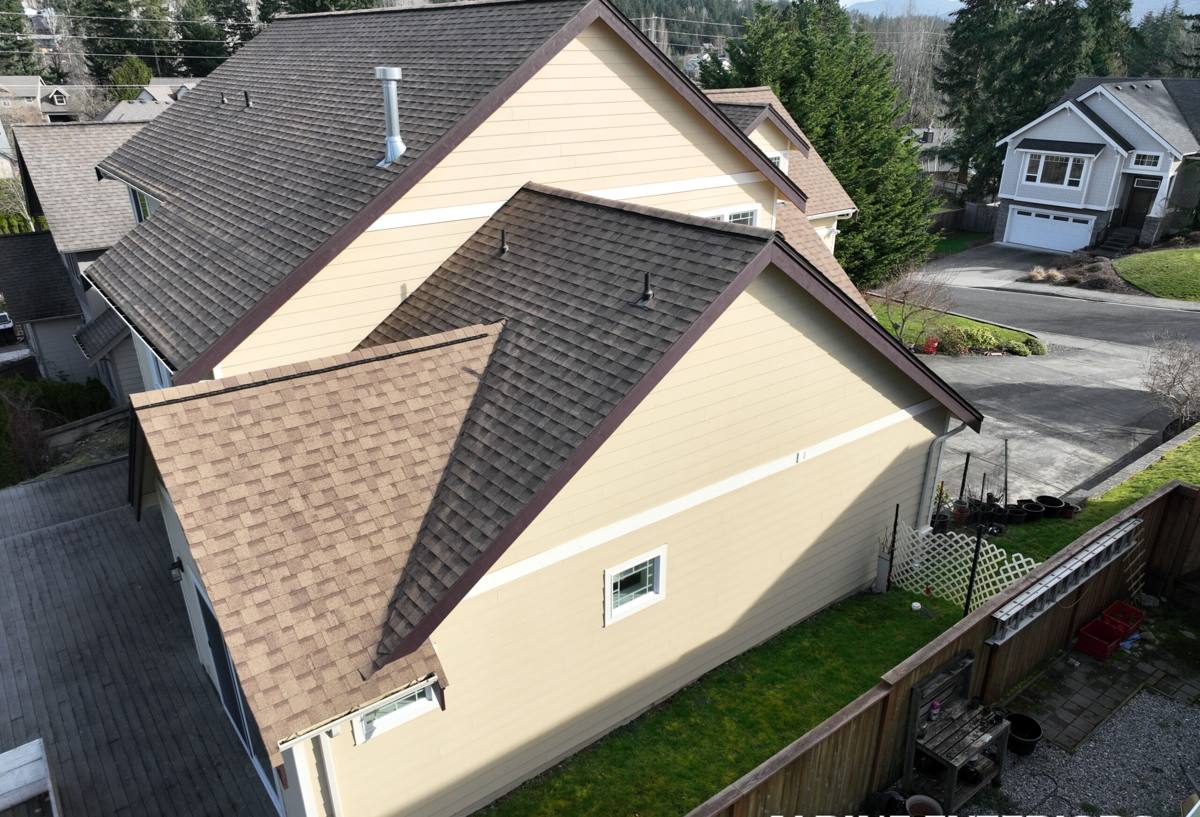
Lynden sits inland from Bellingham Bay, but it doesn't sit outside Whatcom County's weather pattern. The same marine systems that push salt-tinged air across Bellingham roll on across the flat, open farmland around Lynden, and out here there's less tree cover and fewer hills to slow the wind down. That means driving rain hits window openings at an angle, not just straight on, and it can push water sideways under poorly lapped flashing or into gaps that would stay dry in a more sheltered spot. Add a long wet season — often eight or nine months of the year with regular rain — and any shortcut in the flashing sequence has a lot of time to find its way into the wall assembly before anyone notices.
The other factor is moss and organic growth. Whatcom County's damp, mild climate is close to ideal for moss, algae, and mildew, and it doesn't take long for north-facing walls and shaded window sills in Lynden's tree-lined lots to start holding moisture instead of shedding it. A new-construction window opening that's flashed correctly sheds that water outward. One that isn't will trap it against the sheathing, and by the time staining or soft trim shows up on the inside, the damage is usually already inside the wall.
What This Means for a New Build Specifically
On an existing home, a poorly sealed window usually just leaks. On new construction, a poorly sealed window opening gets built over — sided, trimmed, insulated, drywalled — before anyone would ever see a problem. That's the real risk with new-construction window work: the mistakes are invisible for years. Getting the sequence right at the framing stage is the only real quality control point you get.
What a Correct New-Construction Window Install Involves
Sill Pan First
Before a window ever goes into the opening, the rough sill should have a sloped, sealed pan flashing installed — something that directs any water that gets past the window itself back outside the wall, not down into the framing. This is one of the most commonly skipped steps on fast-moving builds, and it's one we don't skip.
Flashing Sequence (Shingle-Lap Order)
Flashing tape and building paper or house wrap have to be installed in the correct order — sill, then jambs, then head — so that each layer overlaps the one below it, the way shingles overlap on a roof. Get this order backwards and water runs behind the flashing instead of over it.
Window Selection: Nail-Fin vs. Block Frame
Most new-construction windows in this region use a nailing-fin frame, which attaches directly to the sheathing and gets integrated into the weather-resistive barrier. Block-frame windows (more common in masonry or some custom builds) install into the rough opening differently and need their own flashing approach. We confirm which frame type the plans call for before the openings are even framed, since it affects rough opening sizing.
Sealant and Backer Rod
The gap between the window frame and the rough opening needs backer rod and the right sealant — not just a bead of caulk around the trim. Interior and exterior sealing are both part of the job, and they serve different purposes: one manages air and vapor, the other manages bulk water.
Framing and Sizing Considerations Specific to New Builds
Rough openings have to be sized correctly from the plans, with the right amount of shim space for the window unit — too tight and the frame can bind or bow; too loose and there's not enough support around the window for it to perform as rated. On open, wind-exposed lots around Lynden, we also pay attention to header and jamb blocking, since wind load on a large window or a wall of windows (increasingly common on newer builds) is a real structural consideration, not just a water-management one.
Comparing Window Frame Options for New Construction
Homeowners and builders in Lynden usually choose between a handful of frame materials for new-construction work. None of them is wrong — it depends on budget, maintenance appetite, and how the home is designed.
| Frame Type | Upfront Cost | Maintenance | Notes for This Climate |
|---|---|---|---|
| Vinyl | Lowest | Low | Good moisture resistance; verify reinforcement on larger units for wind exposure |
| Fiberglass | Mid to high | Low | Stable in temperature swings; holds up well against sustained damp conditions |
| Wood-Clad | Highest | Higher | Attractive interior finish, but any breach in the exterior cladding needs prompt attention in a wet climate |
| Aluminum | Mid | Low | Strong for large spans; less common as primary residential frame in this region |
Whatever frame material is chosen, the installation quality matters more than the product line. A well-installed mid-range window will outperform a premium window that's flashed incorrectly.
Our New-Construction Window Process
- Plan review — we look at the window schedule and rough opening sizes before framing is finalized, so there are no surprises later.
- Coordination with the builder or GC — we work around the framing and siding schedule so windows go in at the right point in the sequence, not too early or too late.
- Sill pan and flashing installation — done in the correct shingle-lap order, tied into the weather-resistive barrier.
- Window setting and fastening — plumb, level, square, and fastened per the manufacturer's schedule.
- Sealing — interior air seal and exterior water seal, done as separate steps.
- Walkthrough — we check operation, drainage, and flashing coverage before the opening gets covered by siding or interior finishes.
Working Alongside Your Builder or GC
A lot of new-construction window problems come from trade stacking — the framer, window installer, siding crew, and painter all touching the same opening without a clear handoff. We coordinate directly with the general contractor or owner-builder on timing, confirm who's responsible for the WRB tie-in versus the flashing, and flag anything in the rough opening (out-of-square framing, missing blocking) before it becomes a bigger fix later. If you're managing your own build in Lynden, we're glad to work as a sub on just the window package, or alongside our own siding scope if we're doing both.
What to Check Before Choosing a Window Package for a New Build
- Frame type matches what the rough openings were built for (nail-fin vs. block frame)
- U-factor and solar heat gain ratings are appropriate for window orientation on the lot
- Sill pan flashing is specified, not just assumed
- Sealant and backer rod are part of the install scope, not left to a separate trade
- Larger window units have engineered blocking for wind load
- Warranty covers both the product and the labor, and you know who to call for each
- Install timing is coordinated with siding and interior trades to avoid gaps in weather protection
Why Hire a Crew That Already Works in Lynden
Whatcom County's building department and local inspectors have specific expectations around flashing and moisture management on new construction, and a crew that's already done this work in Lynden knows what gets flagged and what doesn't. We also know how the local weather actually behaves on open, exposed lots versus more sheltered in-town sites — that shapes small decisions, like how much overlap to build into flashing details or where extra sealant attention pays off. A crew that's new to the area is learning those lessons on your house. We'd rather bring that knowledge to the job on day one.
After the Windows Are In
New-construction windows generally need very little attention for the first several years if they were installed correctly. Once the home is finished, the main ongoing task is keeping sills and tracks clear of moss and organic debris, especially on shaded or north-facing walls, and doing a visual check of exterior sealant every year or two as part of general home maintenance. Catching a small sealant gap early is a five-minute fix; catching it after a wet season has worked its way behind the trim is not.
If you're framing a new build or addition in Lynden and want a straight answer on window scope, timing, or what your rough openings need, we're happy to take a look and put together a free, no-pressure estimate — no obligation either way.