 Bellingham
 Roofing in Sehome's Particular Climate
Sehome sits close enough to Bellingham Bay that salt-laden air is a daily fact of life for anything metal, painted, or porous on a roof. Add Whatcom County's long wet season, the low-pressure systems that roll in off the Strait of Georgia through fall and winter, and the shade from mature conifers on many Sehome lots, and you get a roofing environment that's tougher than it looks from the street. Homes here don't usually fail because of one big storm — they fail slowly, from moisture that never fully dries out between rain events and from moss that gets a foothold on north-facing slopes and never lets go.
A roof built for a drier climate, or installed without real attention to ventilation and underlayment detail, will show its age in Bellingham years before it should. A roof built correctly for this specific neighborhood's exposure — its tree cover, its wind pattern, its months of steady drizzle — will outlast its rated lifespan instead of falling short of it.
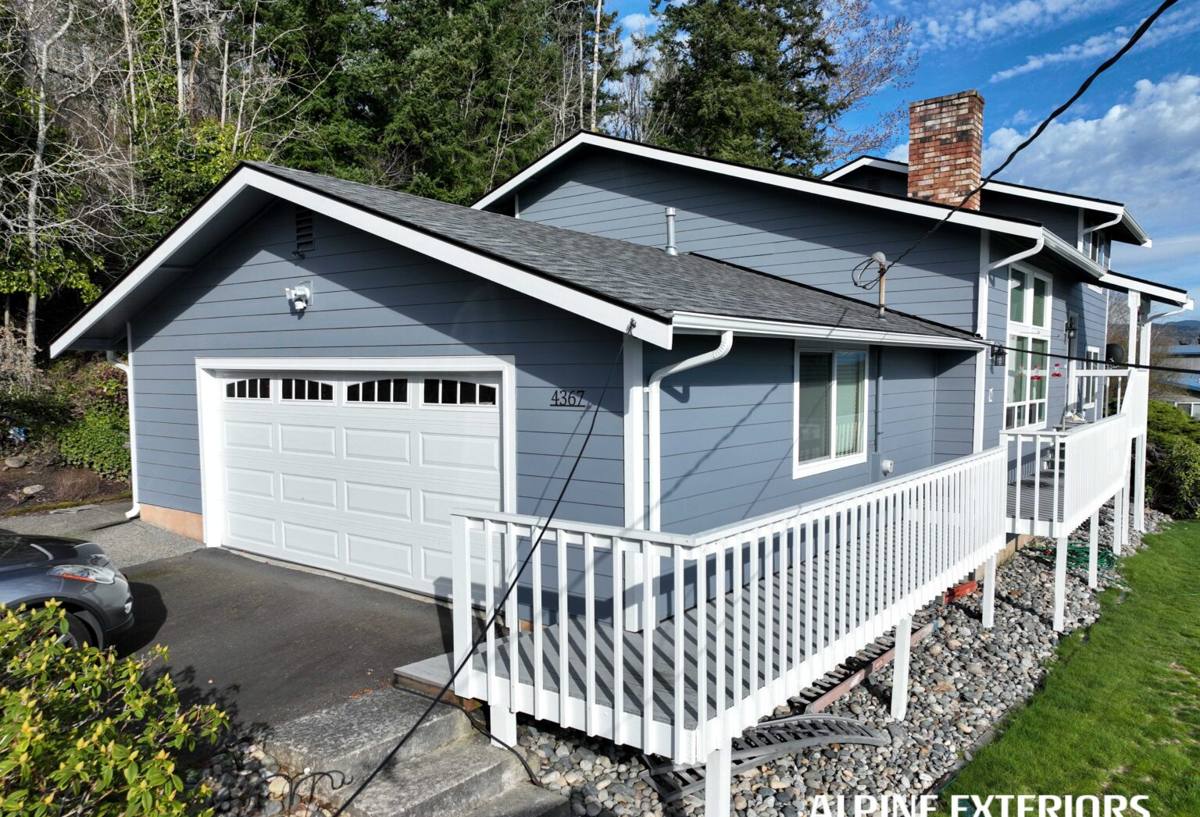
Signs a Sehome Roof Is Due for Replacement
Most homeowners call us after noticing one or two of the following. Any single item is worth a look; several together usually means replacement is the more honest recommendation than another round of patching.
- Granules collecting in gutters or at downspout outlets — a sign asphalt shingles are wearing thin
- Persistent moss or algae streaking on north- and west-facing slopes, even after cleaning
- Shingles that are cupping, curling at the edges, or visibly out of plane
- Soft spots in the decking felt underfoot during an inspection
- Daylight visible through the attic roof boards, or damp insulation near the eaves
- A roof that's 20+ years old and has never been fully re-roofed, only patched
None of these mean a roof needs to be replaced tomorrow. But they're the kind of thing worth having looked at before the next wet season, rather than after a leak shows up on a ceiling.
What a Correct Roof Installation Actually Involves
"New roof" covers a lot of ground, and the difference between a roof that lasts and one that doesn't usually comes down to details that aren't visible once the job is finished.
Tear-Off and Deck Inspection
We don't install new roofing over old. A full tear-off lets us see the actual condition of the roof deck, which is the part homeowners never see and some contractors skip inspecting closely. In this climate, we routinely find soft or delaminated sheathing near valleys, chimneys, and eaves — the spots where water lingers longest. Any compromised decking gets replaced before anything new goes down; roofing over a soft deck just hides the problem for the next owner to find.
Underlayment and Ice-and-Water Protection
Underlayment does more work in Bellingham than it would in a drier region. We run synthetic underlayment across the full roof and self-adhering ice-and-water membrane at the vulnerable points — eaves, valleys, around penetrations, and low-slope transitions — where wind-driven rain off the bay can push water sideways under standard shingle laps.
Flashing
Flashing failure, not shingle failure, is the most common cause of leaks we find in older Sehome roofs. New step flashing at walls and chimneys, new valley metal, and properly lapped counterflashing matter more to a roof's long-term performance than the shingle brand printed on the box.
Ventilation
A roof deck that can't breathe stays damp longer after every rain, which is exactly what feeds moss growth and, eventually, rot. Balanced intake and exhaust ventilation — soffit vents paired with ridge or high-point exhaust — keeps the deck drying out between storms instead of staying saturated straight through the wet months.
Material Options for Sehome Homes
There's no single right material for every roof, but there are real trade-offs worth understanding before you decide. Here's how the common options stack up for this specific climate and the mixed housing stock in the neighborhood.
| Material | Typical Lifespan | How It Handles Salt Air & Moss | Considerations |
|---|---|---|---|
| Architectural asphalt shingle | 25–30 years | Algae-resistant granule options help; still needs periodic moss removal on shaded slopes | Best value, wide color range, matches Sehome's mixed housing stock |
| Standing seam metal | 40–50+ years | Excellent moss resistance; needs a coastal-rated finish to manage salt exposure long-term | Higher upfront cost, sheds moisture fast, quieter than most homeowners expect once properly insulated |
| Cedar shake | 20–30 years with upkeep | Attractive but moisture-sensitive; needs consistent maintenance to resist rot and moss in this climate | We're upfront that the maintenance demand is real here — it's a bigger ongoing commitment than the other two options |
For most Sehome homes, a quality architectural asphalt shingle with algae-resistant granules is the practical choice — it balances upfront cost against the maintenance reality of a shaded, damp lot. Metal earns its higher price on steeper-pitch homes or for owners planning to stay long enough to value the extended lifespan. We'll give you a straight answer on which fits your roof and budget rather than steering you toward whatever's easiest to sell.
Our Installation Process
- On-site inspection and estimate — we look at the whole roof system, not just the shingles, including attic ventilation and any trouble spots you've already noticed
- Written scope and material selection — you know exactly what's being torn off, replaced, and installed before work starts, and what it costs
- Tear-off and deck repair — old roofing removed, deck inspected, any damaged sheathing replaced and documented
- Underlayment, flashing, and ventilation installed — the parts that actually determine how the roof performs through Bellingham's wet months
- Roofing material installed to manufacturer specification, which matters if you ever need to make a warranty claim
- Final walkthrough — gutters and yard checked for debris and nails, roof reviewed with you before we consider the job done
Weather windows matter for scheduling in this region. We plan installation timing around forecasted dry stretches where possible, since a roof deck exposed to rain mid-installation is a problem we'd rather avoid than fix.
Moss, Algae, and Long-Term Maintenance
Whatcom County's moss season isn't a one-time nuisance — it's a recurring condition that a new roof needs to be designed to resist, not just survive once. Beyond material choice, a few installation details make a lasting difference: adequate slope for drainage where the roof design allows it, keeping overhanging branches trimmed back from the roofline, and zinc or copper strips installed at the ridge on shingle roofs, which release trace metal ions that discourage moss regrowth as rain washes over them. None of this eliminates maintenance entirely, but it stretches the interval between cleanings and reduces the chance of moss working under shingle edges and lifting them loose.
What Drives the Cost of a New Roof
Every roof is priced on its own specifics, but the factors that move the number up or down are consistent. Understanding them ahead of time makes an estimate easier to evaluate.
| Factor | Why It Matters |
|---|---|
| Roof size and pitch | Steeper roofs take longer to work safely and use more underlayment and flashing detail |
| Number of layers being removed | Tear-off of multiple old layers adds labor and disposal cost |
| Deck condition | Rot or soft sheathing found during tear-off adds material and labor not visible from the ground |
| Material selected | Asphalt, metal, and cedar carry different material and installation labor costs |
| Roof complexity | Valleys, dormers, skylights, and chimneys each add flashing work and time |
| Ventilation upgrades | Adding or correcting intake and exhaust venting is a smart long-term investment, not just an add-on line item |
We give a written, itemized estimate before any work begins, so you can see where the cost is actually going rather than being handed a single lump number and asked to trust it.
Why Local Experience in Sehome Matters
A crew that already works this neighborhood knows which slopes hold moss year-round because of tree shade, which older homes tend to have decking that needs extra attention during tear-off, and how wind off Bellingham Bay behaves differently than it does further inland. That's not something learned from a manufacturer's install guide — it's learned by doing roofs on these specific streets, in this specific weather, season after season. It also means a crew that isn't driving in from out of the area for a warranty callback or a follow-up question six months after the job is done, and one that's familiar with local permitting and inspection expectations.
Before You Hire: A Practical Checklist
- Ask for proof of current Washington contractor licensing and insurance, not just a business card
- Get a written scope that names the underlayment, flashing, and ventilation approach — not just the shingle brand
- Ask what happens if they find deck damage during tear-off, and how that gets priced
- Confirm whether the estimate is itemized or a single lump sum
- Ask how many roofs they've done in Bellingham or Whatcom County specifically, not just the region broadly
- Check that the warranty covers workmanship, not only manufacturer material defects
If your Sehome roof is showing its age, or you're just weighing your options for the first time, we're happy to take a look and walk you through what we see — no pressure, no obligation. Use the form below to request a free estimate.