 Bellingham
 Siding Built for the Puget Area's Weather, Not Just the Average Pacific Northwest Home
Homes in the Puget area near Bellingham sit close enough to the water that salt-laden air is a constant factor in how exterior materials age. Add in Whatcom County's long stretch of driving rain from fall through spring, plus a moss and algae season that can run most of the year on shaded north and west walls, and you have a climate that is genuinely harder on siding than most manufacturers' marketing photos suggest. We install James Hardie fiber cement siding exclusively, and on Puget-area homes specifically, the product choice and the installation details both matter more than they would in a drier, inland climate.
This page covers what local homes actually need from their siding, what a correct James Hardie install looks like in this environment, and how we approach the work when we're on a Puget-area job site.
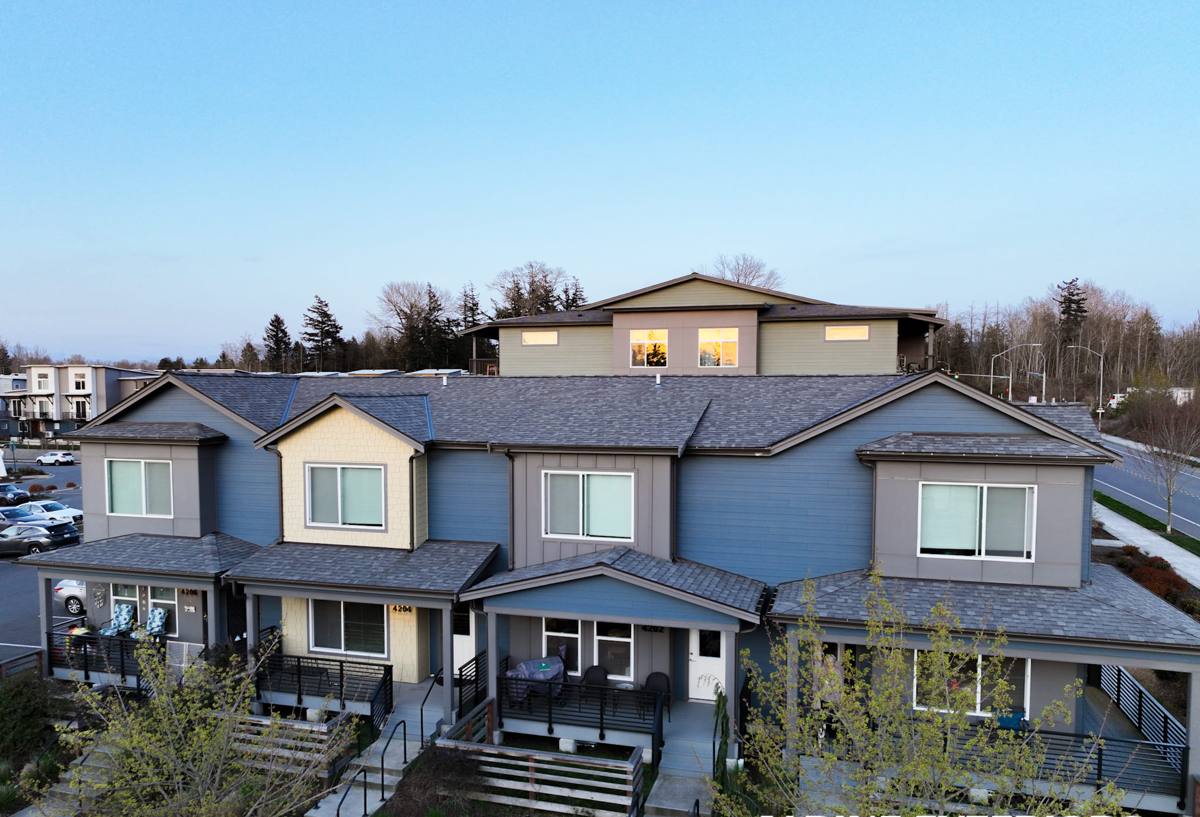
What Salt Air, Rain, and Moss Do to Exterior Siding
Salt air and coastal moisture
Proximity to Puget Sound means airborne salt settles on exterior surfaces and accelerates corrosion of exposed metal fasteners, flashing, and trim hardware. It also means siding surfaces stay damp longer after storms, since salt-laden air holds moisture differently than dry inland air. Materials that rely on paint film alone for protection — rather than a factory-cured finish bonded to the substrate — tend to show fading and chalking sooner in this kind of exposure.
Driving rain and wind-driven water
Storms coming off the Sound don't just fall straight down — wind pushes rain sideways into wall assemblies, especially on the windward side of a home. This makes water management behind the siding (not just the siding surface itself) the difference between a wall that stays dry and one that quietly rots from the inside. Lap spacing, flashing details, and drainage gaps behind the cladding all matter here as much as the siding product itself.
Moss, algae, and shaded exposures
North- and west-facing walls, and anything under tree cover, stay damp for extended stretches in this climate. Organic growth on siding isn't just cosmetic — moss and algae hold moisture against the surface, which shortens the life of anything that can absorb water or swell. This is one of the biggest reasons wood-based and wood-composite siding products struggle long-term in this area.
Why We Standardized on James Hardie for This Climate
We don't install LP SmartSide, vinyl, Cemplank, Allura, primed spruce, or cedar. That's not a marketing position — it's a decision based on what holds up under repeated wet-dry cycling, salt exposure, and moss pressure over decades, not just the first few years.
- Fiber cement composition: James Hardie siding is cement, sand, and cellulose fiber — it doesn't absorb and swell the way wood-based or wood-composite products can when exposed to prolonged coastal moisture.
- Non-combustible: a real advantage regardless of climate, but especially relevant given how many Puget-area homes back up to trees and vegetation.
- ColorPlus factory finish: a baked-on finish applied under controlled conditions, which holds color and resists fading and chalking better than field-applied paint on primed wood or composite substrates — a meaningful difference in a salt-air environment.
- HZ5 climate-engineered product line: James Hardie manufactures region-specific formulations; the HZ5 line is engineered for the wetter, harsher climate zones the Pacific Northwest falls into, rather than a one-size-fits-all national product.
- Strong transferable warranty: James Hardie's warranty terms are a meaningful part of the value — they reflect the manufacturer's own confidence in how the product performs long-term, and they can transfer if the home sells.
We're not saying every other product is without merit — cedar has real aesthetic qualities, and vinyl has a low upfront cost. But given what we see happen to siding on Bellingham-area homes over 10, 15, and 20 years, we made a professional call to install one product system and install it correctly, rather than offer several and let cost drive the decision.
What a Correct James Hardie Install Involves Here
The product only performs as well as the installation. In a high-moisture, high-wind-driven-rain area like Puget, a handful of details separate a siding job that lasts from one that fails early and quietly.
Water management behind the cladding
We install a proper drainage plane and weather-resistant barrier behind the siding, with attention to how water that does get past the surface is directed back out rather than trapped against the sheathing. This matters more here than in drier climates because the volume and frequency of wind-driven rain is simply higher.
Flashing and fastener details
Window and door flashing, kickout flashing at roof-wall intersections, and fastener selection all get scrutinized. Given the salt-air corrosion factor, fastener material and coating matter — we use fasteners rated for the exposure, not just whatever is cheapest or fastest to install.
Proper clearance and gaps
James Hardie specifies minimum clearances from grade, roof lines, decks, and other siding terminations. These clearances exist specifically to keep the bottom edge of the siding from sitting in standing water or trapped moisture — a common failure point we see on improperly installed siding in this area, regardless of brand.
Caulking and joint treatment
Manufacturer-spec caulking at butt joints and penetrations, done correctly the first time, keeps water from tracking behind the panels. Skipping or rushing this step is one of the most common corner-cuts in siding installation generally, and one of the most consequential in a wet climate.
Comparing Siding Options for a Puget-Area Home
| Factor | James Hardie Fiber Cement | Wood / Wood Composite | Vinyl |
|---|---|---|---|
| Moisture absorption | Minimal — cement-based, engineered for wet climates | Higher — prone to swelling, rot in prolonged damp exposure | Non-absorptive, but seams and expansion can let water behind panels |
| Salt air resistance | Factory-cured finish holds up well against fading and chalking | Field-applied paint/primer wears faster in salt exposure | Color can fade and become brittle over time in coastal UV/salt exposure |
| Moss/algae resistance | Doesn't feed organic growth the way absorbent materials can | More susceptible, especially on shaded walls | Resistant to growth but can trap moisture at seams |
| Fire resistance | Non-combustible | Combustible | Melts/deforms under heat exposure |
| Typical service life when installed to spec | Multiple decades | Shorter, especially in coastal/wet climates | Moderate, with earlier cosmetic degradation |
Our Process for Puget-Area Jobs
- On-site assessment: we look at wall exposure (which sides take the worst wind-driven rain), existing moisture damage, tree cover and shading, and current flashing conditions before quoting anything.
- Product and color selection: we walk through James Hardie's HZ5 lines and ColorPlus options suited to the home's exposure and the owner's preferences.
- Tear-off and sheathing check: we don't side over hidden rot. If sheathing is compromised from prior water intrusion, we address it before new siding goes up.
- Weather barrier and flashing installation: this is the step that determines whether the wall stays dry for the next 30 years, and we treat it that way.
- Siding installation to manufacturer spec: correct clearances, fastening, and joint treatment, following James Hardie's published installation requirements for this climate zone.
- Final inspection walkthrough: we review the completed work with the homeowner before calling the job done.
Signs Your Current Siding May Already Be Struggling
- Persistent moss or algae staining that returns quickly after cleaning
- Soft or spongy spots when you press on the siding, especially near the bottom edge
- Visible gaps, warping, or separation at butt joints
- Paint that's peeling or bubbling rather than just fading
- Rust streaks below fasteners or trim hardware
- Interior signs like peeling paint or musty smells on exterior-facing walls
Any of these can indicate water is already getting behind the siding, which is worth having looked at before it becomes a sheathing or framing problem.
Why Local Experience Matters for This Work
A crew that mainly works drier inland areas can install James Hardie siding correctly on paper and still miss the details that matter most where wind-driven rain and salt air are a daily reality. Knowing which wall orientations in the Bellingham area typically take the worst weather, how aggressive moss growth gets on shaded exposures, and how coastal moisture behaves differently than inland humidity all inform real decisions on a job site — from flashing details to caulking schedules to fastener selection. We work this climate regularly, and that shows up in how the siding performs a decade in, not just how it looks on installation day.
If you're considering new siding for a Puget-area home, we're happy to take a look and walk you through what your home specifically needs — no pressure, no obligation. Request a free estimate using the form below and we'll go from there.