 Bellingham
 Puget Roofs Work Harder Than Most
If you own a home in the Puget area near Bellingham, your roof is dealing with a combination of stresses that a lot of manufacturers' warranty language simply doesn't account for. You've got salt-laden air coming off the water, long stretches of driving rain pushed sideways by wind, and a moss season that can run most of the year in the shadier, tree-covered lots common to this part of Whatcom County. None of these things alone will destroy a roof quickly. Together, over years, they wear down materials, fasteners, and flashing details faster than the same products would fail in a drier, inland climate.
A new roof installation here isn't just "put shingles on a house." It's a system that has to shed wind-driven water at every seam, resist corrosion at every metal component, and stay clean enough that moss doesn't get a foothold in the granules or along the shaded slopes. When we install a roof in Puget, we're building for those specific conditions, not just following a generic spec sheet.
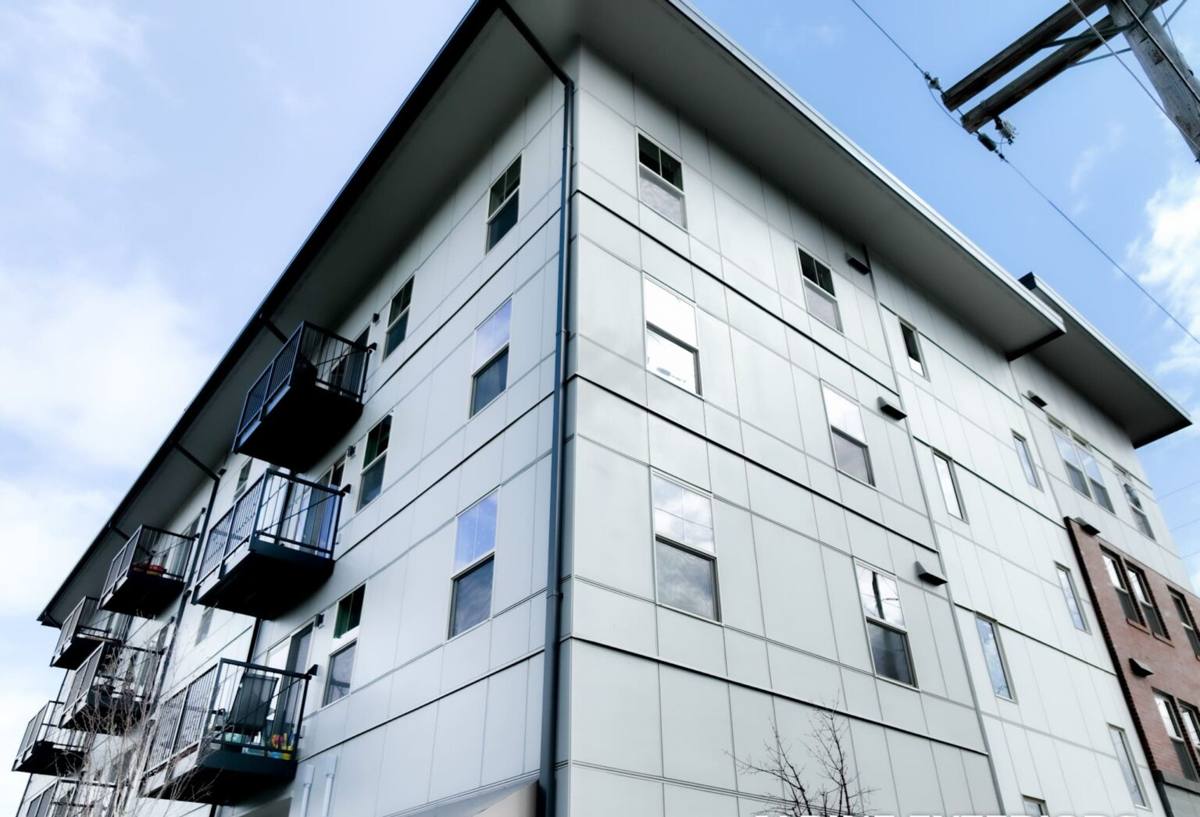
What the Local Climate Does to a Roof Over Time
Salt Air and Metal Corrosion
Homes closer to the water pick up airborne salt that settles on every exposed surface, including flashing, fasteners, vents, and gutters. Standard galvanized fasteners and lower-grade metal flashing can start showing rust and pitting years before they would inland. This doesn't usually show up as a leak right away — it shows up as a fastener that's lost its grip, or a flashing seam that's thinned out and started to fail quietly.
Driving Rain and Wind-Driven Water
Bellingham-area storms don't just drop rain straight down; wind pushes it sideways and up under laps, edges, and any flashing that isn't detailed correctly. A roof that would perform fine in calmer weather can leak at a valley, a wall step-flash, or a low-slope transition if those details weren't built with wind-driven rain in mind. This is one of the most common causes of roof leaks we see on homes that were otherwise installed reasonably well.
Moss, Shade, and Slow Roof Decay
Whatcom County's tree cover and long damp season give moss exactly what it needs: shade, moisture, and time. Moss holds water against the roofing surface, works its way under shingle edges, and can lift tabs enough to let wind and rain in behind them. On cedar or older asphalt roofs especially, sustained moss growth accelerates decay of the roofing material and, eventually, the sheathing underneath it.
Signs Your Puget Home Needs a New Roof
Not every roofing issue means a full replacement, but these are the signs worth taking seriously:
- Granules collecting in gutters or at the base of downspouts
- Shingles that are cupping, curling, or cracking, especially on south- or west-facing slopes
- Moss or dark streaking that keeps coming back even after cleaning
- Soft spots or sagging when walked on, which usually points to deck damage underneath
- Rusted or visibly deteriorated flashing around chimneys, vents, and valleys
- Daylight visible through the attic roof deck, or damp insulation below the roofline
- A roof that's approaching or past the manufacturer's expected service life for this climate
- Rising energy bills tied to poor attic ventilation or insulation performance
If you're seeing more than one of these, it's worth having someone look at the whole system — not just patch the symptom you noticed.
Choosing a Roofing System Built for This Climate
Every roofing material has trade-offs. The right choice for a Puget home depends on your slope, sun exposure, tree cover, and budget — but here's how the common options stack up against the conditions we actually deal with here.
| Material | Moss/Moisture Resistance | Wind-Driven Rain Performance | Maintenance |
|---|---|---|---|
| Architectural asphalt shingle | Good, with proper ventilation and periodic cleaning | Strong when installed with correct underlayment and flashing | Low to moderate |
| Standing seam metal | Very good — sheds moisture quickly, little surface for moss to grip | Excellent when panels and flashing are properly detailed | Low |
| Synthetic/composite shingle | Good, resists moisture absorption better than wood | Strong with correct installation | Low |
| Cedar shake/shingle | Requires active maintenance to resist moss and rot | Good when new, degrades faster in shaded, damp areas | High |
We don't push one material on every home. What we do is walk you through how each option will actually perform on your specific roof — your pitch, your tree cover, and how much upkeep you're realistically willing to do. A steep, sun-exposed roof and a shaded, low-slope roof in the same Puget neighborhood can call for different answers.
What a Correct New Roof Installation Actually Involves
Tear-Off and Deck Inspection
We remove the old roofing down to the deck rather than layering over it. That's the only way to actually see the condition of the sheathing — soft or delaminated deck sections get replaced before anything new goes down. Installing new roofing over a compromised deck just hides a problem that will resurface as a leak later.
Underlayment and Water Protection
Given how much wind-driven rain this area sees, underlayment choice and coverage matter more here than in drier climates. We pay particular attention to ice-and-water shield or equivalent membrane at eaves, valleys, and any low-slope transitions where water is most likely to be pushed backward under normal shingle laps.
Flashing Details
Flashing is where most roof leaks actually start, not in the field of the roof itself. Chimneys, sidewalls, valleys, and vent penetrations all get new, corrosion-resistant flashing — not just caulked over the old metal. Given the salt air in this area, we're deliberate about the metal grades and fasteners we use so they hold up over the long term rather than corroding out early.
Ventilation
Proper intake and exhaust ventilation keeps your attic dry and temperature-regulated, which does double duty: it protects the roof deck from condensation-driven rot, and it slows moss growth by keeping the underside of the roof from staying damp. A roof can be installed perfectly and still fail early if the ventilation underneath it wasn't corrected at the same time.
Our Installation Process
- On-site inspection and estimate — we assess your existing roof, attic ventilation, and any problem areas specific to your property before quoting anything.
- Material selection — we go over the realistic options for your roof's slope, exposure, and budget, with honest trade-offs for each.
- Tear-off and deck check — old roofing comes off, the deck is inspected, and any damaged sheathing is replaced.
- Underlayment and flashing installation — water protection and flashing are installed to handle wind-driven rain, not just standard vertical rainfall.
- Roofing installation — your chosen material is installed to manufacturer spec and to the details this climate actually requires.
- Ventilation correction — intake and exhaust ventilation are checked and corrected as part of the job, not treated as a separate add-on.
- Final walkthrough and cleanup — we walk the finished roof with you, clean the site thoroughly, and go over warranty coverage.
What a New Roof Costs in Puget
Roofing costs vary by material, roof size, pitch, and how much of the deck and flashing needs replacing. Broadly, homeowners in this area should expect asphalt shingle roofs to run less than metal or high-end composite systems, with steep or complex rooflines costing more than simple ones regardless of material. The factors below tend to move the price the most:
| Cost Factor | Why It Matters |
|---|---|
| Roof size and number of slopes | More square footage and more valleys/hips mean more material and labor |
| Pitch and steepness | Steep roofs take longer to work on safely and require more fall protection |
| Deck condition | Rotted or soft sheathing found during tear-off needs replacement before roofing goes on |
| Material choice | Asphalt, synthetic, and metal roofing carry different material and labor costs |
| Flashing complexity | Chimneys, skylights, and multiple wall intersections add detail work |
| Ventilation upgrades | Correcting inadequate intake/exhaust adds scope but protects the new roof's lifespan |
We give a firm, itemized estimate after seeing the roof in person — not a phone-quote guess. That way you know exactly what you're paying for and why.
Why Hiring a Crew That Already Works in Puget Matters
A roofing crew that mostly works drier, inland areas can still do competent work, but they're often applying general-purpose details to a climate that doesn't forgive shortcuts at flashing seams or underlayment coverage. Working in and around Bellingham and Whatcom County day in and day out means we've seen how roofs actually fail here — where moss establishes first, which flashing details let wind-driven rain through, and which materials hold up under sustained salt exposure. That local pattern recognition shows up in the small decisions made on your roof, not just the big ones.
It also means we're a known, reachable local business if a warranty question or a storm-related concern comes up down the road — not a crew that came through once from out of the area.
Ready for a Straight Answer on Your Roof?
If your roof is showing its age, or you just want an honest opinion on how much life it has left, we're happy to take a look. Use the form below to request a free, no-pressure estimate for your Puget-area home — we'll assess the roof, walk you through your real options, and give you a straightforward, itemized quote.