 Bellingham
 Roof Repair in Barkley: What Local Homes Are Up Against
Not every roof problem in Barkley calls for a full tear-off and replacement. A lot of the time, a roof that's otherwise sound has a specific, fixable issue — a section of failed flashing, a run of cracked shingles, a valley that's finally given out after years of wind-driven rain working at it. The trick is knowing the difference, and then doing the repair correctly, because a patched-over problem in this climate rarely stays small.
Barkley sits inside Whatcom County's marine weather pattern, and that pattern is unusually hard on roofs specifically. Salt-tinged air off the water accelerates corrosion on exposed metal and fasteners. Rain here doesn't just fall straight down — it gets driven sideways and even upward under eaves and shingle edges by wind, reaching places a calmer, drier climate would never test. And a long, damp moss season settles into shaded and north-facing roof planes and stays there for months, quietly working moisture into places it doesn't belong. This page is about roof repair specifically for Barkley homes dealing with that combination — what actually needs fixing, how a correct repair is done, and how to tell when a repair is still the right call.
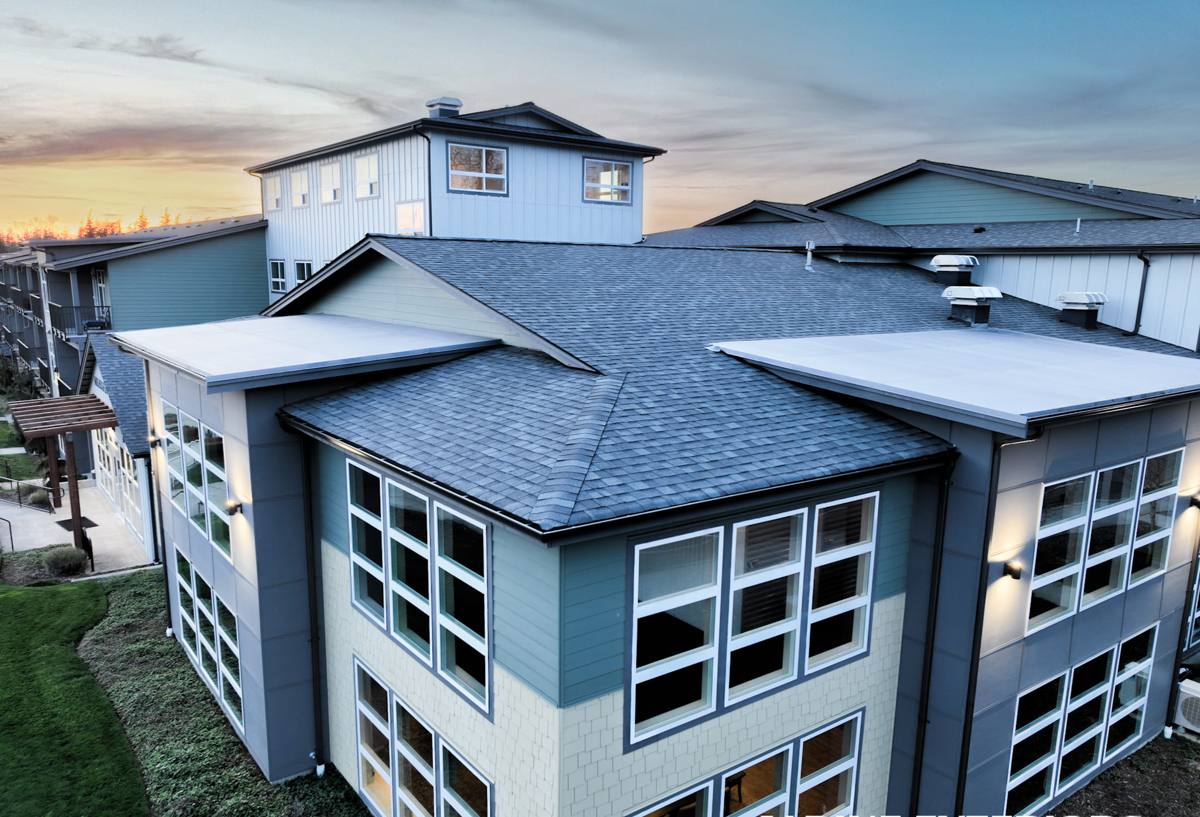
Signs a Barkley Roof Needs Repair
Most homeowners call us because of one specific thing they noticed, not because they've been tracking the overall condition of the roof. It's worth knowing what to look for, both from the ground and from inside the attic, so a small problem gets caught before it becomes a bigger one:
- A water stain on a ceiling or ceiling corner, especially one that shows up or worsens after a windy rainstorm
- Shingles that are cracked, curling at the edges, or missing outright
- Granules collecting in the gutters, a sign shingles are wearing thinner than they should
- Visible daylight or damp insulation when you look up into the attic
- Rust streaks running down from a chimney, vent pipe, or valley flashing
- Moss forming thick mats on shaded or north-facing slopes rather than light surface staining
- Sagging along a section of roofline, which can point to moisture damage in the decking underneath
Any single item on that list doesn't automatically mean the whole roof is failing. It usually means it's time to have someone look closely at the specific area and figure out whether it's a contained repair or a sign of something bigger developing underneath.
What a Correct Roof Repair Actually Involves
A repair that's done right addresses the actual source of the problem, not just the spot where the symptom showed up. That distinction matters more in Barkley than it would somewhere drier, because wind-driven rain and long-standing moss can move water sideways under a roof surface, so where a stain appears inside the house is often not directly below where water is actually getting in.
Finding the Real Leak Source
Leak tracing starts with the interior stain or attic evidence, but it doesn't end there. Water follows the path of least resistance along rafters, decking, and underlayment before it shows up as a visible stain, so a repair that only addresses the ceiling location without walking the roof itself and the attic space above it is guessing rather than diagnosing. We look at the roof surface, the attic framing and decking from underneath, and how the two match up before deciding what actually needs to be repaired.
Flashing Repairs
Flashing failure is the single most common cause of roof leaks we see in this area, and it's rarely the shingle field itself that's the problem. Valleys where two roof planes meet, step flashing along wall intersections, and the metal around chimneys, skylights, and vent penetrations all take the brunt of wind-driven rain. A correct flashing repair means removing and re-lapping the metal properly, tying it back into the underlayment, and sealing transitions with the right material rather than just running a bead of caulk over a gap and calling it fixed. Caulk is a short-term patch on top of a flashing problem, not a repair.
Shingle and Underlayment Repairs
When a section of shingles has failed — cracked, lifted, or blown off — we replace that section down to the underlayment, checking the underlayment and decking underneath for hidden moisture damage before anything new goes back down. Wherever reasonably possible we match the existing shingle profile and color as closely as the current product line allows, though on an older roof an exact match sometimes isn't available, and we'll tell you that honestly upfront rather than let it be a surprise.
Moss and Debris Removal Done Correctly
Moss removal is part of a lot of Barkley repair calls, and how it's done matters. Pressure washing a shingle roof strips protective granules and can shorten the shingles' remaining life more than the moss itself was hurting it. We remove moss and built-up debris by hand or with a soft-wash approach, clear valleys and gutters where debris traps moisture against the roof surface, and where it makes sense, install zinc or copper strips near the ridge, since rainwater running over them helps slow regrowth on shaded slopes going forward.
Ventilation Check
Poor attic ventilation traps moisture against the underside of the roof deck, which accelerates rot and gives moss another source of dampness to work with from below. Any repair visit is also a chance to check that intake and exhaust ventilation are balanced and unobstructed, since a roof can look fine from the street while still losing years of life to trapped attic moisture.
Repair or Replace? How We Help You Decide
This is the question behind almost every call we get, and the honest answer depends on more than just how bad the current problem looks.
| Factor | Leans Toward Repair | Leans Toward Replacement |
|---|---|---|
| Roof age | Well within expected shingle lifespan | At or past the shingle's rated service life |
| Extent of damage | Isolated to one section, valley, or penetration | Spread across multiple slopes or the whole roof |
| Repair history | First or second repair on this roof | Repeated repairs to the same or nearby areas |
| Decking condition | Solid, no soft spots found on inspection | Soft, delaminated, or rotted decking discovered |
| Moss and granule condition | Surface staining, granules still consistent | Heavy granule loss or moss undermining shingle edges broadly |
We walk the roof and the attic before recommending either path, and we'll tell you plainly when a repair will genuinely hold for years versus when it's a temporary fix on a roof that's telling you it's close to the end of its service life. We don't have a reason to push a replacement a homeowner doesn't need, and we're not going to talk someone into a repair that's just going to fail again in a season or two either.
Materials and Methods We Use for Lasting Barkley Repairs
The materials that go into a repair matter just as much in this climate as they do in a full roof replacement. We use corrosion-resistant fasteners and flashing metal rather than standard-grade hardware, since salt air will work on exposed fasteners faster here than it would inland. At vulnerable repair points — valleys, penetrations, and wherever decking has been opened up — we install self-adhered waterproof membrane underneath the new flashing or shingles, which gives a genuine water barrier at exactly the spot that failed before, not just a surface-level patch. Fastening follows manufacturer nailing pattern and count rather than a shortcut, since under-fastened shingles are one of the more common reasons a repair reopens within a year or two of wind exposure.
Our Roof Repair Process
- In-person inspection: We walk the roof and check the attic from underneath in person, not from a photo or a drive-by estimate.
- Honest diagnosis: We identify the actual source of the problem, and tell you plainly whether it's a repair situation or one where replacement makes more sense.
- Written estimate: You get a clear estimate describing exactly what's being repaired and how, not a vague single line item.
- Scheduling around weather: We build reasonable flexibility into the timeline, since wet-season delays are a normal part of working in this region.
- The repair itself: Flashing, shingles, underlayment, or decking sections are addressed to manufacturer specification, with extra attention at the point that actually failed.
- Walkthrough and cleanup: We review the completed repair with you and do a full site and magnetic nail sweep before considering the job done.
What Roof Repairs Typically Cost in Barkley
Repair costs vary widely depending on what's actually wrong, and we'd rather explain the factors than throw out a number that doesn't mean anything until a roof has actually been inspected.
| Factor | What It Affects |
|---|---|
| Type of repair | A single flashing repair is a much smaller job than replacing a damaged section of decking |
| Roof pitch and access | Steep or hard-to-reach roofs take longer and require more safety setup |
| Extent of moss or debris buildup | Heavy, long-neglected moss growth takes more time to remove correctly than routine maintenance would have |
| Hidden decking damage | Repairs that uncover soft or rotted decking cost more than the original visible problem suggested |
| Shingle availability and match | Matching an older or discontinued shingle line can add cost or limit how seamless the repair looks |
A written estimate that spells out exactly what's being repaired and why tells you far more than a bare number, and it's worth asking any roofer to walk through their reasoning rather than just quoting a price.
Why Hiring a Crew That Already Works in Barkley Matters
A crew that regularly repairs roofs in and around Barkley has already seen how salt air corrodes underspecified fasteners, how wind-driven rain finds its way past a flashing detail that would hold up fine somewhere calmer, and which roof orientations hold moss longest through the wet season. That familiarity shows up in decisions a homeowner rarely notices directly but feels in how long the repair actually lasts — where a flashing lap needs to sit, how far a shingle repair needs to extend beyond the visible damage, whether a valley needs new membrane underneath or just new metal on top.
It also matters after the job is finished. A repair warranty is only as good as the company standing behind it, and a contractor with an ongoing, established presence in this community is the one you can actually reach if a question comes up two or three years down the road.
A Practical Checklist Before You Hire Anyone for a Roof Repair
- Do they inspect the attic from underneath, not just the roof surface from the ground?
- Does the estimate describe the actual repair scope, not just "roof repair" as a single vague line?
- Do they explain whether they found hidden decking or underlayment damage, and how that changes the plan?
- Do they carry current WA state contractor licensing, liability insurance, and workers' compensation?
- Will they tell you honestly if a repair isn't the right call and replacement makes more sense?
- Does their warranty separate material coverage from their own workmanship coverage?
Preventive Steps to Avoid Repeat Repairs
A roof repair holds up longer when the rest of the roof isn't working against it. A few habits go a long way in a climate like Barkley's:
- Clear gutters and valleys of debris before the fall rains set in, so water has a clear path off the roof
- Have moss addressed while it's still surface staining, before it builds into mats that hold moisture against shingles
- Trim back tree limbs that keep a section of roof shaded and damp longer than the rest
- Check the attic occasionally for damp insulation or daylight, especially after a heavy windstorm
- Have the roof looked at after any major windstorm, even if nothing looks obviously wrong from the ground
If your Barkley home has a roof leak, storm damage, or a moss problem that's gone past the point of a garden hose and a scrub brush, we're glad to come take an honest look. Use the form below to request a free, no-pressure estimate.