 Bellingham
 Why Roofs Age Differently in Silver Beach
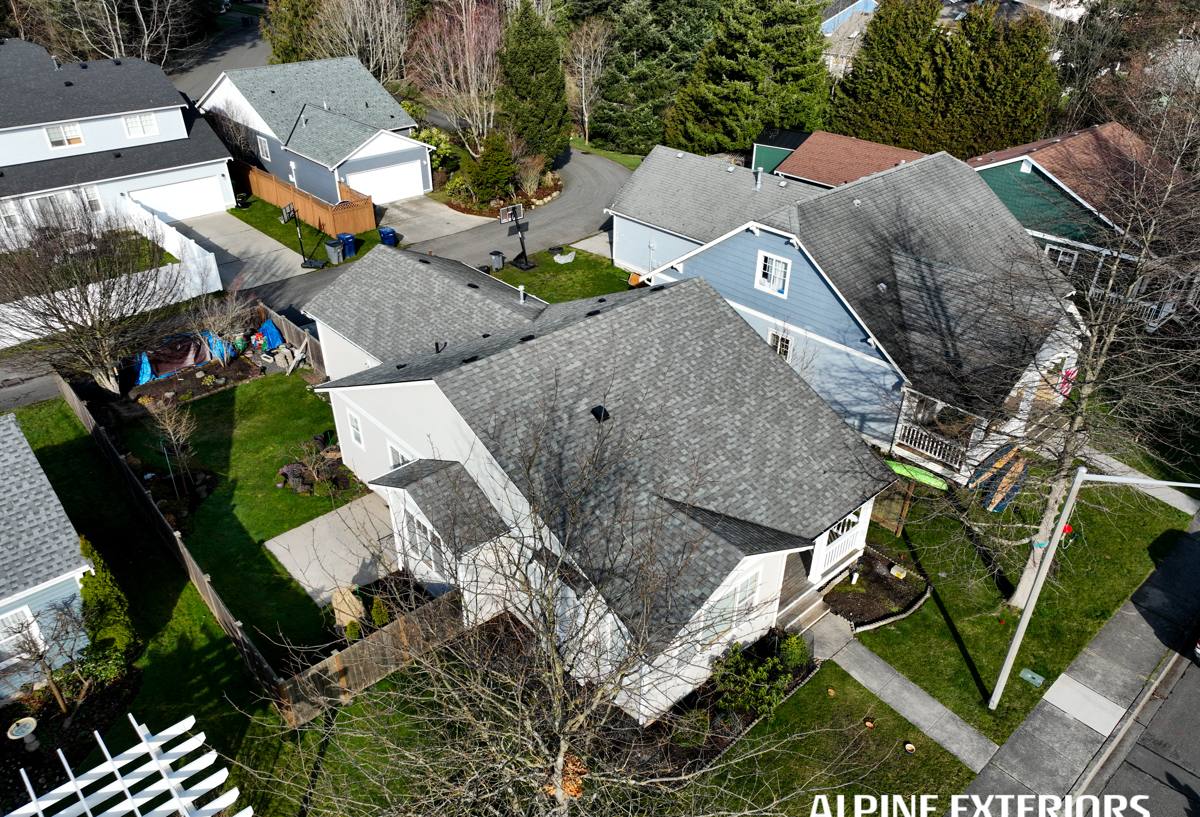
Silver Beach sits close to Lake Whatcom, tucked under a lot of mature tree cover, which gives the neighborhood its character but also creates a tougher environment for a roof than a wide-open lot across town. Shade means shingles stay damp longer after every rain. Tree cover means needles, leaves, and debris build up in valleys and gutters all year. And because Bellingham's weather brings long stretches of drizzle followed by driving rain off the Sound, a roof here rarely gets the chance to fully dry out between storms. That combination — shade, moisture, and organic debris — is exactly what moss, moss, and algae need to take hold, and it's why roofs in this part of Whatcom County often show wear years before a similar roof would in a drier, sunnier part of the state.
Add in the salt air that drifts inland from Bellingham Bay and you get a slow, steady effect on exposed metal — flashing, fasteners, gutters — that homeowners further inland don't have to think about as much. None of this means a roof in Silver Beach is doomed to fail early. It means the roofing system needs to be chosen and installed with this specific climate in mind, not treated like any other roof in Western Washington.
Signs a Roof Needs Replacement, Not Just a Patch
Age and material life
Standard asphalt composition shingles are typically rated for 20 to 30 years, but in a shaded, moss-prone microclimate like Silver Beach, that number can run shorter if the roof hasn't been kept clear of moss and debris. If your roof is original to a home built in the 1990s or earlier and hasn't been replaced, it's worth a real inspection even if there's no obvious leak yet.
Visible warning signs
- Shingles that are cupping, curling at the edges, or losing their granules in patches
- Moss or algae established thickly enough that it's lifting shingle edges, not just discoloring the surface
- Soft or spongy spots when walked on, which usually means the decking underneath has taken on moisture
- Daylight visible through the roof deck from inside the attic
- Rusted, cracked, or missing flashing around chimneys, vents, and skylights
- Granules collecting in gutters and downspouts, a sign the shingles are wearing thin
A single missing shingle or one damaged flashing seam is usually a repair. Widespread granule loss, multiple soft spots, or moss that's been growing unchecked for several seasons is usually a sign the underlayment and decking underneath are compromised, and at that point a repair is just delaying a bigger bill.
What a Correct Roof Replacement Actually Involves
A roof replacement is more than swapping old shingles for new ones. Done right, it's a full system:
- Tear-off to the deck — old shingles and underlayment removed completely so the plywood or OSB decking can actually be inspected, not covered over
- Deck repair — any soft, rotted, or delaminated sheathing replaced before anything new goes down
- Ice and water shield at eaves, valleys, and roof penetrations — the areas most likely to see standing moisture in a shaded lot
- Synthetic underlayment across the full roof as a secondary moisture barrier
- New flashing at chimneys, walls, skylights, and vent pipes rather than reusing old, corroded pieces
- Proper ventilation at the ridge and soffits so the attic can breathe and moisture doesn't get trapped
- New shingles or roofing material installed to manufacturer spec, including nailing pattern and exposure
- Cleanup — magnetic sweep for nails, full debris removal, gutters cleared
Skipping any of these steps to save time or money is where roofs in wet climates fail early. The decking and underlayment matter as much as the shingles you can see.
Choosing Materials for a Shaded, Moisture-Heavy Lot
There's no single "best" roofing material for every home — it depends on the roof's pitch, how much shade it gets, and what the homeowner wants long-term. Here's how the common options compare for a lot like Silver Beach's:
| Material | Typical lifespan | Moss/moisture resistance | Considerations |
|---|---|---|---|
| Standard 3-tab asphalt | 15-20 years | Lower — thinner profile holds moisture longer | Lowest upfront cost, shortest lifespan in shade |
| Architectural (dimensional) shingle | 25-30 years | Better airflow under tabs, some lines offer algae-resistant granules | Best balance of cost and durability for most Silver Beach homes |
| Standing seam metal | 40-50+ years | Excellent — sheds moisture fast, nothing for moss to root into | Higher upfront cost, quieter than people expect with proper insulation, strong on steep or shaded pitches |
| Synthetic/composite shingle | 30-50 years | Good — resists moisture absorption better than organic-based shingles | Mid-to-upper cost range, good option where a shingle look is preferred over metal |
For most Silver Beach homes, an algae-resistant architectural shingle is the practical middle ground — it costs meaningfully less than metal but holds up to shade and moss pressure far better than a basic 3-tab. On steep, heavily shaded roof sections, metal earns its higher price tag because moss simply has nothing to grip onto.
Ventilation and Moisture Control Matter More Here
A shaded roof traps heat and humidity in the attic differently than a sun-exposed one — it's less about summer heat and more about moisture that never fully evaporates. Without balanced intake at the soffits and exhaust at the ridge, that moisture condenses on the underside of the decking, which rots wood from the inside out long before anyone notices a problem from the shingles themselves. When we replace a roof, checking and correcting ventilation is a standard part of the job, not an upsell. On a lot with heavy tree cover, it's often the difference between a roof that reaches 30 years and one that needs deck repairs at year 15.
How the Replacement Process Works
- On-site inspection — we get on the roof, check the decking condition where accessible, look at flashing, ventilation, and the extent of moss or wear
- Written estimate — a clear scope covering materials, tear-off, deck repair allowance, and timeline, no vague line items
- Material selection — we walk through the tradeoffs above based on your roof's pitch and shade, not a one-size-fits-all pitch
- Scheduling around weather — tear-off only happens when we can get the deck covered and dry within the same work window
- Tear-off and deck inspection — old roofing removed, decking assessed and repaired as needed
- Underlayment, flashing, and ventilation installed per the plan
- New roofing installed to manufacturer specification
- Final walkthrough and cleanup — magnetic nail sweep, gutter check, debris hauled off
Timing the Job Around Bellingham Weather
Roofing can happen most of the year in Whatcom County, but a well-run crew plans tear-off days around the forecast, not the calendar. Driving rain during an open tear-off is the single biggest risk to a roof replacement — it's how water gets into decking that was otherwise sound. That means good crews stage materials in advance, watch short-term forecasts closely, and are willing to shift a start date by a day or two rather than leave a roof exposed. If a contractor tells you weather doesn't factor into their scheduling here, that's worth questioning.
What to Look for in a Silver Beach Roofing Contractor
- Washington state contractor license and current liability insurance — ask to see the number, not just take it on faith
- A written estimate that itemizes tear-off, materials, underlayment, flashing, and cleanup separately
- Manufacturer certification for the shingle or metal system being installed, which affects warranty coverage
- A clear plan for weather contingencies during tear-off
- Local references or work you can actually see in the Bellingham area, not just photos from out of state
- A straight answer about ventilation and deck condition — not just a shingle color catalog
Why Local Experience in This Neighborhood Specifically Matters
A crew that mostly works drier, more open parts of Whatcom County will size up materials and ventilation differently than one that regularly works shaded, lake-adjacent lots like Silver Beach. Knowing how aggressively moss comes back here, how long shingles actually stay damp under tree cover, and how salt air off Bellingham Bay affects exposed metal over time isn't something you learn from a manufacturer's spec sheet — it's something you learn by doing this work in this specific climate, repeatedly. That local knowledge shows up in small decisions: which underlayment goes in the valleys, how much ridge ventilation a shaded attic actually needs, which flashing metal holds up best. Those details are what separate a roof that needs attention again in a decade from one that goes the full distance.
If your roof is showing its age, holding onto moss no matter how often it's cleaned, or you're just not sure whether you're looking at a repair or a replacement, we're happy to take a look and give you a straightforward answer. Reach out for a free, no-pressure estimate using the form below — we'll tell you what we actually see, not just what sells a job.