 Bellingham
 Building a Deck That Holds Up in Sehome's Climate
Sehome sits in central Bellingham on rising ground near Sehome Hill, with a lot of mature tree cover and a mix of older and newer homes. That combination, shade, slope, and Whatcom County's marine climate, changes what a deck actually needs to survive here compared to a deck built in a drier region. Salt air moving in off the Salish Sea accelerates corrosion on fasteners and hardware. Driving rain gets pushed sideways into ledger connections and between deck boards rather than just running off. And a moss season that can stretch most of the year on shaded, north-facing surfaces turns any deck that traps moisture into a slippery, rot-prone problem within a few seasons.
A deck that ignores those conditions can look fine for a year or two and then start failing from the inside, soft framing, corroding fasteners, boards that cup or hold moss, before the damage is obvious from the surface. Building correctly for this climate the first time costs less over the life of the deck than repeated patch repairs.
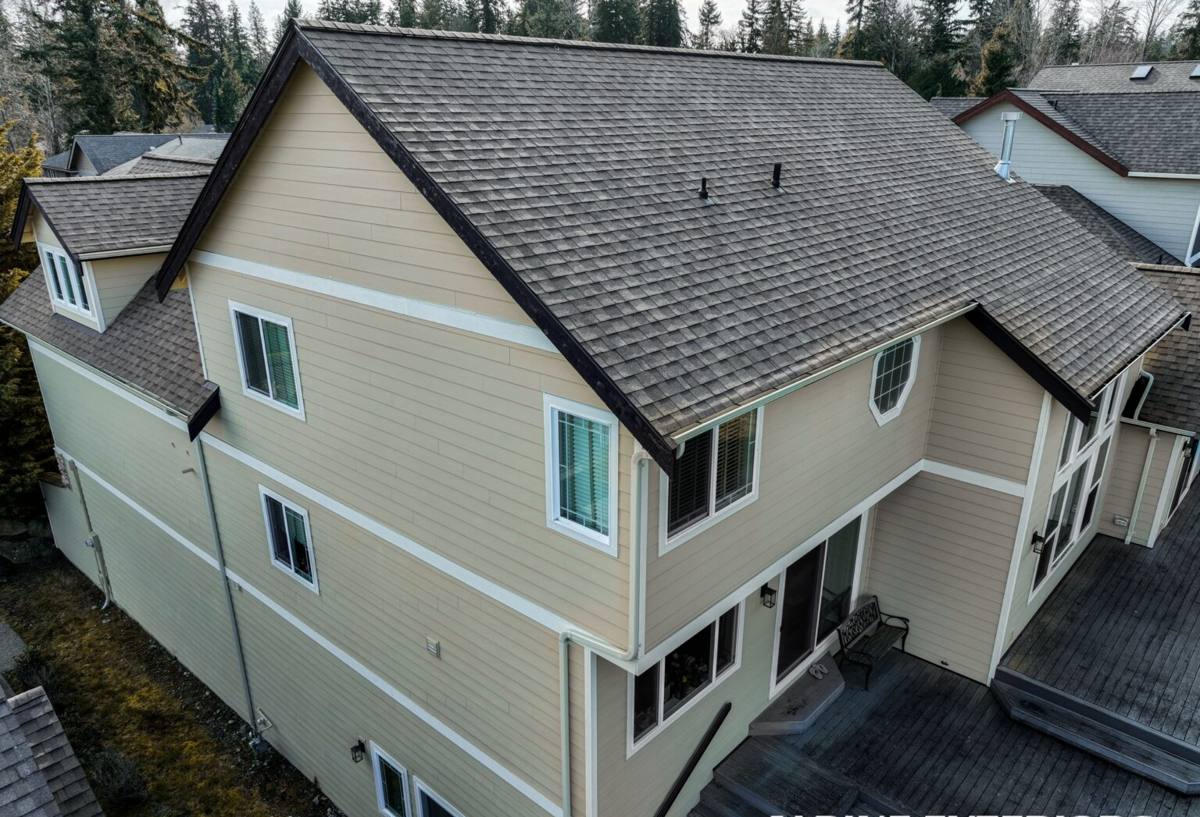
What Sehome's Terrain and Climate Do to a Deck
Shade and Slope
Sehome's tree cover and its rise toward Sehome Hill mean a lot of decks in this neighborhood sit partly or fully shaded for much of the day, and some sit on sloped lots where drainage under and around the deck matters more than it would on flat ground. Shaded decking stays wet longer after rain, which is exactly the condition moss and algae need to establish. On sloped lots, water that isn't directed away from posts and footings can pool against them over time, which is a slower but real threat to the structure's long-term stability.
Salt Air and Fastener Corrosion
Salt-laden air moving through Bellingham speeds up corrosion on any exposed metal, screws, joist hangers, structural connectors, railing hardware. Lower-grade or mismatched fasteners can start showing rust streaks and weakening within a handful of years in this climate, well short of the deck's expected lifespan. The framing is invisible once the deck is finished, so fastener quality is one of those choices a homeowner can't easily check later without pulling boards.
Driving Rain and Moisture Cycling
Rain here typically comes in on a wind rather than straight down, which pushes moisture into ledger board connections, stair stringers, and any spot where two pieces of framing meet. Wood that repeatedly gets wet and then dries, over and over through a wet season, is under more stress than wood that simply stays dry or simply stays wet. That wet-dry cycling is what eventually splits boards, loosens connections, and opens gaps where more water gets in.
What a Correctly Built Deck Includes
A deck built for Sehome's conditions isn't just about picking a decking material. Every layer of the structure needs to account for the moisture and corrosion this climate brings.
- Ledger flashing: The ledger board, where the deck attaches to the house, needs proper flashing that sheds water away from the house's wall assembly rather than trapping it against the rim joist.
- Corrosion-resistant fasteners and hardware: Hot-dip galvanized or stainless structural screws, joist hangers, and connectors rated for exterior and coastal exposure, not standard interior-grade hardware.
- Proper board spacing: Gaps between decking boards sized to let water drain through and airflow reach the framing below, rather than tight joints that hold standing water and debris.
- Footings sized and set below frost depth: Especially important on sloped Sehome lots where drainage patterns can shift how the ground around a footing behaves over time.
- Post bases that keep wood off concrete: Metal post bases that elevate the post above the footing surface, so the post end isn't sitting in whatever water collects there.
- Joist tape or capping on framing: A protective barrier over the tops of joists and beams that keeps moisture from soaking directly into the cut, unfinished wood.
Decking Material Choices for This Climate
There's no single right decking material for every homeowner, but each option behaves differently under sustained moisture and shade, and it's worth understanding the trade-offs before deciding.
| Material | Moisture Behavior | Maintenance | Best Fit |
|---|---|---|---|
| Pressure-treated lumber | Resists rot when properly maintained; can cup or check if left unsealed | Needs periodic sealing or staining | Budget-conscious projects, sunnier or less shaded sections |
| Cedar | Naturally rot-resistant but still absorbs moisture over time | Regular sealing to maintain appearance and resistance | Homeowners who want a natural wood look and are willing to maintain it |
| Composite decking | Doesn't rot, but can hold surface moisture and grow moss/mildew in heavy shade if not cleaned | Low maintenance; occasional cleaning | Shaded or high-moisture areas where wood rot is the bigger concern |
| PVC decking | Fully moisture-resistant; sheds water rather than absorbing it | Lowest maintenance of the common options | Heavily shaded, high-moisture spots where long-term low upkeep matters most |
In Sehome's shadier yards, we lean toward steering homeowners away from unsealed wood on the most persistently damp sections of a deck, not because wood is a bad material, but because it demands more upkeep in these specific conditions than most homeowners want to keep up with year after year.
Our Deck Building Process
1. Site and Slope Assessment
We walk the yard and look at sun exposure, existing drainage patterns, and how the lot slopes relative to the house before proposing a layout. On a sloped or heavily shaded Sehome lot, this step changes footing placement and post height more often than homeowners expect.
2. Design and Material Selection
We talk through decking material, railing style, and layout based on how the space will actually be used and how much shade and moisture that specific spot deals with, not a one-size-fits-all package.
3. Permitting
Deck projects above a certain height or attached to the house typically require a permit through the City of Bellingham or Whatcom County, depending on the property's location. We handle that process as part of the job so the homeowner isn't left navigating it alone.
4. Framing and Structural Work
This is where corrosion-resistant hardware, proper ledger flashing, and correctly set footings matter most, and it's also the part of the deck that's hardest to inspect or fix later once decking boards are down.
5. Decking, Railing, and Finish Work
Board spacing, fastening method, and railing installation are finished with attention to drainage and airflow, not just visual fit and finish.
6. Final Walkthrough
We walk the finished deck with the homeowner, cover basic maintenance expectations for the material chosen, and answer questions before considering the job done.
Signs an Existing Sehome Deck Needs Attention
- Soft, spongy, or bouncy footing anywhere on the deck surface
- Rust staining around fastener heads or connector hardware
- Moss or algae that returns quickly after cleaning, especially on shaded boards
- Gaps opening up between boards, or boards cupping and warping
- Visible gaps, staining, or soft wood at the ledger board where the deck meets the house
- Wobble or movement at railing posts or stair stringers
- Standing water pooling under the deck after rain instead of draining away
Repair, Rebuild, or Replace
Not every aging deck needs to be torn out. If the framing and footings are sound and the problems are limited to surface-level decking or railing, a partial rebuild can extend the deck's life for a reasonable cost. But if there's soft or rotted framing, corroded structural hardware, or a ledger connection that's been letting water into the house wall, patching the visible symptoms without addressing the structure underneath just delays a bigger repair. We tell homeowners honestly which category their deck falls into after an inspection, rather than defaulting to the more expensive option.
Why Hiring a Crew That Already Works in Sehome Matters
A contractor who builds decks across Bellingham regularly, rather than occasionally, has already seen how shade, slope, and salt air actually play out on real decks through multiple wet seasons, not just how a material performs on paper. That experience shapes practical decisions on a Sehome job: how much extra attention a shaded, north-facing section needs, how a sloped lot changes footing and drainage planning, and which hardware is worth spending a little more on up front to avoid a corrosion problem five years down the road. A crew that mostly works in drier or flatter parts of the region is more likely to apply generic details that don't quite account for what this specific neighborhood's terrain and climate combination puts a deck through.
Get a Free, No-Pressure Estimate
If you're planning a new deck in Sehome or need an honest look at one that's showing its age, we're glad to walk the site and give you a straightforward assessment, built for this climate, not a generic template. Reach out using the form below to schedule a free, no-pressure estimate.