 Bellingham
 Window Replacement Built for Sehome's Climate
Sehome sits close enough to Bellingham Bay that salt-laden air is a constant factor in how building materials age here, and it's layered on top of everything else Whatcom County throws at a house: long stretches of driving rain off the water, short damp winters, and a moss season that seems to start earlier every year. Windows are one of the first things to show the wear. Seals fail early, aluminum and steel hardware pits and corrodes, wood sashes swell and stick, and condensation between panes becomes a year-round nuisance instead of an occasional one. None of that is a defect in your house — it's just what this climate does to windows that weren't installed with drainage, sealing, and material choice in mind from the start.
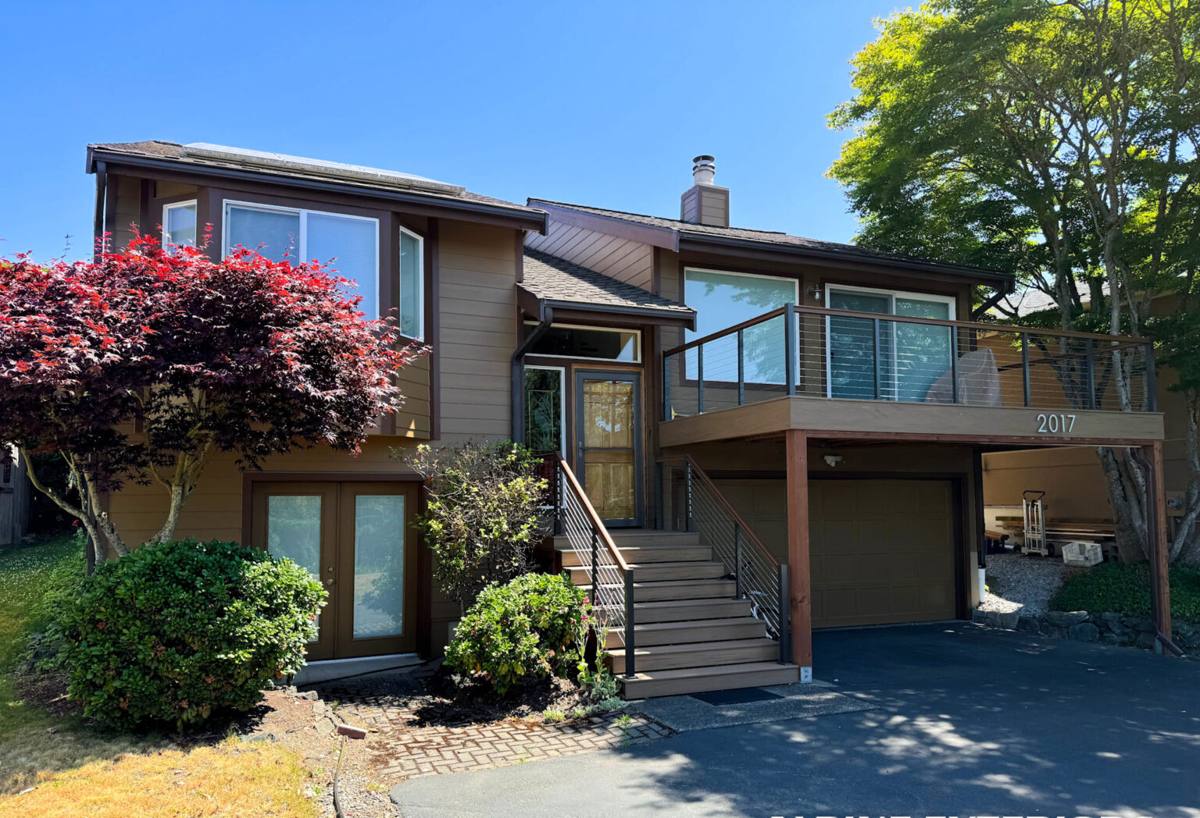
We work on homes throughout Sehome and the surrounding Bellingham area regularly enough to know which failure patterns show up on which house types — the older single-pane wood-frame homes near the university area, the mid-century ranch-style houses, and the newer infill construction all fail differently, and a correct replacement plan accounts for that instead of treating every job the same.
Signs Your Windows Are Due for Replacement
Most homeowners call us after noticing one or two symptoms, not because they've done a full inspection. Here's what actually indicates a window has reached the end of its useful life versus what's a minor, fixable issue:
- Fog or moisture trapped between panes of a double-pane unit — the seal has failed and the insulating gas is gone; this can't be cleaned, only replaced
- Wood sashes that are soft, discolored, or swelling at the bottom rail, especially on north- and west-facing walls that catch the worst of the driving rain
- Drafts you can feel with your hand near the frame on a windy day, even with the window latched
- Visible daylight or gaps around the frame where old caulking or weatherstripping has shrunk and cracked
- Windows that are difficult to open, close, or lock — often a sign the frame has racked or the sash has swollen
- Rising heating bills without another clear cause, particularly in a house with its original single- or early double-pane windows
- Green or black growth on the sill or frame exterior that returns within weeks of cleaning — a sign moisture is being held against the material rather than shedding
What's Normal Wear vs. What Signals Bigger Problems
A little condensation on the inside of glass during a cold snap is normal humidity behavior, not a window failure. But moisture that shows up between the panes, or wood that's gone soft rather than just weathered on the surface, usually means the window itself — or the flashing and sealant around it — has failed. If we find soft trim or staining on the wall below a window during an inspection, we'll tell you plainly whether that's cosmetic or whether water has been getting behind the frame, because that changes the scope of the job.
What a Correct Window Replacement Job Actually Involves
Window replacement looks simple from the outside — pull the old unit, set the new one, caulk the edges. Done that way, it fails within a few years in a climate like this one. A job that actually holds up involves several steps that don't show up in a sales brochure:
Proper Flashing and Drainage
Every window needs a path for water to escape if it gets behind the exterior cladding, which it eventually will in a region with this much wind-driven rain. That means flashing tape or pan flashing at the sill, integrated with the house's weather-resistive barrier — not just a bead of caulk around the trim. Skipping this step is the single most common cause of hidden rot behind "new" windows.
Air Sealing at the Rough Opening
The gap between the window frame and the framing needs to be sealed with a low-expansion foam or backer rod and sealant rated for exterior use — not stuffed with fiberglass insulation alone, which does nothing to stop air movement and can hold moisture against the frame.
Level, Plumb, and Square Installation
A window that's slightly out of square will bind, won't seal evenly, and puts uneven stress on the frame that shortens its life. This takes shims, a level, and patience — it's the part of the job that's easiest to rush and hardest to fix after the trim is back on.
Correct Fastening and Trim Detail
Exterior trim and caulking need to be detailed so water sheds away from the window rather than pooling on a horizontal ledge. On homes near the water, we also pay attention to fastener and hardware material, since standard steel fasteners corrode faster here than they would further inland.
Window Material Comparison
There's no single "best" window material — the right choice depends on your home's exposure, your maintenance appetite, and your budget. Here's how the common options actually compare for a Sehome home's conditions:
| Material | Moisture Performance | Maintenance | Typical Lifespan |
|---|---|---|---|
| Vinyl | Won't rot; handles rain exposure well | Low — occasional cleaning | 20–30 years |
| Fiberglass | Excellent — stable in wet/dry cycling, resists warping | Low | 30–40+ years |
| Wood (unclad) | Poor without diligent upkeep in a wet climate | High — repainting/sealing every few years | Varies widely with maintenance |
| Wood, aluminum- or fiberglass-clad | Good — exterior shell protects the wood core | Moderate | 25–35 years |
| Aluminum | Fair — prone to condensation without thermal break | Low, but corrosion risk near salt air | 20–30 years |
For homes in Sehome specifically, we lean toward vinyl or fiberglass for most replacements because they don't depend on paint or sealant integrity to resist moisture — a real advantage when the house sees this much rain and salt air over its lifetime. Clad-wood units are a reasonable middle ground if you want a painted wood look on the interior without the full maintenance burden of solid wood on the exterior face.
Our Process, Start to Finish
- On-site assessment — we look at every window you're considering replacing, check for hidden water damage around frames and sills, and measure openings
- Honest scope conversation — we tell you which windows genuinely need replacement, which could be repaired instead, and why, before any pricing is discussed
- Product selection — we walk through material, glass package, and style options suited to the home's exposure and your budget
- Written estimate — clear pricing with no vague allowances buried in the fine print
- Installation — old units removed, rough openings inspected and repaired if needed, new flashing and air sealing installed correctly, units set level and plumb
- Exterior and interior trim finish — detailed so water sheds properly and the finished look matches the rest of the house
- Final walkthrough — every window operated and checked with you before we call the job done
What Window Replacement Costs Depend On
We're not going to quote a number here that doesn't apply to your house — every job is different — but these are the factors that actually move the price:
| Factor | Why It Matters |
|---|---|
| Insert vs. full-frame replacement | Full-frame costs more but is necessary when the existing frame is damaged or you're changing window size |
| Material (vinyl, fiberglass, clad-wood) | Fiberglass and clad-wood units cost more upfront but last longer with less upkeep |
| Glass package | Double vs. triple pane, and low-E coatings, affect both cost and energy performance |
| Window size and count | Larger openings and higher window counts increase material and labor cost, but per-window pricing usually improves with volume |
| Hidden repairs found during install | Rot or water damage discovered behind an old frame adds cost — we'll always show you before proceeding, never after |
| Access and site conditions | Second-story windows, tight lot access, or landscaping in the way can add labor time |
Why a Crew That Already Works in Sehome Matters
A contractor who's done work in this neighborhood already knows the housing stock — the age ranges, the common framing quirks, and how exposure changes block to block depending on proximity to the water and tree cover. That's not a small thing when it comes to flashing details and material choice; a window package that's overbuilt for a sheltered lot is wasted money, and one that's underbuilt for a wind-exposed wall will fail early. Familiarity with Bellingham's permitting process and inspection expectations also keeps the job moving without surprises. And practically speaking, a local crew can show up for a warranty check or a follow-up question without it being a special trip.
Keeping New Windows Performing Long-Term
A correctly installed window still needs a little attention to get its full lifespan out of it, especially in a climate this wet:
- Clean weep holes at the sill track once or twice a year so drainage paths don't clog with debris and moss spores
- Inspect exterior caulking annually and re-caulk any cracked or separated joints before the rainy season
- Wipe down tracks and hardware periodically — salt air accelerates corrosion on unprotected metal parts
- Trim back vegetation or moss growth that holds moisture against the exterior trim
- Operate every window a few times a year, even ones you rarely open, so hardware doesn't seize
If your windows in Sehome are drafty, fogging, or just past their prime, we're happy to take a look and give you a straight answer about what actually needs doing — no pressure, no upsell. Reach out for a free estimate using the form below.