 Bellingham
 Siding Installation for Columbia, One of Bellingham's Older Neighborhoods
Columbia sits close enough to Bellingham Bay that its homes take the full brunt of what the Salish Sea throws at them: salt-laden air, wind-driven rain off the water, and a moss season that seems to start earlier and last longer every year. If you're planning a siding installation on a Columbia home, the job isn't just about picking a color and nailing up new boards. It's about understanding what this specific stretch of Whatcom County does to a house's exterior, year after year, and building a wall system that's actually engineered to handle it.
We're a local crew that works this neighborhood regularly, not a national outfit passing through. That matters more here than in a lot of places, because Columbia's mix of older housing stock and coastal exposure punishes shortcuts fast. This page walks through what your siding actually needs to do, what a correct installation involves, and why we've standardized on one product system instead of offering a menu of options.
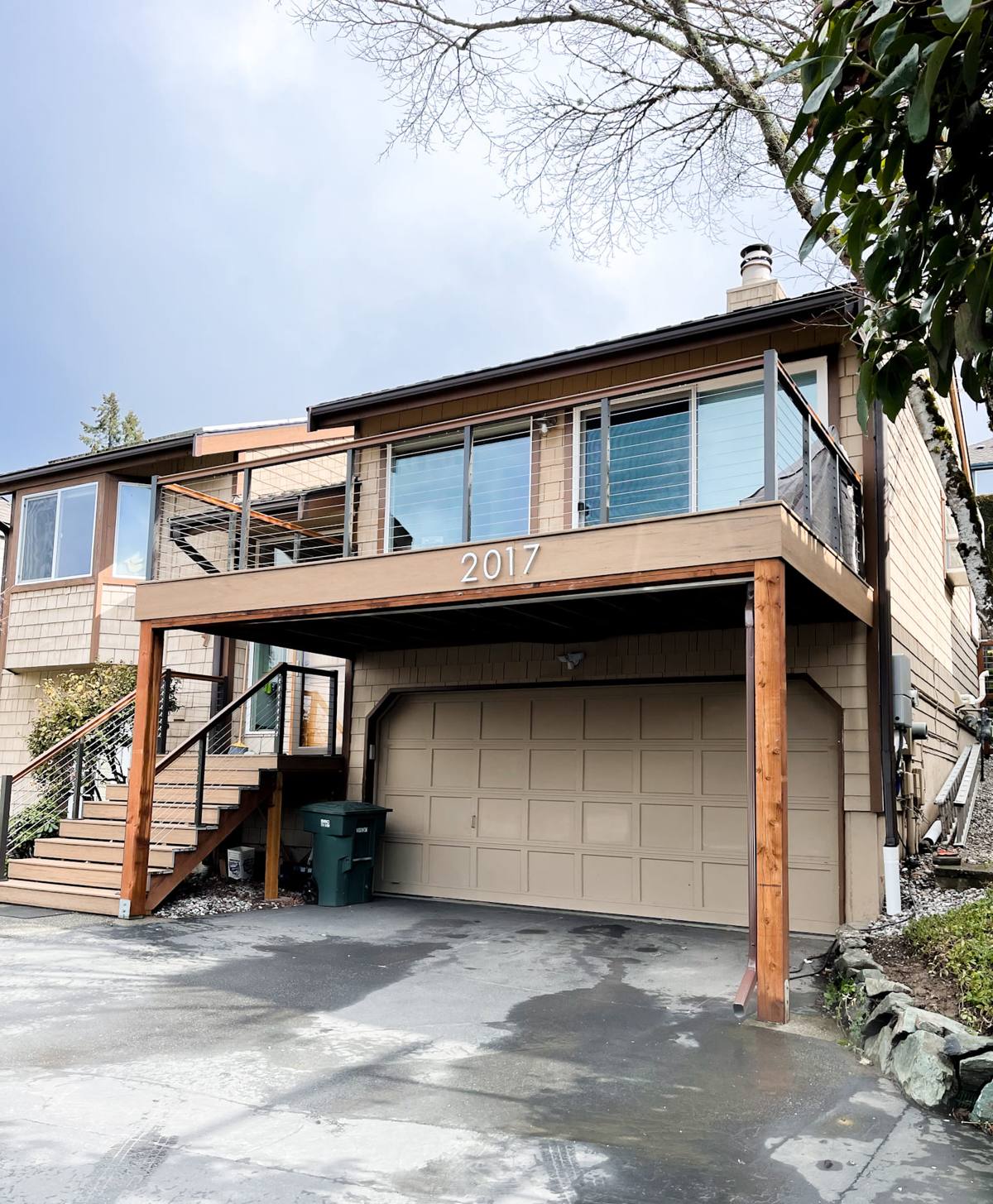
What Bellingham's Climate Does to Exterior Siding
Three things drive almost every siding failure we see in this part of Bellingham:
- Salt air — moisture-laden air off Bellingham Bay carries fine salt particles that accelerate corrosion on fasteners, flashing, and any metal trim that isn't properly rated or protected.
- Driving rain — Pacific storms don't just fall straight down here; wind pushes rain sideways into wall assemblies, which means every seam, joint, and penetration is a potential entry point if it wasn't detailed correctly the first time.
- Moss and sustained dampness — Whatcom County's long, mild, wet stretches from fall through spring keep siding surfaces damp for extended periods, which is exactly the environment moss, algae, and mildew need to take hold.
None of these forces are dramatic on their own. The damage they cause is cumulative — a fastener that corrodes a little each year, a seam that lets in a little more moisture each winter, a north-facing wall that never fully dries out between storms. A siding product and installation method that ignore this reality will look fine for a few years and then start failing all at once.
Columbia's Housing Stock and What It Means for Your Project
Columbia is one of Bellingham's older established neighborhoods, with a mix of home vintages and construction styles rather than a single uniform build era. That matters for a siding project in a few practical ways:
Older wall assemblies need real inspection, not just a re-skin
On a lot of homes in this age range, we routinely find water damage, deteriorated sheathing, or outdated flashing details hidden under the existing siding — problems that a quick tear-off-and-replace approach papers over instead of fixing. A proper installation starts by opening the wall up and looking, not assuming what's underneath.
Mixed trim and architectural detail
Older Bellingham homes often carry trim details, window casings, and roof-to-wall transitions that don't match modern standard dimensions. Getting siding to terminate cleanly against these features takes more custom cutting and flashing work than a newer, simpler build would require.
Retrofitting for today's moisture-management standards
Building science around rain screens, drainage gaps, and weather-resistive barriers has advanced significantly. A correct re-side on an older Columbia home is a chance to bring 1940s–1980s-era wall assemblies up to a modern moisture-management standard — something that pays off directly given how much rain this area sees.
What a Correct Siding Installation Actually Involves
A siding job is only as good as the parts nobody sees once it's finished. Here's what we consider non-negotiable on every installation, in Columbia or anywhere else in the Bellingham area:
Full tear-off and substrate inspection
We remove the existing siding and inspect the sheathing and framing underneath for rot, soft spots, or prior water intrusion before anything new goes up. Skipping this step is the single most common shortcut that leads to a siding job failing years early.
Weather-resistive barrier and flashing, done in the correct order
Water management is a system, not a single product. House wrap, window and door flashing, kick-out flashing at roof lines, and z-flashing above trim all have to be layered in the correct shingle-lap sequence so water is always directed outward and down, never trapped behind the cladding.
Proper fastening for coastal exposure
Given the salt air off the bay, fastener choice isn't cosmetic — it affects how long the installation holds. We use fasteners and flashing rated for the exposure this neighborhood actually sees, not whatever is cheapest.
Manufacturer-spec installation, not "close enough"
Every siding product has an engineered installation spec — nailing patterns, gapping, clearance from grade and roof lines, caulking requirements. Warranties are written around that spec being followed exactly. We install to spec because that's the only way the product performs the way it's designed to, and the only way a warranty claim actually holds up later.
Why We Install Only James Hardie Fiber Cement
We don't offer vinyl, LP SmartSide, primed spruce, cedar, or other fiber cement brands as options — not because there's no legitimate use case for any of them anywhere, but because we've made a professional call about what performs best against the specific conditions Bellingham and Whatcom County produce year after year.
| Material | How it holds up here | Where it falls short |
|---|---|---|
| Vinyl siding | Low upfront cost, no painting required | Can warp or crack in temperature swings, seams are a moisture entry point, looks and performs like a plastic product over time |
| Wood (cedar, primed spruce) | Natural appearance, long tradition in the Northwest | Constant moisture exposure here means ongoing repainting, sealing, and rot risk without disciplined maintenance |
| LP SmartSide (engineered wood) | Lower cost than fiber cement, easier to install | Wood-strand core is vulnerable if the factory seal is ever breached by damage or poor installation, especially in a wet climate |
| James Hardie fiber cement | Non-combustible, dimensionally stable, engineered moisture resistance, factory-baked ColorPlus finish | Higher material and labor cost, heavier and less forgiving of poor installation practice |
James Hardie's HZ product lines are engineered specifically for climate zones like ours — formulated to resist moisture absorption and hold paint and factory finish under sustained damp conditions rather than just tolerating occasional exposure. The ColorPlus factory finish is baked on rather than field-applied, which means better long-term color retention against the fading and streaking that constant coastal moisture causes on field-painted products. It's also non-combustible, which carries real weight in a region where wildfire smoke and ember exposure have become a bigger seasonal concern. Between the engineered climate performance and a strong transferable warranty, it's the product we're willing to put our name behind — so it's the only one we install.
Our Process, Start to Finish
1. On-site assessment
We walk the exterior with you, check current siding condition, look at trim, flashing, and any visible moisture damage, and talk through what your home actually needs.
2. Written estimate
You get a clear scope and price before anything is scheduled — no vague allowances that turn into surprise change orders mid-project.
3. Tear-off and inspection
Old siding comes off, sheathing gets inspected, and we flag any repairs needed before new material goes up.
4. Weather barrier and flashing installation
House wrap and flashing go in first, in the correct sequence, around every window, door, and roof transition.
5. Hardie installation to manufacturer spec
Panels or plank siding are installed with correct fastening, gapping, and clearances, followed by trim and caulking.
6. Final walkthrough
We go through the finished job with you before calling it done.
Cost Factors for a Columbia Siding Project
Every home is different, but the same handful of variables drive most of the price difference between siding projects in this neighborhood:
| Factor | Why it moves the price |
|---|---|
| Existing siding removal | Multiple old layers or hazardous materials (like older stucco or asbestos-containing siding) take more labor to remove safely |
| Sheathing/framing repair | Hidden rot found during tear-off has to be repaired before new siding can go on |
| Home size and wall complexity | More corners, dormers, and trim details mean more cutting, flashing, and labor hours |
| Siding profile and finish | Lap, shingle, and panel styles and ColorPlus finish options carry different material costs |
| Access and site conditions | Tight lots, slopes, or limited staging area affect how efficiently a crew can work |
We give straight numbers based on what we actually find on your home, not a generic per-square-foot quote that changes once work starts.
Maintaining Hardie Siding in a Coastal Climate
Part of what makes fiber cement a good fit here is how little upkeep it needs compared to wood or vinyl — but "low maintenance" isn't "no maintenance." A short annual routine keeps it performing the way it's supposed to:
- Rinse siding once or twice a year to clear salt residue, pollen, and organic buildup before it gives moss a foothold
- Check caulking at trim joints and penetrations annually and re-caulk any cracked or separated sections
- Keep gutters clear so overflow doesn't run down the face of the siding repeatedly
- Trim back vegetation and landscaping that holds moisture against exterior walls
- Watch for any soft spots or discoloration near ground level, which can signal a grade or drainage issue rather than a siding problem
Why a Crew That Already Works Columbia Matters
Siding installation is a local trade in every sense that counts. A crew that already knows Columbia's housing stock, the exposure patterns off Bellingham Bay, and the flashing details that hold up against Whatcom County's rain isn't guessing at any of it. We're not learning this neighborhood's problems on your dime — we've already seen the failure points, and we build to avoid them from the start.
If you're weighing a siding replacement or new installation on a Columbia home, we're glad to come take a look, answer questions honestly, and give you a straightforward, no-pressure estimate using the form below.