 Bellingham
 Siding Installation for Happy Valley Homes
Happy Valley is one of Bellingham's older, more established residential neighborhoods, a mix of mid-century houses and newer infill sitting on tree-covered lots, some flat, some sloped, most with mature landscaping that shades at least part of the exterior for much of the year. That combination, older housing stock plus heavy tree cover plus Bellingham's marine climate, puts a particular kind of stress on siding that a newer, more exposed subdivision on the edge of town doesn't deal with in the same way. We install siding across this stretch of Whatcom County regularly, and Happy Valley shows up on our schedule often enough that we've got a good read on what actually works here versus what looks fine on a spec sheet.
This page is specifically about siding installation for Happy Valley: what the neighborhood's climate and building stock demand, what a correct installation actually involves, and why we only put one product on these homes. If you're comparing siding options or trying to figure out whether your current siding has more life left in it, this should give you a straight answer.
What Happy Valley's Climate Does to Siding
Salt Air Off the Bay
Bellingham sits on Bellingham Bay, and the salt-tinged marine air that moves through the whole city doesn't stop at the waterfront neighborhoods. It reaches inland residential areas like Happy Valley too, just more gradually. Over years, that steady low-level salt exposure works on fasteners, trim, and lower-grade finishes in a way that's slow and easy to miss until a wall section starts failing from the inside out.
Driving Rain
Rain here rarely falls straight down. Wind off the water pushes it sideways, which means it hits lap joints, trim seams, window and door penetrations, and wall corners from angles a purely vertical rainfall assumption doesn't account for. A siding system that would perform fine somewhere calmer and drier can still let water in here, not because the material failed outright, but because the flashing and house wrap details underneath it weren't built for wind-driven moisture in the first place.
A Long Moss Season Under the Tree Canopy
Happy Valley's mature tree cover is part of what makes the neighborhood attractive, but it also means a lot of shaded wall area that stays damp longer after every rain event and gets less direct sun to dry out. Combined with Bellingham's mild, wet year-round temperatures, that adds up to a moss and mildew season that can run most of the calendar year on north-facing or heavily shaded walls. Any siding material with even slight porosity, or one that holds moisture against the substrate instead of shedding it quickly, becomes a growth surface, and it usually shows up first in spots homeowners don't check often: behind shrubs, under eaves, on the shaded side of the house.
Why We Only Install James Hardie Fiber Cement Siding
We don't hand Happy Valley homeowners a catalog of siding brands and let price alone make the decision. We install James Hardie fiber cement, and only James Hardie, because of what we've consistently seen on tear-offs and repair calls in this exact climate.
- Non-combustible core: Fiber cement doesn't feed a fire the way wood-based siding products can, which matters for household safety and can matter for insurance pricing as well.
- Factory-applied ColorPlus finish: The color coat cures under controlled factory conditions instead of being brushed on at the job site, so it resists fading, chalking, and moisture intrusion far longer than field-applied paint holds up.
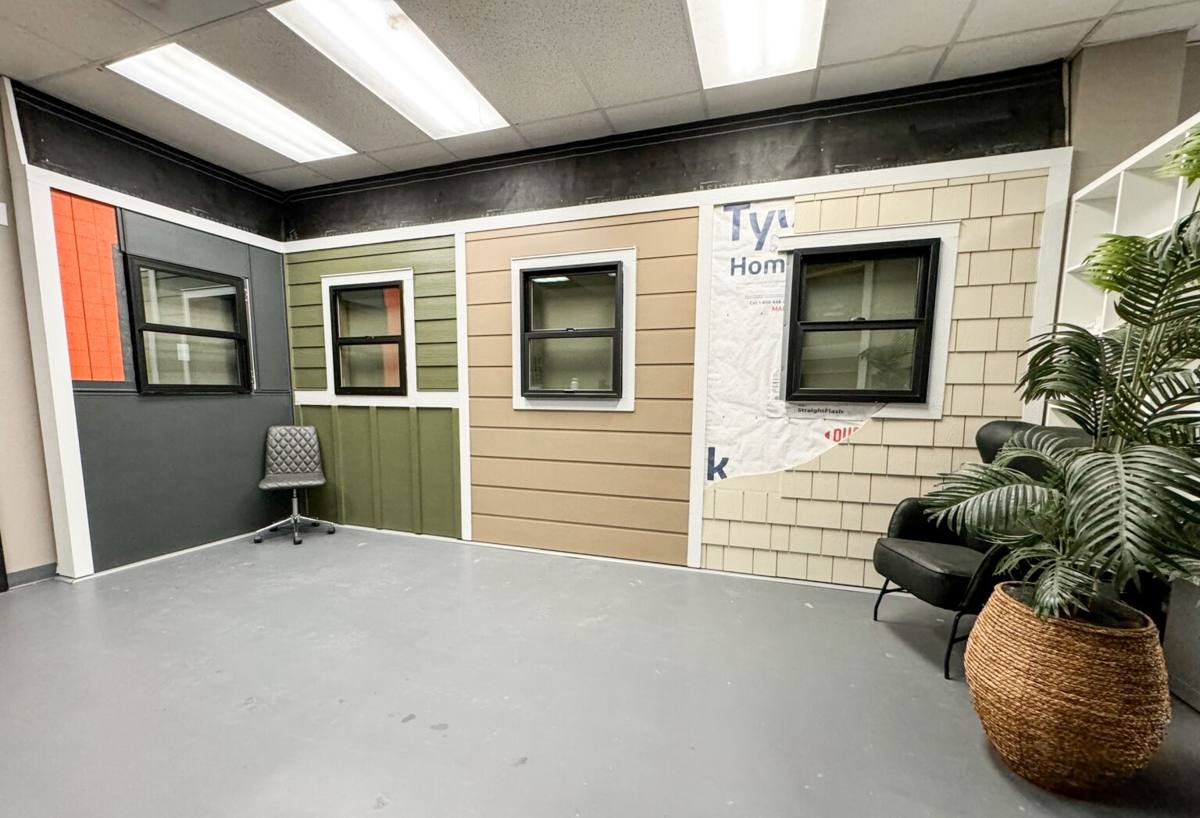
- Climate-engineered HZ product lines: Hardie's HZ5 formulation is built specifically for regions dealing with sustained moisture and freeze-thaw cycling, which is a closer match for Happy Valley's conditions than a generic national siding spec.
- Dimensional stability: Fiber cement doesn't swell, cup, or warp the way engineered wood products can after repeated wet-season moisture cycles under a tree canopy.
- Strong transferable warranty: Hardie backs its products with one of the more substantial warranty structures in the industry, provided the installation follows spec, which is exactly why installation quality matters as much as the material itself.
What Other Products Trade Off in This Climate
We don't install LP SmartSide, vinyl siding, Cemplank, Allura, primed spruce, or cedar, and none of those are bad products in the abstract. LP SmartSide is an engineered wood product that performs reasonably well in drier regions, but in a climate with this much sustained rain and humidity, it's more sensitive to moisture intrusion at cut edges and fastener penetrations than fiber cement. Vinyl is affordable and low-maintenance in a general sense, but it can warp under direct sun exposure, crack in a cold snap, and trap moisture behind the panel if the house wrap and flashing weren't installed with real care, a detail that's easy to get wrong and hard to catch from the curb. Cedar and primed spruce look great and age beautifully when maintained, but they need ongoing painting or sealing to keep moisture out, and under Happy Valley's tree canopy and rain totals, that maintenance schedule tends to slip, which shortens the material's real-world lifespan well below what it's capable of on paper.
What a Correct Siding Installation Actually Involves
Buying the right material is only half the job. A James Hardie installation that performs the way it's engineered to requires correct fastening patterns, proper clearance from grade and roofline, joints that are lapped and sealed the right way, and house wrap and flashing that function as one integrated water-management system rather than separate steps done in isolation. This is where a lot of siding jobs quietly go wrong, not because the product was bad, but because the installation cut a corner that nobody notices until moisture finds its way behind the wall two or three years later.
Our Process, Start to Finish
- On-site walkthrough: We look at the actual house, not a satellite photo, checking wall orientation, tree cover, existing moisture damage, and roofline details before we quote anything.
- Tear-off or overlay decision: We tell you honestly whether your existing siding needs to come off first or whether the substrate underneath is sound enough to build on.
- Substrate and moisture check: Once old siding is off, we inspect sheathing and framing for rot or trapped moisture before anything new goes up, since covering a hidden problem just postpones it.
- House wrap and flashing: We install or verify a continuous water-resistive barrier and properly lapped flashing at every window, door, and penetration, the layer that does the real work of keeping wind-driven rain out.
- Hardie installation to spec: Correct fastener type and spacing, proper clearance from grade and roof surfaces, and joints sealed and lapped according to Hardie's published installation requirements, which is also what keeps the manufacturer warranty intact.
- Final walkthrough: We go over the finished job with you before we consider it done, not after.
Repair or Full Replacement?
Not every siding issue in Happy Valley means tearing off the whole house. Isolated impact damage, a section that failed around a window, or trim that's come loose can often be repaired and matched into existing Hardie siding without a full re-side. But when moisture has been tracking behind the wall assembly for a while, or the existing siding is an older product that's simply reached the end of its service life, a patch usually just delays a bigger job by a year or two. We'll tell you plainly which situation you're actually looking at rather than defaulting to the bigger scope.
Signs a Happy Valley Home May Need New Siding
- Moss or dark staining that returns quickly after cleaning, especially on shaded or tree-covered walls
- Soft or spongy siding, particularly near the base of the wall or around window and door trim
- Peeling paint, bubbling, or visible cupping and warping on siding boards
- Cracked, chipped, or missing sections after wind or storm events
- Visible gaps at seams, corners, or trim joints where water can track in
- A musty smell near exterior walls or rising heating bills that may point to a wall assembly that's no longer sealing properly
Siding Installation Cost Factors in Happy Valley
| Factor | What It Affects | Why It Matters in Happy Valley |
|---|---|---|
| Home size and wall complexity | Total material and labor | Older Happy Valley homes often have more rooflines, dormers, and trim intersections where wind-driven rain can work its way in |
| Tear-off vs. overlay | Labor scope and substrate access | Tear-off exposes hidden moisture damage that's common under decades-old siding in a shaded, high-moisture setting |
| Substrate condition | Repair costs before new siding goes on | Years of trapped moisture behind failing siding under tree cover can rot sheathing and framing before it's ever visible from the outside |
| Tree cover and site access | Labor time and staging | Mature landscaping common on Happy Valley lots can add setup time and requires care to protect during installation |
| Trim and color selection | Material cost and finish longevity | ColorPlus factory finishes outlast field-applied paint against salt air, moisture, and UV exposure |
Real numbers depend on the specific house, which is why we walk the property before quoting instead of pricing off square footage alone.
Why Hiring a Crew That Already Works Happy Valley Matters
A crew that's siding houses in this neighborhood regularly knows how the local combination of tree shade, bay-driven marine air, and wind-driven rain actually plays out on real walls over a full year, not just how a product performs on a spec sheet. That shows up in practical, on-the-ground decisions: which wall orientations stay damp longest and need extra flashing attention, how close to plant beds and mature trees the crew needs to work without disturbing root systems, and which install details are worth the extra time so you're not dealing with a callback two winters from now. It also means we're not learning the neighborhood's quirks on your job. We've already seen how Happy Valley's older housing stock and heavy tree cover interact with Bellingham's climate, and that experience shapes the choices we make on your house from day one.
If your Happy Valley home needs new siding, a repair, or just an honest opinion on what's really going on behind an aging wall, we're glad to take a look. Reach out using the form below to schedule a free, no-pressure estimate.