 Bellingham
 Siding Built for Lynden's Farm-Country Weather
Lynden sits inland from Bellingham Bay in the heart of Whatcom County's farmland, but "inland" doesn't mean protected. The same marine weather systems that soak the coast push straight through the Nooksack River valley, and open farmland offers little wind break. Homes here take on driving rain from the west, long stretches of damp, low-light winter weather, and a moss and algae season that can run eight months or more. Add irrigation overspray, morning fog off the fields, and humidity that lingers in low-lying areas, and you have a climate that is genuinely hard on exterior siding — even if it never sees a drop of ocean spray directly.
We install siding across Whatcom County, and Lynden jobs come with their own pattern of wear. Homes that sit close to open fields see more direct wind-driven rain on exposed walls. Properties near drainage ditches or lower ground hold humidity longer into the morning. And older homes — a good share of Lynden's housing stock — were often sided with materials that were never engineered for this specific combination of rain volume, humidity, and moss pressure. The result is siding that looks fine from the street but is failing from the inside: soft trim boards, bubbled paint, and moisture working behind the cladding where nobody sees it until a wall starts to feel spongy.
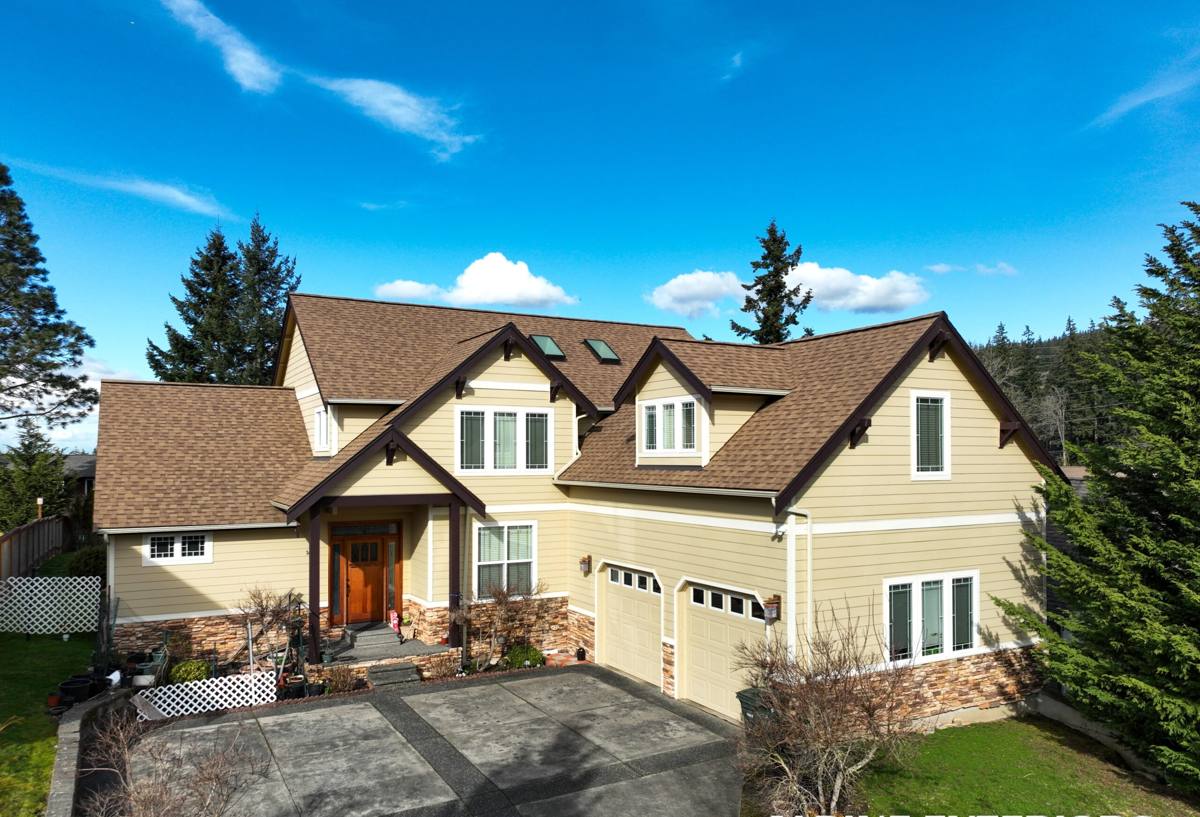
What Lynden Homes Actually Need From Their Siding
Before talking about installation, it's worth being clear about what a siding system in this climate has to do, because it's more demanding than most homeowners expect:
- Shed driving rain without letting water track behind the panels at seams and laps
- Resist moisture absorption into the material itself, not just the paint film on top
- Hold a factory finish through repeated wet-dry cycles without peeling or chalking
- Resist moss and algae growth on north-facing and shaded walls, which in Lynden can mean most of a farmhouse's exterior given how open the lots often are
- Stay dimensionally stable through temperature and humidity swings so caulk joints and paint lines don't crack
This is exactly why we standardized on James Hardie fiber cement and stopped installing vinyl, LP SmartSide, primed spruce, and cedar. Fiber cement doesn't absorb water and swell the way wood-based and wood-composite products can, and it holds a factory-applied finish far longer than field-painted materials. On a farmhouse or a newer build sitting exposed on a Lynden lot, that difference shows up in year eight or ten, not year one — which is exactly when a lot of homeowners with the wrong product start calling contractors about soft boards and peeling paint.
Why We Don't Install Everything on the Market
We get asked about vinyl and engineered wood siding regularly, and we're upfront about why we don't install them. Vinyl is inexpensive and low-maintenance in mild climates, but it flexes and can crack in freeze events, fades unevenly under UV exposure, and doesn't hold up structurally the way fiber cement does — it's a cladding, not a system engineered for this rainfall volume. LP SmartSide and other wood-strand products have improved their moisture engineering, but they're still wood at the core, and wood-based products depend entirely on unbroken paint and caulk to stay dry; one missed touch-up point and moisture gets a foothold. Primed spruce and untreated cedar are honest, traditional materials, but they require a maintenance commitment — recoating, caulking, moisture monitoring — that most homeowners don't sign up for and few contractors are honest about. We'd rather install one product correctly and stand behind it than sell five products and hope the homeowner keeps up with upkeep we can't control.
James Hardie: What We Install and Why
James Hardie fiber cement is a mix of cement, sand, and cellulose fiber, engineered specifically to resist moisture, fire, and pests — none of which are concerns you can fully engineer out of wood or vinyl. For Lynden, two things matter most:
| Feature | Why it matters for Lynden homes |
|---|---|
| HZ5 climate-engineered formulation | Built for the Pacific Northwest's wet-freeze cycle, resisting moisture damage through repeated soak-and-dry seasons |
| ColorPlus factory finish | Baked-on finish resists fading and chalking far longer than field-applied paint, which matters on walls that face constant damp exposure |
| Non-combustible core | Fiber cement doesn't feed a fire the way wood-based siding can — relevant given Whatcom County's mix of rural and wooded properties |
| Dimensional stability | Doesn't swell or shrink with humidity swings the way wood and composite products do, so seams and caulk lines stay tight longer |
| Transferable limited warranty | Coverage that carries to the next owner, which matters for resale on farm-country properties that tend to change hands within families or long-term buyers |
For most Lynden homes we install HardiePlank lap siding, which gives a traditional look that fits both older farmhouses and newer builds in the area. HardiePanel is a common choice for gable ends, shop buildings, and accent walls, and HardieTrim finishes out corners and window returns with a material that won't rot the way wood trim does — often the first thing to fail on an older home even when the field siding is holding up fine.
What Correct Installation Actually Involves
Fiber cement siding only performs the way it's engineered to if the installation is done right. This is where a lot of siding jobs — with any product — quietly go wrong, and it's not something a homeowner can easily inspect once the job is finished.
The Details That Matter
- Weather-resistive barrier: A properly lapped house wrap or building paper behind the siding, installed so water is directed out and down, not trapped against the sheathing
- Rainscreen or drainage gap: A small air gap behind the siding lets bulk water drain and the wall assembly dry out between rain events — critical in a climate where "between rain events" can be a short window
- Flashing at every penetration: Windows, doors, hose bibs, light fixtures, and vents all need proper flashing so water is shed outward instead of finding a path behind the cladding
- Correct fastener pattern and nailing: Hardie specifies exact fastener spacing and placement; getting this wrong voids warranty coverage and can cause panels to crack or work loose over time
- Proper clearance at grade and roof lines: Siding held too close to the ground, a deck, or a roof surface wicks up moisture regardless of how good the material is
- Factory-cut and factory-primed edges: Field cuts get sealed per manufacturer spec so exposed edges don't become the weak point in an otherwise sound installation
Every one of these steps is invisible once the siding is up. That's exactly why the installer matters as much as the product — a Hardie board installed with a rushed weather barrier or the wrong fastener pattern will fail years before it should, and it'll fail in a way that looks like the material's fault when it was actually the installation.
Our Process for a Lynden Siding Installation
We approach every Lynden project the same methodical way, adjusted for what that specific home needs:
1. On-Site Assessment
We walk the full exterior, checking for existing moisture damage, soft sheathing, failed flashing, and problem areas like north-facing walls or spots exposed to prevailing rain. On older homes this often turns up issues behind the current siding that need to be addressed before new cladding goes up — no point installing a 30-50 year siding system over compromised sheathing.
2. Tear-Off and Sheathing Repair
We remove the existing siding, inspect the sheathing and framing underneath, and repair or replace anything compromised by rot or long-term moisture intrusion. This step is where a lot of hidden problems from years of the wrong siding product finally get addressed.
3. Weather Barrier and Drainage Plane
We install a properly lapped weather-resistive barrier and drainage gap so the wall assembly can shed and dry correctly — the foundation that makes everything installed on top of it actually work as designed.
4. Hardie Installation to Manufacturer Spec
Panels and trim go up following James Hardie's fastening, clearance, and flashing specifications exactly, which is also what keeps the manufacturer's warranty intact.
5. Final Walkthrough
We walk the finished job with the homeowner, cover care and maintenance basics, and make sure every question is answered before we consider the job done.
Why Hiring a Crew That Already Works Lynden Matters
Siding installation isn't just about the product — it's about understanding how a specific area's weather and housing stock interact. A crew that regularly works Whatcom County knows which wall orientations take the worst of the rain, how moss and algae behave differently on shaded farm-lot exteriors than on tighter in-town properties, and what condition to expect behind siding on homes of a certain age. That local pattern recognition shows up in small decisions — where to add extra flashing attention, which trim details need reinforcing — that a crew unfamiliar with the area might miss entirely.
It also matters for accountability. A transferable manufacturer warranty is only as good as the installer standing behind the workmanship around it, and a local crew with a track record in the community has a reputation to protect on every job, not just the one in front of them.
What to Ask Before Hiring a Siding Contractor
Whether you go with us or someone else, these are the questions worth asking any contractor bidding a siding job in this climate:
- Are you a certified James Hardie installer, and can you explain their fastening and clearance requirements specifically?
- Will you inspect and repair sheathing before installing new siding, or just cover what's there?
- What weather-resistive barrier and drainage approach do you use, and why?
- How do you flash windows, doors, and other penetrations?
- Is your workmanship backed by a written warranty separate from the manufacturer's material warranty?
If a contractor can't answer these clearly, that's worth noticing before any contract gets signed.
Get a Free Estimate for Your Lynden Home
If your siding is showing moss buildup, soft spots, peeling paint, or you're simply planning ahead for a home that can handle Whatcom County's weather for decades, we're glad to take a look. We'll walk your home, give you an honest read on what's going on with your current siding, and put together a straightforward estimate for a James Hardie installation — no pressure, no upsell to products we don't stand behind. Use the form below to request your free estimate.