 Bellingham
 Siding in Puget Has to Work Harder Than It Does Almost Anywhere Else
Homeowners in the Puget area of Bellingham deal with a combination of weather stress that a lot of siding products simply weren't built for. You've got salt-laden air moving in off the water, long stretches of driving, wind-blown rain, and a moss and mildew season that can last most of the year in the shade of a mature Pacific Northwest tree canopy. None of that is unusual for Whatcom County — but it adds up fast on the exterior of a house, and it's why the siding choice and the installation details matter more here than they would in a drier inland climate.
Salt air is corrosive to exposed metal fasteners and hardware, and it accelerates the breakdown of finishes that aren't engineered to resist it. Driving rain doesn't just wet the surface of your siding — wind pushes it sideways and upward, which means water finds its way behind poorly flashed trim, around loose caulk joints, and into any gap that wasn't sealed correctly the first time. And moss doesn't just look bad; it holds moisture against the wall assembly, which is exactly the condition that causes rot, paint failure, and mildew staining over time.
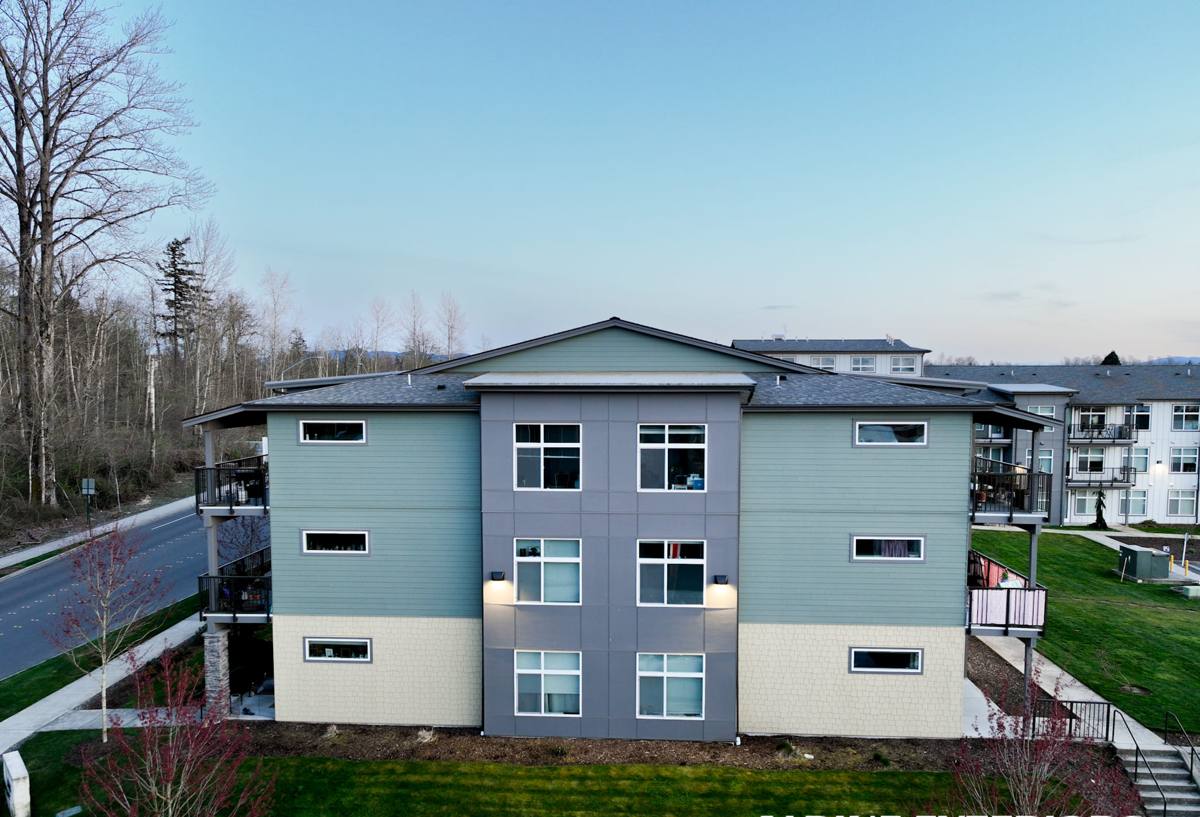
What a Correct Siding Installation Actually Involves Here
A siding job that holds up in Puget isn't just about nailing panels to the wall. It's a system, and every layer of that system has a job to do.
Moisture Management Comes First
Before a single piece of siding goes up, the wall needs a proper weather-resistive barrier, correctly lapped and taped at every seam, with flashing integrated at windows, doors, and any place where two building planes meet. This is the layer that actually keeps bulk water out of your wall cavity — the siding itself is the second line of defense, not the only one. Skipping or rushing this step is the single most common reason siding jobs fail early in wet coastal climates like ours.
Clearances and Drainage
Siding installed too close to grade, a deck, or a roofline gives water and moss a direct path to wick moisture into the material and the wall behind it. Correct installation maintains proper clearance at the bottom of the wall, keeps kick-out flashing where rooflines meet siding, and uses a drainage plane behind the panels so any moisture that does get past the surface has somewhere to go besides your sheathing.
Fastening Done to Spec
Fastener type, spacing, and placement all affect how well siding resists wind-driven rain and how long the finish lasts in salt air. Manufacturer installation instructions exist for a reason, and in a climate like Bellingham's, cutting corners on fastening is one of the fastest ways to end up with buckling, cracking, or moisture intrusion within a few years instead of a few decades.
Why We Only Install James Hardie Fiber Cement in Puget
We don't install vinyl, LP SmartSide, primed wood, or cedar siding, and that's a deliberate standard, not a limitation of what we're capable of doing. We made that call because of exactly the conditions Puget homes deal with every year.
Vinyl siding can warp and become brittle with age, and its seams and J-channels give wind-driven rain more opportunities to get behind the material — a real concern with the kind of horizontal rain this area sees. Wood-based products, including primed spruce, cedar, and engineered wood siding like LP SmartSide, are organic materials at their core. Even with good coatings and maintenance, they're more vulnerable to moisture absorption, swelling, and eventual rot in a climate that stays damp for most of the year, and moss doesn't help their case.
James Hardie fiber cement is different. It's non-combustible, it doesn't swell or rot the way wood-based products can, and it's engineered in climate-specific formulations — including versions built specifically for regions like ours with cooler temperatures and higher moisture exposure. The factory-applied ColorPlus finish is baked on under controlled conditions, which gives it better resistance to fading, chipping, and the kind of streaking and staining that salt air and moss growth cause on field-painted surfaces. It also comes with a strong, transferable manufacturer warranty when installed to spec — something that matters a lot more once you've seen how a coastal climate treats siding that wasn't built for it.
What Drives the Cost of a Siding Job in Puget
Every home is different, but the factors that move the price on a Puget siding project tend to be the same ones, in roughly this order of impact.
| Cost Factor | Why It Matters Here | Effect on the Job |
|---|---|---|
| Tear-off and disposal of existing siding | Older wood or vinyl siding often hides moisture damage that has to be dealt with before new siding goes on | Adds labor and, occasionally, sheathing repair |
| Underlying moisture or rot repair | Common on homes exposed to driving rain and long moss seasons without recent maintenance | Can range from minor trim repair to sheathing replacement |
| Home size and wall complexity | More corners, dormers, and roof intersections mean more flashing and cutting | Increases labor time and material waste |
| Siding profile chosen | Lap, shingle, and panel styles from the James Hardie lineup install at different rates | Affects labor hours more than material cost |
| Site access | Some Puget lots have limited access, slopes, or mature landscaping close to the house | Can add setup and staging time |
A rough, honest range for a full siding replacement on a typical single-family home runs from the low tens of thousands into the mid-thirties or higher, depending on those factors above. The only way to get a real number is a walk-around inspection — anything quoted without one is a guess.
Our Process, Start to Finish
We keep the process straightforward because homeowners deserve to know what's happening to their house and when.
- On-site inspection of your current siding, trim, and any visible moisture or rot issues
- A written estimate that breaks down material, labor, and any repair work found during inspection
- Scheduling that accounts for realistic Bellingham weather windows — we don't install over wet sheathing
- Removal of existing siding and inspection of the wall assembly underneath
- Repair of any damaged sheathing or framing before the weather-resistive barrier goes on
- Installation of the barrier, flashing, and James Hardie siding to manufacturer specification
- A final walk-through with you before we consider the job done
Signs Your Puget Home's Siding Needs Attention Now
A lot of siding problems in this climate are quiet for a long time before they become expensive. Here's what we tell homeowners to watch for:
- Dark streaking or persistent moss and algae growth that comes back shortly after cleaning
- Soft spots, or a spongy feel, when you press on the siding near the bottom of the wall
- Paint that's peeling, bubbling, or failing faster than it used to
- Visible warping, cupping, or gaps opening up between boards or panels
- Rising energy bills that aren't explained by anything else — a sign air and moisture may be getting through the wall
- Musty smells or visible staining on interior walls that back up to exterior siding
Any one of these on its own isn't necessarily an emergency, but in a climate like ours, they tend to compound quickly if left alone.
Why It Matters to Hire a Crew That Already Works This Area
Siding installation isn't identical everywhere, and a crew that mostly works drier, inland climates can miss details that matter a lot here. Knowing how to detail flashing for sustained wind-driven rain, understanding how salt air affects fastener and trim choices, and recognizing early moss and moisture damage on sight are things you pick up from doing this work in Whatcom County specifically, not from a general contracting background. Installer training and manufacturer certification also matter — James Hardie siding performs the way it's rated to perform only when it's installed to spec, and that's on the installer, not the product.
Living With Fiber Cement Siding in Puget
Once it's installed correctly, James Hardie siding is genuinely low-maintenance compared to what most Puget homeowners are used to. It doesn't need repainting on the schedule wood siding does, and the factory finish holds up well against salt air discoloration. That said, no siding is maintenance-free in this climate — a periodic gentle wash to knock back moss and grime buildup, and keeping gutters and downspouts clear so water isn't dumping down the wall, go a long way toward getting the full lifespan out of the material.
If your Puget home's siding is showing its age, or you're planning ahead for a replacement, we're happy to take a look and give you a straight answer about what it needs. Reach out for a free, no-pressure estimate using the form below.