 Bellingham
 Siding Repair for South Hill Homes
South Hill sits on elevated, hillside ground above downtown Bellingham, which gives many of its homes a clear view out toward Bellingham Bay — and gives their siding a clear line of exposure to whatever comes off the water. That combination of height, wind, and proximity to the Salish Sea means siding on a South Hill home works harder than siding on a sheltered, low-lying lot a few miles inland. Add in Whatcom County's long stretch of driving rain each year and a moss season that can run most months on shaded, tree-covered walls, and it's easy to see why siding here tends to show wear in specific, predictable places — usually well before a homeowner expects to be dealing with a repair at all.
We handle siding repair calls in South Hill regularly, and the work here follows a consistent pattern: diagnose what's actually failing and why, fix it correctly the first time, and match new material into the existing wall so the repair doesn't stand out or create a second weak point down the line. We install and repair with James Hardie fiber cement exclusively, which shapes almost every repair decision we make in this neighborhood.
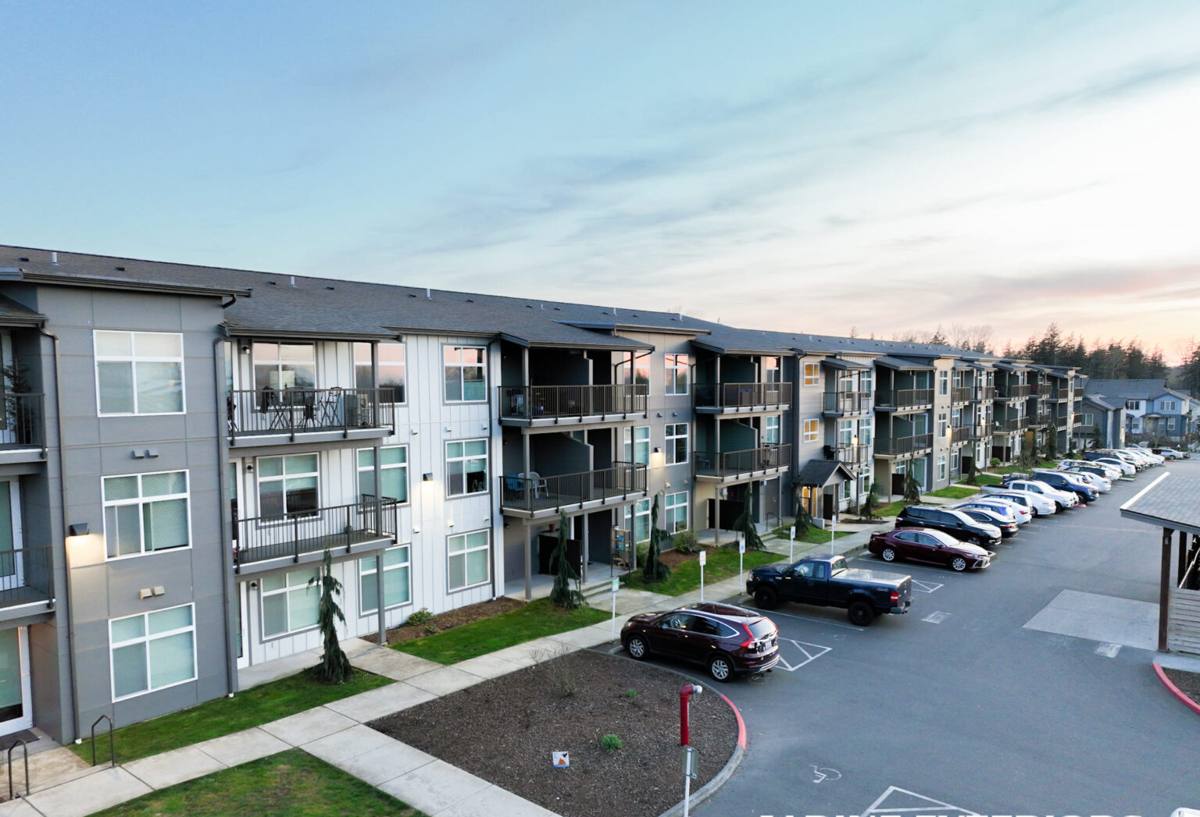
What South Hill's Setting Does to Siding Over Time
Elevation and Wind Exposure
Homes set higher on the hill catch more direct wind than homes tucked into lower, more sheltered parts of Bellingham. Wind pushes rain sideways into siding rather than letting it run straight down the wall, which puts extra stress on lap joints, corner boards, and anywhere trim meets siding. Over the years, that wind-driven rain tends to find the one seam that wasn't lapped or sealed quite right the first time.
Salt Air and Slow Material Fatigue
Bellingham's marine air carries salt further inland than a lot of people expect, and elevated, more open lots tend to catch more of it. Salt air is hard on exposed fasteners and untreated trim, and it speeds up the kind of slow material fatigue that shows up as corrosion streaks, loosening trim, or a fastener that's backed out just enough to let water start working its way behind the siding.
Shade, Mature Trees, and a Long Moss Season
A good number of South Hill lots carry mature tree cover, and combined with the hill's north- and east-facing walls, that shade keeps sections of a house damp long after the rest of the block has dried out. Whatcom County's moss season already runs longer than most of the country's; on a shaded South Hill wall, it can come close to year-round. Moss holds moisture directly against the surface, and left alone, that's exactly the condition that turns a cosmetic problem into a substrate problem.
An Older, Mixed Housing Stock
South Hill has a fair number of older homes, and older homes commonly carry siding that was never Hardie to begin with — older wood siding, earlier fiber cement products, or vinyl added at some point over the years. Repair calls here often start with figuring out exactly what's on the wall now before we can figure out the right way to fix it, which is a step some repair crews skip on the way to a fast patch.
Signs a South Hill Home Needs Siding Repair
Most siding problems give some warning before they turn into a bigger job. On South Hill specifically, we see these signs most often:
- Soft, spongy, or bulging spots on the wall, especially near the ground or under windows
- Persistent staining or dark streaking on shaded or tree-covered walls
- Cracked, warped, or separated boards, particularly on the more wind-exposed sides of the house
- Trim pulling away at corners or around windows and doors
- Visible rust or corrosion streaks below fasteners or metal flashing
- A noticeable draft, or a jump in heating costs with no other clear cause
- Finish or paint failing in one specific area while the rest of the wall still looks fine
Any one of these on its own can be a simple, contained repair. A few showing up together, or damage reappearing in a spot that's already been patched once, usually means there's a moisture source that hasn't actually been found yet.
What a Correct Siding Repair Actually Involves
A repair that only covers the visible damage tends to come back. Doing it right means going a step further:
- Find the actual cause. Damaged siding is often a symptom — of a flashing gap, a failed sealant joint, or moisture that's been tracking behind the wall for a while. Replacing the board without addressing the cause just resets the clock on the same failure.
- Check what's behind the siding. Once damaged material is pulled, we look at the house wrap, sheathing, and framing underneath for hidden rot before anything new goes back on. This is the step that gets skipped most often when a crew is trying to move fast.
- Match the material correctly. If the home already has James Hardie siding, we match the profile, plank width, and color as closely as the product line allows. If it's an older or different material, we'll talk through whether a Hardie-matched repair makes sense for that wall, or whether the damage is a sign that section — or the whole elevation — is due for replacement instead.
- Rebuild the flashing and fastening correctly. New material only performs as well as what's behind it. We lap and seal joints properly and use corrosion-resistant fasteners suited to this area's salt exposure, rather than whatever happens to be on hand.
Repair or Replace? What We Actually Look At
| Situation | Repair Usually Makes Sense | Replacement Is Usually the Better Call |
|---|---|---|
| Damage location | Isolated to one section, elevation, or a handful of boards | Spread across multiple walls or showing up in more than one spot |
| Cause of damage | Impact damage, a single failed flashing point, storm damage | Long-term moisture intrusion behind the wall, widespread rot |
| Existing siding | James Hardie siding still within its service life | Older wood, older fiber cement, or vinyl nearing the end of its life |
| Underlying sheathing | Solid, dry substrate once opened up | Soft, rotted, or repeatedly wet sheathing found behind the siding |
| History | First repair in that spot | Same area has already been patched once or twice before |
We'll tell you honestly which column your home falls into. A repair that's likely to fail again within a couple of years isn't doing you any favors, and we'd rather say so upfront than sell a patch job we don't believe in.
Why We Repair and Replace with James Hardie Only
We install and repair with James Hardie fiber cement exclusively — we don't repair sections in LP SmartSide, vinyl, Cemplank, Allura, primed spruce, or cedar. That's a professional standard we hold to, not a claim that those products can never be repaired at all. Plenty of them can. But standardizing on one system means every repair we do, we do with material we trust completely and understand at a technical level, instead of juggling different installation quirks and warranty rules across half a dozen products.
For a South Hill home specifically, that matters because of the site's wind, salt, and moisture exposure:
- Non-combustible fiber cement core that doesn't feed a fire the way wood-based siding products can
- Factory-applied ColorPlus finish that resists fading and moisture far longer than field-applied paint, which matters on a wall already fighting salt air and sun exposure
- Climate-engineered HZ formulations built for regions with sustained moisture, so a repaired section performs the same as the rest of the wall over time
- Dimensional stability that keeps a patched section from swelling, cupping, or standing out next to the original siding
- A strong transferable warranty, provided the repair is installed to spec, which protects you even if you sell the home later
When a section of a home already has Hardie siding on it, repairing with the same material is the straightforward call. When it doesn't, we'll walk you through what replacing that section — or eventually the whole elevation — with Hardie would actually look like, so you can make an informed decision instead of just patching over a product we wouldn't install new.
Our Siding Repair Process for South Hill
Repair calls in this neighborhood generally follow the same steps:
- An on-site walk-through of the damaged area and a look at the rest of the exterior, since one visible problem often points to a related issue nearby
- An honest read on whether you're looking at a contained repair or something pointing toward a larger replacement
- A written estimate before any work starts, with the scope spelled out clearly
- Removal of the damaged section and inspection of the sheathing and flashing underneath
- Repair or replacement with matched James Hardie material, correct flashing, and corrosion-resistant fasteners
- Cleanup and a final walk-through so you can see the finished work before we call the job done
Cost Factors for Siding Repair in South Hill
| Factor | What It Affects | Why It Matters Here |
|---|---|---|
| Extent of hidden damage | Whether the repair stays contained or grows into a bigger job | Long-term moisture behind a wall can rot sheathing that isn't visible until it's opened up |
| Existing siding material | Whether a clean match is possible | Matching new Hardie into existing Hardie is straightforward; matching into an older or different material may call for a broader replacement instead |
| Access and elevation | Staging and labor time | Hillside lots and taller walls common on South Hill can require more setup than a single-story, street-level home |
| Number of repair locations | Overall labor and material cost | Several small, scattered repairs can add up to more than one focused, larger fix |
| Trim and flashing condition | Whether trim needs replacing alongside the siding itself | Salt air and wind exposure age trim and flashing faster here than on more sheltered lots |
Exact pricing depends on what we find once we're on-site, and in some cases, once damaged material has actually been pulled off the wall. That's why we look at the property in person rather than quoting a number over the phone.
Why a Crew That Already Works South Hill Matters
A contractor who works this part of Bellingham regularly knows which walls take the worst of the wind, how far salt air actually reaches up the hill, and how long moss really holds on to a shaded, tree-covered elevation through the year. That's different from general siding experience — it's specific, accumulated knowledge about how this particular hillside setting behaves through a full Whatcom County wet season. It shapes real decisions on a repair call: which fastening details are worth the extra time, where flashing needs the most attention, and when a patch is genuinely the right call versus when it's just delaying a bigger conversation you'd rather have now.
If you're dealing with damaged, aging, or failing siding on a South Hill home, we're glad to take a look and give you an honest read on what it actually needs. Reach out using the form below to schedule a free, no-pressure estimate.