 Bellingham
 Siding Repair for York Homes in Bellingham
York is one of Bellingham's older, established neighborhoods, and that means a real mix of housing stock — homes from different decades, with different original siding, different additions, and different repair histories layered on top of each other. When something goes wrong with the siding on a York home, the fix depends on knowing what's actually on the wall, not just patching whatever's visible from the street.
We work throughout Whatcom County, and York is close enough to our regular routes that we can get eyes on a repair quickly, come back for a proper look, and stand behind the work without treating it as a one-off drive-across-town job. That matters more than it sounds like it should, because siding repair done by someone unfamiliar with local conditions tends to fix the symptom and miss the cause.
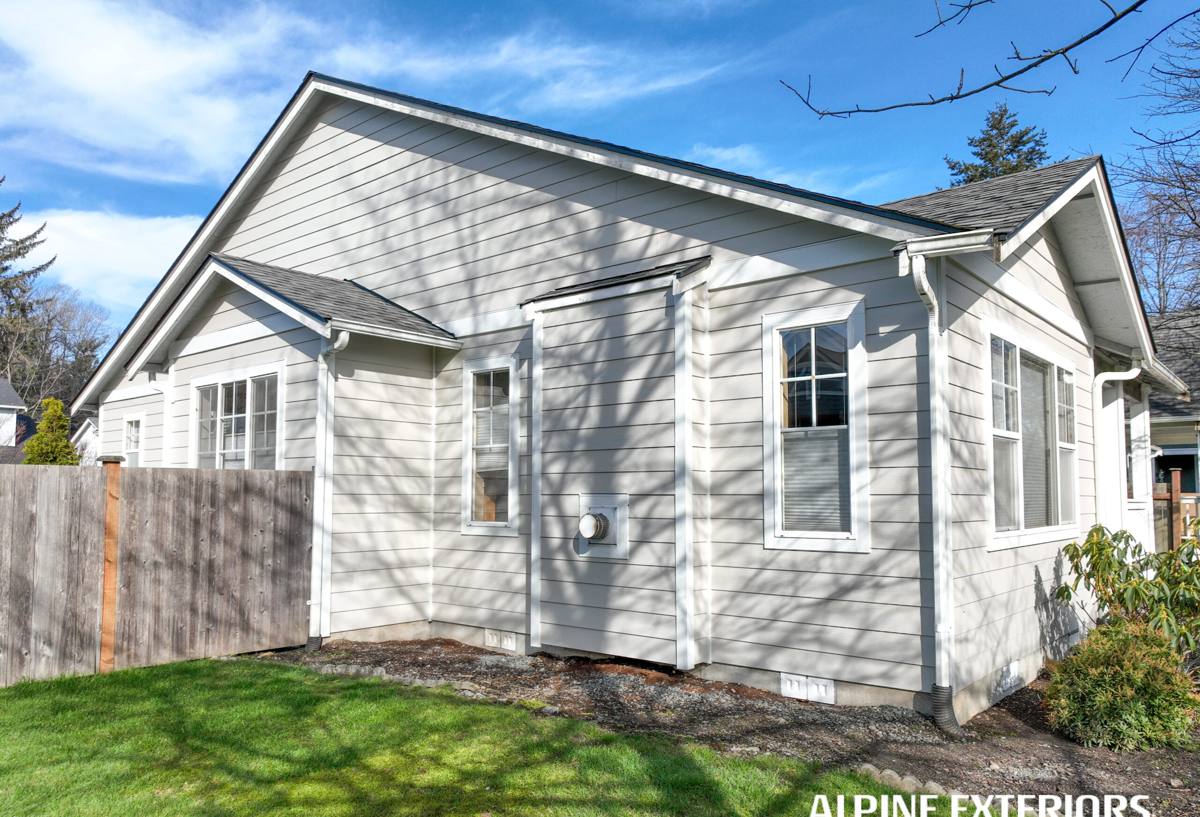
What Bellingham's Climate Does to Siding in York
Bellingham sits on the water, and that has real consequences for exterior building materials. Salt-laden air off Bellingham Bay accelerates corrosion on fasteners, flashing, and any metal trim tied into the siding system. Combine that with the driving rain that comes through on a west or southwest wind, and you get moisture pushed sideways into seams, laps, and butt joints that were never designed to handle water hitting them at an angle.
Then there's moss season — which in this part of Whatcom County isn't really a season so much as most of the year. Tree cover is heavy in a lot of York's older lots, and shaded, damp siding grows moss and algae readily. That growth holds moisture against the surface far longer than open, sunny siding would, which is exactly the condition that breaks down paint film, swells wood-based products, and eventually opens the door to rot underneath.
None of this is unique to York, but it's constant here in a way that drier inland climates don't experience. Any repair that doesn't account for it is a repair that fails again in a year or two.
Common Repair Issues We See on York Homes
Because York has such a range of home ages, we run into a wide variety of siding materials and failure points. The most frequent issues include:
- Cedar lap siding with soft, delaminating boards near ground level or under roof valleys, where runoff concentrates
- Vinyl siding cracked or warped from age and UV exposure, with gaps that let wind-driven rain behind the panels
- Older engineered wood siding (LP-style products) with swollen, crumbling edges at butt joints and corners — a known weak point for that category of material
- Fiber cement siding with failed caulk joints or damaged panels from impact, but the underlying board still sound
- Trim and corner boards rotted out well before the field siding shows any obvious damage
- Moss and algae staining that's cosmetic on the surface but signals a damp microclimate worth investigating further
The pattern across almost all of these: by the time damage is visible from the ground, there's usually been water intrusion happening for a while. Visible cracking or staining is a symptom, not the starting point.
What a Correct Repair Actually Involves
Diagnosis Before Anything Gets Removed
A repair that starts with "replace the damaged board" and nothing else is a repair that's likely to need doing again. Before we touch anything, we check what's happening behind the siding — whether the water intrusion point is actually where the damage shows, or whether it's traveled from a flashing failure, a gutter overflow, or a caulk joint somewhere else entirely. Siding often shows damage downstream of where the actual problem is.
Matching the Existing Material
On an older York home, matching siding profile, exposure width, and finish can be genuinely difficult if the original product is discontinued or was a builder-grade material that was never great to begin with. We're upfront when an exact match isn't realistic and lay out the honest options — a close match on a less visible elevation, or a case for replacing a full wall section instead of chasing a mismatch.
Checking What's Underneath
Water-resistive barrier, flashing at windows and penetrations, and the condition of the sheathing behind the siding all get checked when we open up a repair area. Patching new siding over compromised sheathing or missing flashing just relocates the failure a few years down the road.
Repair vs. Replacement: How We Help You Decide
Not every repair should turn into a full re-side, and not every problem should get patched indefinitely. The right call depends on how widespread the damage is, what's underneath, and what material is currently on the house.
| Factor | Leans Toward Repair | Leans Toward Replacement |
|---|---|---|
| Extent of damage | Isolated to one area or elevation | Recurring damage across multiple walls |
| Sheathing condition | Sound, dry, no soft spots | Soft, delaminated, or visibly rotted |
| Material on the house | Fiber cement or sound cedar | Aging engineered wood siding, brittle vinyl |
| Match availability | Product still available or close match exists | Discontinued profile, poor match options |
| Age of original install | Well within expected service life | Nearing or past typical service life |
We'll tell you honestly which side of this table your home falls on. If a targeted repair genuinely solves the problem, that's what we'll recommend — a full re-side isn't the answer to every siding complaint.
Our Repair Process in York
1. On-Site Assessment
We walk the affected areas, check moisture readings where it matters, and look at the broader picture — roofline, gutters, grading, and tree cover — since siding problems rarely exist in isolation.
2. Clear Scope and Straight Answers
You get a plain explanation of what's actually wrong, what a proper fix requires, and what it would cost — including whether repair or replacement makes more sense for your situation.
3. Correct Repair Execution
Damaged material comes out, the substrate gets inspected and addressed if compromised, flashing and water-resistive barrier are corrected where needed, and new material goes in properly lapped, fastened, and sealed — not just caulked over.
4. Follow-Through
We stand behind the work. If something about a repair doesn't hold up the way it should, you can reach the same crew that did the job, not a call center.
Why We Use James Hardie for Repair Work
When a repair calls for new siding material — whether it's a full section replacement or an area large enough that we're recommending a broader upgrade — we install James Hardie fiber cement, and that's the only siding system we install, full stop. We don't put in vinyl, LP SmartSide, Cemplank, Allura, primed spruce, or cedar, even for smaller repair jobs.
Part of the reason is climate. Hardie's HZ product lines are engineered specifically for regions with sustained moisture exposure, which describes Bellingham well. Fiber cement doesn't absorb water and swell the way wood-based and engineered wood products can, it's non-combustible, and the factory-applied ColorPlus finish holds up to UV and salt air far better than field-applied paint on repair patches. It also carries a strong transferable warranty, which matters on a house that may change hands.
The other part is repair practicality. On a York home where we're already dealing with mismatched or aging siding, standardizing on one durable system means a repair we do today is built out of the same material we'd use for a full replacement later — no guessing which product line is still around in ten years.
Signs Your York Home May Need Siding Repair
- Soft or spongy spots when you press on siding, especially near the ground or under roof valleys
- Visible cracking, warping, or bowing in panels or boards
- Paint that's peeling, bubbling, or failing faster than it should on an otherwise maintained house
- Persistent moss or algae growth in the same spots year after year
- Gaps at corners, trim, or butt joints where you can see daylight or feel airflow
- Water stains or discoloration on interior walls near exterior corners
- Siding that feels noticeably colder or damp to the touch compared to surrounding areas
Why a Crew That Already Works York Matters
Repair work benefits from local familiarity in ways new construction doesn't always need. Knowing the general age and construction patterns common in York, understanding how Bellingham's rain and wind exposure plays out on different lot orientations, and having done this kind of moisture diagnosis on similar homes nearby all shorten the distance between "something's wrong" and "here's exactly what's wrong and how to fix it correctly." A crew unfamiliar with Whatcom County conditions is more likely to treat a York repair like a generic siding job, when the driving rain and moss exposure here call for specific attention to flashing, drainage, and material choice.
If you're seeing damage, staining, or soft spots on your siding, we're glad to take a look and give you a straight answer about what's actually needed. Reach out for a free, no-pressure estimate using the form below.