 Bellingham
 Siding Replacement in York: Built for Bellingham's Marine Climate
Homes in the York area sit close enough to Bellingham Bay and the Salish Sea that salt-laden air is a daily fact of life, not an occasional nuisance. Add Whatcom County's long, wet winters and the shoulder-season drizzle that can linger for weeks, and you have a climate that is genuinely hard on exterior siding. Driving rain pushed sideways by wind off the water finds every gap in flashing and trim. Shaded lots under mature evergreens hold moisture long after a storm passes, which is exactly the setup moss and algae need to take hold. Siding replacement in this kind of environment is not a cosmetic upgrade — it's a functional decision about what will actually keep water out of your walls for the next several decades.
We work on homes throughout York and the surrounding Bellingham neighborhoods, and the patterns repeat house after house: siding that looked fine from the street but was already failing at the seams, corners, and anywhere two materials met. This page walks through what York homes specifically need, what a correct siding replacement job looks like, and how our process works from first inspection to final walkthrough.
Signs a York Home Needs Siding Replacement
Moisture and rot indicators
Soft spots near the bottom of wall sections, staining that reappears after painting, and a musty smell in adjoining rooms are all signs that water has been getting behind the siding — often for years before it becomes visible from outside. In this climate, by the time you can see the damage, the sheathing or framing behind it has usually been wet on and off for multiple rainy seasons.
Moss, algae, and green staining
A long moss season means north-facing walls, areas under eaves with poor sun exposure, and anything shaded by trees are prone to a green or black film building up on the siding surface. On some materials this is just a cleaning problem. On others — particularly wood-based products — sustained moss growth holds moisture against the surface and accelerates decay underneath.
Aging or failing original material
A lot of the housing stock in and around York was built or re-sided with materials that were standard decades ago — cedar, older masonite-type hardboard, or vinyl that has gone brittle and cracked in the cold snaps we get most winters. If your siding is original to a home built before modern water-resistive barrier standards, replacement is often the only way to actually fix the underlying moisture path, not just the surface appearance.
What a Correct Siding Replacement Job Actually Involves
Siding replacement done right is mostly about what happens before the new material ever goes up. The visible product is only as good as the water management system behind it.
Full tear-off and wall inspection
We remove the existing siding down to the sheathing so we can actually see what's there — soft wood, missing or failed house wrap, old flashing that was never properly integrated. Covering over hidden damage with new siding just restarts the clock on a problem that's already in progress.
Water-resistive barrier and flashing
This is the layer that matters most in a climate with driving rain. A correctly lapped water-resistive barrier, properly flashed windows and doors, and flashing at every horizontal trim break are what actually stop bulk water from reaching the sheathing — the siding itself is the second line of defense, not the only one.
Installation to manufacturer spec
Fastener spacing, clearance from grade and roofing, gaps at butt joints, and caulking only where the manufacturer calls for it — these details are what separate a siding job that lasts thirty-plus years from one that fails at the seams in five. We install every board to James Hardie's published installation requirements, not to whatever gets the job done fastest.
Why We Install Only James Hardie Fiber Cement Siding
We made a decision as a company to install one siding system: James Hardie fiber cement. We don't install vinyl, LP SmartSide, or primed wood products, and that's a deliberate standard, not a limitation in what we're capable of installing.
Fiber cement doesn't feed mold or moss the way wood-based products can, it doesn't become brittle in cold weather the way vinyl does, and it carries a factory-applied ColorPlus finish that's baked on rather than field-painted — which matters in a marine climate where paint film on site-finished materials tends to fail faster from salt exposure and constant moisture cycling. It's also non-combustible, which is an increasingly important consideration for insurance and long-term home value. We'd rather install one product system extremely well than offer several and cut corners on any of them.
Choosing the Right Hardie Product for Your York Home
James Hardie engineers its siding by climate zone, and Whatcom County falls into the HZ5 category — the line built for regions with real moisture exposure and temperature swings, as opposed to the HZ10 line designed for hot, dry climates. That distinction matters more than most homeowners realize; it affects the moisture-management engineering of the board itself, not just the color options.
| Product Line | Typical Use | Why It Fits York |
|---|---|---|
| HardiePlank Lap Siding | Primary wall siding, most common choice | Wide range of textures and ColorPlus colors; engineered for wet, variable climates |
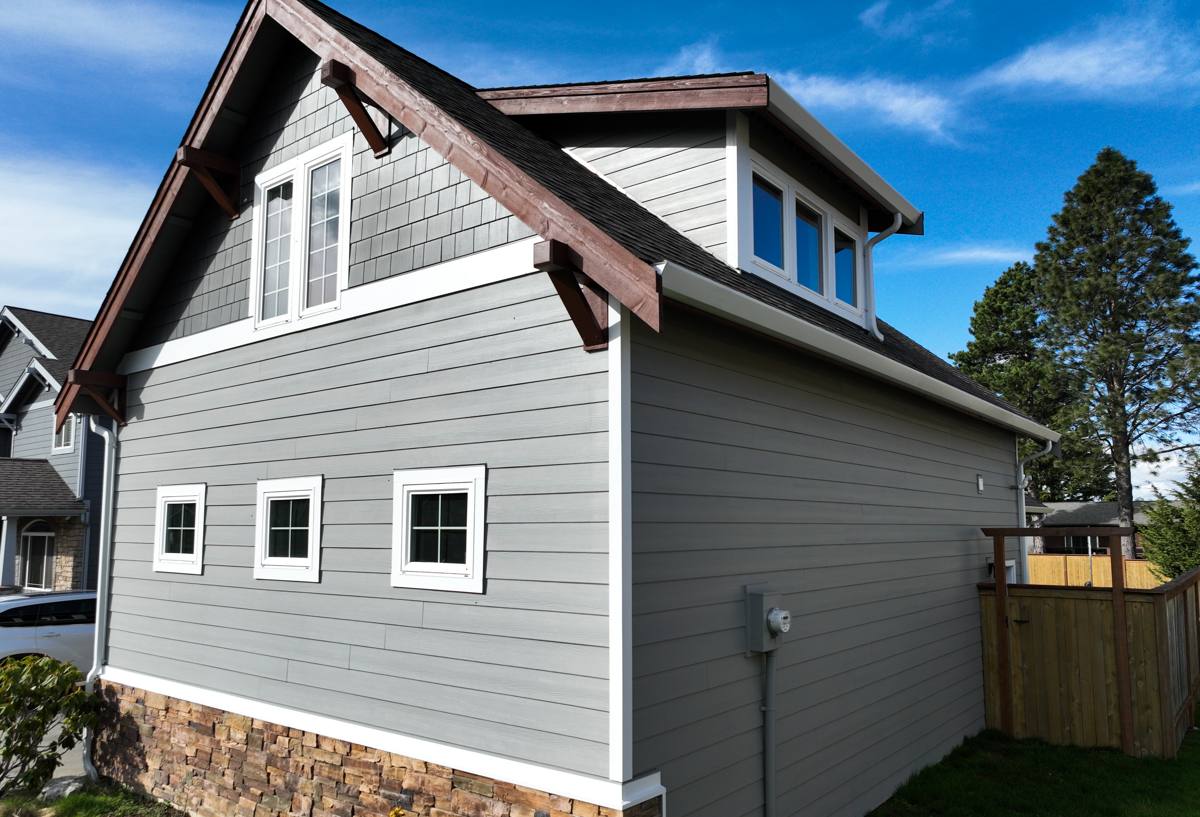
| HardieShingle | Accent areas, gables, dormers | Matches the shingle-style detailing common on Bellingham-area homes without the moisture risk of real cedar shingle |
| HardiePanel | Modern vertical siding, porch ceilings | Clean look for contemporary remodels; same fiber cement durability |
| HardieTrim | Corners, window and door trim, fascia | Pairs with the siding so trim doesn't rot out years before the field siding does |
Our Siding Replacement Process
- On-site inspection. We walk the full exterior, check problem areas you've noticed, and look at conditions a homeowner typically can't see from the ground.
- Written estimate. A clear scope of work and price — what's included, what product line and color, and the timeline.
- Tear-off and sheathing assessment. Old siding comes off, and we address any rot or sheathing damage before anything new goes up.
- Water-resistive barrier and flashing installation. Done to current best practice, not just to what was there before.
- James Hardie siding and trim installation. Installed to manufacturer spec, including fastener pattern, clearances, and joint treatment.
- Final walkthrough. We go over the finished work with you before calling the job complete.
What Affects Siding Replacement Cost
Every home is different, but the same handful of factors drive most of the variation in price:
| Factor | Impact on Cost |
|---|---|
| Amount of hidden damage found at tear-off | Rot repair and sheathing replacement add cost beyond the original estimate scope |
| Home size and wall complexity | More corners, gables, and dormers mean more cutting, trim, and labor time |
| Product line and texture selection | Shingle-style and specialty textures typically run higher than standard lap siding |
| Trim and accent scope | Full trim replacement adds cost but avoids mismatched old trim failing early |
| Access and site conditions | Steep lots, limited staging area, or two-story sections affect labor and equipment needs |
We give a firm written estimate after the inspection, and we flag any hidden damage before we do the repair work — not after it's already done.
Why Hiring a Crew That Already Works in York Matters
A crew that regularly works in and around Bellingham neighborhoods like York knows what the local moisture exposure actually does to a wall over time, understands how to sequence a tear-off around our wet-season weather windows, and isn't guessing at what a house built to older regional standards is likely to be hiding behind the siding. That familiarity shows up in fewer surprises during the job and a final result that's actually built for the conditions it has to survive, not a generic install.
Post-installation checklist for homeowners
- Rinse siding annually to remove salt residue and organic buildup, especially on shaded or north-facing walls
- Keep gutters and downspouts clear so water doesn't sheet down the siding face
- Trim back vegetation and tree branches that keep wall sections in constant shade
- Inspect caulking at trim joints and penetrations once a year
- Address any small paint chips or dings quickly rather than letting them sit through a wet winter
Get an Estimate for Your York Home
If your siding is showing moss, staining, soft spots, or is simply old enough that you're wondering how much longer it will hold up through another Bellingham winter, we're happy to take a look. We offer free, no-pressure estimates for siding replacement throughout York and the surrounding area — just fill out the form below to get started.