 Bellingham
 Metal Roofing Built for Silver Beach's Weather, Not Just the Sale
Silver Beach homes sit in one of the more exposed pockets of the Bellingham area — close enough to open water that salt-laden air is a constant, with tree cover overhead that keeps roofs damp long after a storm has passed. That combination is hard on any roofing material, but it's especially hard on roofs that weren't specified with this exact environment in mind. We install metal roofing for homeowners in this neighborhood because, done correctly, it holds up to exactly the conditions that wear other systems down fastest: salt air, driving wind-driven rain, and a moss season that in Whatcom County can run most of the year.
This page covers what Silver Beach roofs actually need, what separates a correct metal roof installation from a rushed one, and how we handle the job from first look to final walkthrough.
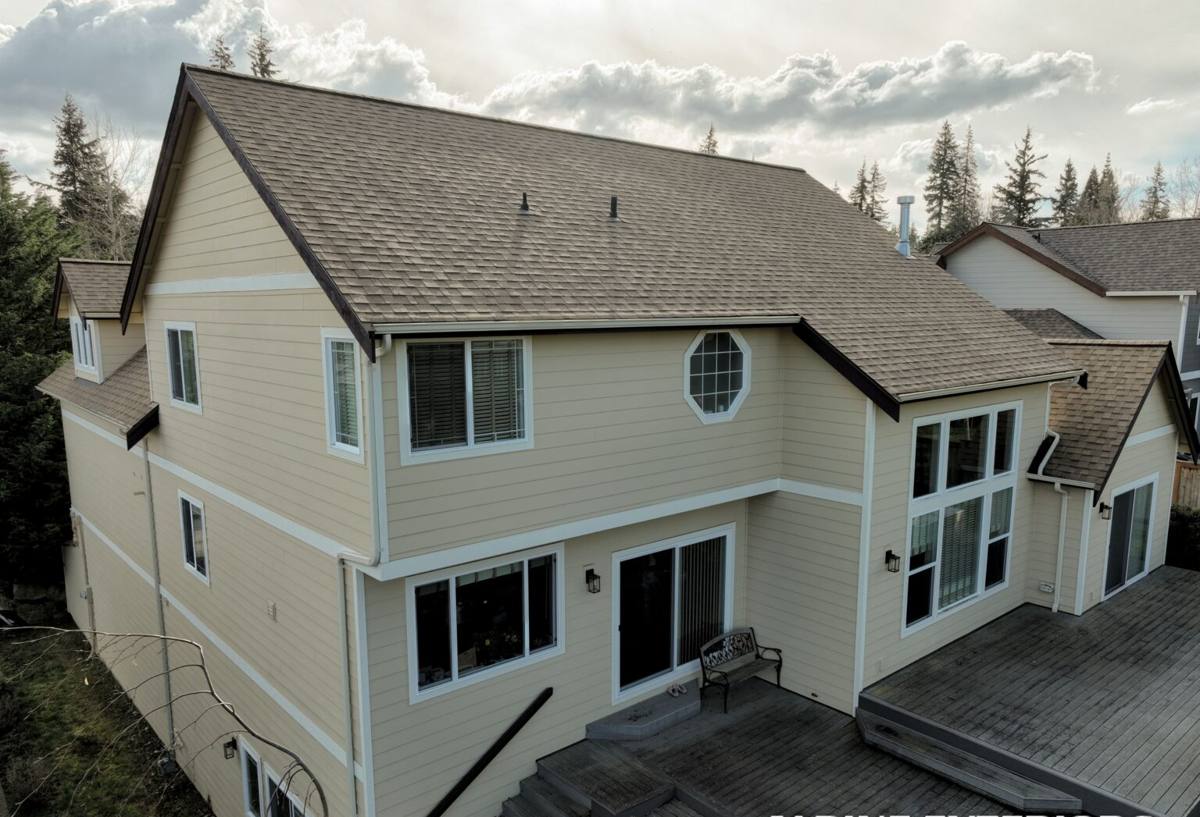
What Silver Beach's Climate Actually Does to a Roof
Salt Air
Airborne salt accelerates corrosion on any exposed metal — fasteners, flashing, gutters, and unprotected panel edges. It doesn't take a direct ocean-front lot to feel this; homes set back from the water still pick up salt in the air, especially with the wind patterns common around Bellingham Bay and the surrounding shoreline. Materials and coatings that aren't rated for a marine or near-marine environment corrode faster here than they would inland, and once corrosion starts at a fastener or seam, it spreads.
Driving Rain
Bellingham doesn't just get a lot of rain — a good share of it comes in sideways, pushed by wind off the water. That matters more than total rainfall for roofing purposes, because wind-driven rain finds every weak lap, every under-sized flashing, and every gap in underlayment that a straight-down rain would never reach. A roof detailed for average conditions instead of the wind patterns specific to this area will eventually leak at exactly those weak points.
A Long Moss Season
Between tree cover, humidity, and shade patterns common to this part of Whatcom County, moss and algae have a long growing window here — often nearly year-round on north-facing or shaded slopes. On roofing materials with any texture or seam for organic matter to grip, moss holds moisture against the surface, which is exactly the condition that shortens a roof's life, whether that roof is asphalt, wood, or metal.
Why Metal Roofing Is a Strong Fit for This Environment
Metal roofing doesn't solve every one of these problems automatically — the product and the installation both have to be matched to the conditions — but the material itself has real advantages for a neighborhood like Silver Beach:
- Smooth, low-profile surfaces give moss and algae far less to grip than a shingle's granulated texture, which slows regrowth and makes periodic cleaning easier.
- Steep water-shedding performance moves wind-driven rain off the roof quickly rather than letting it sit in a textured surface.
- Long service life when the coating and fasteners are correctly matched to a salt-air environment — properly specified metal roofing is built to outlast multiple cycles of asphalt reroofing.
- Consistent panel seams (on standing seam systems especially) give fewer entry points for wind-driven moisture than a shingle field with thousands of individual laps.
None of that is automatic, though. The wrong panel type, the wrong fastener, or a rushed flashing detail turns those advantages into problems just as fast on metal as on any other roofing material — sometimes faster, because a metal roof failure at a seam or fastener can move water a long way before it shows up as a stain inside the house.
Choosing the Right Metal Roofing System
Not every metal roofing product is built the same way, and the choice matters more in a salt-air, high-moisture climate than it would somewhere drier and more sheltered.
| System | How It's Fastened | Best Fit For | Trade-Offs |
|---|---|---|---|
| Standing seam | Concealed clips, no exposed fasteners on the field | Homes wanting maximum weather-tightness and longest service life | Higher upfront cost; requires precise installation |
| Exposed-fastener panel | Screws driven through the panel face | Budget-conscious projects, outbuildings, some residential applications | Fasteners are a maintenance item — gaskets age and need periodic checking, especially in salt air |
| Stone-coated steel | Interlocking panels, concealed fasteners | Homeowners wanting a traditional shingle or tile look with metal's durability | Textured surface holds a little more organic debris than smooth panel — needs the same moss vigilance |
For most Silver Beach homes, we lean toward standing seam or a quality concealed-fastener system precisely because exposed fasteners are the first thing salt air attacks. When a client has a specific look or budget in mind that points toward an exposed-fastener panel instead, we say so plainly and explain what that means for long-term maintenance rather than letting it go unmentioned.
Coating and Gauge
The steel or aluminum substrate matters, but the coating system over it is what actually fights corrosion in a marine-influenced climate. We spec coatings rated for coastal and near-coastal exposure rather than a generic inland-grade finish, and we won't downgrade that spec to save money on a Silver Beach job — it's the one place where cutting corners shows up fastest.
What a Correct Installation Involves
The panels get most of the attention, but the parts of a metal roof that actually determine whether it survives Bellingham's weather are mostly things you can't see once the job is done.
- Full underlayment rated for the exposure — synthetic, self-adhering ice-and-water-style membrane at eaves, valleys, and penetrations, not just felt over the deck.
- Deck inspection and repair before a single panel goes down; metal roofing over a soft or damaged deck just hides a bigger problem.
- Fastener spec matched to the substrate and climate — corrosion-resistant fasteners and gaskets rated for salt-air exposure, not whatever came in the standard box.
- Flashing at every transition — valleys, sidewalls, chimneys, skylights, and roof-to-wall intersections are where wind-driven rain gets in, and where rushed installers cut the most corners.
- Proper panel overlap and seam direction relative to prevailing wind and water flow specific to the roof's exposure.
- Ventilation that keeps moist attic air from condensing against the underside of the metal — a detail that's easy to skip and expensive to fix later.
Our Process
1. On-Site Assessment
We look at the whole roof system, not just the surface — deck condition, existing ventilation, tree overhang, shaded slopes prone to moss, and how the house is oriented relative to prevailing wind and rain. This is also where we talk through panel type and budget honestly, including what each option means for maintenance down the road.
2. Written Scope and Estimate
You get a clear, itemized scope — panel system, underlayment, flashing plan, ventilation work if needed — before any work starts. No surprise add-ons discovered halfway through the tear-off.
3. Tear-Off and Deck Prep
Old roofing comes off, the deck gets inspected, and any soft or damaged sheathing is replaced before underlayment goes down. This is the step that determines whether the new roof actually performs as designed.
4. Underlayment and Flashing
We install underlayment rated for the exposure and detail every flashing point before panels go on — this is where most future leaks are prevented or guaranteed, depending on how carefully it's done.
5. Panel Installation
Panels go down with fasteners and clips specified for the coastal exposure, run and lapped to shed wind-driven rain rather than just gravity-fed runoff.
6. Final Walkthrough
We walk the finished roof and the ground-level details — gutters, downspouts, and how water leaves the property — with the homeowner before calling the job done.
Maintenance in a Moss-Prone, Salt-Air Climate
Metal roofing is lower-maintenance than most alternatives, but "lower-maintenance" isn't "no-maintenance," especially in this neighborhood's specific conditions.
- Clear debris and needle buildup from valleys and behind chimneys or skylights at least once a year — trapped organic matter is what starts moss growth even on smooth metal.
- Rinse shaded, north-facing slopes periodically where moss and algae are most likely to establish.
- Check gutters and downspouts for salt-related corrosion or granular buildup that can slow drainage.
- Inspect exposed fasteners (on panel systems that use them) every year or two for gasket wear — this is the single most common maintenance item on exposed-fastener metal roofs in salt air.
- Watch for any panel scratches that expose bare metal, and get them touched up before corrosion has a chance to start.
- After major windstorms, a quick visual check of flashing and panel edges is worth the ten minutes it takes.
Cost Factors to Understand Before You Get Quotes
| Factor | Why It Moves the Price |
|---|---|
| Panel system | Standing seam runs higher than exposed-fastener panel; stone-coated steel falls in between |
| Roof complexity | Valleys, dormers, and multiple roof planes mean more flashing labor and material |
| Deck condition | Rot or soft sheathing found during tear-off adds repair cost before installation can proceed |
| Coating and gauge upgrades | Coastal-rated coatings and heavier gauge steel or aluminum cost more but matter directly for salt-air longevity |
| Ventilation work | Adding or correcting attic ventilation as part of the reroof affects both cost and long-term performance |
| Tear-off scope | Full tear-off versus roofing over existing material changes both labor and disposal costs |
We don't quote a price without seeing the roof — anyone who does is guessing. What we can say honestly is that metal roofing generally costs more upfront than asphalt shingles and less over the life of the roof when it's specified correctly for a climate like this one.
Why Local Experience in Silver Beach Matters
A crew that mostly works inland jobs, or jobs outside a marine-influenced climate, doesn't necessarily think about coastal-rated fasteners or moss-prone shaded slopes as a default. We work throughout Bellingham and Whatcom County, including neighborhoods like Silver Beach that see more salt air and shade-driven moss than the regional average. That's not a marketing line — it's the reason our specs for fastener grade, coating rating, and flashing detail don't change depending on how convenient the job site is.
It also means we're not guessing about how a given roof orientation on a given slope will handle wind-driven rain in this area — we've seen how these details play out on roofs like yours, in this weather, over time.
Get an Honest Look at Your Roof
If you're weighing metal roofing for a Silver Beach home — whether it's a full reroof, a replacement after storm damage, or you're just trying to understand your options before your current roof needs it — we're glad to take a look and give you a straight answer, no pressure attached. Use the form below to request a free estimate.