 Bellingham
 Roofing in South Hill: A Different Set of Problems Than a New Subdivision Roof
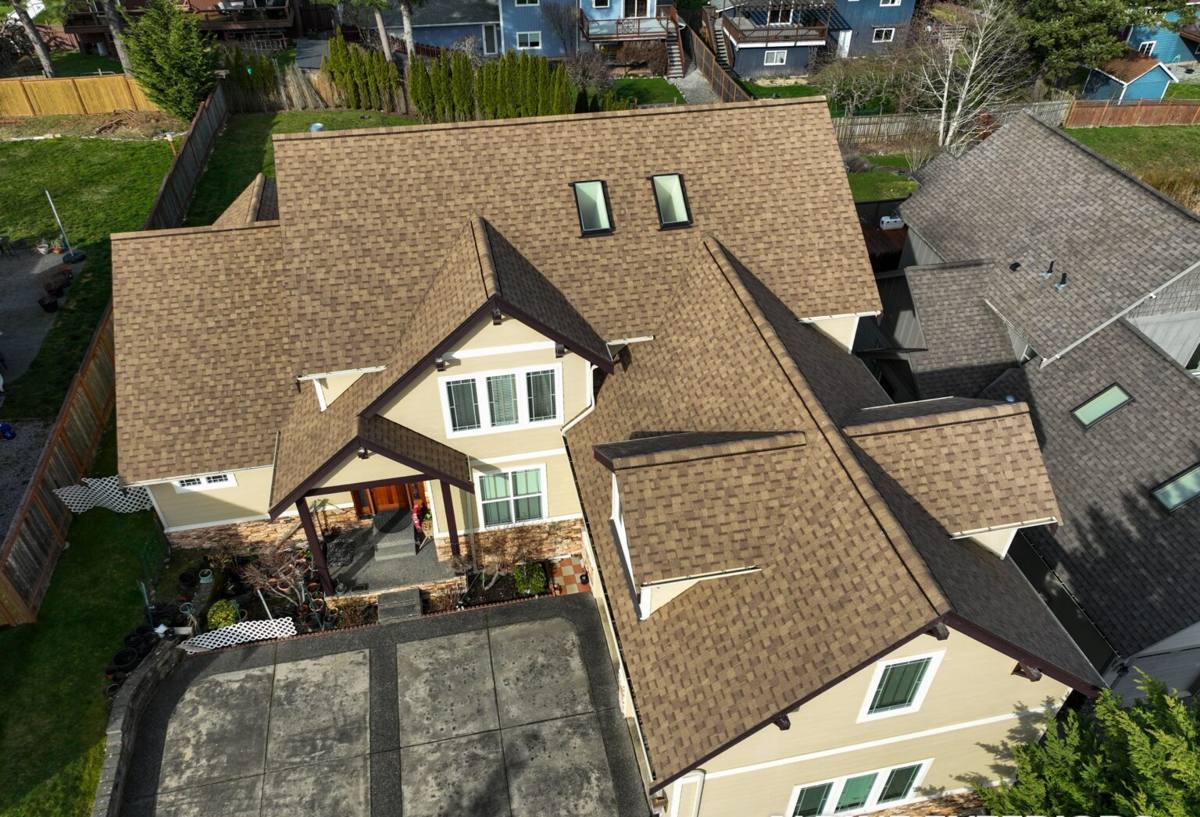
South Hill sits up above downtown Bellingham, and that elevation and tree cover come with a roofing personality all their own. Mature conifers and big-leaf maples shade large stretches of these roofs for most of the day, which means less sun exposure to dry out a roof deck after a storm rolls off Bellingham Bay. Add in the steeper pitches and older roof framing common on the hill's established homes, and you get a combination that's genuinely different from what we see on a flat-lot roof in a newer part of Whatcom County. A roof replacement here isn't just "install shingles" — it's solving for shade, moisture retention, and roof geometry all at once.
We're not guessing at what South Hill roofs need. We work on this hill regularly, and the same issues show up over and over: moss colonies that outlast a homeowner's patience, valleys that hold water longer than they should, and fascia boards that rot from the inside out before anyone notices from the ground.
Why South Hill's Climate Is Hard on Roofs
Salt Air
Bellingham Bay is close enough that salt-laden air reaches South Hill roofs, especially on the west- and north-facing slopes that catch weather coming off the water. Salt air accelerates corrosion on exposed metal — nails, flashing, gutter hardware — faster than it would inland. Over a roof's lifespan, that corrosion is one of the quieter causes of leaks, because a rusted-through nail head or a corroded flashing seam doesn't announce itself until water is already inside.
Driving Rain
Whatcom County rain doesn't always fall straight down. Wind off the bay pushes it sideways, which puts real stress on flashing details around chimneys, skylights, and roof-to-wall intersections — the places where a roof is only as good as its weakest seam. A roof that's fine in a light drizzle can still leak in a wind-driven storm if those transitions weren't detailed correctly.
Moss Season
Between the tree canopy and the long stretch of wet, mild weather from fall through spring, South Hill roofs deal with an extended moss season — often longer than roofs in more open, sun-exposed parts of the county. Moss isn't just cosmetic. It holds moisture against the shingle surface, lifts shingle edges as it grows, and works its way into fastener lines over time. Left alone for years, it shortens a roof's usable life significantly.
Signs a South Hill Roof Is Due for Replacement, Not Another Repair
- Granule loss heavy enough that you can see bare, shiny patches on the shingle surface, especially in valleys or on south-facing slopes
- Moss that keeps returning within a season or two of being cleaned off, even after treatment
- Shingles that are cupping, curling at the edges, or cracking when you look closely from a ladder
- Daylight visible through the roof deck from inside the attic, or damp insulation after a storm
- Repeated leaks in the same spot despite prior patch repairs — a sign the underlying deck or flashing has failed, not just the surface layer
- A roof that's 20+ years old, since most asphalt roofing in this climate is well past its effective service life by then even if it "looks okay" from the street
If you're only seeing one or two of these, a repair might still be the right call. If you're seeing several at once, replacement is usually the more honest recommendation — patching a roof that's failing in multiple places tends to cost more over a few years than doing the job once, correctly.
Choosing the Right Roofing Material for a Shaded, Wet Site
Not every material performs the same way under heavy tree cover and long moss seasons. Here's how the common options compare for a South Hill setting specifically:
| Material | Moss/moisture resistance | Typical lifespan here | Notes for South Hill |
|---|---|---|---|
| 3-tab asphalt shingle | Fair — flat profile traps less debris, but thinner material weathers faster in shade | 15–20 years | Lowest upfront cost; shortest lifespan under heavy tree cover |
| Architectural (dimensional) shingle | Good — thicker mat and better sealant strip resist lifting | 25–30 years | The standard we recommend for most shaded South Hill homes |
| Standing seam metal | Very good — smooth surface sheds moss and debris well | 40–50+ years | Higher upfront cost; needs corrosion-rated fasteners near the bay |
| Cedar shake | Poor without diligent maintenance — organic material holds moisture | Varies widely | We'll install it if requested, but we're upfront that it demands more upkeep in this climate than composite options |
For most South Hill homes, an architectural shingle rated for algae/moss resistance hits the right balance of cost, appearance, and how well it holds up under tree cover. Metal is worth the conversation for homeowners planning to stay long-term and wanting to minimize maintenance, but it's a bigger investment upfront.
What a Correct Roof Replacement Actually Involves
A roof replacement is more than swapping old shingles for new ones. Done right, here's what's happening underneath:
Full Tear-Off and Deck Inspection
We remove the old roofing down to the deck rather than layering over it. That's the only way to actually see the plywood or sheathing underneath — and on shaded, moisture-prone roofs like South Hill's, deck rot in valleys and around penetrations is common enough that we plan for some deck replacement as part of the estimate, not as a surprise change order later.
Underlayment and Ice/Water Shield
A synthetic underlayment goes down across the whole deck as the roof's secondary moisture barrier. In valleys, along eaves, and around chimneys and skylights — the spots most exposed to driving rain and standing water — we add a self-adhering ice-and-water membrane for extra protection where flashing alone isn't enough.
Flashing Details
Flashing around chimneys, roof-to-wall transitions, and skylights is where most roof leaks actually start, not in the open field of shingles. We install new flashing rather than reusing old, corroded pieces — particularly important given the salt air exposure common on this hill.
Ventilation
Proper intake and exhaust ventilation keeps the attic temperature closer to outdoor conditions, which reduces condensation and helps shingles last their full rated lifespan. Under heavy tree shade, a poorly ventilated attic stays damp longer, which compounds moss and moisture problems from the top and bottom of the deck at once.
Our Process, Start to Finish
- Inspection and honest assessment — we get on the roof (not just a look from the ground), check the deck condition where accessible, and tell you plainly whether you need a replacement or if a repair will genuinely hold.
- Written estimate — clear scope, material options, and pricing before any work starts. No surprise add-ons for things we should have caught during inspection.
- Scheduling around the weather — Whatcom County's wet season limits good roofing windows, so we plan tear-off days around forecasts and keep the deck covered if weather turns mid-job.
- Tear-off and deck repair — old roofing removed, deck inspected and repaired as needed, debris hauled and disposed of properly.
- Installation — underlayment, ice-and-water membrane in vulnerable areas, new flashing, ventilation components, and the roofing material itself, installed to manufacturer spec.
- Final walkthrough — we walk the property with you, check gutters and downspouts are clear of installation debris, and answer any questions before we call it done.
Why Hiring a Crew That Already Works South Hill Matters
South Hill's older housing stock, tree-lined streets, and steeper driveways create real logistical challenges that a crew unfamiliar with the neighborhood has to learn on your job. We already know to plan for tight staging areas, tree-limb clearance for material delivery and dump trailers, and the access considerations that come with a hillside lot. We're also familiar with City of Bellingham permitting requirements for roofing work, which keeps the paperwork side from slowing down your project.
Just as important: we know what South Hill roofs typically look like underneath once torn off, because we've opened up enough of them. That means fewer surprises, more accurate estimates, and a crew that isn't guessing at how the tree canopy and bay-driven weather have treated your specific roof over the years.
Protecting the Investment After Installation
A new roof still needs a little attention to hit its full expected lifespan, especially under South Hill's tree cover:
- Clear gutters and downspouts at least twice a year — more often if you're under heavy maple or conifer cover
- Have moss growth addressed early, before it spreads across a full slope, rather than waiting until it's visible from the street
- Trim back overhanging branches where practical to reduce debris buildup and shade retention on the roof surface
- Schedule a roof check after major windstorms to catch any lifted shingles or flashing movement early
- Keep an eye on the attic for musty smells or damp insulation, which can signal a developing leak before it shows up as a ceiling stain
Get a Straight Answer on Your South Hill Roof
If your roof is showing its age, or you just want an honest opinion on repair versus replacement, we're glad to take a look. The estimate is free, there's no pressure attached to it, and you'll get a clear explanation of what we see and why — use the form below to get started.