 Bellingham
 Roofing in a Shaded, Wet Corner of Whatcom County
Sudden Valley sits back in the trees along Lake Whatcom, and that setting is a big part of what makes roofing here different from a roof job closer to downtown Bellingham. Heavy fir and cedar canopy keeps lots private and cool, but it also keeps roof surfaces shaded, damp, and covered in needle litter for much of the year. Layer on the driving rain and long moss season that come with living anywhere in Whatcom County's marine climate, and you end up with a roofing environment that has little patience for shortcuts.
An asphalt shingle roof can hold up for decades in this climate — but only when it's installed with the details that actually matter for a shaded, moisture-heavy lot: the right underlayment, correctly detailed flashing, balanced attic ventilation, and a shingle product chosen for algae and moss resistance rather than pulled off the shelf without thought. This page covers what that looks like for a Sudden Valley home specifically, not a generic roofing checklist.
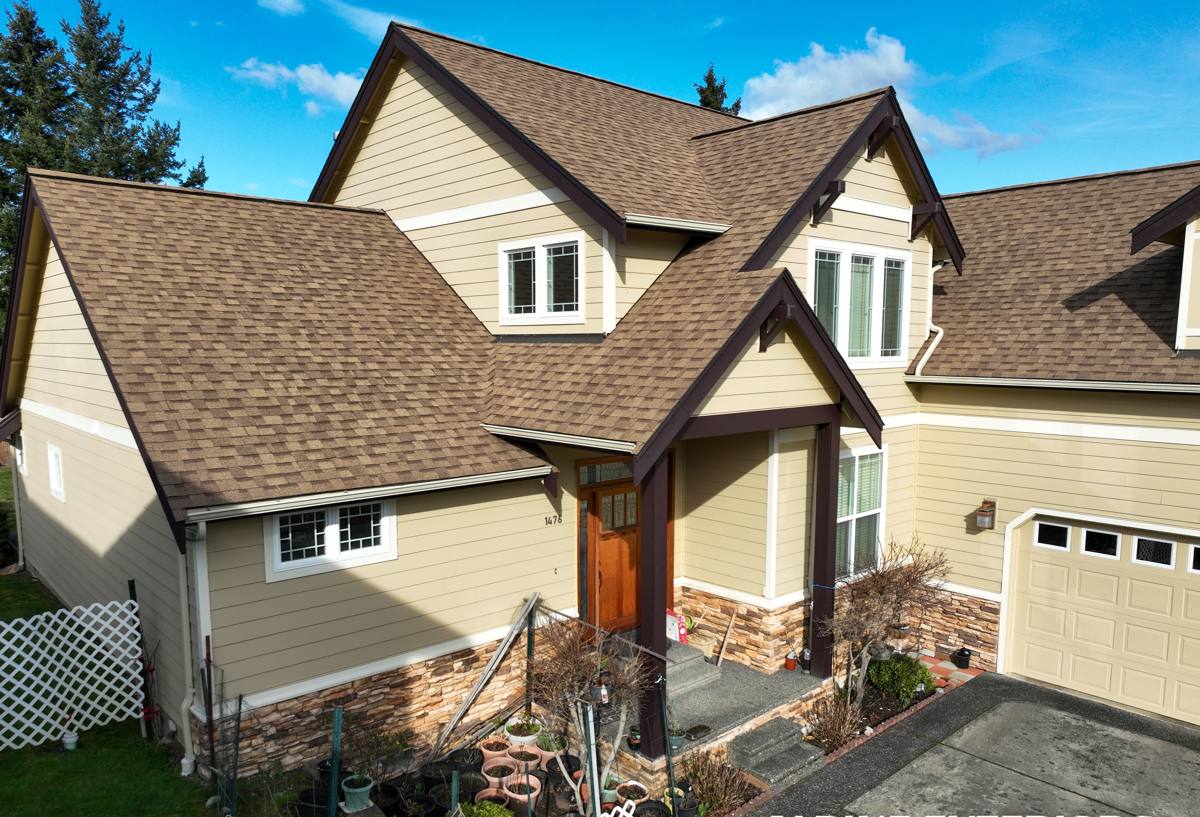
What This Setting Does to a Roof Over Time
Shade and Moss
A roof under tree cover dries slower than one in full sun. Every rain event leaves shaded slopes and north-facing sections damp longer, and that lingering moisture is exactly what moss and algae need to take hold. Once moss establishes in a shingle's granule surface, it holds even more water against the roof deck and starts to lift shingle tabs at the edges — which is how a moss problem quietly turns into a leak problem.
Needle and Debris Buildup
Conifer needles and cones collect in valleys, behind chimneys, and along gutter lines faster on a wooded lot than almost anywhere else. That debris holds water against the roofing material and can dam up valleys during heavy rain, sending water sideways under shingles instead of down and off the roof.
Wind-Driven Rain
Whatcom County storms regularly bring rain sideways, not just straight down, and that's a different stress test than a light shower. Flashing, starter courses, and nail patterns that would be fine in a drier climate can fail here specifically because wind-driven rain finds gaps that gravity alone would never expose.
What a Correctly Installed Shingle Roof Actually Includes
A lot of roofing problems we get called out for in this area trace back to a handful of details that got skipped or rushed during installation. None of them are exotic — they're just easy to shortcut if a crew isn't used to building for this specific climate.
- Ice and water shield at eaves, valleys, and around penetrations, not just felt paper, to guard against wind-driven rain and debris damming
- Synthetic underlayment that stays intact and slip-resistant through a long, wet install season
- Balanced ridge and soffit ventilation, sized to the attic, so moisture escapes instead of condensing on the underside of the deck
- Properly lapped step and counter flashing at every wall, chimney, and skylight intersection
- Correct nailing pattern and placement per the shingle manufacturer's specification, not just "close enough"
- Algae-resistant (AR) shingle granules as standard, not an upgrade, on any lot with significant tree cover
Skipping any one of these usually doesn't cause an immediate problem — it causes a problem in year four or five, after the first heavy moss season or the first real windstorm finds the weak point.
Ventilation Matters More Under Tree Cover
Shaded roofs run cooler and stay damper, which changes how attic moisture behaves. Without enough intake and exhaust airflow, that moisture condenses on roof sheathing from underneath — a problem that looks nothing like a roof leak from inside the attic, but rots the deck just the same. On a wooded Sudden Valley lot, we treat ventilation sizing as part of the roofing job, not an afterthought.
Choosing an Asphalt Shingle for a Shaded, Lakeside Lot
Not every shingle line is a good fit for a heavily treed property. The table below is a general guide to how common asphalt shingle tiers perform in this kind of environment — actual products and pricing depend on the manufacturer and what's available at the time of your project.
| Shingle Type | Typical Lifespan | Moss/Algae Resistance | Best Fit |
|---|---|---|---|
| 3-tab (standard) | 15–20 years | Lower unless AR-rated | Budget-driven projects, sun-exposed roofs |
| Architectural (laminated) | 25–30+ years | Good, especially with AR granules | Most Sudden Valley homes; better wind and impact tolerance |
| Impact-resistant / premium | 30+ years | Very good with AR granules | Steep, heavily shaded, or debris-prone roof sections |
For most homes here, an architectural shingle with algae-resistant granules is the practical middle ground: meaningfully better wind and moisture performance than 3-tab, without the premium cost of top-tier impact-rated lines. We can walk through manufacturer options — including common lines from GAF, CertainTeed, and Owens Corning — and match warranty coverage to how your specific roof is exposed to trees, wind, and sun.
Warning Signs Worth a Closer Look
On a shaded, wooded lot, roof problems often develop quietly for a season or two before they show up as an active leak. Worth checking for, or having us check for you:
- Dark streaking or green-tinted moss patches, especially on north-facing slopes
- Shingle tabs that look lifted, curled, or cupped at the edges
- Granules collecting in gutters or at downspout outlets
- Sagging or spongy-feeling sections when walked (do not do this yourself — flag it for an inspection)
- Water staining on interior ceilings, especially near valleys, chimneys, or skylights
- Visible daylight through the roof deck from inside an unfinished attic
- Debris buildup in valleys that doesn't clear on its own after rain
Any one of these on its own isn't necessarily an emergency, but they're worth a professional look before the next wet season rather than after.
How We Approach a Sudden Valley Roofing Project
- On-site inspection. We look at the whole roof system — decking, flashing, ventilation, and shingle condition — not just the surface layer, and pay particular attention to shaded slopes and valleys.
- Honest scope and estimate. You get a clear breakdown of what needs to be replaced versus what can be repaired, in plain language.
- Tear-off and deck check. Old material comes off and the deck gets inspected for soft spots or moisture damage before anything new goes down.
- Underlayment and flashing. Ice and water shield, synthetic underlayment, and new flashing go in at every vulnerable point — eaves, valleys, walls, and penetrations.
- Shingle installation. Installed to manufacturer specification for nailing, exposure, and ventilation, using a product matched to your roof's sun and tree exposure.
- Final walkthrough. We review the finished roof with you, including gutter and debris-management recommendations specific to your lot.
Maintenance That Actually Extends Roof Life Here
A well-installed roof still benefits from upkeep suited to a wooded, wet climate. The goal isn't constant maintenance — it's a few timely steps that prevent moss and debris from ever getting a foothold.
Gutter and Valley Clearing
Needles and debris should be cleared from gutters and roof valleys at least once or twice a year on a heavily treed lot — more often if your property has dense overhanging canopy. Clogged valleys are one of the more common causes of roof leaks we see in this kind of setting.
Moss Treatment
Soft washing or approved moss treatments, done before moss gets established rather than after, protect the shingle surface without the damage that pressure washing or aggressive scraping can cause. Zinc or copper control strips near the ridge can also help slow regrowth over time.
Periodic Inspection
A quick inspection every year or two — especially after a significant windstorm — catches small issues like lifted flashing or a cracked shingle before they turn into a deck-level repair.
Why Hire a Crew That Already Works This Neighborhood
Sudden Valley isn't a typical in-town lot. Many properties sit on sloped, tree-covered ground with limited staging space and roads that take some care to navigate with equipment and material deliveries. A crew that already works in this community knows how to plan access, protect landscaping, and manage debris without the learning curve of a first-time visit.
Local experience also means we've seen how shingle products, ventilation systems, and flashing details actually perform under this specific combination of shade, moisture, and wind over multiple seasons — not just how they're rated on paper. That's the difference between a roof that looks good at installation and one that's still performing well a decade in, through repeated moss seasons and Whatcom County's wind-driven rain.
Ready for a Straight Answer on Your Roof?
If your Sudden Valley roof is showing moss, debris buildup, or you're just not sure how much life is left in it, we're happy to take a look and give you a clear, no-pressure assessment. Use the form below to request a free estimate, and we'll go over exactly what your roof needs — nothing more, nothing less.