 Bellingham
 Sudden Valley's Siding Problem Isn't Just Rain
Sudden Valley sits in one of the more heavily wooded, lake-adjacent pockets of Whatcom County, and that setting creates a specific set of demands on exterior siding that a lot of general "Bellingham weather" advice skips over. Yes, the marine air moving in off Bellingham Bay and the broader Puget Sound region keeps everything in this part of Washington damp for much of the year. But in Sudden Valley specifically, the bigger factor is often tree canopy: mature conifers and second-growth timber shade large sections of most lots for much of the day, which means siding stays wet longer after every rain event than it would on an open lot in town.
That combination — driving rain, limited direct sun on shaded elevations, and a long moss season that can run from fall through late spring — is exactly the kind of environment where the wrong siding choice turns into a maintenance headache within a few years. We install exclusively James Hardie fiber cement siding, and this page is about why that matters specifically for homes in this community, not just in general.
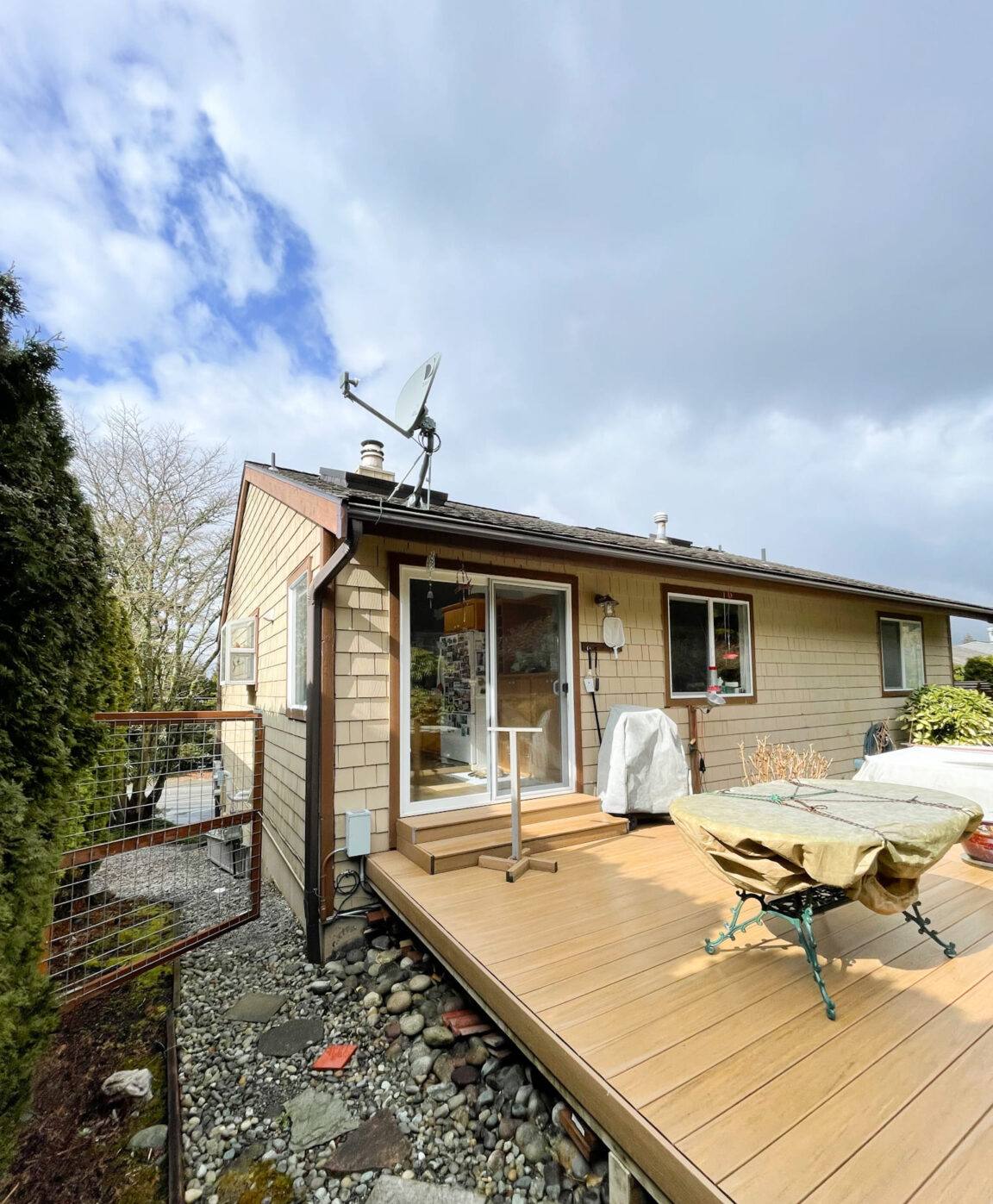
Why Moss and Moisture Do More Damage Here Than Elsewhere
Moss itself doesn't eat through siding. The problem is what moss growth indicates and what it holds against the wall: a layer of organic material that stays saturated, blocks airflow, and keeps the siding surface wet far longer than an exposed, sun-drying surface would be. On shaded, tree-covered lots like many in Sudden Valley, north- and east-facing walls, areas under eaves with limited overhang, and siding close to grade or plantings are the spots that take the worst of it year after year.
On wood-based products — cedar, primed spruce, or engineered wood siding like LP SmartSide — that sustained moisture exposure is the mechanism behind swelling, edge softening, and eventually rot at butt joints and panel edges, especially where caulking has aged out or where the original installation left end cuts unsealed. Vinyl doesn't rot, but it doesn't hold up structurally either — it can warp, fade unevenly in the dappled light patterns common under a tree canopy, and it gives moss and algae an easy surface to cling to since it doesn't have a factory finish designed to shed organic growth.
Fiber cement doesn't solve moss on its own — nothing prevents moss from landing on a wall — but it removes the failure mode that makes moss dangerous. Hardie board is non-combustible, doesn't swell or rot from sustained moisture contact, and its ColorPlus factory finish is baked on to resist the fading and surface breakdown that shaded, damp walls accelerate in painted wood and standard vinyl.
What This Means for Different Elevations of Your Home
- Shaded, tree-covered walls: highest moss and algae exposure; benefit most from a moisture-stable product and correct rainscreen gapping
- Walls facing the lake or open exposure: more direct wind-driven rain; flashing and joint sealing matter more here than moss resistance
- Ground-level and low-clearance siding: splashback and plant contact keep this zone wet longest; correct clearance from grade is non-negotiable
- Under decks, eaves, and roof valleys: concentrated runoff spots that need extra flashing attention regardless of siding material
The James Hardie System — Not Just a Board
We only install James Hardie products, and it's worth explaining what that actually includes, because "fiber cement" isn't one product — it's a system of parts that all have to work together.
James Hardie's HZ5 product line is engineered for climates like this one — freeze-thaw cycling, sustained damp conditions, and high annual rainfall — as opposed to the HZ10 line built for hot, dry climates. Getting the right HZ designation matters more than most homeowners realize, because it affects how the board is engineered to handle moisture cycling over decades, not just how it looks on day one.
The lineup we work with most in this area includes:
- HardiePlank lap siding — the standard horizontal board, available in several textures including smooth and cedar-grain
- HardieShingle — for homes wanting a shingle look without the moisture sensitivity of real wood shakes
- HardiePanel — vertical panel siding, often used for accent gables or modern-style elevations
- HardieTrim — matched trim boards so window, corner, and fascia trim age and perform the same way as the field siding
The factory-applied ColorPlus finish is part of why we standardized on Hardie over repainting-prone alternatives. It's baked on with a process designed to resist fading and chipping better than field-applied paint, which matters a lot on a shaded lot where a wall might not fully dry out between rain events for weeks at a stretch.
What a Correct Installation Actually Involves
Fiber cement is a forgiving material in terms of longevity, but it is not forgiving of a rushed or generic installation — and this is where a lot of the real-world problems with fiber cement siding actually originate, not with the product itself. Manufacturer specs exist for a reason, and skipping them is the single biggest cause of premature failure we see on fiber cement re-siding jobs.
The non-negotiables on every job
- Weather-resistive barrier installed and lapped correctly before any siding goes up
- Rainscreen or drainage gap where conditions call for it, so moisture that gets behind the siding has somewhere to go
- Minimum clearance from grade, roof lines, decks, and walkways per manufacturer specification
- Correct fastener type, spacing, and penetration depth — under- or over-driven fasteners are a common cause of cracking
- Proper flashing at every window, door, and penetration, not just caulk
- Factory-cut or properly sealed field cuts, since an unsealed cut edge is the fastest way for moisture to get into the board
- Correct panel and joint gapping to allow for expansion without forcing water behind the cladding
None of this is unique to our company — it's what James Hardie's own installation manual requires. But it's also the part that gets shortcut most often when a crew is unfamiliar with the product or is rushing to hit a price. On a shaded, high-moisture lot, those shortcuts show up faster than they would on a dry, open one.
How Fiber Cement Compares for This Kind of Site
| Factor | James Hardie Fiber Cement | Vinyl | Wood / LP SmartSide |
|---|---|---|---|
| Behavior under sustained shade/moisture | Stable; won't swell or rot | Doesn't rot, but can warp and trap moss/algae | Prone to swelling, edge softening, rot at joints |
| Finish life on north/shaded walls | Factory-baked finish resists fading longer | Fades unevenly in dappled light | Repaint cycle shortens in constant damp |
| Fire resistance | Non-combustible | Combustible | Combustible |
| Typical repaint/refinish need | Rare, if installed and finished correctly | Never repainted, but fades and can't be restored | Every 5–8 years, sooner in constant shade |
| Installation sensitivity | High — must follow spec exactly | Lower, but limited long-term performance ceiling | Moderate to high depending on product |
What It Costs — and What Actually Moves the Number
We won't quote a number here that doesn't reflect your specific home, but the factors that move fiber cement siding pricing up or down are consistent, and most are relevant to Sudden Valley lots specifically:
| Cost Factor | Why It Matters Here |
|---|---|
| Home access and site layout | Sloped, wooded, or narrow-access lots common in the area can add setup and staging time |
| Existing siding removal and condition of sheathing underneath | Long-term moisture exposure sometimes means sheathing repair is needed before new siding goes on |
| Number of trim details, gables, and elevation changes | Cut, custom trim, and multi-story sections add labor beyond flat wall footage |
| Product line and profile chosen | HardiePlank vs. HardieShingle vs. panel accents price differently |
| Flashing and drainage upgrades | Correcting old flashing details during a re-side adds cost but prevents repeat failure |
How We Approach a Project in Sudden Valley
Sudden Valley is a private, gated community, and a fair number of homes fall under HOA design guidelines that can involve review of exterior color and material changes before work begins. We factor that into scheduling from the start rather than treating it as a surprise mid-project — checking what documentation or approval steps a homeowner may need, and building the timeline around gate access and any community scheduling requirements rather than assuming open street access like a standard in-town job.
On site, our process is straightforward:
- Walk the exterior and assess current siding, trim, flashing, and any moisture damage at grade or under eaves
- Confirm product line, color, and trim details, including any HOA approval needs specific to the property
- Remove existing siding and inspect sheathing, repairing or replacing any compromised sections before new material goes on
- Install weather-resistive barrier, drainage gap where called for, and flashing at every penetration
- Install James Hardie siding and trim to manufacturer spec — correct fastening, gapping, and clearances
- Final walkthrough covering care and what to watch for on shaded elevations going forward
Keeping Fiber Cement Siding Performing Long-Term
Fiber cement is low-maintenance compared to wood, but "low-maintenance" isn't "no-maintenance," especially with the tree cover common on Sudden Valley lots. A short seasonal routine goes a long way:
- Rinse shaded, moss-prone elevations with a garden hose or soft wash setup once or twice a year — skip the pressure washer, which can force water behind joints and damage the finish
- Keep gutters clear so runoff isn't sheeting down wall sections it shouldn't
- Trim back vegetation and branches touching or overhanging siding to reduce shade, debris buildup, and physical contact
- Check caulking at trim and penetrations annually and have any cracked or missing sealant redone promptly
- Watch ground-level siding for splashback staining and address grading or plant clearance if it's a repeat problem
None of this is heavy lifting, but skipping it on a shaded, damp lot removes the margin that a correctly installed Hardie system is built to have.
If you're weighing a siding replacement for a home in Sudden Valley, we're glad to walk the exterior with you, point out what your specific elevations and tree cover are doing to the current siding, and put together a free, no-pressure estimate for a James Hardie system built for this site.