 Bellingham
 Building New in Sudden Valley: What the Site Actually Throws at Your Windows
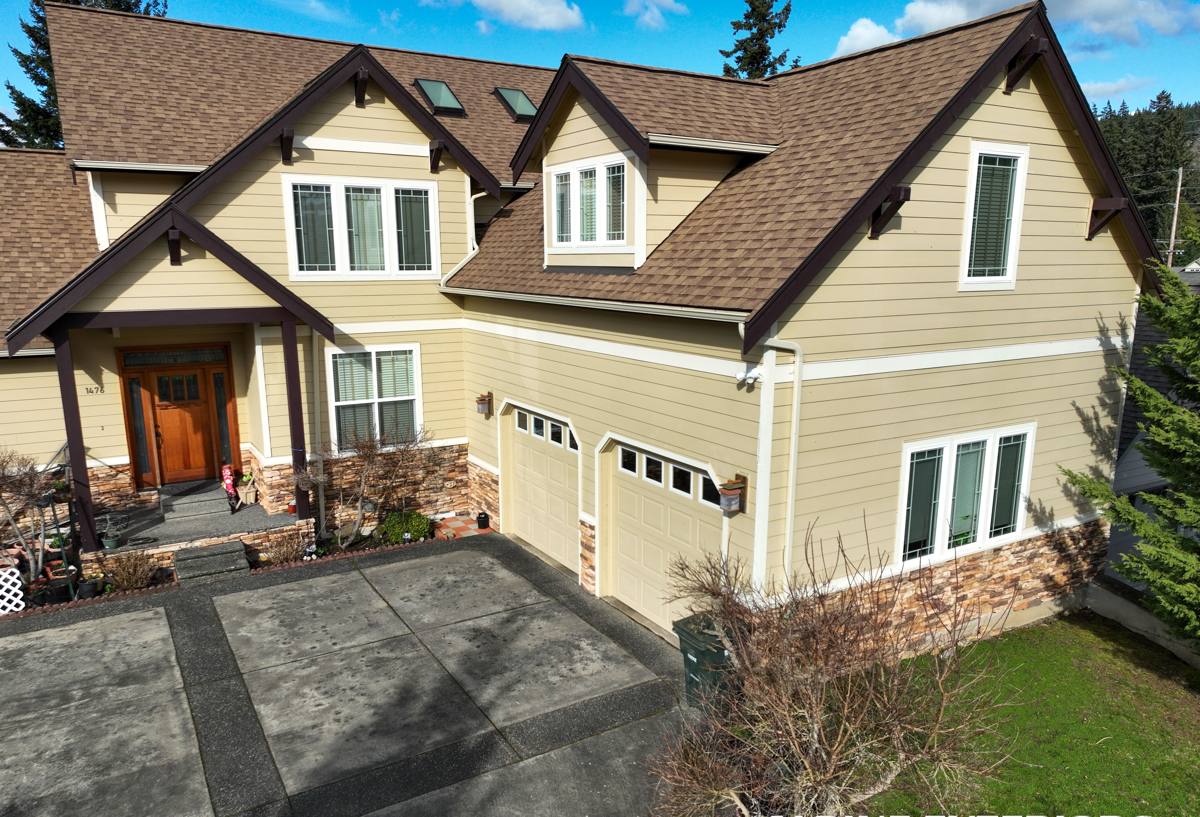
Sudden Valley sits in a heavily wooded, hilly stretch of Whatcom County along Lake Whatcom, and that setting is part of what makes it a great place to build — but it's also a demanding one for exterior work. Tree cover holds moisture against the house long after a storm has passed, hillside lots mean water moves differently around the foundation than it would on a flat city lot, and the same marine-influenced climate that gives Bellingham its driving rain and salt-tinged air off the Bay keeps everything in the area damp for long stretches of the year. Put those together and you get one of the longer moss seasons in the county, on roofs, siding, and yes, window sills and trim.
None of that is a reason to avoid building here. It's a reason to get the window installation right the first time, because a new-construction window that's flashed and sealed correctly will handle decades of that weather without complaint, while one that's rushed or installed with shortcuts will show water staining, rot at the sill, or fogged glass within a few winters.
Why New-Construction Window Installation Is a Different Job Than Replacement
Replacement window work happens after a house already exists — you're fitting a new unit into an opening that's already flashed, trimmed, and sided. New-construction installation is earlier in the sequence and touches more of the building envelope. We're working directly with the rough opening, the weather-resistant barrier (WRB), and the window's own nailing flange, and everything has to be layered correctly — like shingles on a roof — so water sheds down and out, never sideways or in.
That also means new-construction installation is a coordination job as much as an install job. We're working alongside the framer, the siding crew, and sometimes the roofer, and the order of operations matters. A window installed before the WRB is properly lapped, or before the sill pan is in place, can look fine on install day and still leak the first wet winter.
The Water-Management Sequence, in Order
- Rough opening is checked for square, level, and correct sizing before anything is installed.
- A sloped sill pan is set at the bottom of the opening so any water that gets past the window drains back out, not into the wall.
- Self-adhered flashing tape is applied to the sill and jambs, then the window is set and fastened per the manufacturer's schedule.
- Head flashing goes on last, lapped over the WRB above it — this is the step that's easiest to get wrong and hardest to catch after the siding goes on.
- The WRB is taped and lapped over all flashing so the whole assembly drains as one system, not a patchwork of separate parts.
Choosing Windows for Sudden Valley's Conditions
Frame material matters more here than it does in a drier, sunnier part of the state. Between constant shade from tree canopy, high ambient moisture, and the freeze-thaw swings that come with the elevation around the lake, some materials simply hold up with less maintenance than others.
| Frame Material | Moisture Behavior | Maintenance in Shaded/Wet Sites | Typical Fit for Sudden Valley |
|---|---|---|---|
| Vinyl | Won't rot, but can flex slightly in temperature swings | Low — occasional cleaning | Good value option for most new builds |
| Fiberglass | Dimensionally stable, resists moisture well | Low | Strong choice for larger openings or exposed elevations |
| Wood-clad (exterior clad, interior wood) | Interior wood needs a dry, conditioned space; exterior clad protects from weather | Moderate — clad exterior is low-maintenance, but any seal failure at the clad joint invites rot | Works well when detailed correctly; we're careful with clad units in shaded, damp locations |
| Aluminum | Conducts heat and cold, can condense in cold, damp climates | Low, but thermal performance is the trade-off | Usually reserved for specific architectural applications, not typical residential new-build |
We don't push one material on every job. We'll talk through your elevations, how much sun versus tree shade each side of the house gets, and your maintenance preferences, and land on a frame type that fits the specific lot — not a generic recommendation.
Glass and Energy Code
Washington's energy code sets minimum performance requirements for new-construction glazing, and those numbers get checked at inspection. Beyond meeting code, a good low-E glass package also cuts down on the condensation you'd otherwise see on cold, damp Whatcom County mornings — worth asking about specifically if your lot sits in heavy shade, since shaded glass stays colder longer than glass that gets afternoon sun.
Our Process on New Builds in Sudden Valley
Pre-Drywall Coordination
We come in during framing to confirm rough openings match the window schedule before units are ordered — catching a sizing mismatch on paper is a lot cheaper than catching it after a custom window arrives. We also walk the WRB installation with the framer or GC so flashing sequencing is agreed on before anyone starts.
Install Sequence
Windows go in following the sill-pan-and-lap sequence above, unit by unit, with each one checked for square, plumb, and proper shim placement before it's fastened off. We don't move to the next opening until the current one is flashed and sealed correctly.
Final Walkthrough
Before siding closes everything in, we do a final check of every opening — flashing laps, sealant beads, and operation of each window and door unit. This is the last point where any of that assembly is easy to access, so we treat it as the real quality gate, not the final coat of siding.
Mistakes We See on New Builds — and Build Our Process to Prevent
- Head flashing installed under the WRB instead of over it, which funnels water behind the siding instead of away from it
- No sill pan, relying on caulk alone to keep water out of the rough opening
- Windows fastened before the opening is confirmed square, leading to operational problems (hard-to-close sashes, wind whistle) that show up months later
- Sealant used as a substitute for proper flashing laps rather than as a backup to them
- Window schedule and rough openings not cross-checked before ordering, causing delays or field modifications
- Trim and siding installed too tight to the frame, trapping moisture against the window instead of letting it drain and dry
What Drives the Cost on a New-Construction Window Package
| Factor | Why It Matters |
|---|---|
| Frame material and glass package | Vinyl is typically the most economical; fiberglass and wood-clad cost more upfront but can lower long-term maintenance |
| Number and size of openings | Large openings and specialty shapes (arched, oversized picture windows) take more material and labor per unit |
| Site access | Hillside lots and limited staging areas around Sudden Valley's wooded parcels can add time for material handling |
| Energy code performance level | Higher-performance glass packages cost more but reduce condensation and energy loss in a shaded, damp site |
| Coordination complexity | Custom builds with multiple trades on a tight schedule take more project management than a straightforward install |
We give a written estimate broken down by these factors so you can see where the money goes and where there's room to adjust — for example, choosing vinyl on shaded north-facing walls and reserving fiberglass or wood-clad for the more visible, sun-exposed elevations.
Why It Matters That We Already Work in Sudden Valley
Sudden Valley is a private, gated community, and getting crews and material deliveries in and out efficiently takes some familiarity with how the neighborhood operates. Beyond logistics, the terrain itself — narrow hillside driveways, mature tree cover close to the house, lots with real grade changes — changes how staging, ladder work, and material handling get planned. A crew that's already built and worked here isn't guessing at any of that on day one.
We also know the practical side of the local climate from repeat experience, not a general weather report: which elevations on Sudden Valley lots hold moisture longest, which sides of a house need the most attention to moss and algae growth over time, and how tree-shaded openings perform differently than sun-exposed ones. That's the kind of judgment that only comes from doing this work, in this specific area, more than once.
Get a Straightforward Estimate
If you're planning a new build in Sudden Valley and want windows installed correctly the first time — not just quickly — we're happy to walk through your plans and give you a clear, no-pressure estimate. Fill out the form below and we'll follow up to talk through your project.