 Bellingham
 Windows in York Take a Different Kind of Beating
The York neighborhood sits close enough to Bellingham Bay and the surrounding waterways that its homes deal with a specific combination of weather stress most inland properties never see: salt-tinged air, wind-driven rain that hits window walls sideways rather than straight down, and a wet season that can stretch from October well into April. Add Whatcom County's shade cover and humidity, and you get near-constant conditions for moss and mildew to take hold on sills, cladding, and anywhere water is allowed to sit.
None of that means windows here need to be exotic or expensive. It means the installation has to be done correctly the first time — proper flashing, proper sealing, and materials chosen for moisture exposure rather than looks alone. A window that's a perfectly good product in a dry climate can still fail early in York if it's installed without accounting for how water actually moves across this style of building envelope.
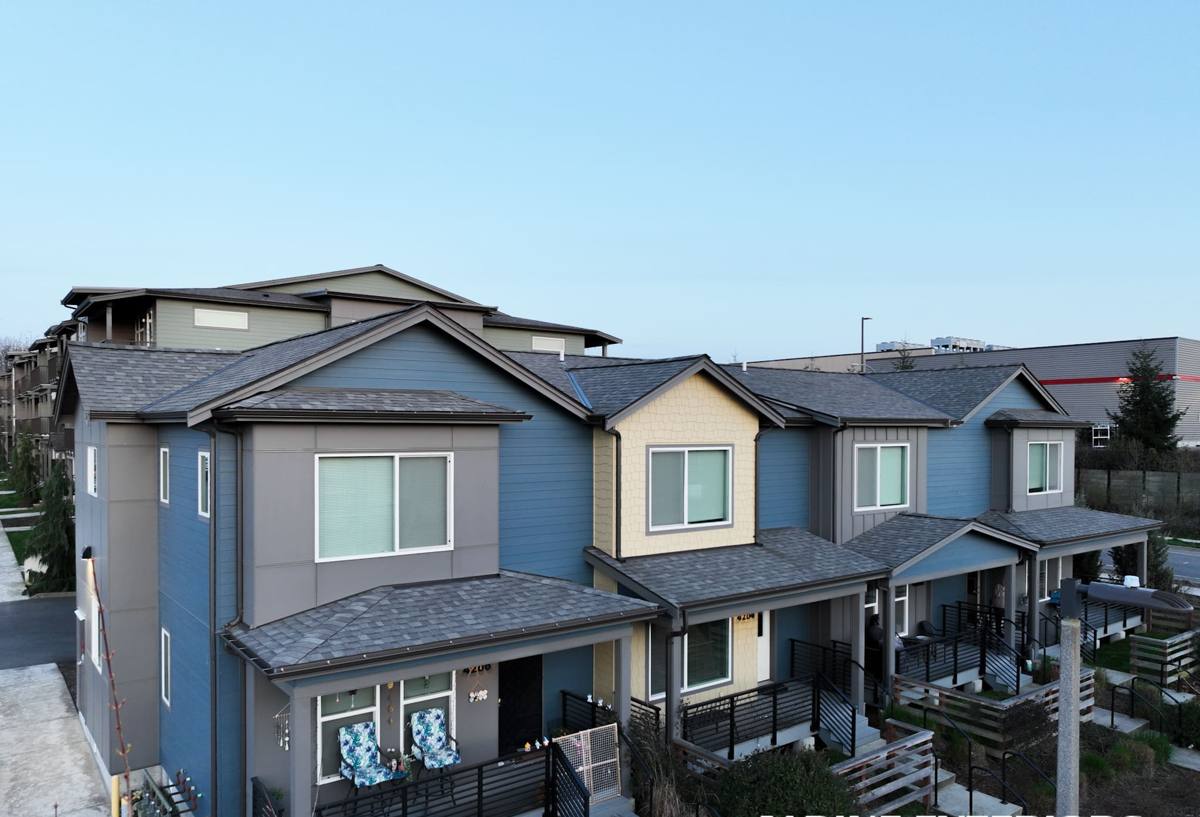
How York's Climate Shows Up in Older and Newer Windows Alike
Salt Air and Metal Fatigue
Homes closer to the water see faster corrosion on window hardware — hinges, cranks, and locking mechanisms — than homes even a few miles inland. Aluminum-frame windows from past decades are especially prone to pitting and stiff operation once salt exposure builds up over years.
Driving Rain and Wind-Loaded Seams
Storms off the Sound don't just drop rain, they push it. Wind-driven rain finds any gap in flashing, caulking, or a poorly bedded nailing fin and drives water behind the cladding instead of down and away from it. This is usually where hidden rot starts — not from the glass itself, but from water working its way in around the frame.
Moss, Algae, and Trapped Moisture
Shaded lots and long wet stretches let moss and green algae establish on horizontal surfaces — window sills, trim, and the tops of frames — faster than most homeowners expect. Left alone, that growth holds moisture against wood and painted surfaces far longer than open air would, accelerating rot and paint failure.
Signs It's Time to Look at Your Windows
- Sills or lower frame corners feel soft, spongy, or show dark staining
- Visible moss, black streaking, or green algae building up on sills or trim
- Windows are hard to open, close, or lock — especially older aluminum-frame units
- Condensation forming between panes (a sign the seal on an insulated glass unit has failed)
- Noticeable draft or cold spot near the frame during winter storms
- Visible daylight or gaps around the frame from outside
- Paint or finish peeling specifically at the bottom corners of the window, not evenly across the whole sash
Any one of these on its own isn't necessarily an emergency, but a few of them together usually means water has been getting past the frame for a while, not just recently.
What a Correct Window Installation Actually Involves
Swapping an old window for a new one sounds simple, but the parts that determine whether it lasts fifteen years or fails in five happen before the new window ever goes in the opening.
Removal and Opening Inspection
Once the old window is out, the rough opening gets inspected for hidden water damage — soft framing, rotted sheathing, or trapped moisture behind the old unit. This is often the first time a homeowner sees the actual condition of the wall around a window that looked fine from inside.
Flashing and Weather Barrier Integration
The flashing has to tie into the home's existing weather-resistive barrier in the correct shingled order — bottom, sides, then top — so that any water reaching the wall sheds down and out, never behind the barrier. This step matters more in York's wind-driven rain than it does in calmer, drier regions, because sideways-blown water tests every seam.
Sealing and Insulation
Low-expansion foam or backer rod and sealant fill the gap between the window frame and rough opening — enough to stop air and water infiltration without bowing the frame out of square. Exterior sealant beads get tooled properly so they shed water instead of holding it.
Fastening and Final Adjustment
The window gets shimmed level, plumb, and square, fastened per the manufacturer's schedule, and operated through a full open-close-lock cycle before the crew leaves. A window that's slightly out of square will bind, won't seal fully, and will wear out its own hardware faster.
Choosing Materials That Hold Up Near Bellingham Bay
There's no single "best" window material for every home, but some perform more predictably than others under salt air, moisture, and long wet seasons. We frame these as trade-offs, not verdicts — the right choice depends on your home's exposure, your maintenance appetite, and your budget.
| Frame Material | How It Handles Salt Air & Moisture | Maintenance | Typical Lifespan |
|---|---|---|---|
| Vinyl | Won't corrode or rot; performs consistently in coastal humidity | Low — occasional cleaning | 20-30 years |
| Fiberglass | Very stable in temperature and moisture swings; strong seal retention | Low | 25-35+ years |
| Wood (clad exterior) | Good if the exterior cladding is intact; interior wood still needs protection from condensation | Moderate to high — finish and seal checks | 20-30 years with upkeep |
| Aluminum (older stock) | Prone to pitting and hardware corrosion in salt air over time | Moderate — hardware lubrication and corrosion checks | Varies widely; often shorter near the water |
We generally steer homeowners in York toward vinyl or fiberglass for straightforward replacements, simply because they hold up with the least ongoing attention in this specific climate. Wood-clad windows still have a place where the look matters and the owner is willing to keep up with finish maintenance — we're honest about that trade-off rather than pushing one material as universally superior.
Our Process for York Homeowners
- On-site assessment — we look at existing windows, framing condition, and any visible moisture or moss issues before quoting anything.
- Honest scope and estimate — what needs replacing, what can be repaired, and what's optional, with pricing broken out so you can see where the cost is going.
- Scheduling around weather — we plan installation days with Whatcom County's rain patterns in mind so openings aren't sitting exposed longer than necessary.
- Removal, inspection, and any needed framing repair — addressed before the new window goes in, not papered over.
- Installation with proper flashing and sealing — done to the standard described above, not just "fit and caulk."
- Final walkthrough — every window operated and checked with you present before we consider the job finished.
What Affects the Cost of a Window Installation
| Factor | Why It Matters |
|---|---|
| Number of windows | Per-unit cost typically drops with larger whole-house projects |
| Frame material chosen | Vinyl is generally the most budget-friendly; fiberglass and clad wood cost more upfront |
| Framing repair needed | Rot or water damage found during removal adds labor and material cost |
| Window size and configuration | Large picture windows, bays, or custom shapes cost more than standard double-hungs |
| Glass package | Double-pane vs. triple-pane, and coatings for energy performance, shift price per unit |
| Access and site conditions | Second-story windows, tight lots, or difficult access can add labor time |
We'd rather walk your specific home and give you real numbers than quote a generic range that doesn't reflect what's actually going on with your windows and framing.
Why It Matters to Hire a Crew That Already Works in York
A contractor who works this neighborhood regularly already understands how the local wind and rain patterns behave against a given lot's orientation, what the housing stock in the area tends to be built like, and what moisture problems show up most often on homes near the bay versus those set further back. That familiarity shows up in small decisions — how flashing gets detailed, which sealants actually hold up here, how installation gets timed around the wet season — that a crew unfamiliar with Whatcom County's coastal conditions might not think twice about.
It also means someone is nearby if a question comes up after the job is done, rather than a crew that did one job in the area and moved on.
Keeping New Windows Performing Long-Term
- Rinse sills and frames periodically to keep salt residue and moss spores from building up
- Check and clear weep holes on vinyl and aluminum frames so water can drain out as designed
- Re-lubricate hardware on operable windows once a year, especially in homes closer to the water
- Watch for early moss growth on horizontal trim and remove it before it holds moisture against the surface
- Have caulking and exterior sealant checked every few years — sealant is a wear item, not a one-time application
None of this is heavy maintenance, but skipping it is how a well-installed window still ends up with avoidable problems a decade in.
If you're dealing with drafty, failing, or aging windows in York, we're happy to come take a look and give you a straightforward, no-pressure estimate — just fill out the form below to get started.