 Bellingham
 Why Windows Fail Faster in Puget
Puget sits close enough to the water that homes here take on a different kind of weather load than a house ten miles inland. Salt-laden air moves through on a regular basis, corroding hardware, pitting aluminum cladding, and breaking down cheap weatherstripping years before it should. Add Whatcom County's long stretch of driving, wind-pushed rain each fall and winter, and a moss season that keeps everything damp for weeks at a time, and you have a climate that punishes any weak point in a window's seal or flashing. It's not dramatic weather — no hailstorms, no extreme heat — but it's relentless, and relentless is what wears out a window.
Most window failures we see in this area aren't glass problems. They're seal problems, frame problems, and flashing problems — the parts of the job that don't show up until water finds its way behind the trim. A window replacement done right in Puget has to account for that from the first measurement.
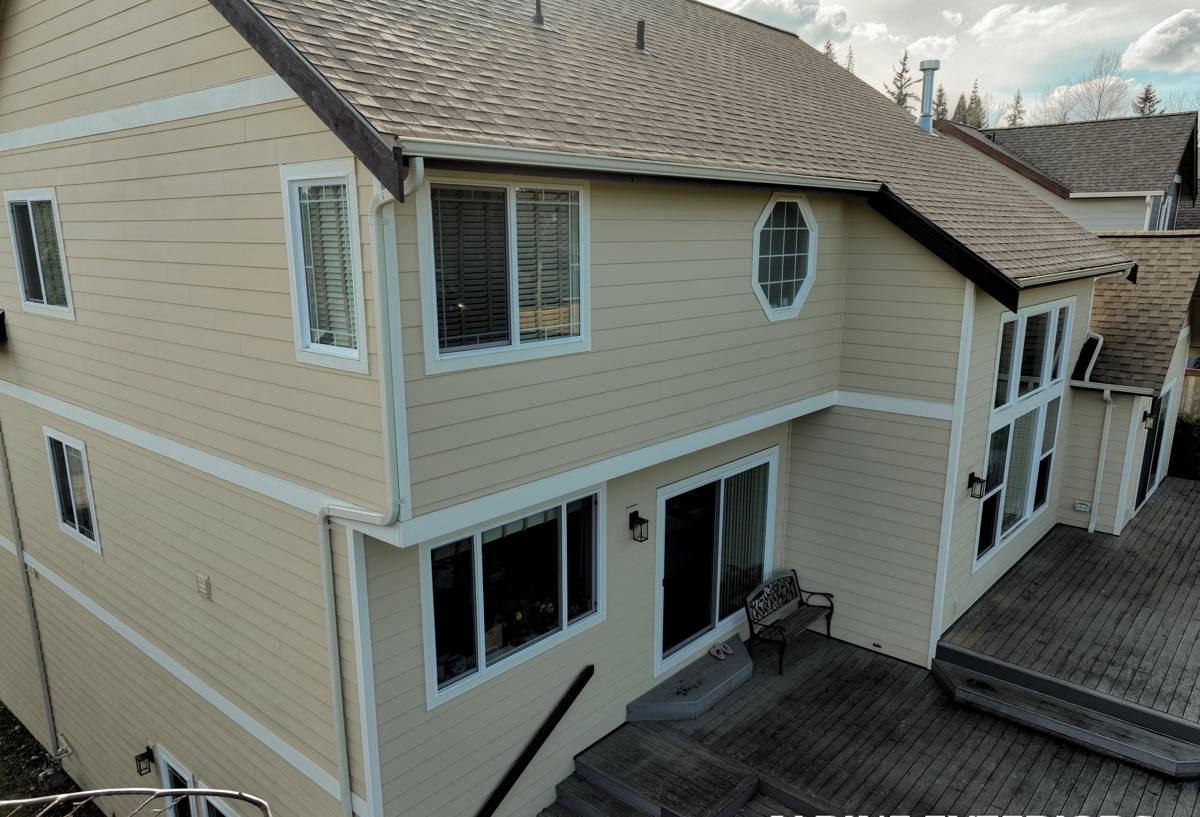
Signs a Puget Home's Windows Are Losing the Fight
Windows rarely fail all at once. They give small signals first, and catching them early usually means a simpler repair conversation instead of a bigger one involving sheathing or framing damage.
- Fogging or a milky haze between panes — the seal has broken and the gas fill is gone
- Soft or discolored trim and sill boards, especially on walls that face prevailing wind and rain
- Visible moss or dark streaking building up on sills and lower frames faster than the rest of the exterior
- Drafts you can feel with a hand near the frame on a windy day
- Hardware — locks, cranks, hinges — that's stiff, corroded, or won't latch cleanly anymore
- A noticeable jump in heating costs without any other explanation
- Paint or finish peeling specifically around the window opening rather than the wall in general
Any one of these on its own might just mean routine maintenance. Two or three together, especially on the weather-facing side of the house, usually means the window and its flashing are due for replacement, not another caulk-and-paint patch.
Why Patch Jobs Don't Hold Up Here
Caulking over a failing seal or repainting a soft sill buys a season, maybe two, in a drier climate. In Puget's combination of salt air and sustained damp, moisture that's already gotten behind the trim keeps working even after the surface looks fixed. We'd rather tell a homeowner honestly that a patch is temporary than sell a repair we know won't hold through the next wet season.
What a Correct Window Replacement Actually Involves
The window unit itself is maybe a third of what makes a replacement last. The rest is what happens around it — the parts that are invisible once the trim goes back on, and the parts that separate a job that lasts fifteen-plus years from one that leaks again in three.
Removal Without Collateral Damage
Old windows come out carefully so we can see the actual condition of the framing and sheathing underneath. This is where hidden rot or old, undersized flashing usually turns up — better to find it now than have it become a mystery leak later.
Sill Pan and Flashing, Not Just Caulk
A correctly flashed opening sheds water down and out, away from the wall assembly, using layered flashing tape and a sill pan rather than relying on caulk as the primary barrier. Caulk is a backup, not a strategy. This is the single biggest difference between an installation that survives Bellingham's rain season and one that doesn't.
Setting, Shimming, and Insulating
The new window gets shimmed level and square, fastened per the manufacturer's schedule, and insulated around the gap with a low-expansion foam or batt that won't bow the frame or compress out over time.
Weatherproofing and Trim
Exterior trim and any house wrap or siding are integrated back over the flashing in the right shingled order — top layers overlapping lower ones — so water always has a path down and out, never in.
Final Check
Operation, lock engagement, and a visual and physical check of the seal all get confirmed before we consider the opening finished.
Choosing a Window Built for This Climate
Material and glass package matter less than correct installation, but they still matter. In a marine climate with salt exposure and long damp stretches, some choices hold up with less maintenance than others.
| Frame Material | How It Handles Puget's Climate | Maintenance |
|---|---|---|
| Vinyl | Won't corrode or rot; handles salt air and moisture well | Low — occasional cleaning |
| Fiberglass | Very stable in temperature and moisture swings; strong long-term performance | Low |
| Wood, unclad | Attractive but vulnerable to sustained moisture and moss growth without upkeep | High — regular sealing/painting |
| Wood, clad | Good interior look with a protective exterior shell; watch cladding seams for wear | Moderate |
| Aluminum | Prone to corrosion and heat/cold transfer in salt air conditions | Moderate to high |
We generally steer homeowners toward vinyl or fiberglass for anything facing prevailing weather in Puget, not because other materials can't work, but because they demand more upkeep to hold up the same way — and that's a fair trade-off to weigh against upfront cost. For glass, a double-pane, low-E, argon-filled unit is the practical standard here; triple-pane can make sense on a particularly exposed wall but is rarely necessary house-wide in this climate.
Our Process, Start to Finish
- Walkthrough and assessment — we look at every window from both sides, note condition, exposure, and any signs of existing moisture damage
- Honest recommendation — which windows need replacing now, which can wait, and why
- Written estimate — clear line items, no vague allowances
- Scheduling around weather — we plan install days with Bellingham's rain patterns in mind so openings aren't left exposed longer than necessary
- Installation — one opening finished at a time rather than every window torn out at once
- Site cleanup — old units and debris hauled off, work area left clean
- Walkthrough with the homeowner — operation checked together before we call it done
Why a Crew That Already Works Puget Matters
A window installer who works this specific area regularly has already seen how the local weather exposes bad work. That shows up in small but important ways: knowing which walls in a given neighborhood take the harder wind-driven rain, sizing flashing details for the moisture load rather than a generic minimum, and recognizing early moss or corrosion patterns for what they are instead of treating them as cosmetic. It also means we're not learning Whatcom County's permitting and inspection expectations on your house — we already know what's required and build it in from the estimate, not as a surprise change order.
Familiarity with the area also means realistic scheduling. We know how many workable weather days a Bellingham fall or winter actually gives us, and we plan around that instead of overpromising a timeline that rain will blow through.
What Affects the Cost of a Window Replacement
| Factor | Why It Matters |
|---|---|
| Number and size of openings | More or larger windows mean more material and labor |
| Frame material | Vinyl is typically the most budget-friendly; fiberglass and clad wood cost more upfront |
| Glass package | Standard low-E double-pane vs. upgraded coatings or triple-pane |
| Condition of existing framing | Rot or water damage found during removal adds repair scope |
| Access and height | Second-story or hard-to-reach openings take more time and equipment |
| Trim and siding integration | Matching or rebuilding exterior trim adds labor beyond the window swap itself |
We won't quote a per-window number without seeing the actual openings — condition varies too much house to house to make that honest. What we can say is that a straightforward, single-story vinyl replacement runs toward the lower end of most contractors' ranges, while anything involving rot repair, custom sizing, or upper-story access moves up from there.
Living With New Windows in a Marine Climate
Even a correctly installed window benefits from a little seasonal attention here. Rinse salt residue off frames and hardware periodically, especially after windy weather off the water. Keep an eye on sills for early moss during the wet months and clear it before it holds moisture against the frame. Check that weep holes at the bottom of the frame stay clear of debris so water can drain as designed. None of this is heavy maintenance — it's the difference between a window that looks and performs the same in year ten and one that starts showing its age by year five.
If your windows are drafty, fogged, or just tired of fighting Puget's weather, we're happy to take a look and walk you through what we see — no pressure, no obligation. Request a free estimate below and we'll get a time on the calendar.