 Bellingham
 Asphalt Shingle Roofing Built for Lynden's Weather
Lynden homeowners deal with a specific mix of conditions that doesn't show up the same way everywhere in Whatcom County. You're inland enough to avoid some of the direct salt exposure that coastal Bellingham neighborhoods get, but moisture-laden air still moves through the valley, driving rain still hits roofs sideways during winter storms, and the long gray stretch from fall through spring gives moss more time to take hold than almost anywhere else in the state. An asphalt shingle roof that's installed correctly for this climate will outlast one that was installed the same way you'd install it in Spokane or Sacramento. The materials matter, but the workmanship matters more.
This page covers what a correctly installed or repaired asphalt shingle roof looks like for a Lynden home specifically — not a generic roofing overview, but the details that actually change outcomes here.
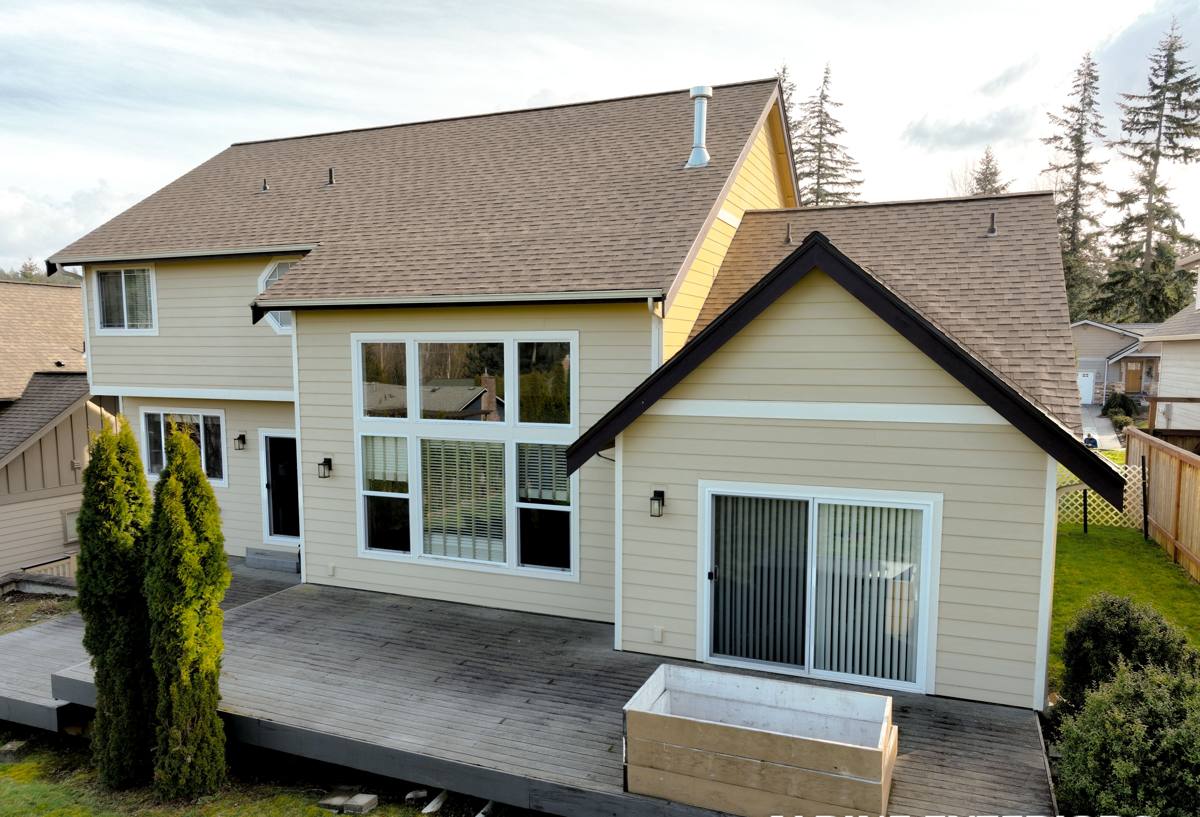
What Lynden's Climate Actually Does to a Roof
Whatcom County sits in a temperate rainforest zone. That means near-constant low-level moisture for months at a time, punctuated by heavier storm systems that bring wind-driven rain rather than straight-down rain. Add in the region's long moss season, and you've got three separate mechanisms working against a shingle roof:
- Driving rain gets pushed under shingle tabs and around flashing points that would stay dry in a calmer climate — this is why underlayment and flashing detail work matters more here than the shingle brand itself.
- Sustained dampness keeps roof surfaces wet longer after each rain event, which is exactly the environment moss, algae, and moisture-loving growth need to establish themselves.
- Salt-influenced air, even at a reduced level this far inland, contributes to slow corrosion on exposed metal fasteners, flashing, and vent components over the life of a roof.
None of this means asphalt shingles are the wrong choice for Lynden — they're the most common roofing material in this part of the county for good reason, when they're specified and installed with these conditions in mind.
What a Correct Installation Involves Here
Underlayment Is Not Optional Detail Work
In a drier climate, underlayment is almost a formality. In Lynden, it's a primary line of defense. We use synthetic underlayment rated for high-moisture climates, and in vulnerable areas — eaves, valleys, low-slope transitions — we add self-adhering ice-and-water membrane even though this isn't a heavy snow-load region. The reason is wind-driven rain, not snow: that membrane seals around fastener penetrations in a way standard felt doesn't.
Flashing Details Are Where Roofs Actually Fail
Most leaks on asphalt shingle roofs don't come from failed shingles — they come from flashing that was cut short, reused when it shouldn't have been, or sealed with caulk instead of properly integrated. Chimneys, skylights, sidewall transitions, and any place a roof plane meets a vertical surface need step flashing and counterflashing installed in the correct sequence with the underlayment, not just caulked over the top. We treat every flashing point as a full detail, not an afterthought.
Ventilation Prevents the Problems You Can't See
A roof deck that can't breathe traps moisture from the inside, which shows up as premature shingle deterioration, deck rot, and in some cases interior moisture issues — regardless of how good the exterior materials are. Balanced intake (soffit) and exhaust (ridge or roof vents) ventilation is standard on every roof we install, sized to the attic space, not just added as a token vent.
Fastening Pattern and Nail Placement
Shingles are rated for specific wind speeds only when fastened correctly — the right nail count, placed in the manufacturer's nailing zone, not high or low on the shingle. In a region that gets genuine wind events during winter storms, this is not a place to cut corners. Improperly fastened shingles are one of the most common causes of premature blow-off, and it's a problem you often can't see from the ground until shingles are already missing.
Our Process for a Lynden Roofing Project
- On-site inspection. We assess the existing roof, deck condition, ventilation, and any moss or moisture damage before quoting anything.
- Honest scope. We tell you what's actually needed — full replacement, partial repair, or maintenance — not the most expensive option by default.
- Written estimate that specifies underlayment type, flashing approach, ventilation plan, and shingle product, so you know exactly what you're paying for.
- Tear-off and deck check. We remove old roofing down to the deck and inspect for rot or soft spots before anything new goes down — this step gets skipped by crews trying to move fast, and it's where hidden problems get caught.
- Installation following the sequence above: underlayment, flashing, shingles, ventilation, cleanup.
- Final walk-through so you can see the finished work and ask questions before we consider the job done.
Moss, Algae, and the Maintenance Reality of a Wet Climate
No asphalt shingle roof in Whatcom County is fully immune to moss and algae growth — the climate is simply too consistently damp for it. What separates a roof that lasts from one that doesn't is how that growth is managed over time. Moss that's allowed to mat and thicken holds moisture against the shingle surface, which accelerates granule loss and, eventually, deck moisture intrusion. A roof with algae-resistant shingles, decent airflow, and periodic gentle cleaning will hold up far longer than one that's ignored until the moss is thick enough to see from the street.
We recommend a simple annual check, especially heading into fall: clear debris from valleys and gutters, look for moss establishing along shaded slopes (typically north-facing or under tree cover), and address it with soft washing rather than pressure washing or scraping, which damages the shingle surface.
Simple Homeowner Checklist for Lynden Roofs
- Clear leaves and needles from valleys and gutter lines before winter storms arrive
- Watch for moss starting on shaded or north-facing roof planes and treat it early rather than waiting
- Check attic ventilation isn't blocked by insulation at the soffits
- Look for granules collecting in gutters, a sign of aging shingles
- Have flashing around chimneys and skylights inspected every few years, not just when a leak appears
- Avoid pressure washing shingles — it strips granules and shortens roof life
Choosing the Right Shingle for This Climate
Not all asphalt shingles perform the same in sustained wet, moss-prone conditions. We steer Lynden homeowners toward products with built-in algae resistance (copper-infused or algae-resistant granules) and a wind rating suited to winter storm exposure, rather than the cheapest base-grade shingle on the market. The upfront cost difference is modest; the difference in how the roof looks and performs in year eight versus year eighteen is not.
| Shingle Type | Typical Lifespan Here | Moss/Algae Resistance | Best Fit |
|---|---|---|---|
| Standard 3-tab | 15–20 years | Low unless treated | Budget-conscious projects, secondary structures |
| Architectural (laminate) | 25–30 years | Moderate to high with AR granules | Most Lynden homes — best balance of cost and durability |
| Premium/designer architectural | 30+ years | High with AR granules | Homeowners prioritizing longevity and appearance |
We don't push the most expensive tier by default — for most Lynden homes, a mid-grade architectural shingle with algae-resistant granules is the sensible choice given the climate and the cost.
Cost Factors Specific to a Lynden Roof
Every roof is priced based on its own conditions, but a few factors consistently move the number for homes in this area:
| Factor | Why It Matters Here |
|---|---|
| Roof pitch and complexity | Steeper or multi-valley roofs need more careful flashing work given driving-rain exposure |
| Deck condition | Long-term moisture exposure means deck rot is more common on older, poorly ventilated roofs |
| Ventilation upgrades | Homes with inadequate soffit or ridge venting often need this addressed during a re-roof |
| Tree cover | Heavy tree cover increases moss risk and debris accumulation, affecting both material choice and maintenance needs |
| Access | Lot size and structure layout affect staging and disposal logistics |
We don't quote roofs sight unseen — an accurate number requires seeing the deck, the pitch, and the current condition in person.
Why It Matters That We Already Work in Lynden
A roofing crew that only occasionally works this far into the county doesn't build the same instinct for what fails here versus what fails in a different climate. Knowing which slopes tend to hold moss longest given typical tree cover and orientation in this area, which flashing details tend to get missed on older Lynden homes, and how local wind patterns during winter storms actually load a roof — that comes from doing this work in this specific area repeatedly, not from a generic install checklist. It also means faster response if something needs attention after a storm, and a crew that stands behind work they know has to hold up against this particular climate, year after year.
Signs Your Lynden Roof Needs Attention
Most roof problems give warning signs before they become emergencies. Worth calling us about if you notice any of the following:
- Shingles that are curling, cracking, or missing granules in patches
- Visible moss buildup, especially thick or spreading growth
- Daylight visible through the roof deck from inside the attic
- Water stains on interior ceilings or upper walls
- Sagging areas anywhere on the roof plane
- Granules consistently collecting in gutters and downspouts
Catching these early is almost always cheaper than waiting for a full leak to develop, and it's a large part of why regular inspection matters more in a climate like this one.
If you're weighing a repair, a full replacement, or just want an honest read on where your roof stands, we're glad to come take a look. The estimate is free, there's no pressure, and you'll get a straight answer about what your roof actually needs — just fill out the form below to get started.