 Bellingham
 Why Barkley Decks Wear Out Faster Than the Brochure Says
Barkley sits close enough to Bellingham Bay and the Nooksack lowlands that decks here deal with a specific combination of punishment: salt-tinged air drifting in off the water, long stretches of driving rain from fall through spring, and a moss season that can run seven or eight months if a deck sits in any shade at all. None of that is dramatic on its own. It's the accumulation that gets people — a deck that looked fine two summers ago starts feeling soft underfoot, or the stair stringers develop a give that wasn't there before.
Untreated or under-maintained wood in this climate doesn't fail all at once. It fails in layers: finish breaks down first, then end grain and fastener holes start wicking moisture, then hidden framing members begin to soften from the inside while the top surface still looks presentable. By the time a board feels spongy to the foot, the damage underneath is usually further along than it looks.
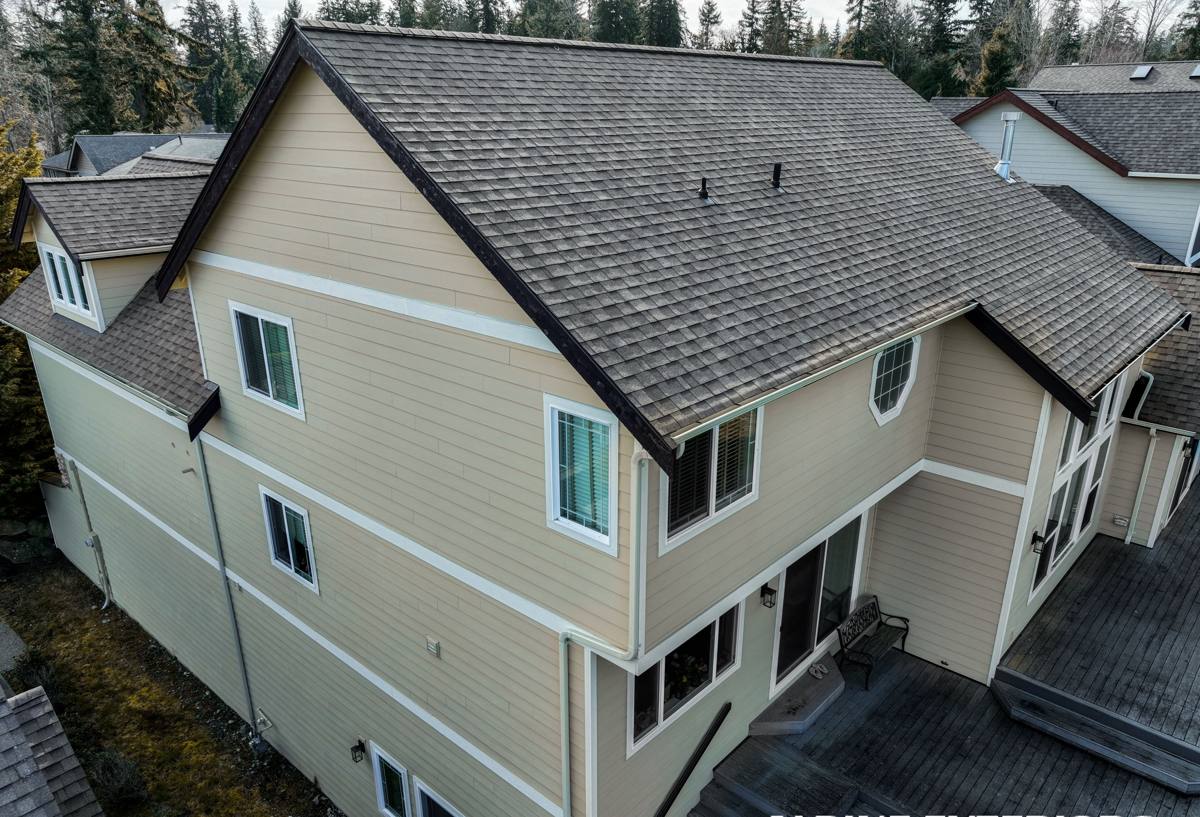
What Whatcom County Weather Actually Does to a Deck
Salt Air and Metal Fasteners
Homes closer to the bay see accelerated corrosion on nails, screws, and structural brackets — especially older galvanized hardware that wasn't rated for coastal exposure. Once a fastener starts rusting, it loses grip strength and can stain or split the wood around it, which is often the first visible sign something's wrong.
Driving Rain and Horizontal Water Intrusion
Bellingham's rain frequently comes in at an angle, driven by wind off the water. That means water gets pushed into joints, under rail caps, and behind ledger boards that a straight-down rain would never reach. Flashing details that work fine in drier climates often aren't enough here.
Moss, Shade, and Trapped Moisture
Moss itself doesn't destroy wood, but it holds moisture against the surface far longer than bare wood would dry on its own. On decks with any tree cover or north-facing shade — common throughout Barkley's more established, tree-lined lots — moss buildup in board gaps and around fasteners is one of the most common early drivers of rot we find.
Signs a Barkley Deck Needs Repair Now
- Boards that flex, feel spongy, or sound hollow when tapped
- Rust streaks running down from screw or nail heads
- Gaps opening up between decking boards or at rail post bases
- Moss or dark staining concentrated in shaded corners or under planters
- Stairs or railings that have developed noticeable wobble
- Soft spots or discoloration where the deck meets the house (the ledger connection)
- Standing water that doesn't drain within an hour or two after rain stops
Any one of these alone might just be cosmetic. A few of them together, especially near the ledger or stair framing, usually means the repair needs to go past the surface boards.
What a Correct Deck Repair Actually Involves
A lot of deck "repairs" in this region amount to swapping a few obviously bad boards and calling it done. That approach treats the symptom and skips the cause, which in Bellingham's climate almost guarantees the same failure shows up again within a season or two, usually in a spot right next to the one that got fixed. A repair done right works from the structure outward:
1. Check the Framing Before Touching the Surface
Joists, beams, and the ledger board attachment to the house get inspected first. This is where hidden rot does the most damage, because it's invisible from the top and it's what actually holds the deck up.
2. Address the Water Source, Not Just the Symptom
If a board rotted because water was pooling there, replacing the board without fixing the drainage or flashing just resets the clock. We look at slope, gaps between boards, and flashing at the ledger and any posts before we finish the visible repair.
3. Match or Upgrade Fasteners for the Exposure
Given the corrosion issues salt air causes in this area, repairs get done with fasteners and hardware rated for the exposure the deck actually sees — not whatever happens to be in the truck.
4. Rebuild Structural Connections to Code
Ledger attachment, joist hangers, and post-to-beam connections are common weak points on older decks that were built before current fastening standards. A repair is a natural point to bring those connections up to a safer standard, especially on stairs and rail posts.
Repair or Replace? A Straight Answer
Homeowners in Barkley often ask us this before we've even looked at the deck. The honest answer depends on where the damage is and how much of the structure it's reached.
| Situation | Repair usually makes sense | Replacement usually makes sense |
|---|---|---|
| Surface boards only | Yes — isolated rot, splitting, or wear | No, unless most boards are affected |
| Ledger board rot | Sometimes, if caught early | Often, if rot has spread into the house rim joist |
| Joists or beams | Case by case — sistering can work if damage is limited | Yes, if multiple structural members are compromised |
| Railings and stairs | Yes — these are frequently isolated failures | Rarely required unless posts are rotted at the base |
| Deck age | Under 15-20 years, generally sound design | Older decks with outdated or undersized framing |
We'll always tell you plainly if a repair is patching over a bigger problem. Sometimes the honest recommendation is to spend less now on a targeted repair and revisit replacement in a few years; sometimes it's the opposite. We'd rather give you that straight answer than sell a repair that won't hold.
Our Deck Repair Process
- On-site inspection — we check the surface, but also get underneath the deck to look at joists, the ledger connection, and post bases where the real damage usually hides.
- Written scope and estimate — you get a clear explanation of what's failing, why, and what it will take to fix it correctly, with pricing broken out by area of work.
- Structural repair first — any compromised framing, ledger, or connection hardware is addressed before cosmetic work begins.
- Surface and drainage correction — decking, rail components, and stair elements are replaced or repaired, with attention to board gaps and slope so water sheds instead of sitting.
- Final walkthrough — we go over what was done and what to watch for going forward, including any maintenance that will extend the life of the repair.
Material Choices for Whatcom County Conditions
Every decking material has a maintenance trade-off in this climate, and we'd rather explain those honestly than push whatever's easiest to install.
Pressure-Treated Lumber
The most common and least expensive option for structural repairs and framing. It holds up well against rot when properly sealed and maintained, but it does require periodic refinishing — skipping that in a climate this wet shortens its service life noticeably.
Cedar
Naturally rot-resistant and a good visual match for older Bellingham-area decks, but it's softer than composite and needs consistent finish maintenance to perform well against year-round moisture.
Composite Decking
Lower long-term maintenance and good moisture resistance, which suits our climate. The trade-off is a higher upfront material cost and the fact that composite doesn't accept the same kind of localized board repair — damaged sections typically get replaced whole rather than sanded or patched.
For repairs specifically, we'll often match your existing material to keep costs down and avoid a patchwork look, but we'll flag it if your current material choice is part of why the deck is failing in the first place.
Maintenance That Actually Extends a Repair's Life
- Clear moss and debris from board gaps at least twice a year, more often in shaded areas
- Reseal or refinish wood decking on the manufacturer's recommended cycle, not just when it looks faded
- Keep gutters and downspouts clear so roof runoff isn't dumping extra water onto the deck
- Check rail posts and stair stringers for movement once a year, especially after winter storms
- Avoid stacking planters or storage directly on decking boards for long periods — trapped moisture underneath accelerates rot
- Have the ledger board and under-deck framing inspected every few years, even if the surface looks fine
Why Hiring a Crew That Already Works Barkley Matters
A repair crew that already knows how homes in this neighborhood are built and how they age has an advantage that isn't available from an out-of-area contractor pulling permits for the first time in Bellingham. We know which failure patterns show up on shaded, tree-covered lots versus more exposed ones, what flashing details actually hold up against wind-driven rain here, and which fastener grades are worth the extra cost given the salt air moving in from the bay. That familiarity shows up in fewer surprises during the repair and fewer callbacks after.
If your deck is showing any of the warning signs above, we're happy to take a look and give you a straightforward assessment — no pressure, no upsell, just an honest read on what it needs. Reach out for a free estimate using the form below.