 Bellingham
 Fairhaven's Climate Is Harder on Siding Than Most of Bellingham Realizes
Fairhaven sits close to Bellingham Bay, and that proximity changes what siding has to deal with year-round. Salt-laden air off the water accelerates corrosion on fasteners, trim, and anything with exposed metal. Add Whatcom County's long wet season — months of low-intensity, wind-driven rain rather than short heavy downpours — and you get siding that stays damp longer than it would in a drier climate. Combine that with the mature tree canopy common throughout Fairhaven's older residential streets, and you get shaded, slow-drying wall sections where moss, algae, and mildew take hold and simply don't let go for much of the year.
None of this is unusual for western Washington. But it does mean a siding product and installation method that work fine in a drier inland climate can fail early here. Homes in Fairhaven need a siding system that resists moisture intrusion at the seams, doesn't feed mold and moss growth, and holds up to salt air without the fasteners or trim rusting out from behind the cladding where you can't see it happening.
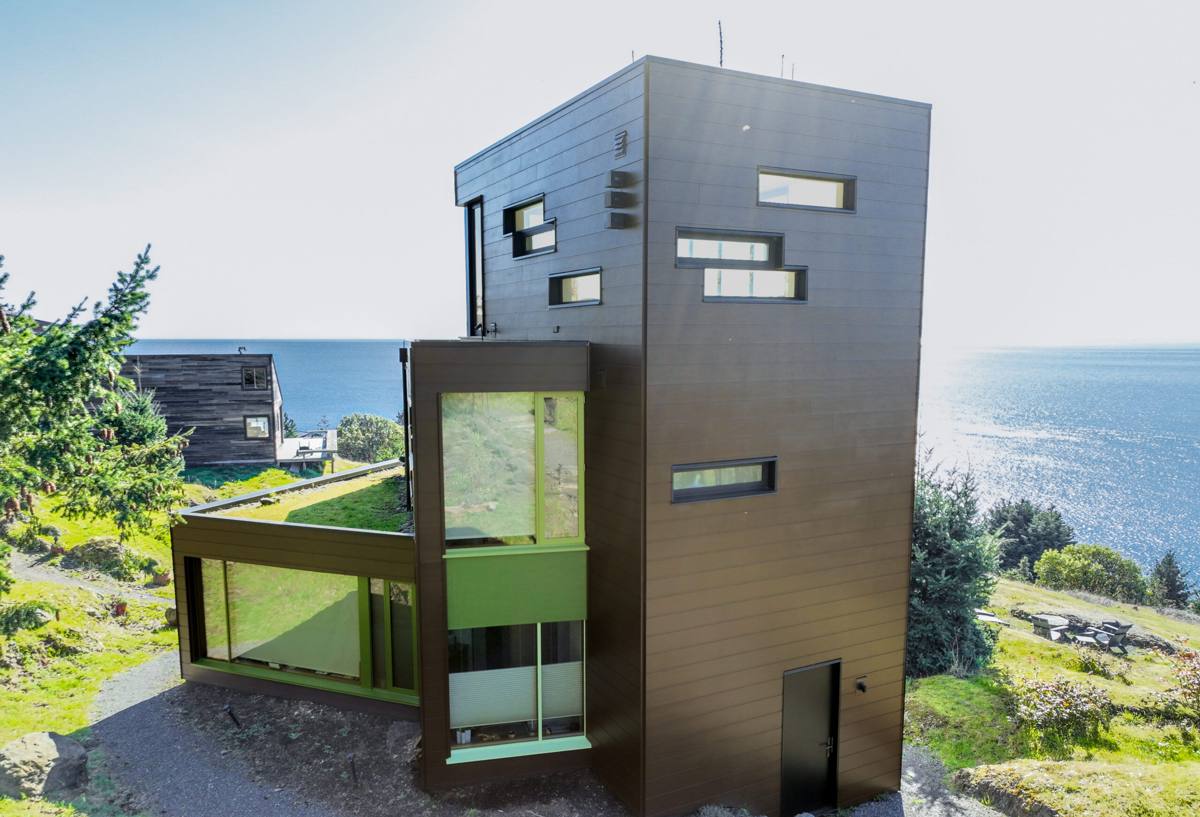
What Siding Actually Needs to Do in This Neighborhood
Strip away the marketing and a siding job in Fairhaven has three real jobs to do:
- Shed water fast at every horizontal joint, corner, and penetration — window, vent, hose bib, light fixture — before it can wick behind the panel
- Resist moisture absorption in the material itself, so the siding doesn't stay wet long enough to feed moss and mildew growth
- Hold paint and finish through decades of damp, salt-influenced air without cracking, peeling, or delaminating
Wood-based products struggle with the second and third points in this climate — they absorb moisture, swell, and eventually rot or delaminate at the edges no matter how well they're primed. Vinyl handles moisture fine but expands and contracts with temperature swings, which opens gaps at seams over time and gives moss more surface area to grip. That's the backdrop for why the material choice matters as much as the installation crew.
Why We Install Only James Hardie Fiber Cement
We standardized on James Hardie fiber cement siding and don't install LP SmartSide, vinyl, or other fiber cement brands. Fiber cement itself — cellulose fiber, sand, and cement — doesn't absorb water the way wood-based siding does, and it doesn't expand and contract the way vinyl does. That combination matters directly in a place like Fairhaven, where the siding is wet more often than it's dry for a good chunk of the year.
Within fiber cement, we chose Hardie specifically for the factory-applied ColorPlus finish, which is baked on under controlled conditions rather than field-painted, and for the HZ5 product line engineered for the Pacific Northwest's moisture exposure. It's also non-combustible, which matters less for salt air and more for general fire risk, but it's part of why we settled on one manufacturer instead of switching between brands job to job. Consistency in the product lets us also be consistent in the installation details that actually determine how long the siding lasts — and those details matter more in Fairhaven's climate than in a drier part of the state.
What a Correct Fiber Cement Installation Actually Involves
Manufacturer Specifications, Not Shortcuts
James Hardie publishes detailed installation requirements — fastener spacing, minimum clearances above grade and roofing, gaps at butt joints, caulking specs — and those requirements exist because fiber cement performs exactly as well as its installation. A beautiful product installed off-spec will still fail early, usually at the seams and penetrations first. Correct clearance from grade, decks, and roof lines is especially important here, since it's exactly those low, shaded transition points where moisture and moss linger longest.
Flashing and Moisture Management
Most siding failures we get called out to replace aren't failures of the siding material — they're failures of the flashing and water management behind it. Window and door flashing, weather-resistant barrier integration, kick-out flashing at roof-wall intersections, and proper head flashing above trim all have to be done correctly and in the right order, before a single piece of siding goes up. In a wet, salt-air climate like Fairhaven's, this is the single biggest factor in whether a siding job lasts fifteen years or fifty.
Fastening and Corrosion Resistance
Salt air corrodes standard fasteners over time, especially where they're concealed and can't be inspected easily. We use corrosion-resistant fasteners appropriate for coastal-influenced exposure, and we fasten to Hardie's spec rather than "close enough" spacing, since under- or over-driven nails are one of the more common causes of early cracking and paint failure.
Joints, Caulking, and Touch-Up
Butt joints, trim transitions, and any field-cut edges need the right sealant and touch-up paint matched to the ColorPlus finish. Skipping this step is invisible for the first year or two and then shows up as staining and moisture intrusion right at the joints — exactly the spots already under the most stress in this climate.
Our Process for a Fairhaven Fiber Cement Project
Assessment and Scope
We start by walking the exterior with the homeowner, checking existing siding condition, trim, flashing, and any signs of past moisture intrusion — this is especially important on Fairhaven's older housing stock, where prior repairs or additions sometimes have inconsistent flashing details underneath. We also check exposure: which walls get the most driving rain and salt air off the bay, and which stay shaded and slow-drying under tree cover, since that affects product selection and detailing.
Prep and Tear-Off
We remove existing siding down to the sheathing, inspect for hidden rot or moisture damage, and address anything we find before covering it back up — no siding job should bury a problem. We install or verify the weather-resistant barrier and rebuild flashing details to current standards.
Installation
Hardie siding, trim, and accessories go up to manufacturer spec: correct clearances, fastener pattern, joint treatment, and flashing integration at every window, door, and penetration.
Finish and Walkthrough
We caulk and touch up as specified, clean up the site, and walk the exterior with the homeowner to review the finished work before calling the job done.
Cost Factors for Fiber Cement Siding in Fairhaven
Every home is different, but the same factors tend to drive cost up or down on jobs in this area:
| Factor | Why It Matters Here |
|---|---|
| Existing siding removal and disposal | Older Fairhaven homes may have multiple layers or original wood siding requiring full tear-off |
| Hidden sheathing or framing repair | Long-term moisture exposure near the bay increases the odds of rot found once siding comes off |
| Flashing and trim rebuild | Correct water management at windows, doors, and rooflines is labor-intensive but non-negotiable |
| Home height and access | Multi-story homes and tight lot lines common in older neighborhoods add scaffolding or lift costs |
| Product line and profile | HardiePlank lap, shingle-style panels, and trim combinations vary in material and labor cost |
| Color and finish | Factory ColorPlus finishes cost more upfront than primed product but eliminate a full paint job |
We provide a written estimate that itemizes these factors rather than a single lump number, so homeowners can see what's driving the price.
Maintenance in a Marine, Moss-Prone Climate
Correctly installed Hardie siding is low-maintenance, not no-maintenance. In a climate like Fairhaven's, a little seasonal attention goes a long way:
- Rinse siding annually, focusing on shaded and north-facing walls where moss and algae establish first
- Keep gutters clear so overflow doesn't run down the siding face or pool at the base of walls
- Trim back vegetation and tree limbs that keep wall sections shaded and slow to dry
- Inspect caulking at trim and joints every year or two and touch up if it's cracking or pulling away
- Address any paint chips or scratches promptly to keep the underlying material protected
- Watch for staining at flashing points, which can signal a water management issue rather than a siding issue
None of this is heavy work, but skipping it in a climate this wet lets small issues turn into siding-deep problems faster than it would in a drier region.
Why a Crew That Already Works in Fairhaven Matters
Fairhaven's mix of older homes, bay-facing exposure, and shaded, tree-covered lots means every property has a slightly different set of moisture and wind conditions to design around. A crew that already works this neighborhood has seen how those conditions play out on actual homes — which walls take the worst of the driving rain, where moss tends to establish first, and what flashing details tend to be missing on older construction. That local pattern recognition, combined with installing one manufacturer's system correctly every time rather than switching products job to job, is what keeps a siding job performing for decades instead of needing attention again in five or six years.
If you're planning a siding project in Fairhaven or elsewhere in Bellingham, we're happy to walk your home, look at your specific exposure and existing conditions, and put together a straightforward, no-pressure estimate — no obligation, just an honest look at what your home needs.