 Bellingham
 Barkley's Siding Problem Isn't Like Other Neighborhoods
Barkley sits close enough to the water and the Bellingham weather patterns that come with it to put real stress on exterior siding — salt-laden air off the bay, long stretches of driving rain through fall and winter, and a moss season that can run most of the year on shaded elevations. Add the tree cover common to Whatcom County lots and you get siding that stays damp longer than siding in a drier, more open part of the state. That combination is exactly what breaks down the wrong products and, over time, chews through even good products installed the wrong way.
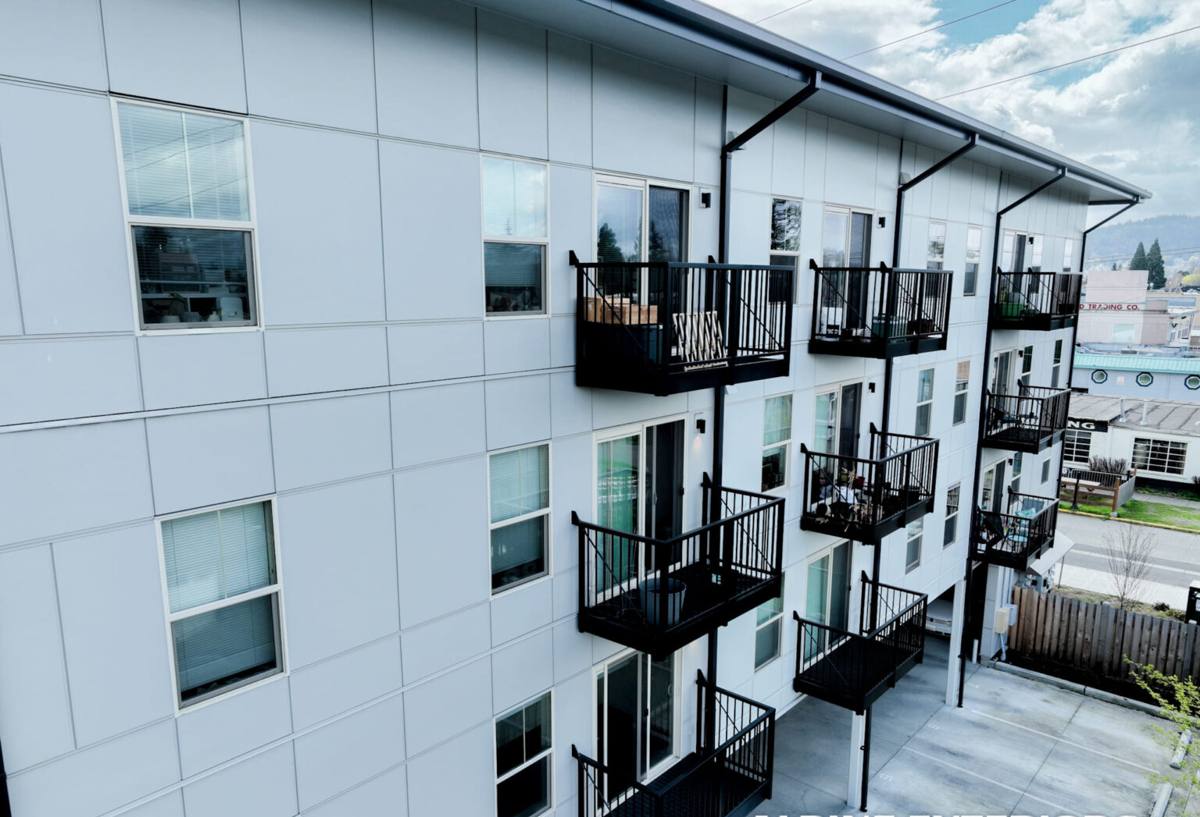
We install James Hardie fiber cement siding exclusively, and we've done enough of it around Bellingham to know what Barkley homes specifically need from their siding: a material that doesn't absorb water, a finish that holds color without repainting every few years, and an installation that accounts for moss, moisture, and wind-driven rain rather than ignoring them.
Why Salt Air and Moss Change the Calculus
Salt air
Homes closer to Bellingham Bay deal with airborne salt that accelerates corrosion on fasteners, flashing, and any exposed metal trim. Over years, that corrosion can work its way into seams and joints, giving water a path behind the siding even if the surface still looks fine. It also degrades cheaper paint finishes faster than inland areas, which is one reason factory-applied, baked-on finishes hold up better here than field-painted siding.
Driving rain
Bellingham's rain doesn't just fall — a lot of it comes in sideways during winter storms, pushing water into laps, corner joints, and anywhere siding meets a window, door, or roofline. Siding that isn't lapped, flashed, and caulked correctly at those transition points will eventually let water behind the cladding, no matter how good the material itself is.
Moss season
Shaded, north-facing walls and anything near mature trees stay damp for extended stretches, which is prime moss and algae territory. Moss holds moisture against the siding surface, and on porous or wood-based products that constant dampness leads to swelling, soft spots, and eventually rot. Fiber cement doesn't feed moss the way wood or wood-composite products can, and it doesn't swell when it stays wet — but moss can still take hold on the surface and needs to be dealt with periodically regardless of material.
What James Hardie Brings to a Barkley Home
James Hardie fiber cement is a mix of cement, sand, and cellulose fiber, engineered specifically for climate zones like ours. Hardie's HZ5 product line is formulated for regions with the freeze-thaw cycles and sustained moisture exposure typical of the Pacific Northwest — it resists moisture absorption far better than wood, engineered wood, or vinyl, and it's non-combustible, which matters given the wildfire smoke and dry-summer risk that's become more common across Washington in recent years.
The ColorPlus finish system is baked on at the factory in multiple coats rather than sprayed or brushed on site. That matters directly for Barkley: a factory finish holds up better against salt air and UV exposure than field-applied paint, and it comes with its own finish warranty separate from the material warranty. You're not repainting fiber cement every five to seven years the way you might with wood siding exposed to this much weather.
Product lines that make sense here
- HardiePlank lap siding — the standard choice for most Barkley homes, available in smooth or cedar-textured finishes
- HardieShingle — for homes wanting a shingle-style look without the maintenance burden of real wood shingles in a wet climate
- HardiePanel — vertical panel siding, often used for accents, gables, or modern-style builds
- HardieTrim — matched trim boards that resist the same moisture and rot issues as the field siding, so you're not pairing durable siding with trim that fails first
What a Correct Installation Actually Involves
Fiber cement siding is only as good as its installation. Most siding failures we see on inspections — Hardie or otherwise — trace back to installation shortcuts, not the material itself. For Barkley's climate, a handful of details matter more than usual:
Water management behind the siding
Correct installation starts with a weather-resistant barrier and rain screen or drainage plane behind the siding, giving any moisture that does get past the cladding a way to drain and dry out instead of sitting against the wall sheathing. This is especially important on the sides of a home that face prevailing wind-driven rain.
Flashing at every penetration
Windows, doors, hose bibs, light fixtures, vents — every place something interrupts the siding is a place water can find a way in in Bellingham's rain. Proper step flashing, head flashing, and kick-out flashing at roof-to-wall intersections are not optional extras; they're the difference between siding that lasts decades and siding that hides rot behind it.
Fastener placement and clearances
Hardie specifies exact nailing patterns, fastener types, and minimum clearances from grade, roof lines, and decks. Skipping these — nailing too high, too low, or too close to panel edges — voids the manufacturer warranty and creates cracking or water entry points down the line. Given the salt air in Barkley, we also pay attention to using corrosion-resistant fasteners rather than whatever is cheapest.
Caulking and joint treatment
Butt joints, corners, and trim transitions need the right sealant, applied correctly, and Hardie's own installation guidance is specific about which joints should be caulked and which should be flashed instead of caulked. Over-relying on caulk as the only water barrier is a common shortcut that fails within a few years in a climate this wet.
How Our Process Works
- Walkthrough and assessment — we look at your current siding's condition, check for existing moisture damage, and note the specific exposures your home has (shaded walls, wind direction, proximity to trees or water).
- Written estimate — a clear scope covering material, trim, flashing details, and any repair work needed to the sheathing or framing underneath before new siding goes on.
- Prep and tear-off — removing old siding, inspecting and repairing sheathing, and addressing any rot or moisture damage found before it gets covered up again.
- Weather barrier and drainage plane installation — the part of the job nobody sees but that determines how the siding performs in Barkley's rain for the next 30-plus years.
- Hardie installation — siding, trim, and flashing installed to manufacturer spec, with attention to fastener corrosion resistance and joint treatment.
- Final walkthrough and cleanup — checking every joint, corner, and penetration before we consider the job done.
Cost Factors for a Barkley Siding Project
| Factor | Why It Matters Here |
|---|---|
| Home size and wall complexity | More corners, dormers, and roof-wall intersections mean more flashing detail and labor |
| Existing sheathing condition | Homes with hidden moisture damage from years of wet exposure may need sheathing repair before siding goes on |
| Product line chosen | Lap, shingle, and panel styles carry different material and labor costs |
| Trim and accent work | Matched HardieTrim adds cost but avoids mismatched durability between siding and trim |
| Site access and tree cover | Mature trees and tight lot lines common in Barkley can affect staging and cleanup time |
Every home is different, and the only way to get a real number is a walkthrough — but these are the factors that move the estimate up or down.
Signs Your Current Siding Is Already Struggling
If your siding has been up for a while and you're not sure whether it's holding up to Barkley's weather, a few signs are worth checking before they turn into a bigger repair:
- Persistent moss or algae growth that comes back quickly after cleaning
- Soft spots, bubbling, or visible swelling, especially near the bottom courses or trim
- Paint that's peeling or chalking faster than it should
- Gaps opening up at seams, corners, or where siding meets trim
- Staining or streaking that suggests water is tracking somewhere it shouldn't be
Any of these can mean water has already gotten behind the siding, which is worth catching early — the damage is almost always worse underneath than what shows on the surface.
Why a Crew That Already Works Barkley Matters
Siding installation isn't one-size-fits-all across Whatcom County. A crew that's already worked on homes in and around Barkley knows which elevations tend to hold moss, how local wind patterns drive rain into specific wall assemblies, and what's typical for the sheathing and framing found in homes of this area's common build eras. That familiarity shows up in the details — where extra flashing gets added even though it's not strictly required, which fastener spec to use given the salt exposure, and how to sequence a job around Bellingham's rain windows so materials aren't installed wet.
It also matters for warranty support. Because we install James Hardie exclusively, we're not juggling installation standards across five different siding brands — every job follows the same manufacturer spec, which is what keeps both the material warranty and the finish warranty intact if you ever need to use them.
Ready to Talk Through Your Home
If your Barkley home's siding is showing its age, or you're planning ahead before a bigger problem shows up, we're glad to walk the property, answer questions honestly, and give you a straightforward estimate — no pressure, no upsell to a product we don't stand behind. Use the form below to get started.