 Bellingham
 Siding Installation for Barkley Homes, Built for Where You Actually Live
Barkley sits far enough from the water and close enough to Bellingham's tree cover that homes here deal with a specific mix of weather stress: damp air that never fully clears, driving rain that comes sideways off Pacific storms, and long stretches of shade that keep siding wet longer than it would be in a more open, sun-exposed neighborhood. None of that is dramatic on its own. It's the accumulation over years that separates a siding job that still looks sharp at year fifteen from one that's chalking, cupping, or growing moss by year seven.
We install James Hardie fiber cement siding exclusively, and we've done enough work around Bellingham and Whatcom County to know that "good siding" here isn't just about the product on the truck — it's about how it's flashed, gapped, fastened, and finished for this specific climate. This page covers what siding installation for a Barkley home should actually involve, and why the details matter more than the marketing.
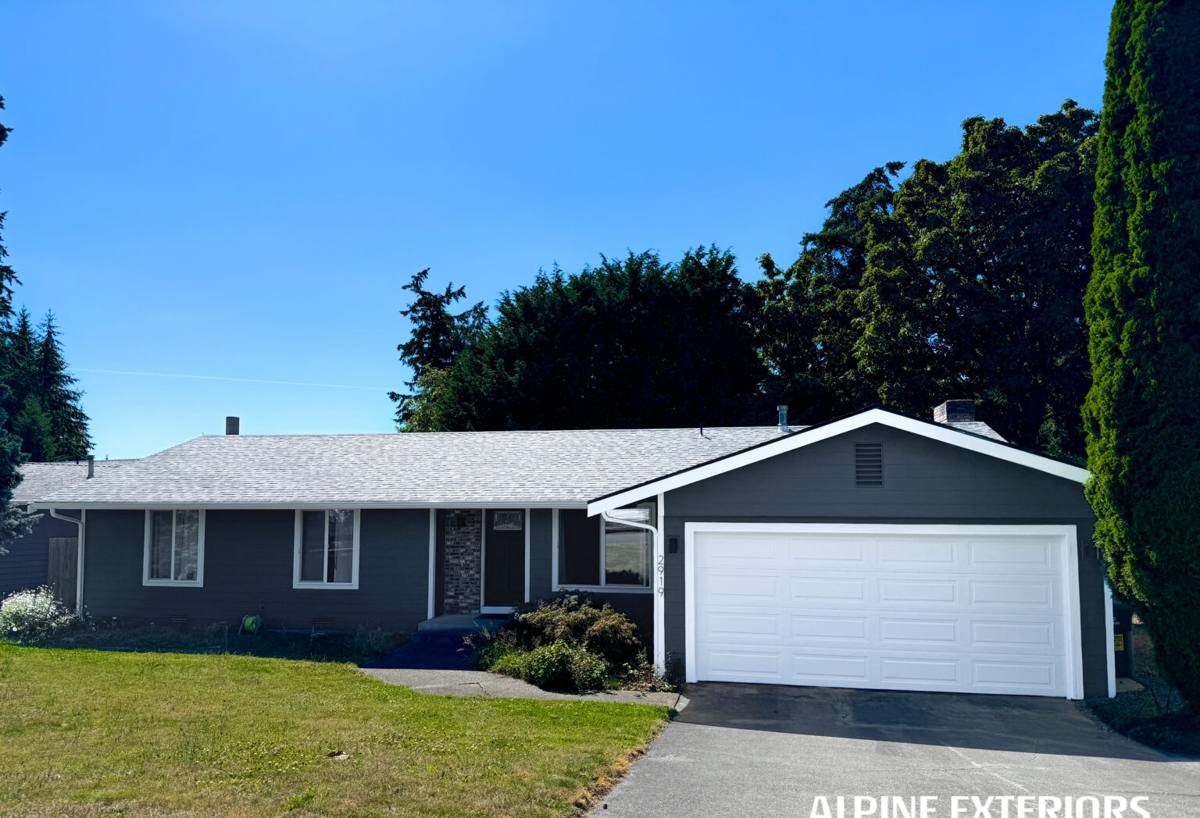
What Barkley's Climate Actually Does to Siding
Salt Air, Even Inland
Bellingham Bay isn't far, and moisture carrying trace salt content travels further inland than most homeowners assume, especially with the region's prevailing westerly winds. Salt-laden moisture accelerates corrosion on fasteners, flashing, and any metal trim that isn't rated for it. Cheaper or mismatched hardware is often the first thing to fail, long before the siding material itself shows wear.
Driving Rain
Whatcom County storms don't always fall straight down. Wind-driven rain pushes water sideways and upward, testing every seam, joint, and penetration point in a siding system. A wall that would stay dry in a calmer climate can take on water here if laps, caulking, and house wrap details aren't done correctly.
A Long Moss Season
Between the tree canopy common in and around Barkley and the region's extended damp season, siding surfaces can stay wet for days at a time, especially on north-facing walls and anywhere shaded by mature trees. That's exactly the environment moss and mildew need to take hold, and it's why the surface finish and drainage behind the siding matter as much as the siding itself.
What Correct Installation Involves
Fiber cement siding is a durable product, but its long-term performance depends almost entirely on installation quality. The material itself rarely fails first — flashing, fastening, and clearances do. A correct James Hardie installation for a Barkley home includes:
- A drainage plane behind the siding. House wrap or building paper installed to shed water downward and outward, not trap it against the sheathing.
- Proper flashing at every penetration. Windows, doors, hose bibs, light fixtures, and vents all need flashing details that direct water away from the wall assembly, not just caulk over the gap.
- Correct fastener placement and spacing. Hardie's installation specs call for specific nail or screw placement, and getting it wrong can void the manufacturer's warranty even if the siding looks fine on day one.
- Ground and roof clearances. Siding installed too close to grade, decking, or roof lines invites moisture wicking and accelerated wear — a common shortcut on rushed jobs.
- Factory-finished ColorPlus panels installed to spec, including proper caulking at cut edges and touch-up at any field-cut ends, so the factory finish's warranty coverage stays intact.
- Ventilation behind the cladding where the wall assembly calls for it, so moisture that does get behind the siding has somewhere to go instead of sitting against the sheathing.
Skip any one of these and the siding can still look good for a while. The problems show up later — usually as staining, soft trim, or moss creeping in at seams — and by then the fix is more than cosmetic.
How Our Process Works in Barkley
1. On-Site Assessment
We look at more than the existing siding. We check the wall assembly where it's exposed, the condition of trim and flashing, drainage around the foundation, and how much shade and tree cover the home gets — all of which affect how we detail the installation.
2. Product and Line Selection
James Hardie makes several plank profiles and panel styles, and the right choice depends on the home's existing architecture and exposure. We'll walk through the options that make sense for your home rather than pushing a single default.
3. Removal and Wall Prep
Old siding comes off, and we inspect the sheathing underneath for rot or moisture damage before anything new goes up. This is the point where hidden problems get caught and fixed — not covered over.
4. Weather Barrier and Flashing
House wrap, flashing, and any needed drainage details go in before a single piece of siding is hung. This step is invisible once the job is done, which is exactly why it's the step most likely to get shortcut on lower-quality installs.
5. Installation to Manufacturer Spec
Panels or planks go up following James Hardie's fastening, spacing, and clearance requirements, which keeps the manufacturer's warranty valid and gives the finished wall the performance the product is engineered for.
6. Final Walkthrough
We go over the finished work with you, including where flashing and caulking were used, so you know what's behind the walls and what warranty coverage applies.
Siding Options Compared
| Factor | James Hardie Fiber Cement | Vinyl | Wood / Cedar |
|---|---|---|---|
| Moisture behavior in wet climates | Engineered for damp, marine-influenced climates when installed to spec | Can warp or buckle; seams are moisture entry points | Absorbs moisture; needs consistent maintenance to resist rot |
| Moss and mildew resistance | Factory finish resists staining better than raw wood | Can trap moisture behind panels, encouraging growth | Prone to moss and mildew without regular treatment |
| Fire resistance | Non-combustible | Combustible | Combustible |
| Maintenance | Low; factory finish holds color | Low, but brittle over time and hard to repair cleanly | High; repainting, staining, and sealing needed regularly |
| Longevity when installed correctly | Decades, backed by a strong transferable warranty | Moderate; UV and impact wear over time | Variable; depends heavily on upkeep |
We don't install vinyl, cedar, or engineered wood products like LP SmartSide. That's a standard we hold across every job, not a sales pitch for this page — we think Barkley's climate rewards a siding system that doesn't depend on a homeowner's maintenance schedule to perform.
Signs a Barkley Home Needs New Siding
- Visible moss or algae growth that returns shortly after cleaning
- Soft or spongy spots when you press on the siding, especially near the bottom courses
- Paint that's peeling, bubbling, or chalking faster than expected
- Gaps opening up at seams, corners, or trim boards
- Warping, cupping, or visible separation from the wall
- Rising energy bills that suggest the wall assembly is no longer doing its job
Any one of these can be minor. Several at once usually means the siding system, not just the surface, needs attention.
What to Ask Before You Hire
- Are you installing to the manufacturer's written specifications, including fastener type and spacing?
- What house wrap or weather barrier system do you use, and how is it detailed around windows and doors?
- Who handles flashing at penetrations, and how is that work inspected before siding goes on?
- Is the manufacturer's warranty transferable, and what would void it?
- Have you worked in this neighborhood or similar wooded, shaded lots before?
A contractor who can answer these clearly, without hedging, is one who understands that siding is a system, not just a material.
Why a Crew That Already Works Barkley Matters
Every neighborhood in Bellingham has its own quirks — sun exposure, tree cover, soil drainage, prevailing wind direction — and Barkley's mix of mature trees and proximity to the bay creates conditions that call for specific flashing and drainage decisions. A crew that's already worked homes in this area isn't guessing at how much clearance to leave at grade or how to detail a north-facing wall that barely sees direct sun. That familiarity shows up in fewer callbacks and a wall assembly that's built for the conditions it actually has to withstand, not a generic install applied the same way everywhere.
Get a Free Estimate
If your Barkley home's siding is showing its age, or you're planning ahead rather than reacting to a problem, we're happy to take a look and walk you through what correct installation would involve for your specific home. There's no pressure and no obligation — just a straightforward assessment from a crew that installs one product, does it to spec, and stands behind the work. Reach out using the form below to schedule a free estimate.