 Bellingham
 Windows Built for Birchwood's Marine Climate
Birchwood sits close enough to the water and to Whatcom County's marine weather patterns that homeowners here deal with a specific combination of stress on their exterior: salt-laden air drifting in off Bellingham Bay, long stretches of driving rain, and a moss season that can run most of the year in shaded yards. Windows take the brunt of this. Frames absorb moisture at the corners, sills collect standing water, and hardware exposed to salt air corrodes faster than manufacturers' spec sheets ever account for.
A window that works fine in a dry inland climate can fail early here — not because it's a bad product, but because it was never tested against what a Bellingham winter actually does to a west- or south-facing wall. Custom windows for a Birchwood home need to be selected and installed with that reality in mind, not treated as an off-the-shelf swap.
What Birchwood Homes Typically Need
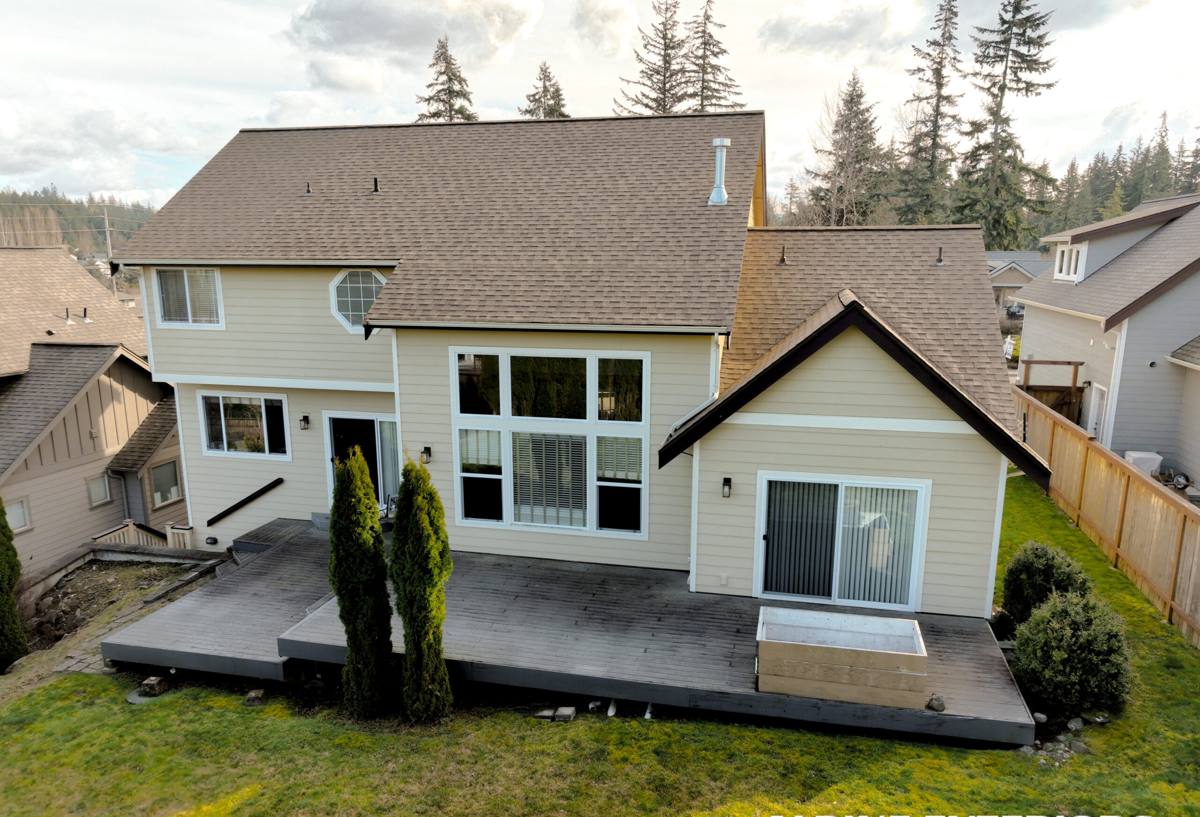
Like much of Bellingham, Birchwood includes homes from several different building eras, so window needs vary house to house. Older single-pane or early dual-pane windows are usually the first thing worth addressing — they're the main source of cold drafts, condensation between panes, and swollen or rot-prone wood frames. Newer builds sometimes just need better-performing glass or hardware upgrades rather than a full frame replacement.
What's consistent across most of the neighborhood is exposure. Whatcom County's weather doesn't hit every wall of a house equally — the sides that catch prevailing wind and rain need windows and flashing detail that can shed water aggressively, while shadier, moss-prone areas need materials and finishes that won't trap moisture against wood or degrade under constant damp.
Common issues we see in the area
- Fogging or moisture between panes — a sign the seal has failed
- Soft, discolored, or swollen wood at the sill or lower frame corners
- Drafts you can feel by hand even with the window fully latched
- Hardware (latches, cranks, hinges) that's stiff, corroded, or won't fully lock
- Visible gaps or failing caulk where the frame meets the siding
- Moss or algae staining building up on the sill or lower sash
- Windows that are noticeably harder to open than they used to be, from swelling
What a Correct Custom Window Installation Involves
"Custom" doesn't just mean a non-standard size — it means the window is built and installed to fit the specific opening, wall assembly, and exposure of your house, rather than forced into a generic frame. That matters more here than in drier climates, because a poor fit is exactly where water finds its way in during a wind-driven rain event.
A correct installation, whether it's new construction, a full-frame replacement, or a retrofit into an existing frame, generally includes:
- Accurate measurement of the actual opening, not the old window's nominal size — older openings are rarely perfectly square
- Removal and inspection of the old frame and surrounding sheathing for hidden rot or moisture damage before anything new goes in
- Proper flashing integration with the existing weather-resistive barrier, lapped correctly so water sheds outward and down, never trapped behind the siding
- Sill pan flashing at the base of the opening, so any water that does get past the window has somewhere to drain instead of sitting on bare sheathing
- Correct shimming and squaring so the sash operates smoothly and the seals compress evenly all the way around
- Low-expansion foam and/or backer rod and sealant at the gap between frame and rough opening — not just caulk smeared over a loose fit
- Exterior trim and caulking matched to the existing siding profile so the finished look is clean and the seal is continuous
Skip any one of these steps and the window itself becomes almost irrelevant — a premium window installed without proper flashing will leak just as reliably as a cheap one.
Choosing Window Materials for This Climate
There's no single "best" window material — the right choice depends on the exposure of the specific wall, your maintenance appetite, and budget. Here's how the common options actually compare for a Birchwood home dealing with salt air, rain, and moss:
| Material | How it handles this climate | Maintenance | Typical trade-off |
|---|---|---|---|
| Vinyl | Won't rot or corrode from salt air; handles moisture well | Low — occasional cleaning | Frame profiles are thicker; color/finish options are more limited |
| Fiberglass | Very stable in temperature swings and damp conditions; strong against warping | Low | Higher upfront cost than vinyl |
| Wood-clad | Good performance if the exterior cladding and seals stay intact; interior wood look | Higher — cladding seams and any exposed wood need monitoring | More installation-sensitive; a missed seal detail shows up as rot over time |
| Aluminum | Strong but conducts cold and can corrode faster in salt air without proper coatings | Moderate | Less common for residential retrofits here for this reason |
Our default recommendation for most Birchwood homes is vinyl or fiberglass for exposed walls, simply because they hold up to damp, salt-tinged air without the ongoing upkeep that wood-clad products demand. We'll still install wood-clad windows when a homeowner wants that look or is matching existing trim — we just make sure the flashing and cladding seams are done right, because that's where wood-clad windows actually fail, not in the wood itself.
Our Process, Start to Finish
1. On-site walkthrough
We look at each window opening individually — exposure, condition of the surrounding wall, and what's actually causing the problem (the glass, the seal, the frame, or the installation itself).
2. Honest recommendation
Not every window needs full replacement. Sometimes a targeted repair or hardware upgrade solves the problem. We'll tell you when that's the case rather than upselling a full-frame job you don't need.
3. Custom order
Windows are ordered to the exact opening dimensions and specified for the wall's exposure — more weather-resistant detailing on rain- and wind-exposed walls, standard detailing elsewhere.
4. Installation
Old frame removal, sheathing inspection, flashing, sill pan, sealing, and trim — done in the sequence described above, with attention to the specific wall's rain exposure.
5. Final walkthrough
We check operation, seals, and exterior finish with you before calling the job done.
What Affects the Cost
Custom window pricing varies by size, material, glass package, and how much of the surrounding wall needs repair. As a rough guide, homeowners in this area typically see installed costs in the range of $700–$1,800 per window, with full-frame replacements and larger or specialty shapes running toward the higher end. The table below covers the main factors that move the number up or down.
| Factor | Effect on cost |
|---|---|
| Material (vinyl vs. fiberglass vs. wood-clad) | Vinyl is typically most affordable; fiberglass and wood-clad cost more |
| Full-frame replacement vs. retrofit into existing frame | Full-frame costs more but is necessary when the old frame is damaged |
| Hidden rot or sheathing damage found during removal | Adds repair cost, but skipping it means the new window fails early |
| Glass package (standard dual-pane vs. upgraded low-E or triple-pane) | Higher-performance glass costs more up front, pays back in comfort and efficiency |
| Number of windows done in one visit | Doing multiple windows together reduces per-window labor cost |
We'll always give you a firm, itemized number before any work starts — no vague allowances that turn into surprises once the old window is off the wall.
Energy Efficiency and Moisture Control
In a marine climate, energy efficiency and moisture control are really the same conversation. A window that's properly sealed against air leaks is also properly sealed against the wind-driven rain that Whatcom County sees for a good chunk of the year. Look for a solid dual-pane (or upgraded) glass package with a low-E coating suited to our cooler, wetter climate rather than a hot, dry one — the coating and gas-fill spec that performs best here isn't always the same one marketed for other regions.
Beyond the glass itself, the installation quality determines whether that efficiency actually shows up in your home. A well-rated window installed with gaps in the sealant or missing sill pan flashing will still leak air and, eventually, water — the product spec only matters if the install matches it.
Why Local Experience Matters
A crew that regularly works in Bellingham and around Birchwood already knows which wall orientations take the worst weather, how the county's building department wants flashing and moisture barriers documented, and what long-term moss and salt exposure actually does to different materials over years, not just on a spec sheet. That's the kind of judgment that doesn't come from a general installation manual — it comes from having handled Whatcom County's actual weather on actual houses like yours.
It also means fewer surprises during the project. Local crews recognize the construction patterns common to homes in this area and can flag likely issues — hidden rot, undersized flashing, outdated moisture barriers — before they become change orders mid-job.
Keeping New Windows Performing Long-Term
- Rinse frames and sills periodically to clear salt residue, especially after storms
- Keep gutters and downspouts clear so runoff isn't sheeting directly down over window heads
- Trim back vegetation that keeps a window in constant shade and dampness, which encourages moss and mildew
- Check exterior caulking annually and touch up any cracking before it lets water behind the trim
- Operate hardware (locks, cranks) a few times each season so it doesn't seize from disuse and humidity
- Address any new fogging between panes promptly — it's a failed seal, not something that self-corrects
None of this requires much time, but it's the difference between windows that look and perform well for decades versus ones that need early attention because small issues went unaddressed.
If you're noticing drafts, fogged glass, or sticking hardware on a Birchwood home, we're happy to take a look and give you a straightforward assessment — no pressure, no obligation. Use the form below to request a free estimate.