 Bellingham
 Why Decks Wear Out Faster in Birchwood
Birchwood is a settled, tree-lined residential pocket of Bellingham, and like most of this city, it sits inside a marine climate that is genuinely hard on outdoor wood structures. Bellingham gets a long, wet fall-through-spring stretch, occasional salt-tinged air off Bellingham Bay, and enough shade and moisture from the region's tree cover to keep moss and algae thriving for much of the year. None of that is unusual for Whatcom County — but it means a deck here ages differently than the same deck would in a dry inland climate.
The damage is rarely dramatic. It's slow: joists that stay damp two days longer after every rain, fasteners that corrode from the inside out, ledger boards that trap water against the house, and decking boards that cup, gray, or grow a slick green film underfoot. By the time a deck feels unsafe, the structure underneath it has usually been losing integrity for years. Replacement, done correctly, is your chance to build past all of that — not just swap old boards for new ones.
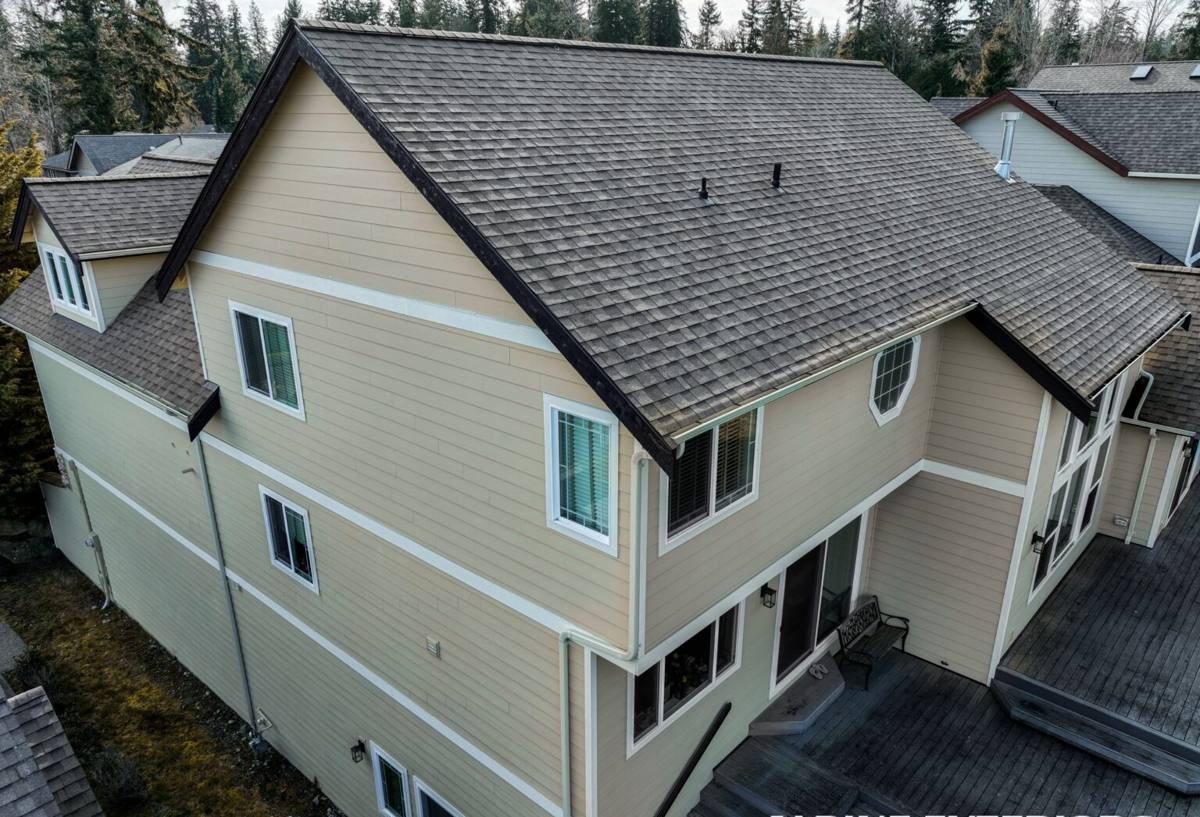
Signs a Birchwood Deck Needs Replacing, Not Patching
Repair makes sense when the problem is isolated — a cracked board, a loose rail. Replacement is the honest call when the issues are structural or systemic. Common signs we see on older decks in this area:
- Soft, spongy, or spalling wood at the ledger board (where the deck attaches to the house) — often the first place moisture damage becomes serious
- Support posts or footings that have shifted, rotted at the base, or were never properly set below frost/grade in the first place
- Rust streaking around fasteners, or nails/screws that back out on their own
- Persistent moss or algae that returns within weeks of cleaning, especially on shaded sections
- Joists you can flex by hand, or a deck surface that feels "bouncy" when walked on
- Railings that wiggle at the post connection — a common safety failure point on decks over 15-20 years old
- Boards cupping, splitting, or delaminating faster than a simple refinish can keep up with
If what you're seeing is confined to one or two boards and the frame underneath is sound, we'll tell you that — a full replacement isn't always the right answer, and we'd rather say so upfront than sell a bigger job than you need.
What "Just Resurfacing" Misses
A lot of deck problems in Bellingham hide underneath the decking, not on top of it. Fresh boards over a compromised frame look great for a season and then start showing the same symptoms the old deck had — because the moisture path into the structure was never actually fixed. That's why any serious replacement estimate starts with the framing, not the surface material.
What a Correct Deck Replacement Involves
A deck replacement isn't just removing old boards and screwing down new ones. Done right, it addresses every layer that keeps water out and weight properly supported:
- Ledger board and flashing — the connection to your house is the single most common source of hidden rot. Proper flashing (and sometimes a self-adhering waterproof membrane behind it) is what keeps rain from wicking into your home's framing
- Footings and posts — set to the depth and bearing your local code requires, checked for level and for any settling or heaving from years of wet-dry cycles
- Joists and beams — sized correctly for the span and load, with joist tape or another moisture barrier on top to keep decking fasteners from sitting in trapped water
- Fasteners and hardware — corrosion-resistant hardware rated for treated lumber contact, which matters more here than in drier regions because of how much time the wood spends wet
- Decking surface — wood, composite, or PVC, chosen for how it actually performs in shade, moisture, and moss exposure, not just how it looks in a showroom
- Railings and stairs — rebuilt to current code, which has generally gotten stricter on railing height and baluster spacing since many older decks were built
Choosing Decking Material for a Wet, Shaded Climate
Material choice matters more in Bellingham than in places with a genuine dry season, because your decking almost never gets a long uninterrupted stretch to fully dry out. Here's how the common options actually hold up:
| Material | Moisture & Moss Behavior | Maintenance | Typical Lifespan |
|---|---|---|---|
| Pressure-treated wood | Absorbs water readily; needs to breathe and dry between rains or rot risk climbs | Annual cleaning and re-staining/sealing recommended | 10-15 years before major work needed |
| Cedar | Naturally rot-resistant but still absorbs moisture; grays without maintenance | Regular sealing to preserve color and resist moss | 15-20 years with upkeep |
| Capped composite | Resists moisture absorption well; can still host surface algae/moss in heavy shade | Occasional washing, no staining or sealing | 25-30 years, manufacturer-warrantied |
| PVC decking | Doesn't absorb water at all; best option for consistently shaded or low-airflow areas | Lowest maintenance of the group | 25-30+ years |
We install all of the above and will lay out the honest trade-offs for your specific deck — sun exposure, tree cover, and how much upkeep you actually want to do matter more than any general recommendation. A shaded deck under mature trees behaves very differently than one that gets full afternoon sun, even on the same street.
A Note on Wood-Alternative Products
We're selective about which composite and PVC lines we install. Not every product on the market handles our climate equally well — some early-generation composites had known issues with moisture absorption and mold in shaded, high-humidity settings. We stick to capped composite and PVC products with a track record in wet Pacific Northwest conditions, because a warranty is only as good as the product holding up long enough to need it.
Our Deck Replacement Process
- On-site assessment — we inspect the ledger connection, footings, and framing before quoting anything, not just the visible surface
- Honest scope and estimate — a clear breakdown of what's being replaced, what materials we're recommending and why, and a firm price before work starts
- Permitting — we handle the permit application where required so you're not stuck navigating it alone
- Demolition — old decking, framing, and any compromised posts or footings removed and hauled off
- Structural rebuild — new footings, framing, ledger flashing, and hardware installed to current code
- Decking, railings, and stairs installed — with attention to drainage and airflow underneath, which matters more here than in drier climates
- Final walkthrough — we go over the finished deck with you, including basic care specific to whatever material you chose
Permits and Local Building Requirements
Most deck replacements in Bellingham and unincorporated Whatcom County require a building permit, particularly when the structure is being rebuilt down to the footings or when railing height changes. Requirements can vary depending on your deck's height above grade, its size, and whether it's attached to the house. We pull and manage the required permits as part of the job rather than leaving that step to you — it's one less thing to chase down, and it protects you if the deck is ever part of a home sale or insurance question down the road.
Living With Your New Deck Through Moss Season
A well-built deck in this climate still needs some seasonal attention — the goal of a good rebuild is to make that upkeep light, not eliminate it entirely. A few habits go a long way:
- Sweep leaves and needles off regularly in fall — trapped organic debris is what feeds moss and algae growth
- Rinse or gently wash the surface a couple of times a year, more often in heavily shaded spots
- Keep gutters and downspouts clear so runoff isn't dumping extra water onto or near the deck
- Check railing connections annually — the freeze-thaw cycles and constant damp here can loosen hardware over time
- For wood decking, plan on resealing on the schedule your product recommends rather than waiting until it visibly grays
Why Hire a Crew That Already Works in Bellingham
A deck built by someone unfamiliar with this climate tends to make the same mistakes: undersized flashing, fasteners that aren't rated for constant moisture, decking laid without enough airflow underneath. Those aren't obvious problems on install day — they show up two or three winters later as rot, staining, or a deck that never seems to fully dry out. We work on homes throughout Bellingham and Whatcom County, including neighborhoods like Birchwood, and we build for the conditions this area actually delivers: sustained rain, shade from mature tree cover, and a moss season that runs longer than most homeowners expect. That's not a sales pitch — it's just what holds up here and what doesn't.
If your deck is showing its age, we're happy to take a look and give you a straight answer about whether it needs a full replacement or just targeted repair. Reach out for a free, no-pressure estimate using the form below.