 Bellingham
 Roof Repair Built for Columbia's Weather, Not a Generic Climate
Columbia is one of Bellingham's older, more established neighborhoods, and that means older roofs — many of them with layers of repairs, patched flashing, and moss that keeps coming back no matter how many times someone scrapes it off. Roofing here doesn't fail the way it does in a dry inland climate. It fails from the top down and the edges in, driven by a specific combination of conditions: salt-laden air rolling in off Bellingham Bay, driving rain that comes in sideways during winter storms, and a moss season that in Whatcom County can stretch for eight months or more out of the year.
A roof repair that works somewhere dry and sunny can fail here in a single wet winter. This page is about what Columbia homes specifically need from a roof repair, what a correct repair actually looks like, and why it matters that the crew doing the work already understands this neighborhood's roofs.
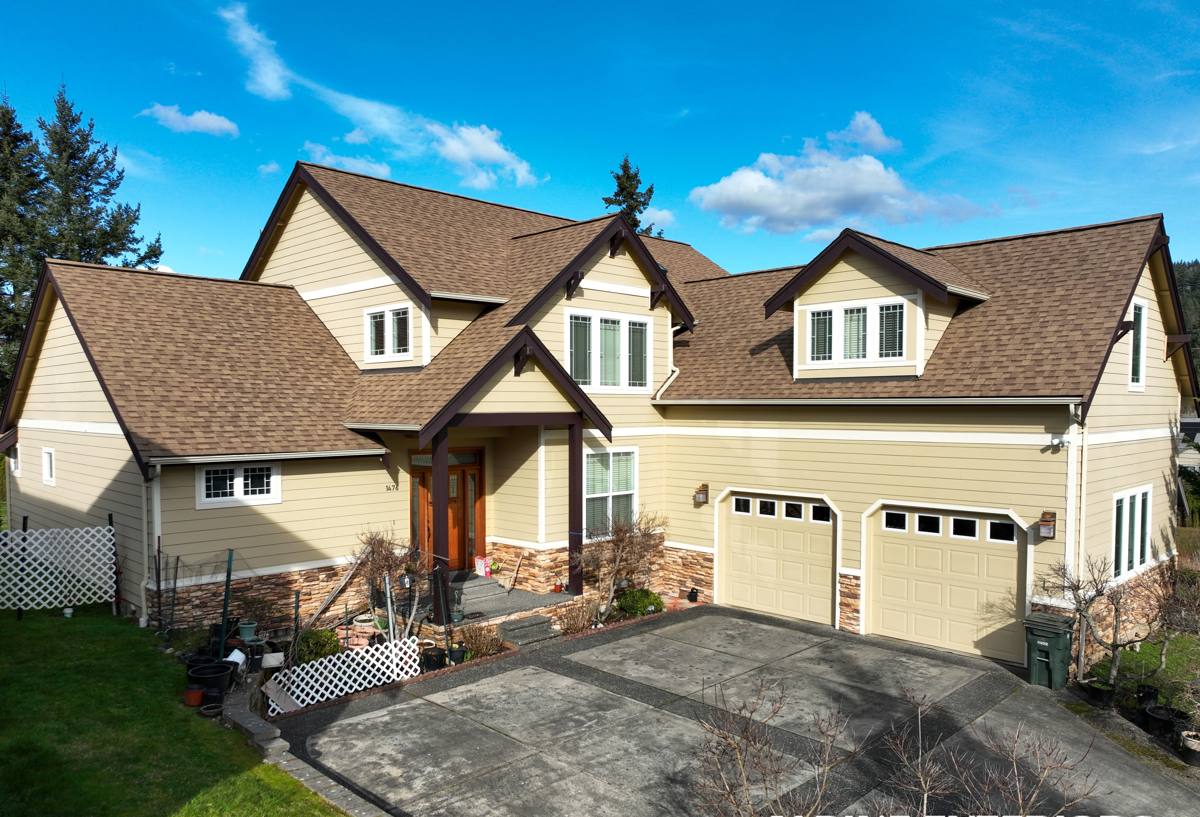
How Bellingham's Climate Actually Damages a Roof
Salt Air and Metal Fatigue
Homes closer to the water deal with airborne salt that settles on every exposed metal surface — flashing, fasteners, gutter hardware, and vent caps. Over years, that salt accelerates corrosion in ways that aren't always visible from the ground. A nail head or a flashing seam can look fine from a distance while it's actually thinning out and losing its ability to hold a watertight seal.
Driving Rain and Wind-Driven Water
Whatcom County doesn't just get a lot of rain — it gets rain pushed sideways by wind coming off the Sound. That matters for repair work because wind-driven rain can find its way under shingles, around chimneys, and through valleys that would stay dry in a straight-down rain. Repairs that don't account for wind direction and proper overlap often leak again within a season or two.
Moss and the Long Wet Season
Moss thrives on shaded, moisture-retentive roof surfaces, and a lot of Columbia's mature tree canopy creates exactly that environment. Moss isn't just cosmetic — its root structure lifts shingle edges and holds water against the roof deck long after a storm has passed, which is one of the most common causes of slow, hidden leaks in this part of Bellingham.
Signs a Columbia Home Needs Roof Repair
Most roof problems here show up gradually, which is exactly why they're often ignored until they become expensive. Here's what we look for, and what homeowners should watch for between inspections:
Interior Warning Signs
- Ceiling stains that appear after a heavy rain, then seem to dry up and disappear
- A musty smell in an attic or upper closet, especially after a wet week
- Visible daylight through the roof deck when viewed from inside the attic
- Soft or sagging spots in ceiling drywall near exterior walls or chimneys
Exterior Warning Signs
- Moss buildup along the north-facing slopes or shaded valleys
- Curled, cracked, or missing shingles, especially near ridges and edges
- Rust streaks below metal flashing or vent caps
- Granules collecting in gutters, a sign shingles are wearing thin
- Gaps or lifted seams where flashing meets a chimney, skylight, or wall
What a Correct Roof Repair Actually Involves
Diagnosis Before Any Work Starts
The most common mistake in roof repair isn't bad materials — it's fixing the visible symptom instead of the actual entry point. Water travels along roof decking and rafters before it shows up as a stain, so a leak over a bedroom might actually originate several feet away, near a valley or a chimney. A correct repair starts with tracing the water path, not just patching the spot where the stain appeared.
Matching Existing Materials
When we repair a section of an existing roof, we match the shingle profile, color, and exposure as closely as possible so the repair doesn't stand out and, more importantly, so it sheds water the same way the surrounding roof does. Mismatched shingle profiles can create small ridges where water pools instead of running off.
Flashing Gets the Most Attention
The majority of roof leaks we find in Columbia trace back to flashing, not the shingle field itself — chimney flashing, valley flashing, and step flashing along walls and dormers. A proper repair replaces compromised flashing rather than caulking over it, because caulk is a temporary patch, not a permanent moisture barrier, especially with the amount of rain this area sees.
Ventilation and the Moss Cycle
Where moss is chronic, we look at attic ventilation as part of the repair. A roof that stays consistently damp and poorly ventilated will regrow moss faster than one that dries out between rain events, so addressing airflow can extend the life of the repair itself.
Common Repair Scenarios We See in This Neighborhood
| Issue | Typical Cause | What the Repair Involves |
|---|---|---|
| Recurring moss on shaded slopes | Tree canopy, limited sun exposure, poor airflow | Careful removal, treatment, and addressing any lifted shingles underneath |
| Leak near a chimney | Failed or aging step and counter flashing | Flashing replacement, not just sealant |
| Valley leaks during storms | Wind-driven rain overwhelming worn valley flashing | Valley flashing and underlayment replacement |
| Rust stains near vents or metal trim | Salt air corrosion of fasteners and flashing | Corroded hardware and flashing replacement |
| Granule loss and thinning shingles | Age combined with constant moisture exposure | Section replacement matched to existing shingles |
Our Roof Repair Process
- On-site inspection. We get on the roof and in the attic when it's safe to do so, tracing the actual water path rather than guessing from the ground.
- Honest assessment. We tell you plainly whether this is a targeted repair, a larger section replacement, or a sign the roof is nearing the end of its service life.
- Written scope and price. You get a clear description of exactly what will be repaired and why, before any work begins.
- The repair itself. Matching materials, correct flashing detail, and proper fastening for this climate — not shortcuts that only hold until the next storm.
- Final walkthrough. We show you the completed work and explain what was done, so you understand your roof better than before we arrived.
Repair vs. Replacement: Making the Right Call
Not every roof problem in Columbia needs a full replacement, but not every leak should be patched forever either. Here's how we generally think about it:
| Factor | Leans Toward Repair | Leans Toward Replacement |
|---|---|---|
| Age of roof | Under 15-20 years, depending on material | Nearing or past manufacturer's expected service life |
| Extent of damage | Isolated to one section, valley, or flashing point | Widespread granule loss, curling, or multiple leak points |
| Moss history | Manageable with cleaning and ventilation fixes | Chronic moss with visible deck damage underneath |
| Underlying decking | Solid, no rot found during inspection | Soft spots or rot found in multiple areas |
| Cost over time | Repair cost is modest relative to remaining roof life | Repeated repairs are approaching replacement cost |
We won't push a replacement when a repair will genuinely hold up, and we'll say so directly if we think a repair is just delaying the inevitable. Broadly, targeted repairs tend to run from a few hundred dollars for small flashing or shingle fixes up into the low thousands for larger sections involving decking work — the exact number always depends on what we actually find once we're on the roof.
Why a Crew That Already Works in Columbia Matters
Roofing crews who work regularly in this part of Bellingham build a working sense of how local roofs age — which flashing details tend to fail first, how much moss buildup is normal versus a warning sign, and which repair approaches actually hold up against this area's wind-driven rain instead of just looking finished on the day the work wraps up. That familiarity shows up in small decisions during a repair: how much flashing to replace instead of patch, which direction to lap materials given local wind patterns, and when a "quick fix" is actually going to cost more in the long run.
It also matters for scheduling and responsiveness. Roof leaks in Whatcom County rarely wait for convenient weather, and a crew already working in the area can typically get to a leaking roof faster than one dispatching from farther away.
Checklist: Before You Hire Anyone for Roof Repair
- Ask for a written scope of work, not just a verbal price
- Confirm whether flashing will be replaced or just resealed
- Ask how they'll match existing shingle color and profile
- Confirm licensing and insurance, and ask to see proof
- Ask what warranty applies to the labor, separate from any material warranty
- Ask whether they've worked on roofs in your specific neighborhood before
- Get a straight answer on repair vs. replacement, with reasoning, not just a sales pitch
What to Expect After the Repair
A properly repaired roof section should perform the same as the surrounding roof — no premature moss regrowth in that spot, no recurring stains inside, and flashing that stays sealed through a full winter of driving rain. We stand behind our labor, and we'll walk you through what maintenance, if any, makes sense going forward, including how often moss treatment should be revisited given your home's sun exposure and tree cover.
If your Columbia home has a roof leak, persistent moss, or flashing that's seen better days, we're happy to take a look and give you a straight answer about what it actually needs. Reach out for a free, no-pressure estimate using the form below.