 Bellingham
 Getting Windows Right the First Time in Birchwood
When a home is going up in Birchwood, the window installation is one of those steps that either sets the house up for decades of trouble-free performance or bakes in a moisture problem that won't show up until the drywall is long since painted. New-construction windows aren't just "install and caulk" — they're a flashing and drainage system that has to work with the house wrap, the sheathing, and the siding that goes on after. In a Bellingham marine climate, where wind-driven rain and salt-laden air off the Sound are part of daily life for months at a time, that system has to be right from the first window set, not fixed later.
We work new-construction window installs in Birchwood as part of our regular service area, alongside the rest of Whatcom County. That means we're used to the inspection sequence local building departments expect, the moisture realities of this specific stretch of coastline, and the coordination it takes to stay on a builder's schedule without cutting corners on flashing details that nobody sees again once the siding closes in.
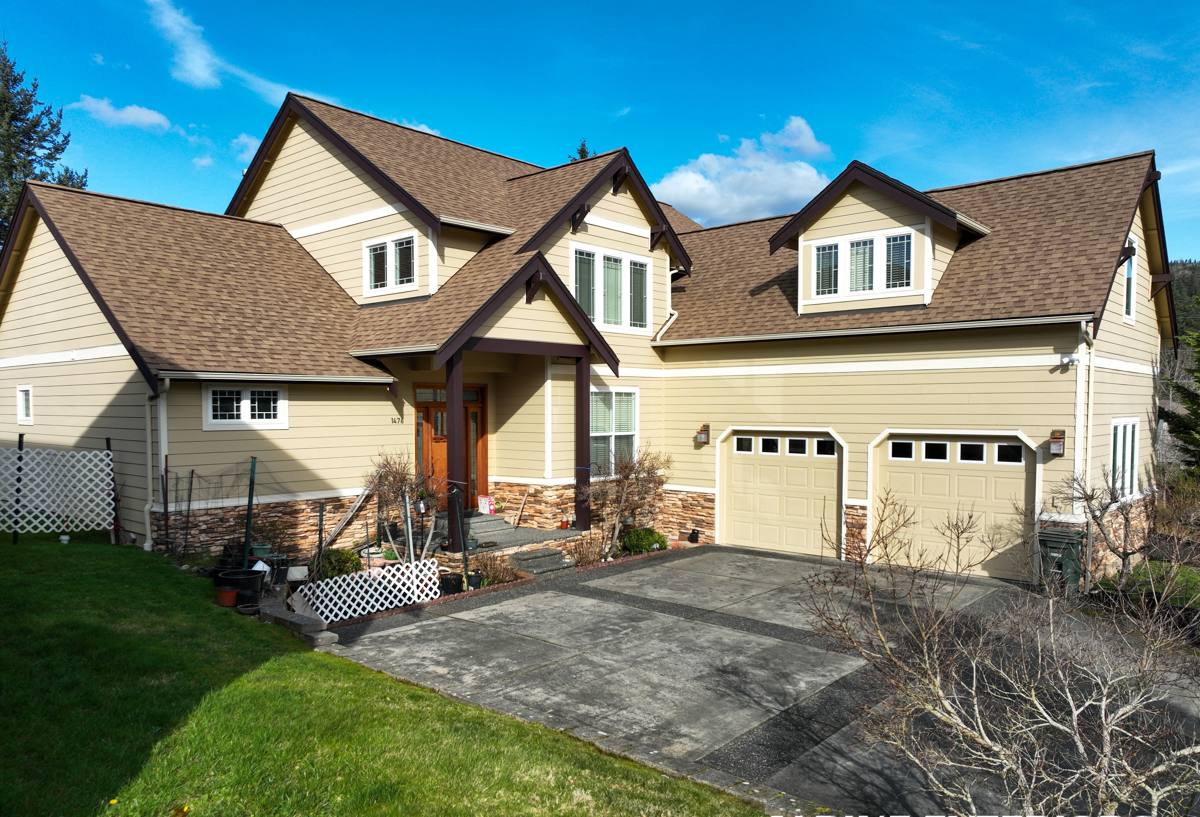
What Birchwood's Climate Actually Demands From a Window Install
Birchwood sits close enough to Bellingham Bay and the Salish Sea that homes here deal with a specific combination of stressors: salt-bearing air that accelerates corrosion on unprotected fasteners and hardware, driving rain that comes in sideways during fall and winter storms, and a long moss and mildew season driven by months of damp, mild weather. None of these are dramatic on their own, but together they punish any weak point in a window opening.
- Salt air — corrodes bare steel fasteners, uncoated flashing tape edges, and lower-grade hardware over time, so material choice at the opening matters as much as the window unit itself.
- Driving rain — pressurizes water against the wall assembly during storms, meaning any gap in sill pan flashing or head flashing becomes an active leak path, not a theoretical one.
- Long wet season — keeps sheathing and framing damp for extended stretches if drainage isn't built in, which is exactly the condition that lets mold and moss-related rot get a foothold behind siding.
A window that's a great fit for a drier inland climate can still underperform here if the installer treats the opening prep as an afterthought. The window unit matters, but the flashing and drainage plane around it matters just as much — arguably more, since that's what determines whether water that does get past the exterior cladding actually drains back out.
The Installation Itself: Flashing, Sequencing, and Sealing
A correct new-construction window install follows a specific order. Skipping or reversing steps is one of the most common causes of hidden water intrusion in newer homes, and it's not something a homeowner can usually spot once the wall is closed up.
Sill Pan Flashing and Drainage
Every rough opening should get a sloped sill pan before the window ever goes in — something that directs any water reaching the sill back out to the exterior rather than letting it pool against the framing. In a climate with as much sustained rainfall as Whatcom County sees, we treat sill pan flashing as non-negotiable, not an upgrade.
Weather-Resistant Barrier Integration
The window's flanges need to be integrated with the house wrap in the correct shingle-lap order — jamb flashing first, then the window set into the pan, then head flashing lapped over the top so water is always directed down and out over the layer below it, never into it. Done out of order, the wall can look fine on installation day and still leak the first hard winter storm.
Fastening and Sealant Choices
We use corrosion-resistant fasteners and sealants rated for the temperature swings and UV exposure this region sees, since salt air is unforgiving toward anything that starts to rust or degrade at the opening. Sealant is a backup to good flashing geometry, not a substitute for it — a bead of caulk cannot make up for a flashing lap installed backwards.
Our Process for New-Construction Window Installs in Birchwood
We treat a new-construction install as a sequence with checkpoints, not a single visit:
- Opening review — verify rough opening sizes match the ordered window schedule and that framing is square, plumb, and dry before flashing starts.
- Sill pan and flashing install — sloped pan flashing set and integrated with the water-resistant barrier before any window touches the opening.
- Window set — unit leveled, shimmed, and fastened per manufacturer spec, checking reveal and operation before final fastening.
- Head flashing and barrier lap — completed in proper shingle-lap order so the whole assembly drains correctly.
- Sealant and backer rod — applied at the interior and exterior per the window manufacturer's installation instructions, which vary by product line.
- Photo documentation — we document flashing details before they're covered by siding, so there's a record of what's behind the wall if it's ever needed later.
- Final walkthrough with the builder or GC — confirming operation, sightlines, and readiness for siding crews to close in behind us.
That documentation step matters more than it sounds. Once siding goes on, nobody — not us, not the builder, not the homeowner — can see the flashing again without tearing into the wall. Having a photo record from the install gives everyone a reference point if a question ever comes up down the road.
Choosing Window Frame Materials for This Climate
Frame material affects how a window holds up against salt air, moisture cycling, and the maintenance a homeowner will realistically keep up with over the years. There's no single "best" answer — it depends on budget, maintenance tolerance, and the look the home is going for.
| Frame Material | Salt Air / Moisture Behavior | Maintenance | General Cost Position |
|---|---|---|---|
| Vinyl | Won't corrode; performs well in coastal air | Low — occasional cleaning | Lower |
| Fiberglass | Very stable in wet, salty conditions; minimal expansion/contraction | Low | Mid to higher |
| Aluminum | Can corrode faster near salt air unless well-coated; more prone to condensation without thermal breaks | Moderate | Varies widely |
| Wood / wood-clad | Needs consistent upkeep to avoid moisture-related deterioration in a wet climate | High | Higher |
For Birchwood specifically, we lean toward vinyl or fiberglass frames for most new-construction projects because they hold up with the least ongoing maintenance in a marine climate. Wood and wood-clad windows can still be the right call for a homeowner who wants that look and is willing to keep up with finish maintenance — we'll talk through the honest trade-offs rather than push one product line.
Energy Code and Performance in a Wet, Mild Climate
Washington's state energy code sets minimum performance requirements for new-construction windows, including U-factor limits that affect heat loss through the glass and frame. Bellingham's climate is mild compared to much of the state, but it's also consistently damp, which raises condensation risk on the interior face of a window if performance is marginal. We select and verify window specifications against the current code requirements for the jurisdiction, and we pay attention to how a given window's performance numbers translate to real condensation behavior in a house that's going to see a lot of humid air over a Whatcom County winter.
Getting this wrong doesn't just cost energy — it can show up as persistent condensation on interior glass and sills, which over a few wet seasons becomes a maintenance headache for the homeowner and, in the worst cases, a finish or trim problem.
Coordinating With Your Builder's Schedule
New-construction window installs happen inside someone else's construction schedule — the builder or general contractor is coordinating framing, sheathing, house wrap, siding, and interior trades around our window work. We show up ready to move at the pace the job needs, communicate directly with the GC about sequencing, and flag anything we find at the opening — an out-of-square rough opening, a sheathing issue, a house wrap detail that needs correction — before it becomes a problem for the trades that follow us. Being easy to schedule with matters as much as the install quality itself when a builder has a dozen trades to manage on one job.
What to Verify Before the Wall Closes In
Once siding goes up, these details are hidden for the life of the house. Whether you're a builder, a homeowner working with a builder, or a homeowner acting as your own GC, it's worth confirming these before sign-off:
- Sill pan flashing is present and properly sloped toward the exterior at every opening
- Flashing laps follow correct shingle order — head flashing over the barrier, not under it
- Fasteners and flashing tape are rated for long-term exterior and coastal exposure
- Windows are shimmed, level, and operate smoothly with even reveals
- Sealant is applied per the window manufacturer's specific installation instructions
- Photo documentation exists of flashing details before they're covered
- Window specs meet current Washington state energy code requirements for the project
Why a Crew That Already Works Birchwood Matters
New-construction window installation isn't exotic work, but the details that separate a good install from a problem one are exactly the details that don't show up on a walkthrough — they show up two or three wet seasons later. A crew that regularly works in Birchwood and the surrounding Bellingham area already accounts for the salt air, the driving rain, and the long moss season in how they flash and seal every opening, rather than treating this as a generic install and hoping the climate cooperates. We also know the practical side: how local building departments here expect flashing and drainage details to be documented, and how to keep a builder's schedule moving without skipping steps that matter.
If you're building in Birchwood and want a window install that's done right the first time — not reworked after the first storm season — we're happy to talk through your project. Reach out for a free, no-pressure estimate, and we'll walk through what your specific build needs.