 Bellingham
 Windows in Birchwood Take a Different Kind of Beating
Birchwood sits close enough to Bellingham Bay and the Sound that salt-laden air is a daily fact of life for the homes here, not an occasional nuisance. Add the driving, sideways rain that comes off the water through fall and winter, plus a moss and mildew season that can run eight months or longer in shaded, north-facing yards, and you've got a climate that is genuinely hard on window assemblies. This isn't a page about windows in general — it's about what actually holds up on a Birchwood house, and what a correct installation looks like for this specific stretch of Whatcom County.
Most window failures we see in this neighborhood aren't about the glass itself. They're about what's happening around the glass — the frame material, the seals, and most of all the flashing and water management behind the trim. A window can look fine from the curb for years while water is quietly working its way into the wall cavity behind it. That's the part of the job that separates a window that lasts fifteen years from one that lasts thirty-five.
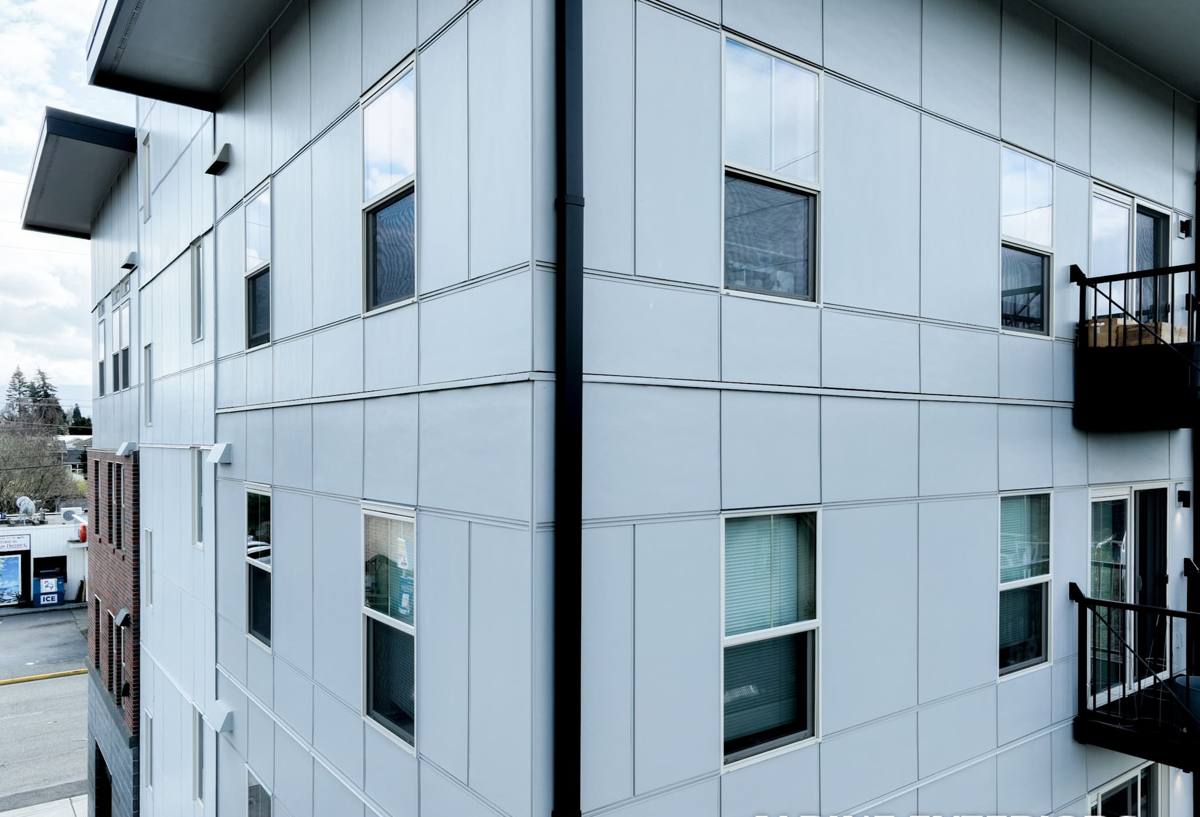
How Salt Air, Rain, and Moss Actually Damage Windows
Salt Air
Airborne salt is corrosive to unprotected metal hardware — hinges, locks, cranks, and lesser-grade aluminum components. Over time it can also degrade certain finishes and gaskets faster than the manufacturer's rating assumes, especially on windows facing west or south toward open water and prevailing wind.
Driving Rain
Wind-driven rain doesn't just sit against a window — it gets pushed sideways and upward into gaps that vertical rain would never reach. A window installed with standard flashing details for a drier climate can leak here even when it wouldn't leak somewhere inland. Bellingham's exposure to weather systems moving in off the Strait makes correct flashing and sill pan detailing non-negotiable, not optional upgrades.
Moss and Sustained Moisture
Whatcom County's long damp season means anything that traps moisture against wood trim, sill framing, or caulking stays wet longer than it would in a drier region. Moss and mildew thrive in that environment, and where they take hold on window trim or nearby siding, they hold moisture against the wall assembly even longer — accelerating rot in wood-framed openings and breaking down caulk and sealant faster than their rated lifespan.
Signs a Birchwood Home Needs Window Attention
- Fogging or a persistent haze between panes on double- or triple-glazed units — a sign the seal has failed
- Soft, spongy, or darkened wood trim around the frame
- Paint or caulk that's cracking, peeling, or pulling away from the frame edge within a year or two of application
- Drafts you can feel with a hand near the sash, especially during a windy rain event
- Windows that are difficult to open, close, or lock — often a sign the frame has shifted or swollen
- Visible moss, algae, or dark streaking on the sill or trim below the window
- Musty smell or visible staining on interior drywall near a window opening
Any one of these on its own isn't necessarily an emergency. Several of them together, especially moisture staining combined with soft trim, usually means water has already gotten past the surface and into the framing — which is a job for full replacement and repair, not a caulk gun.
What a Correct Installation Actually Involves
A window installation is really a water-management project that happens to have a window in the middle of it. The steps that matter most, especially in a wet, salt-exposed area like Birchwood:
- Remove the old unit and inspect the opening. This is where hidden rot, prior water damage, or missing house wrap gets found — and it needs to be dealt with before the new window goes in, not covered over.
- Repair or rebuild the rough opening if framing, sheathing, or sill material has been compromised by past leaks.
- Install a sloped sill pan so any water that does get past the window has somewhere to drain instead of pooling against the sill framing.
- Flash the opening correctly — sill, jambs, then head, in that order, with each layer overlapping the one below it so water always sheds outward and down, never back into the wall.
- Set the window plumb, level, and square and shim it properly so the sash operates smoothly and the seal isn't stressed unevenly.
- Seal and insulate the gap between the frame and rough opening with an appropriate low-expansion foam or backer rod and sealant — not just caulk sprayed around the trim.
- Integrate the flashing with the house wrap or weather-resistive barrier so the window becomes part of a continuous drainage plane, not an isolated patch.
- Finish exterior trim and caulking with materials rated for continuous damp exposure, and interior finish work to match.
Skip or rush any of those steps and the window may look perfect on installation day while still being set up to fail in five years instead of twenty-five.
Choosing Frame Material for This Climate
There's no single "best" window material for every home — it depends on budget, exposure, and how the house is built. Here's how the common options actually perform under Bellingham's conditions:
| Frame Material | How It Handles Salt Air & Rain | Maintenance | Typical Trade-Off |
|---|---|---|---|
| Vinyl | Resistant to corrosion and rot; performs well in coastal exposure | Low — occasional cleaning | Fewer color/finish options; can't be repainted |
| Fiberglass | Very stable in wet, temperature-swinging climates; low expansion/contraction | Low | Higher upfront cost than vinyl |
| Aluminum | Strong but conducts cold and can corrode near salt air without a quality finish | Moderate | Prone to condensation and heat loss unless thermally broken |
| Wood | Excellent insulator but vulnerable to rot without diligent upkeep in a wet climate | High — regular painting/sealing | Best appearance for period homes; needs ongoing care |
| Wood-clad (wood interior, vinyl/aluminum-clad exterior) | Good — exterior shell protects wood from weather | Moderate | Cladding seams need to be well-sealed at install |
For most Birchwood homes we recommend vinyl or fiberglass on the exterior-facing side for their corrosion and rot resistance, with the interior finish chosen to match the home's style. Homes with strong architectural character sometimes justify wood or wood-clad, but that decision should come with an honest conversation about the maintenance commitment it requires in this climate.
Glass and Hardware Matter Too
The frame gets most of the attention, but two other components deserve a mention:
- Glass package: Double-pane, low-E, argon-filled glass is the standard baseline for this region's energy code and comfort needs. Triple-pane adds further insulation value and is worth considering on north- and west-facing walls that take the brunt of wind and cold.
- Hardware finish: Look for corrosion-resistant hardware coatings on locks, hinges, and cranks. In a salt-air environment, cheap hardware is often the first thing to fail — even when the window itself is holding up fine.
Our Process for a Birchwood Window Job
We approach every window job here the same methodical way:
- On-site assessment. We look at each window individually — exposure, condition, framing, and how water has historically moved around that opening — rather than quoting a blanket price sight unseen.
- Honest scope discussion. If we find rot or water damage during the walkthrough, we tell you before work starts, not after we've already opened up the wall.
- Product selection based on exposure. A window on the rain- and wind-exposed side of the house may warrant a different spec than one on a sheltered wall, even on the same home.
- Careful removal and opening prep, including addressing any rot or missing weather barrier we find.
- Installation with full flashing and sill pan detailing — the step that actually determines whether the window stays dry for the long haul.
- Final inspection and cleanup, including checking operation, seals, and trim finish before we consider the job done.
Why a Crew That Already Works This Area Matters
Window installation isn't a one-size-fits-all trade, and the right approach in a dry inland climate isn't automatically the right approach a few miles from Bellingham Bay. A crew that regularly works Birchwood and the surrounding Bellingham neighborhoods already knows which exposures take the worst weather, which older homes in the area tend to have outdated flashing or house wrap, and how long moss and moisture problems typically take to show up after a bad install. That local pattern recognition is the difference between a crew that installs windows and a crew that installs windows that hold up here specifically.
It also matters for accountability — a contractor based in and around Bellingham is going to be reachable next year and the year after if a question comes up, not a crew that worked through the area once and moved on.
What Affects the Cost
| Factor | Why It Moves the Price |
|---|---|
| Number of windows & opening size | More material, labor, and disposal per unit |
| Frame material chosen | Vinyl, fiberglass, and wood-clad carry different material costs |
| Condition of the existing opening | Rot repair or rough opening rebuild adds labor before the new window goes in |
| Glass package | Double- vs. triple-pane, and any specialty coatings, change unit cost |
| Exposure & flashing complexity | Heavily exposed walls warrant more thorough sill pan and flashing work |
| Trim and finish work | Matching existing exterior trim profiles or repainting adds scope |
Because so much of the real cost depends on what's found once the old window comes out, we avoid quoting firm numbers without seeing the home. A general estimate before that walkthrough is a starting point, not a promise.
A Simple Maintenance Checklist for Whatcom County Homes
- Rinse salt residue off exterior frames and hardware a few times a year, especially after storms
- Check and re-caulk any gaps in exterior trim before the wet season sets in each fall
- Clear moss and debris from sills and nearby siding promptly rather than letting it accumulate
- Test that windows open, close, and lock smoothly each season — resistance can signal frame movement
- Look inside along the sill and lower wall for staining or a musty smell after heavy rain events
- Keep gutters and downspouts clear so roof runoff isn't dumping extra water near window openings
None of this replaces a proper installation, but it does extend the life of good windows and catch small problems before they become wall damage.
Let's Take a Look at Your Windows
If you're dealing with drafts, fogged glass, soft trim, or you're just planning ahead for a home in Birchwood, we're glad to come take a look and give you a straightforward, no-pressure estimate. Use the form below to get started.