 Bellingham
 Blaine's Climate Puts Real Demands on a Roof
Blaine sits at the far northwest corner of Whatcom County, right where the Strait of Georgia meets the Canadian border. That location gives homes here a specific set of roofing challenges that inland Washington properties simply don't deal with in the same combination. Salt-laden air off the water accelerates the breakdown of metal fasteners and flashing. Wind-driven rain, common during fall and winter storms, doesn't just fall straight down — it gets pushed sideways under poorly sealed shingle edges and around chimneys and vents. And the region's long, damp shoulder seasons create ideal conditions for moss and algae to take hold on north-facing slopes and shaded roof sections for months at a time.
None of this means asphalt shingle roofing is a poor choice for Blaine — it remains one of the most practical, cost-effective options for this climate when it's specified and installed correctly. But "correctly" matters more here than it does in drier parts of the state. A roof that would perform fine in Spokane can fail early on the Whatcom County coast if it's missing the right underlayment, fastener grade, or ventilation detail.
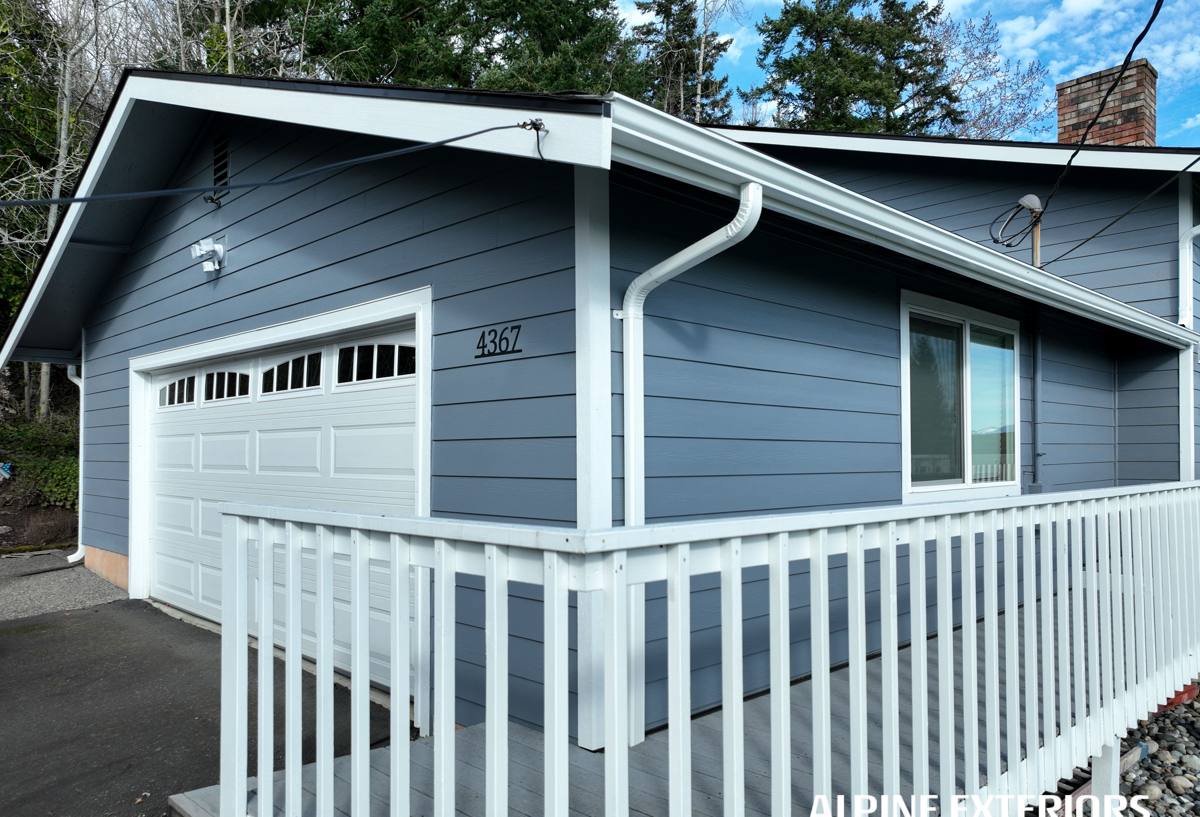
What Salt Air, Rain, and Moss Actually Do to a Shingle Roof
Salt Air and Corrosion
Airborne salt from the Strait of Georgia settles on every exterior surface, including your roof. Over years, it accelerates corrosion on exposed metal — nail heads, flashing seams, and drip edge — especially where a lower-grade fastener was used to save money on the original install. Once flashing starts to corrode, water finds a way underneath it long before the shingles themselves are worn out.
Driving Rain and Wind Uplift
Storms coming off the water regularly bring sustained wind alongside heavy rain. That combination tests every seal on the roof: shingle adhesive strips, flashing laps, and the nailing pattern itself. A roof installed with the wrong nail placement or without properly activated seal strips can develop lifted edges that let water in during exactly the storms it's supposed to handle.
Moss, Algae, and Trapped Moisture
Blaine's mild, wet winters and shaded tree canopy in many neighborhoods give moss a long growing window. Moss doesn't just look bad — its root structure holds moisture directly against the shingle surface and can lift shingle edges as it grows, creating openings for water. Left unmanaged for a few seasons, moss growth can meaningfully shorten a roof's usable life.
What a Correct Asphalt Shingle Install Involves Here
A shingle roof is a system, not a single product. In a marine climate like Blaine's, every layer of that system needs to be right — not just the shingles on top.
Underlayment
We use synthetic or ice-and-water underlayment appropriate to the roof's exposure, with extra protection at eaves, valleys, and low-slope transitions where wind-driven rain is most likely to work its way underneath the shingle course above.
Flashing
Step flashing at walls and chimneys, and properly lapped valley flashing, are where most shingle roof leaks actually originate — not in the field of the roof. We install new flashing as part of a re-roof rather than reusing old, corroded pieces, and we size fastener material to resist the corrosion that salt air causes over time.
Ventilation
Balanced intake and exhaust ventilation keeps the attic dry and temperature-stable, which matters for shingle lifespan and for preventing condensation issues that show up as staining or premature deterioration from underneath.
Fastening
Correct nail count, placement, and penetration depth are what actually hold a shingle roof together in wind. This is a detail that's easy to shortcut and very hard to verify after the fact — it's one of the first things we check when we inspect another contractor's work.
Choosing a Shingle for Blaine's Conditions
Not every asphalt shingle product is a good match for a coastal, moss-prone environment. The table below outlines the general trade-offs homeowners in this area should weigh.
| Shingle Type | Typical Lifespan | Wind Performance | Best Fit for Blaine |
|---|---|---|---|
| 3-Tab (economy) | 15–20 years | Lower wind ratings | Budget projects, less wind/moss exposure |
| Architectural (laminated) | 25–30 years | Higher wind ratings, better seal-strip design | Most Blaine homes, especially exposed sites |
| Algae-resistant (AR) shingles | Varies by base product | Same as base line | Strongly recommended on shaded or north-facing roofs |
| Impact-rated shingles | Varies by base product | Reinforced mat | Optional upgrade for added durability |
For most Blaine properties, we recommend architectural shingles with algae-resistant granules as the baseline standard, not an upsell. The added cost is modest compared to the cost of moss and streaking treatment or early replacement, and the heavier laminated construction handles wind-driven rain better than a basic 3-tab product.
Why We Don't Cut Corners on Underlayment or Flashing to Hit a Lower Price
It's possible to install a cheaper shingle roof by skimping on underlayment coverage or reusing old flashing. We don't do that here, because in a climate with this much wind-driven rain and salt exposure, those are exactly the details that determine whether a roof lasts its full expected lifespan or starts leaking in year six. We'd rather explain the cost difference upfront than have a homeowner discover it later as water damage.
Our Process for a Blaine Roofing Project
1. On-Site Inspection
We walk the roof (or use a drone where access is limited) to assess current shingle condition, flashing, ventilation, and any moss or moisture damage, and to check the decking underneath where accessible.
2. Written Scope and Estimate
You get a clear, itemized estimate covering materials, underlayment, flashing, and labor — no vague allowances. We'll walk through shingle options and explain the reasoning behind our recommendation for your specific roof and exposure.
3. Tear-Off and Deck Inspection
Full tear-off lets us inspect the decking for soft spots or rot, which is common on older Blaine homes where a previous roof trapped moisture for years without anyone knowing. Any damaged decking is replaced before new material goes down — this gets flagged and priced clearly, not buried in the base cost.
4. Install
Underlayment, flashing, ventilation components, and shingles go in following manufacturer specifications and the details above, with attention to the eaves, valleys, and penetrations that take the most weather here.
5. Cleanup and Walkthrough
We clear debris and nails from the property and walk the finished roof with you before calling the job done.
Signs a Blaine Roof Needs Attention
Because coastal wear often starts at flashing and edges rather than in the middle of the roof, problems can be easy to miss from the ground. Watch for:
- Moss growth along shaded slopes, ridges, or valleys
- Streaking or dark staining on shingles (often algae, not just dirt)
- Granules collecting in gutters or downspouts
- Curling, cracking, or lifted shingle edges, especially after a windstorm
- Rust staining or visible corrosion at flashing, vents, or fasteners
- Water stains on interior ceilings or in the attic near chimneys or valleys
- Daylight visible through the roof deck from inside the attic
Any one of these is worth a professional look before it becomes a larger repair.
Moss and Algae Management Between Roof Replacements
A new roof doesn't make a home immune to moss — it just starts the clock over. In Blaine's climate, we recommend periodic soft washing (not high-pressure washing, which damages granule surfaces) and keeping overhanging branches trimmed back to reduce shade and debris buildup. Zinc or copper strips installed near the ridge can help suppress moss regrowth on many roofs and are worth discussing at the time of install. Gutters should be checked regularly, since clogged gutters near the coast tend to hold moisture against the lower courses of shingles longer than they would in a drier climate.
What Affects the Cost of a Blaine Shingle Roof
Every roof is different, but the main cost drivers we see on Blaine projects are consistent:
- Roof size and complexity — number of facets, valleys, and penetrations
- Pitch and access — steeper or harder-to-access roofs take more labor and safety setup
- Decking condition — hidden rot or soft spots found during tear-off add material and labor
- Shingle grade — 3-tab versus architectural versus algae-resistant options
- Flashing scope — full replacement versus reusing sound existing flashing
- Ventilation upgrades — adding or correcting intake/exhaust venting
We provide a written, itemized estimate so you can see exactly what's driving the number, rather than a single lump-sum figure.
Why Hiring a Crew That Already Works in Blaine Matters
Roofing crews based well inland don't always account for the extra corrosion resistance, sealing detail, and moss-prevention steps that a marine, border-town climate like Blaine's calls for. We work throughout Whatcom County, including Blaine and the surrounding waterfront communities, and we specify materials and installation details with this exact climate in mind — not a generic statewide standard. That local familiarity shows up in the small decisions: which fastener grade we use, how much underlayment coverage we add at eaves and valleys, and which shingle lines actually hold their color and granule integrity near the water.
If you're planning a roof replacement, dealing with moss buildup, or just want an honest read on your current roof's condition, we're happy to take a look. Request a free, no-pressure estimate using the form below, and we'll give you a clear picture of what your Blaine home's roof actually needs.