 Bellingham
 Custom Decks in Blaine: Built for a Salt Air Border Town
Blaine sits at the northern edge of Whatcom County, close enough to Semiahmoo Bay and Drayton Harbor that salt air reaches most homes in town, not just the ones with a water view. Add in Blaine's exposure to Pacific storm systems coming ashore near the border, and you get one of the tougher climates in the county for a horizontal wood or composite structure to sit outside in year-round. We're based nearby in Lynden and build in Blaine regularly, and a deck here ages differently than one built twenty miles inland — the difference shows up in fastener corrosion, moss growth, and how long boards stay damp after a storm.
A deck takes on rain, standing moisture, and UV exposure across a horizontal surface that doesn't drain or dry the way a vertical wall does. That single difference is why a deck built with the same generic approach used everywhere else in the Pacific Northwest tends to underperform in Blaine specifically. We build custom decks alongside our siding, roofing, and window work, and we treat deck framing and material choices as climate decisions, not just design decisions.
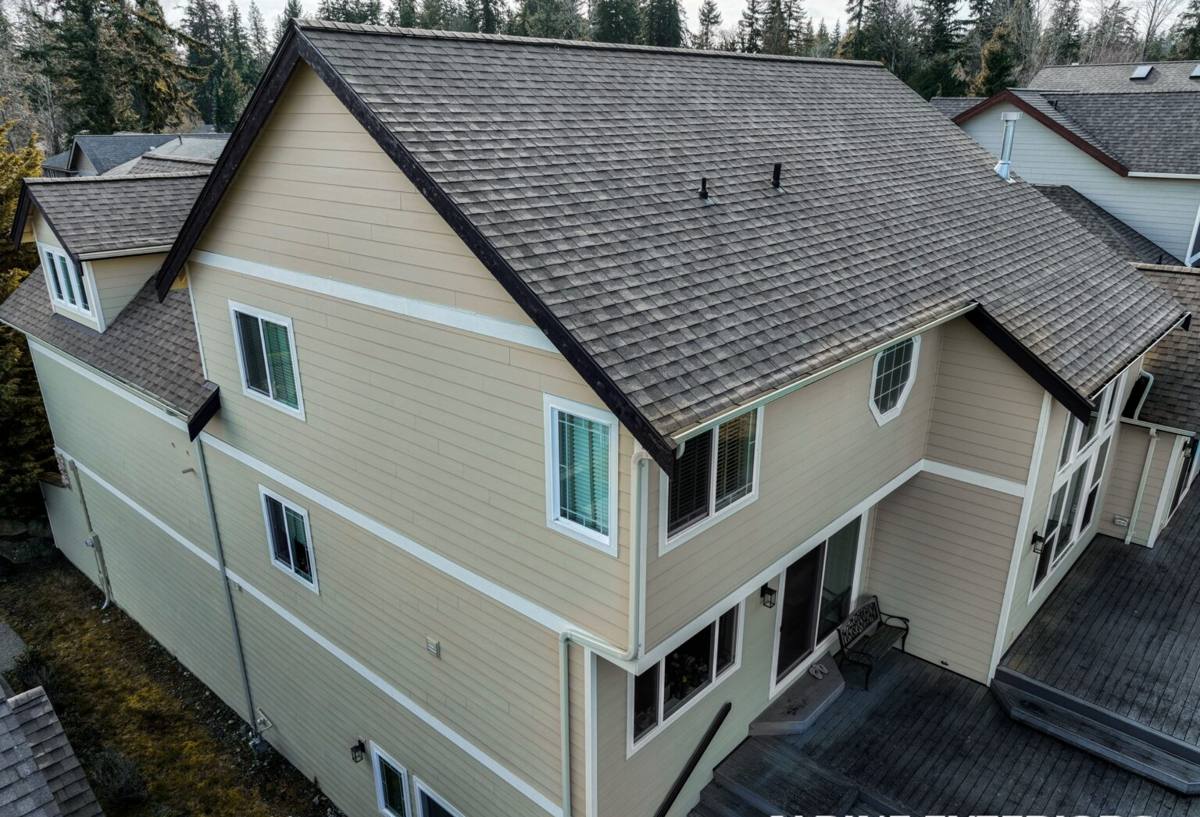
What Blaine's Climate Does to a Deck
Salt Air Near the Water
Homes closer to the bay or harbor take a steadier dose of salt-laden air than towns set further inland, and a deck's fasteners, hardware, and any exposed metal connectors are usually the first place that shows. Standard coated screws and joist hangers corrode faster under sustained salt exposure, and once a fastener starts to go, the connection it's holding is compromised even if the visible wood still looks fine.
Driving Rain Off the Water
Storms coming off the water push rain sideways as well as down, and on a deck that means water gets driven into board gaps, ledger connections, and railing posts more aggressively than a calm, straight-down rain would produce. Framing and flashing details that would be adequate in a sheltered inland yard aren't always enough this close to Blaine's exposed shoreline.
A Long Moss Season
Mild temperatures and near-constant moisture give moss a growing season that can run most of the year on shaded decks, especially under tree cover or on north-facing exposures that don't get much winter sun. Moss on a deck isn't just cosmetic — it holds moisture against the board surface and turns a deck slick and genuinely dangerous underfoot, particularly on stairs.
What Correct Deck Construction Involves Here
A deck that's going to hold up in Blaine's climate needs a handful of details done right from the framing up, not just a good-looking surface board on top:
- Corrosion-resistant fasteners and hardware: Stainless steel or heavy hot-dip galvanized fasteners and joist hangers, sized for the salt exposure of the specific lot, not just whatever is standard elsewhere in the county.
- Proper ledger flashing: The ledger board connection to the house is the single most common source of deck failure and water intrusion into the home itself, and it needs flashing that sheds water away from the wall assembly, not just a bolted board.
- Joist tape and drainage detailing: Protecting the tops of joists from standing water extends framing life significantly, especially under a climate that doesn't give lumber much chance to fully dry between rain events.
- Board spacing for drainage and airflow: Gaps that are too tight trap moisture and debris and accelerate rot or moss growth; spacing that's engineered for actual drainage, not just appearance, pays off over the life of the deck.
- Footing depth and bracing for local soil and wind: Footings sized and set to local frost depth and soil conditions, with bracing that accounts for the wind loads a waterfront-adjacent property can see.
- Railing and stair connections built to code: Especially important on a deck that sees moss and standing moisture, since a weakened stair connection is where a slick surface turns into a real fall risk.
Choosing Deck Materials for a Blaine Property
There's no single right material for every deck, and we walk homeowners through the honest trade-offs rather than pushing whatever has the best margin. The right call usually comes down to budget, how much upkeep you want to take on, and how exposed the specific lot is to salt air and shade.
| Material | How It Handles Blaine's Climate | Maintenance Trade-Off |
|---|---|---|
| Pressure-treated lumber | Solid performance when properly fastened and sealed; needs consistent upkeep to resist moss and moisture over time | Lowest upfront cost, but requires periodic cleaning, sealing, and closer inspection near the water |
| Cedar | Naturally moisture- and insect-resistant, but still porous enough that moss takes hold on shaded boards without regular care | Attractive appearance, moderate upkeep, needs re-staining or sealing on a regular cycle |
| Composite decking | Doesn't absorb moisture the way wood does, which limits rot risk; still needs occasional cleaning where moss or algae collect on shaded sections | Higher upfront cost, significantly less ongoing maintenance over the life of the deck |
| PVC decking | Fully synthetic and highly moisture-resistant, a strong fit for the wettest, shadiest lots near the water | Highest material cost, minimal maintenance beyond routine cleaning |
Hardware and framing decisions matter as much as the surface board choice, regardless of which decking material you land on. A composite deck built on framing with substandard fasteners will still develop problems at the connections, even if the boards themselves never rot.
Our Process for a Custom Deck Build
- On-site assessment: We walk the specific lot, checking sun and shade exposure, distance from the water, existing drainage, and how the deck will tie into the house.
- Design and material conversation: We talk through layout, railing style, and material trade-offs in plain terms, with a real range based on your priorities rather than a generic package.
- Permitting: Deck projects in Blaine typically require a building permit depending on size and height; we handle that process rather than leaving it on the homeowner.
- Framing and structural work: Footings, ledger flashing, joists, and hardware go in first, built to the loads and moisture exposure the specific site actually sees.
- Decking, railing, and finishing: Surface boards, railing systems, and any stairs go in last, with attention to drainage spacing and connection details throughout.
- Final walkthrough: We go over the finished deck with you, including what maintenance the specific material you chose actually needs going forward.
Cost Factors for a Blaine Deck Project
| Factor | What Drives Cost | Coastal Climate Consideration |
|---|---|---|
| Size and footprint | Square footage, height off grade, number of levels | Larger horizontal surfaces mean more total exposure to driving rain and moss |
| Framing material | Standard pressure-treated framing vs. upgraded structural components | Corrosion-resistant hardware and fasteners add cost but reduce long-term failure risk near the water |
| Decking material | Wood vs. composite vs. PVC surface boards | Lower-maintenance materials cost more upfront but hold up better against constant moisture and moss |
| Railing and stairs | Style, material, code requirements based on height | Corrosion-resistant hardware matters most on stair connections and rail posts |
| Site conditions | Slope, existing structure to remove, access for equipment | Soil and footing work may need adjustment for waterfront-adjacent ground conditions |
These are general drivers, not a quote. Every lot in Blaine sits at a slightly different distance from the water and under different tree cover, so we walk the property before putting a real number on the work.
Signs an Existing Blaine Deck Needs Attention
- Soft or spongy boards, especially near the ledger connection to the house
- Rust staining around fasteners, joist hangers, or railing hardware
- Moss that returns quickly after cleaning, particularly on shaded sections
- Visible gaps or separation where the ledger board meets the house
- Wobble or give in railing posts or stair stringers
- Standing water that doesn't drain within a few hours after rain
Any of these is worth a professional look before the next wet season. A deck with early-stage issues is often a straightforward repair; one with ledger rot or failing framing usually points to a rebuild rather than a patch.
Timing a Deck Project Around Blaine's Weather
Whatcom County's wettest stretch typically runs from late fall through winter, and Blaine's coastal exposure makes that stretch harder on both fresh lumber and a working crew than it is further inland. Spring and summer generally offer the driest, most stable conditions for framing and finish work, since treated lumber, sealants, and adhesives all perform better when they can cure under dry conditions rather than between storm systems. A deck that's actively failing shouldn't wait for the ideal season, but a new build or major rebuild is usually worth timing around Blaine's drier months when possible.
Why a Local Crew Matters for a Blaine Deck
A crew that builds decks across Whatcom County through every season sees how salt air, driving rain, and moss actually behave on real Blaine properties over years, not just how a material performs on a spec sheet. That experience shapes practical decisions on build day: how much corrosion resistance a given fastener package actually needs for a specific lot's distance from the water, which board spacing holds up best under a shaded tree line, and where extra flashing attention at the ledger prevents a callback down the road. Blaine's exposed, coastal position isn't the same as more sheltered towns further inland in the county, and a crew that already works this area builds accordingly instead of applying a generic approach.
If you're planning a new custom deck or need an honest look at one that's showing its age, we're glad to walk the property and give you a straightforward assessment. Reach out using the form below to schedule a free, no-pressure estimate.