 Bellingham
 Deck Replacement Built for Blaine's Waterfront Climate
Blaine sits right on the water at the top of Whatcom County, and that location shapes what a deck has to survive here. Salt-laden air off Semiahmoo Bay and Drayton Harbor works on fasteners and metal connectors year-round, not just during storms. Add the driving rain that comes off the Strait in fall and winter, plus a moss season that can run eight months out of the year on shaded or north-facing decks, and you have a structure that ages faster here than it would twenty miles inland. When a deck starts to fail in Blaine, it's rarely one problem — it's usually corrosion, trapped moisture, and moss cover all working on the wood at the same time.
We're a Bellingham-based crew that works Blaine regularly, so we're not guessing at what holds up here. We've seen what five or ten years of coastal exposure does to a deck built with standard interior-grade hardware, and we build replacements to avoid repeating those mistakes.
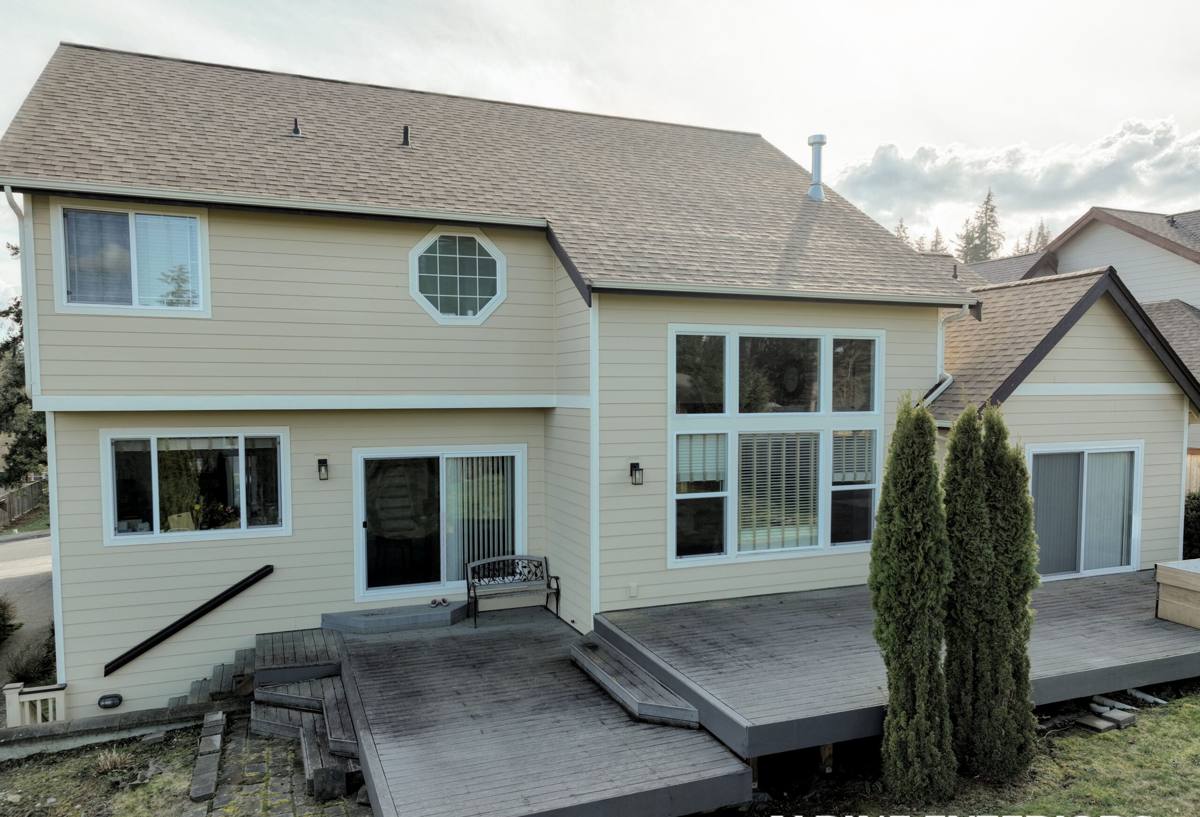
Signs a Blaine Deck Needs Replacement, Not Another Repair
Homeowners often ask us to patch a board or two before realizing the whole structure is compromised. Here's what tells us a full replacement is the honest recommendation instead of a repair:
- Soft or spongy spots in the decking, especially near the house or at board ends
- Rust streaks bleeding out from screws, joist hangers, or bolts
- Visible gaps or separation where the ledger board meets the house
- Wobble in the railing posts or noticeable movement when you walk near the edge
- Persistent green or black moss growth that comes back within weeks of cleaning
- Wood that's gone gray and fibrous, or that a screwdriver sinks into easily
- Footings that have shifted, cracked, or settled unevenly
Any one of these on its own might be repairable. Two or three together, especially on a deck more than 15 years old, usually means the framing has been compromised long enough that patching won't buy much time.
What a Correct Deck Replacement Actually Involves
The Ledger Connection
The ledger board — where the deck attaches to the house — is the single most common failure point we find on coastal decks, and it's also the hardest to see once the decking is down. It needs proper flashing that directs water away from the house band board, not just a bead of caulk. On a home exposed to driving rain off the water, we treat ledger flashing as non-negotiable, because a failure here rots the house structure, not just the deck.
Joist and Beam Protection
Every joist top gets a self-adhering membrane tape before decking goes down. It's a small material cost that keeps water from wicking into end grain and screw holes, which is exactly where rot starts on an untreated joist top in a wet climate. We also make sure joist spacing and beam sizing match the actual span and load — a lot of older Blaine decks were built to whatever the lumber yard had on hand, not to a proper span table.
Fasteners and Hardware
This is where salt air punishes a shortcut fastest. Standard electro-galvanized screws and joist hangers can start showing rust within a couple of seasons this close to the water. We use stainless steel or hot-dip galvanized hardware rated for coastal exposure throughout the frame, not just on the visible top surface.
Footings
Whatcom County's mix of clay and fill soils near the coast can shift with seasonal moisture. We set footings below frost depth and size them to the actual soil conditions rather than reusing whatever depth the old deck happened to have.
Choosing the Right Decking Material for This Climate
Material choice matters more in Blaine than in a dry inland climate, because everything spends more time wet. Here's how the common options compare for a coastal deck:
| Material | Moisture Behavior | Maintenance | Typical Lifespan Here |
|---|---|---|---|
| Pressure-treated lumber | Absorbs and releases water readily; prone to cupping if not properly dried before install | Needs re-staining or sealing every 2-3 years in this climate | 10-15 years |
| Cedar | Naturally rot-resistant but still needs sealing against salt air and moss | Annual cleaning, periodic oiling | 15-20 years with upkeep |
| Composite (capped) | Doesn't absorb water into the core; resists rot | Periodic cleaning to prevent moss/mildew film on the surface | 25-30 years |
| PVC decking | Fully waterproof, no organic material for moss to root into | Occasional wash; least maintenance-intensive | 25-30+ years |
We don't push one product on every job. A cedar deck under a covered porch that stays mostly dry can perform well for decades. The same cedar decking fully exposed to weather off the water will need far more attention. We'll walk you through what your specific site and sun/shade exposure calls for rather than defaulting to whatever's easiest to install.
Our Deck Replacement Process
- On-site assessment — we check the ledger, framing, footings, and hardware condition before quoting anything, since what's underneath often changes the scope
- Written estimate — a clear breakdown of materials, labor, and any framing or footing repairs found during assessment
- Permitting — most deck replacements in Blaine and unincorporated Whatcom County require a permit, especially for elevated structures or anything attached to the house; we handle that paperwork
- Demo and disposal — full removal of old decking, railing, and any compromised framing, hauled off site
- Framing correction — ledger flashing, joist tape, proper fastener upgrades, footing repair or replacement as needed
- Decking and railing install — installed to the manufacturer's fastening spec, with attention to drainage gaps and board spacing
- Final walkthrough — we go over the finished deck with you before calling the job done
Permits and Local Considerations in Blaine
Blaine's proximity to the water means some properties fall under shoreline or setback regulations that don't apply a few miles inland. Elevated decks and any deck attached to the primary structure typically need a building permit, and decks near critical areas or shoreline buffers may need additional review. We factor this into the timeline up front rather than surprising you with a permit delay mid-project. If your lot has any shoreline overlay, we'll flag it during the assessment so there are no surprises.
What Drives the Cost of a Deck Replacement
| Factor | Why It Matters |
|---|---|
| Deck size and shape | Square footage and the number of angles/cuts directly affect material and labor time |
| Height off the ground | Elevated decks need more substantial framing, footings, and often guardrails, plus more complex demo |
| Decking material | Composite and PVC cost more upfront than treated lumber but less over the deck's lifetime |
| Railing type | Cable, glass, or metal railing systems cost more than standard wood balusters |
| Ledger and framing condition | Rot found behind the old ledger or in support posts adds repair scope not visible until demo |
| Permit requirements | Shoreline-adjacent or elevated decks may need engineering review, which adds time and fees |
We'd rather give you an honest range up front and adjust in writing if hidden damage turns up than lowball a number and surprise you later.
Keeping a New Deck Ahead of Moss and Salt Air
A well-built deck still needs some seasonal attention in this climate. A few habits go a long way:
- Sweep debris off the deck surface regularly through fall — trapped leaves hold moisture and feed moss
- Rinse salt spray off surfaces and hardware a few times a year if the deck faces open water
- Keep gutters and downspouts near the deck clear so runoff isn't draining onto it
- Check railing hardware annually for early rust, especially at joints and base plates
- Reseal wood decking on the manufacturer's recommended schedule rather than waiting until it looks worn
Why a Crew That Already Works Blaine Matters
A lot of deck problems we get called out for started with a builder who didn't account for how much harder this coastline is on a structure than a typical inland yard. We're not learning that on your project — we already spec stainless or hot-dip hardware as standard, we already know which fastening details fail first out here, and we already know the Whatcom County and City of Blaine permit process. That's the difference between a deck that needs attention again in eight years and one that holds up for two or three decades.
If you're weighing repair versus replacement, or just want an honest look at what shape your current deck is in, we're happy to come out and take a look. The estimate is free, there's no pressure to book anything on the spot, and you'll get a straight answer about what your deck actually needs.